
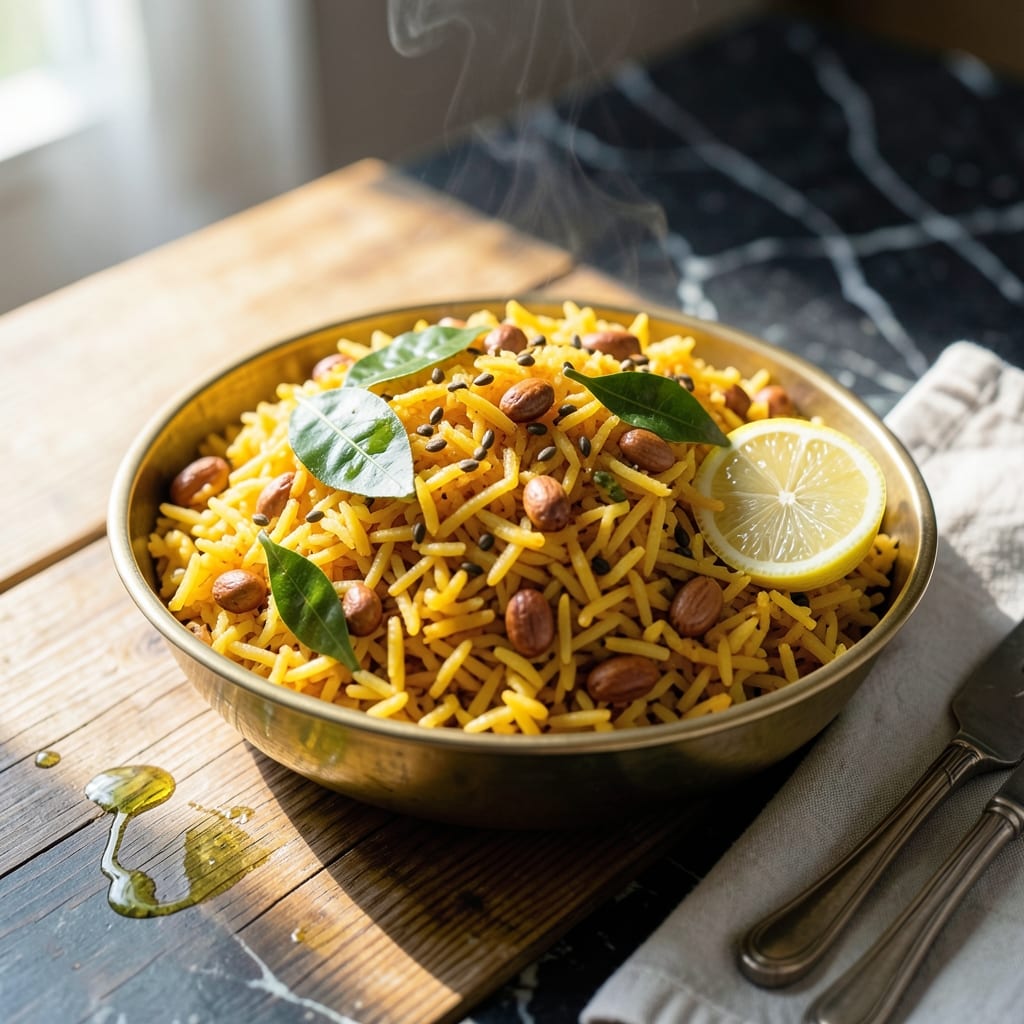
This South Indian lemon rice delivers a burst of zesty citrus flavor that transforms plain rice into something extraordinary. The dish balances tangy, spicy, and aromatic notes perfectly, making it a staple in many households.
The secret lies in tempering mustard seeds, curry leaves, and turmeric in hot oil before mixing with cooked rice and fresh lemon juice. This simple technique infuses every grain with bright, complex flavors.
You’ll end up with a vibrant yellow rice dish that’s both comforting and refreshing. It pairs beautifully with yogurt, papad, or as part of a larger meal spread.
Ready in under 30 minutes, this recipe brings authentic taste to your kitchen with minimal effort.
Ingredients for Lemon Rice Recipe Padhuskitchen
Transform plain rice with these vibrant South Indian ingredients for citrusy, aromatic perfection.
| Ingredient | Amount | Notes |
|---|---|---|
| Basmati Rice 🍚 | 1 ½ cups | Rinsed until water runs clear |
| Lemons 🍋 | 3 whole | Juiced, about 1/2 cup juice |
| Mustard Seeds 🌿 | 1 tsp | Black or yellow variety |
| Curry Leaves 🍃 | 12 pieces | Fresh preferred, dried acceptable |
| Turmeric Powder 🌶️ | ½ tsp | For vibrant yellow color |
| Peanuts 🥜 | ¼ cup | Raw, unsalted, halved |
| Dried Red Chilies 🌶️ | 2 whole | Broken into pieces |
| Chana Dal 🌾 | 1 tbsp | Split chickpea lentils |
| Urad Dal 🌾 | 1 tbsp | Split black gram lentils |
| Asafoetida 🧂 | ¼ tsp | Hing, optional but traditional |
| Green Chilies 🌶️ | 2 whole | Slit lengthwise, seeds removed |
| Vegetable Oil 🫒 | 3 tbsp | Or coconut oil for authenticity |
| Salt 🧂 | 1 tsp | Adjust to taste preference |
| Fresh Cilantro 🌿 | ¼ cup | Chopped, for garnish |
The turmeric and curry leaves are non-negotiable for authentic flavor. Indian grocery stores like Patel Brothers carry fresh curry leaves and both dal types—chana and urad add essential texture. Asafoetida (hing) is traditional but can be omitted (it’s potent, so a pinch goes far). For oil, coconut is ideal, but any neutral oil works. Look for bright yellow turmeric and whole mustard seeds for best results.
No fresh curry leaves? Dried at half the amount, but fresh is worth the hunt. Skip the peanuts if allergic—cashews work too. Out of green chilies? Serrano peppers are a good swap. For extra tang, add a splash of tamarind paste with the lemon. The rice should be slightly undercooked before mixing—it’ll finish in the tempering oil. Rinsing removes excess starch, so don’t skip it.
Store cooked rice in the fridge for up to 4 days—it reheats well with a splash of water. Curry leaves freeze beautifully (just rinse and pat dry first). Keep turmeric and dals in airtight containers away from light—they’ll stay fresh for 6-12 months. The dish tastes even better the next day as flavors meld.
Why You’ll Love This Recipe
- I’ll be real: it uses staples I always have on hand, and those curry leaves stretch a simple dish into something special.
- One Pot Wonder: I toss everything in a single pot—basmathi rice, turmeric, and the zing of fresh lemon—minimal cleanup, maximum flavor.
- Zesty Comfort: Here’s what sold me—the bright pop of lemon with the earthy crunch of mustard seeds and curry leaves hits just right.
- Lunchbox Hero: Between us, this keeps perfectly for days, so I pack it for picnics, work lunches, or even a quick dinner side.
Step-by-Step Instructions for Lemon Rice
Master this traditional South Indian dish with precise technique and authentic flavor development.
Step 1: Prepare and Cook the Basmati Rice
Rinse the 1.5 cups Basmati Rice thoroughly until the water runs clear, removing excess starch that could make the final dish gummy. I use a fine-mesh strainer for this process, changing the water 4-5 times until it’s completely transparent.
Cook the rice in a 1:2 rice-to-water ratio until just tender—about 12-15 minutes at a gentle boil. The grains should be separate and firm, not mushy. Drain immediately and spread on a tray to cool completely. This prevents the rice from becoming sticky when mixed with the tempering later.
Step 2: Create the Tempering with Aromatic Spices
Heat the 3 tbsp Vegetable Oil in a heavy-bottomed pan over medium heat. Add the 1 tsp Mustard Seeds and wait for them to pop—this takes about 30-45 seconds and signals the oil is properly hot. Immediately add the 1 tbsp Chana Dal, 1 tbsp Urad Dal, 0.25 cup Peanuts, and 2 whole Dried Red Chilies broken into pieces.
Stir constantly as the dals turn light golden brown (about 2-3 minutes). The peanuts should start to color slightly at the edges. Add the 0.25 tsp Asafoetida, 12 pieces Curry Leaves, and 2 whole Green Chilies slit lengthwise. Sauté for another 30 seconds until the curry leaves crisp slightly and release their aroma.
Step 3: Incorporate Turmeric and Lemon
Reduce heat to low and add the 0.5 tsp Turmeric Powder, stirring quickly to prevent burning. The turmeric will deepen the golden color of the tempering. After 10 seconds, add the juice from the 3 whole Lemons (about ½ cup) and 1 tsp Salt.
Let this mixture simmer for 1 minute to meld the flavors. The acidity from the lemon juice will brighten the earthy spices while the salt balances the tang. The oil may slightly separate, which is normal for this stage.
Step 4: Combine Rice with Tempering and Finish
Add the cooled basmati rice to the tempering mixture. Using a gentle folding motion with a spatula, mix thoroughly to ensure every grain is coated with the spiced oil and lemon juice. The rice should take on a vibrant yellow hue from the turmeric.
Cook over low heat for an additional 2-3 minutes, stirring occasionally, to allow the flavors to penetrate deeply. The rice should be heated through but not dry—if it seems too dry, a splash of water can remedy this. Taste and adjust salt if needed before finishing.
Remove from heat and let sit covered for 5 minutes. This resting period allows the flavors to fully develop. Garnish with the 0.25 cup Fresh Cilantro chopped finely just before serving to preserve its bright color and fresh aroma.
Pro Tips For Making Lemon Rice Recipe Padhuskitchen
- Toast mustard seeds first: Heat the oil until it shimmers, then add mustard seeds—I learned this the hard way after mine stayed raw and bitter in the finished dish. Wait until they pop before adding curry leaves.
- Rinse rice thoroughly: Wash basmati rice under cold water until the water runs clear, about 3-4 times. Sounds tedious, but it removes excess starch so your lemon rice stays light and fluffy, not gummy.
- Zest before juicing: Grate the lemon zest first, then juice the halves—once you’ve squeezed them, zesting becomes impossible. I skip this when I’m lazy, but the dish is noticeably brighter when I don’t.
- Bloom turmeric in oil: Add turmeric powder to the hot oil with mustard seeds and let it sizzle for 10 seconds. This wakes up its color and flavor, and guarantees that earthy warmth spreads evenly through the rice.
Regional Styles of These Flavors
Tamil Nadu Style
In Tamil Nadu, this dish is a lunchbox favorite. They often use sesame oil instead of vegetable oil for a nuttier aroma. The tempering includes 1/4 cup roasted peanuts and sometimes 1 tsp grated ginger for extra warmth. 🗺️
Karnataka Twist
Karnataka versions add 1/2 tsp cumin seeds to the tempering for earthier notes. Some cooks include 1/4 cup grated coconut in the final mix. The rice is often slightly more moist, with an extra 2 tbsp lemon juice for tang.
Andhra Spice
Andhra style amps up the heat with 4 green chilies and 1 tbsp red chili powder. They also add 1/2 tsp fenugreek seeds to the tempering. The result is a fiery, aromatic version that pairs well with yogurt. 🌶️
Kerala Coconut
Kerala cooks use coconut oil and add 1/4 cup shredded coconut along with curry leaves. They often include 1/2 tsp black peppercorns in the tempering for a more complex spice profile.
Maharashtra Variation
In Maharashtra, they sometimes add 1/2 cup diced cucumber for freshness. The tempering includes 1 tsp coriander seeds crushed lightly. This version is lighter and often served at room temperature.
Hyderabadi Touch
Hyderabadi cooks add 1/4 tsp garam masala at the end for warmth. They also use ghee instead of oil for richness. The dish is often garnished with 2 tbsp fried cashews for crunch.
Nutrition Facts
Frequently Asked Questions
Can I use regular rice instead of basmati?
Yes, but basmati’s long grains stay separate better. Use 1.5 cups of any long-grain white rice, but rinse well to avoid mushiness. The texture may be slightly different but still tasty.
What if I don’t have curry leaves?
Dried curry leaves work at half the amount. For a substitute, use a pinch of asafoetida for aroma, or 1 tsp lime zest for citrus notes. Fresh is best, but the dish remains flavorful.
How do I fix overly sour lemon rice?
Balance the tang by adding a pinch of sugar or 1/4 tsp more salt. Stir well and taste. You can also mix in 1/2 cup plain cooked rice to dilute the acidity.
Can I make this ahead of time?
Store in an airtight container in the fridge for up to 4 days. Reheat with a splash of water to restore moisture. Flavors deepen overnight.

- Lump Rice Recipe Sri Lanka: Traditional Island-Style Texture - November 4, 2026
- Laos Sticky Rice Recipe: Traditional Steamed Perfection - November 4, 2026
- Magic Rice Recipe: One-Pot Aromatic Wonder - November 4, 2026