
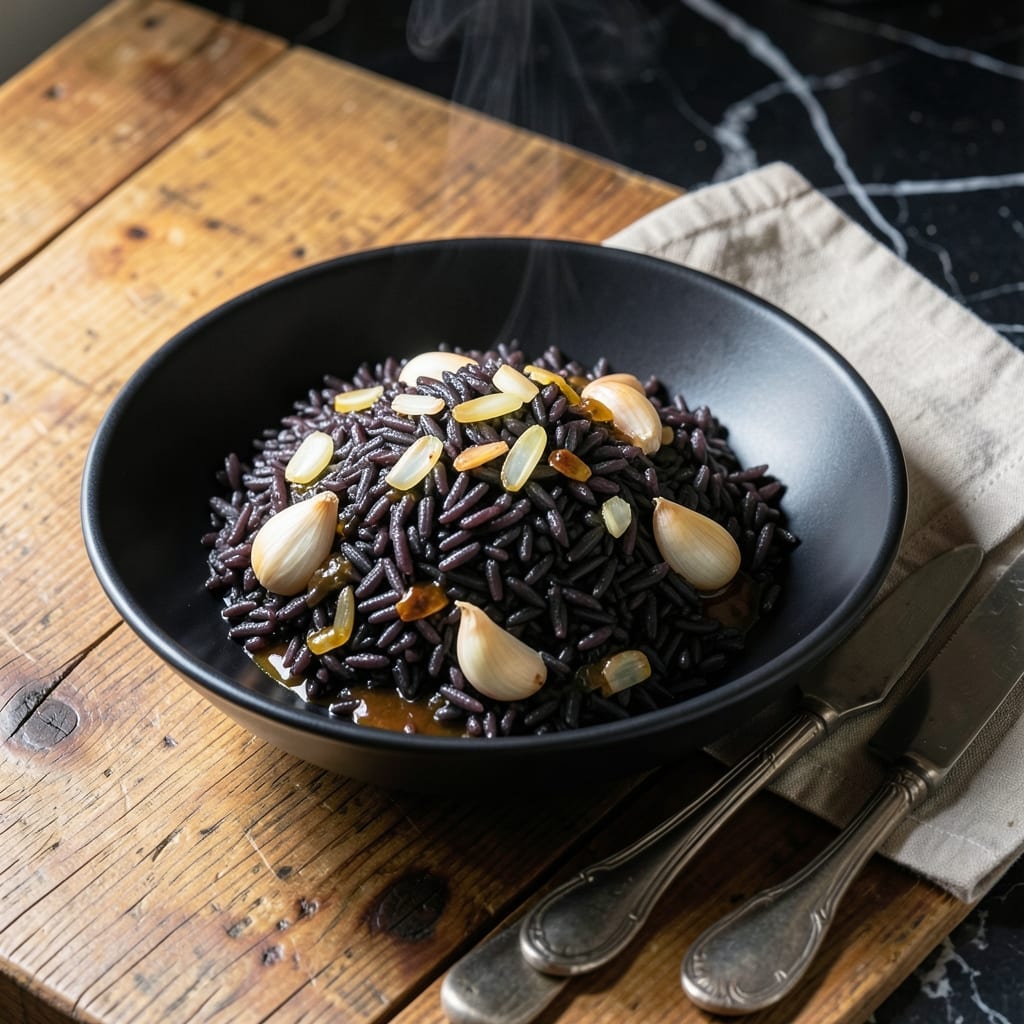
This recipe transforms simple black rice into a deeply aromatic side dish that’s as nutritious as it is visually striking. The grains cook up with a rich, earthy flavor and a satisfying chew, making every bite memorable.
I’ve refined the water-to-rice ratio and cooking time to ensure perfectly tender results every time. A quick rinse before cooking removes excess starch, while a short soak can enhance texture and reduce cooking time.
The deep purple-black hue is packed with antioxidants, and its nutty taste pairs beautifully with proteins, vegetables, or as a base for bowls. It’s a versatile staple that elevates any meal.
With minimal effort and a few key steps, you’ll achieve a dish that’s as impressive as it is delicious. Here’s how to make it.
Ingredients for Long Grain Black Rice
Pantry staples and fresh herbs come together for this striking, nutrient-packed side.
| Ingredient | Amount | Notes |
|---|---|---|
| Long Grain Black Rice 🌾 | 2 cups | Rinsed thoroughly before cooking |
| Water 💧 | 4 cups | Filtered or spring for best flavor |
| Olive Oil 🫒 | 1 ½ tbsp | Extra-virgin for richness |
| Garlic Cloves 🧄 | 3 cloves | Minced finely for even flavor |
| Shallot 🧅 | 1 whole | Finely diced for subtle sweetness |
| Vegetable Broth 🥕 | 1 cup | Low-sodium preferred for control |
| Sea Salt 🧂 | 1 tsp | Fine grain for even distribution |
| Freshly Ground Black Pepper 🌶️ | ½ tsp | Adjust to taste preference |
| Bay Leaf 🍃 | 1 whole | Dried for aromatic depth |
| Dried Thyme 🌿 | ½ tsp | Crushed to release oils |
| Lemon Zest 🍋 | 1 tsp | Freshly grated for brightness |
| Fresh Parsley 🌿 | ¼ cup | Chopped for garnish and freshness |
The black rice is the star here. Look for long-grain varieties at Whole Foods or Asian markets—brands like Lotus Foods or Lundberg are solid. Avoid the quick-cook versions; they lose that signature chew. I rinse mine until the water runs clear (about 3-4 times), which keeps it from turning gummy. The color’s natural, by the way—no dyes here (that’s the anthocyanin talking).
No shallots? A small yellow onion works fine. Out of fresh parsley? Cilantro or chives add a nice pop too. The broth can be swapped for water in a pinch, but you’ll miss that extra depth. If you’ve got mushroom broth, even better—it pairs amazingly with the earthy rice. The lemon zest? Skip it if you must, but it really brightens everything up (worth the extra minute).
Uncooked rice keeps in the pantry for up to a year—just store it in an airtight container. Cooked rice holds in the fridge for 4-5 days or freezes for 3 months. I like to portion it into single servings for easy reheating (microwave with a splash of water to fluff it back up).
Why You’ll Love This Recipe
- Minimal Effort: I just toss the rice, water, and a splash of olive oil in a pot—no stirring, no fuss.
- Rich and Earthy: The garlic and shallot bloom in the oil, giving the black rice this deep, nutty flavor that’s hard to resist.
- Meal Prep Hero: It keeps beautifully for days, so I make a big batch for lunches or quick dinners.
- Budget Stretch: A little goes a long way—this rice is filling, affordable, and feels fancy without the price tag.
Step-by-Step Instructions for Long Grain Black Rice
This method brings out the nutty depth and striking color that makes this rice so special.
Step 1: Rinse and Toast the Rice
Place the 2 cups Long Grain Black Rice in a fine-mesh strainer and rinse under cold water until the water runs clear. This removes excess starch and prevents gummy rice. Shake off any excess water—it should look like dark pearls in your colander.
Heat the 1.5 tbsp Olive Oil in a medium pot over medium heat. Add the rinsed rice and toast for 2-3 minutes, stirring constantly, until the grains become fragrant and slightly glossy. You’ll notice the rice start to make a subtle popping sound—that’s your signal it’s ready for liquids.
Step 2: Sauté the Aromatics
Add the finely diced Shallot to the pot with the rice and cook for 2 minutes until it softens and turns translucent. The shallot should smell sweet and mellow, not sharp or raw. This builds a flavor base that complements the rice’s natural earthiness.
Stir in the 3 cloves minced Garlic Cloves and cook for 30 seconds until fragrant but not browned. Garlic burns easily, so keep it moving in the pot. You want its aroma to fill your kitchen without any bitter notes developing.
Step 3: Add Liquids and Seasonings
Pour in the 4 cups Water, 1 cup Vegetable Broth, 1 tsp Sea Salt, 0.5 tsp Freshly Ground Black Pepper, 1 whole Bay Leaf, 0.5 tsp Dried Thyme, and 1 tsp Lemon Zest. Stir well to combine all the ingredients.
Bring the mixture to a boil over high heat. As soon as it reaches a full, rolling boil, reduce the heat to low, cover the pot with a tight-fitting lid, and let it simmer undisturbed. This transition from boil to simmer is crucial for even cooking.
Step 4: Simmer Until Tender
Let the rice cook covered for 30-35 minutes. Resist the urge to peek during this time—releasing steam can extend the cooking process. The rice is done when all the liquid has been absorbed and the grains are tender but still slightly chewy.
If you notice the liquid evaporating too quickly before the rice is done, add ¼ cup of hot water and continue cooking. The rice should have a deep, rich color and a slight bite to it, not mushy or overcooked.
Step 5: Rest and Garnish
Once the rice is tender, remove the pot from heat and let it sit covered for 10 minutes. This resting period allows the grains to absorb any remaining moisture and steam to finish the cooking process evenly.
Fluff the rice gently with a fork, discarding the Bay Leaf. Stir in the 0.25 cup Fresh Parsley just before serving to add a pop of color and freshness. The parsley should look vibrant against the deep purple-black rice, and its bright flavor will balance the dish perfectly.
Pro Tips For Making Long Grain Black Rice
- Soak the Rice: Cover the black rice with water for at least 30 minutes before cooking—it cuts the cooking time nearly in half and prevents that dreaded crunchy center.
- Toast the Grains: Heat the rice in olive oil with minced shallot and garlic for 2 minutes until fragrant; it deepens the nutty flavor and keeps the grains from turning mushy.
- Use Extra Water: Black rice absorbs more liquid than white, so go with a 1:2.5 rice-to-water ratio—any less and you’ll end up with undercooked, chewy bits.
- Let It Steam: After cooking, turn off the heat, cover the pot, and let it sit for 10 minutes; this lets the grains finish absorbing moisture and fluff up without stirring.
Troubleshooting Perfect Results
Rice Still Crunchy
If your grains are undercooked after 35 minutes, the issue is usually insufficient liquid. Add ½ cup hot water or broth, cover tightly, and cook for another 10-15 minutes. I always check for doneness by tasting a few grains from different spots in the pot. 💡
Mushy Texture
Overcooked rice often results from too much water or lifting the lid too often. Stick to the 4 cups water and 1 cup broth ratio, and resist peeking during cooking. If it’s already mushy, drain excess liquid and spread the rice on a baking sheet to dry slightly.
Uneven Cooking
This happens when heat isn’t distributed evenly. Use a heavy-bottomed pot and ensure your burner is the right size. If the top layer is still firm, stir gently once halfway through cooking, then re-cover. I find my Le Creuset Dutch oven works perfectly for this.
Bland Flavor
If the rice tastes flat, you likely skipped toasting the grains or under-seasoned. Toasting for 2-3 minutes brings out the nutty depth, and don’t forget the 1 tsp sea salt—it enhances all the other flavors. A squeeze of lemon at the end can also brighten it up. 🌟
Sticky or Gummy
Insufficient rinsing is the usual culprit. Rinse until the water runs completely clear—this removes excess starch. Also, avoid stirring the rice while it’s cooking, as this releases more starch and creates gumminess.
Liquid Evaporates Too Fast
If your pot lid doesn’t fit tightly, steam escapes, and the rice won’t cook properly. Use a well-fitting lid or cover with foil first, then the lid. If needed, add ¼ cup hot liquid at a time to compensate. Cooking at too high a heat can also cause rapid evaporation.
Nutrition Facts
Frequently Asked Questions
Do I need to soak the rice before cooking?
It’s optional but can reduce cooking time by 5-10 minutes. Soaking softens the grains, leading to more even cooking. If you do soak, use cold water for 30 minutes then drain.
Why does the water turn purple during rinsing?
That’s the natural anthocyanin pigment releasing from the bran layer. It’s completely normal and confirms you’re using authentic black rice. Keep rinsing until the water runs clear.
Can I cook this in a rice cooker?
Yes! Use the same 2:1 liquid-to-rice ratio and cook on the standard setting. It may take 5-10 minutes longer than white rice. Let it steam for 10 minutes after cooking completes.
How do I store cooked black rice?
Keep in an airtight container in the fridge for up to 5 days. For longer storage, freeze for up to 3 months. Reheat with a splash of water to restore texture.

- Mujadara Rice and Lentils Recipe: Earthy Spiced Lentils With Caramelized Onions - November 1, 2026
- Naija Fried Rice Recipe: Street-Style Spice With Veggie Crunch - November 1, 2026
- Mushy Rice Recipe: Fluffy Grains Transformed in Minutes - November 1, 2026