
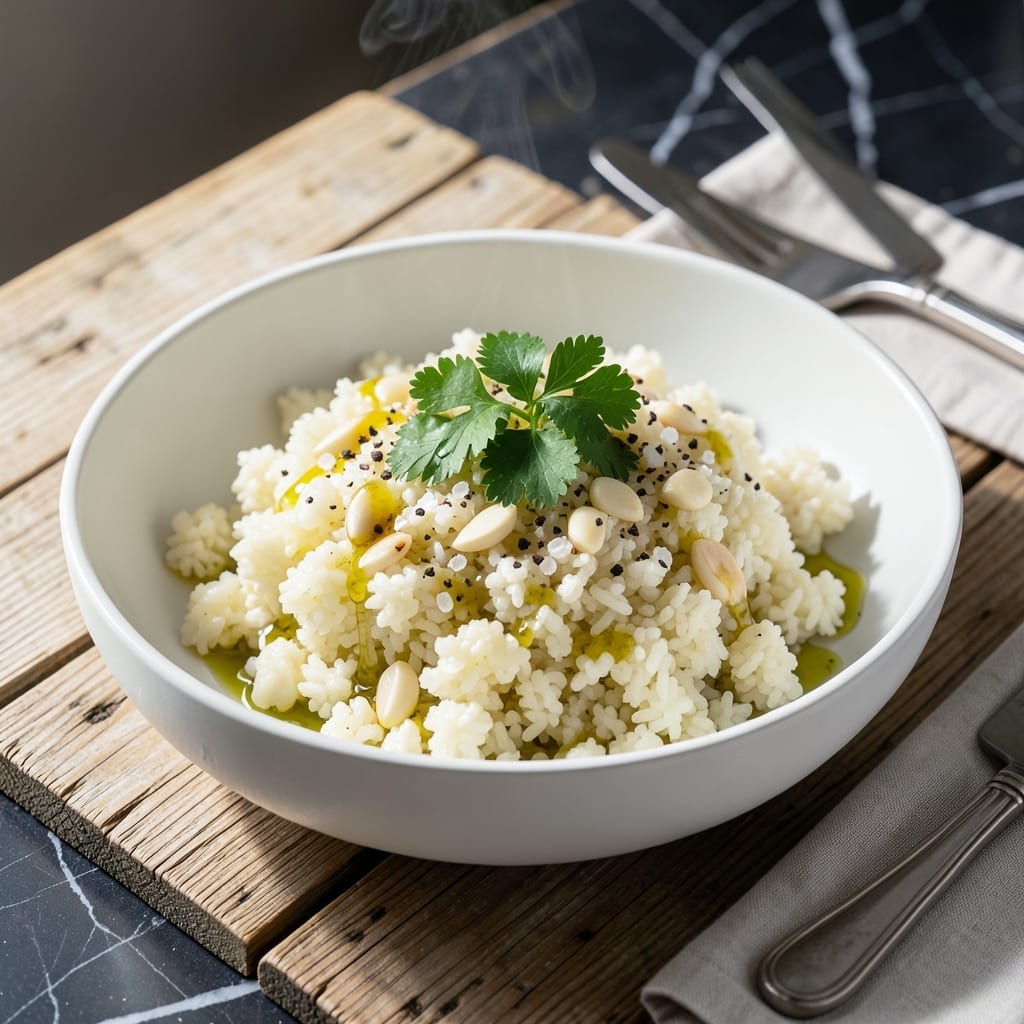
This light and fluffy cauliflower rice delivers the perfect low-carb alternative to traditional rice. The secret is in the preparation—grating fresh cauliflower and cooking it just until tender.
What you get is a versatile side dish that soaks up flavors beautifully, with a texture that’s surprisingly similar to the real thing. It’s ready in 15 minutes and pairs perfectly with any main course.
Ingredients for Low Carb Cauliflower Rice
Fresh cauliflower and a handful of pantry staples create this light, fluffy side dish.
| Ingredient | Amount | Notes |
|---|---|---|
| Fresh Cauliflower 🥦 | 1 whole | Medium head, about 2 lb |
| Olive Oil 🫒 | 2 tbsp | Extra-virgin preferred |
| Garlic Cloves 🧄 | 3 cloves | Minced for flavor depth |
| Sea Salt 🧂 | ½ tsp | Fine grain for even distribution |
| Ground Black Pepper 🌶️ | ¼ tsp | Freshly ground preferred |
| Fresh Parsley 🌿 | ¼ cup | Chopped, for garnish |
| Lemon Juice 🍋 | 1 tbsp | Freshly squeezed for brightness |
| Onion Powder 🧅 | ½ tsp | Optional, for extra flavor |
| Turmeric 🌿 | ¼ tsp | For color and warmth |
| Red Pepper Flakes 🔥 | 0.125 tsp | Optional, for heat |
The cauliflower quality is paramount. Choose firm, unblemished heads with tight florets—avoid any with brown spots or softness. Whole Foods and Trader Joe’s consistently carry excellent organic options. For best texture, use within 3-4 days of purchase. The medium head specified yields approximately 4 cups of riced cauliflower, perfect for four servings.
No fresh cauliflower? Frozen riced cauliflower works in a pinch (thaw completely and pat dry first). Short on garlic? Garlic powder at half the amount substitutes adequately. For oil, any neutral variety like avocado works, but extra-virgin olive oil provides superior flavor. The turmeric adds a subtle golden hue—omit if you prefer the natural white color.
Cooked cauliflower rice keeps well in the fridge for 4-5 days in airtight containers. For longer storage, freeze in portions for up to 3 months. Reheat gently in a skillet with a splash of water to restore moisture and prevent drying.
Why You’ll Love This Recipe
- One Pan Magic: I just pulse fresh cauliflower in my food processor, sauté with olive oil and garlic—minimal mess, maximum flavor.
- Garlic Lovers’ Dream: The sizzling garlic in olive oil hits the cauliflower just right, making it taste way more indulgent than it is.
- Meal Prep Hero: I make a big batch on Sunday and it stays fresh for days, ready to toss into stir-fries or eat as-is.
- Budget Friendly: Honestly, a single head of cauliflower stretches into multiple meals without breaking the bank.
Step-by-Step Instructions for Low Carb Cauliflower Rice
Here’s the method to transform fresh cauliflower into a light, fluffy low-carb alternative to rice.
Step 1: Pulse the Cauliflower into Rice-Like Granules
Cut the fresh cauliflower into large florets, discarding the thick stem. Working in batches, pulse the florets in a food processor using 1-second pulses until they resemble rice grains. Be careful not to over-process—you want distinct grains, not a fine powder.
This step takes about 8-10 pulses per batch. I check frequently and stop when the pieces are uniform and the size of cooked rice. If you don’t have a food processor, a box grater works too, though it requires more effort and yields slightly coarser grains.
Step 2: Sauté Aromatics in Olive Oil
Heat the 2 tbsp olive oil in a large skillet over medium heat. Add the 3 cloves garlic cloves (minced) and sauté for 30-45 seconds until fragrant but not browned. Garlic burns quickly, so keep it moving in the pan.
Add the 0.5 tsp onion powder, 0.25 tsp turmeric, and 0.125 tsp red pepper flakes to the oil. Stir for 10 seconds to bloom the spices—their aromas will intensify and infuse the oil with warmth and depth.
Step 3: Cook the Cauliflower Rice Until Tender
Add the pulsed fresh cauliflower to the skillet, spreading it in an even layer. Cook undisturbed for 2-3 minutes to allow the bottom to develop some color. Then, stir well and cook for another 5-7 minutes until the cauliflower is tender but still has a slight bite.
The cauliflower should soften but retain texture. Watch for the grains to turn from opaque to slightly translucent at the edges. If it starts to brown too quickly, reduce the heat to medium-low.
Step 4: Season and Finish with Bright Notes
Sprinkle the 0.5 tsp sea salt and 0.25 tsp ground black pepper over the cauliflower rice. Stir to distribute evenly. The salt enhances the natural sweetness of the cauliflower while the pepper adds subtle heat.
Remove from heat and stir in the 1 tbsp lemon juice. The acidity brightens the dish and balances the earthy, spiced flavors. Taste and adjust seasoning if needed—this is your last chance to perfect the flavor.
Step 5: Garnish and Serve Immediately
Transfer the cauliflower rice to a serving dish and sprinkle with the 0.25 cup fresh parsley (chopped). The parsley adds freshness and a pop of color. Serve immediately while hot—the texture is best right after cooking.
This dish works as a base for proteins or as a standalone side. For extra depth, a drizzle of additional olive oil or a squeeze of lemon just before serving elevates the flavors further.
Pro Tips For Making Low Carb Cauliflower Rice
- Dry the Cauliflower: After grating, spread the cauliflower on a clean towel and press out all the moisture—this keeps it from turning mushy when cooked.
- High Heat First: Crank the pan to medium-high heat before adding the cauliflower; it should sizzle immediately for that perfect golden color and nutty flavor.
- Skip the Overcrowding: I learned this the hard way—cook in batches if needed, or the cauliflower will steam instead of sauté, leaving it soggy.
- Mince Garlic Fine: Sounds obvious, but finely minced garlic disperses better and cooks evenly without burning, which gives every bite consistent flavor.
Pro Cooking Tips for low carb cauliflower rice
Preventing Mushiness
Overcooking is the enemy of good cauliflower rice. Cook it just until tender, about 7-10 minutes total. I pull mine off the heat when it’s still slightly firm—it continues cooking from residual heat. 🌟
Even Cooking
Use a large skillet (at least 12 inches) to give the cauliflower room to spread out. Crowding the pan steams the rice instead of sautéing it, leading to a soggy texture. A cast iron skillet works beautifully here.
Proper Pulsing
Pulse the florets in 1-second bursts—about 8-10 pulses per batch. Over-processing creates a fine, powdery texture. I check after each pulse to ensure uniform, rice-like grains.
Moisture Control
Fresh cauliflower releases water as it cooks. After pulsing, I squeeze the riced cauliflower in a clean kitchen towel to remove excess moisture before cooking. This prevents a watery final dish.
Spice Blooming
Always bloom your spices in hot oil for 10 seconds before adding the cauliflower. This wakes up the flavors of turmeric and onion powder, making them more aromatic and impactful. 🔥
Fresh Finish
Stir in the lemon juice off the heat to preserve its bright, fresh flavor. Adding it too early can make the dish bitter. The acidity cuts through the richness beautifully.
Nutrition Facts
Frequently Asked Questions
Can I use frozen cauliflower instead of fresh?
Yes, but thaw and pat it completely dry first. Frozen releases more moisture, which can make the rice soggy. Cook it for 1-2 minutes longer to evaporate excess water.
Why does my cauliflower rice taste bitter?
Overcooking or using old cauliflower can cause bitterness. Stick to 7-10 minutes total and choose fresh, firm heads. Adding a pinch of sugar can help balance any lingering bitterness.
How do I store leftovers?
Keep in an airtight container in the fridge for 4-5 days. Reheat in a skillet with a splash of water to restore moisture. For longer storage, freeze for up to 3 months.

- Peri Peri Rice Recipe: Spicy Portuguese One-Pot Harmony - November 6, 2026
- Mexican Flavoured Rice Recipe: Authentic Spice-Infused One-Pot Meal - November 6, 2026
- Lao Gan Ma Fried Rice Recipe: Spicy Wok-Tossed Perfection - November 6, 2026