
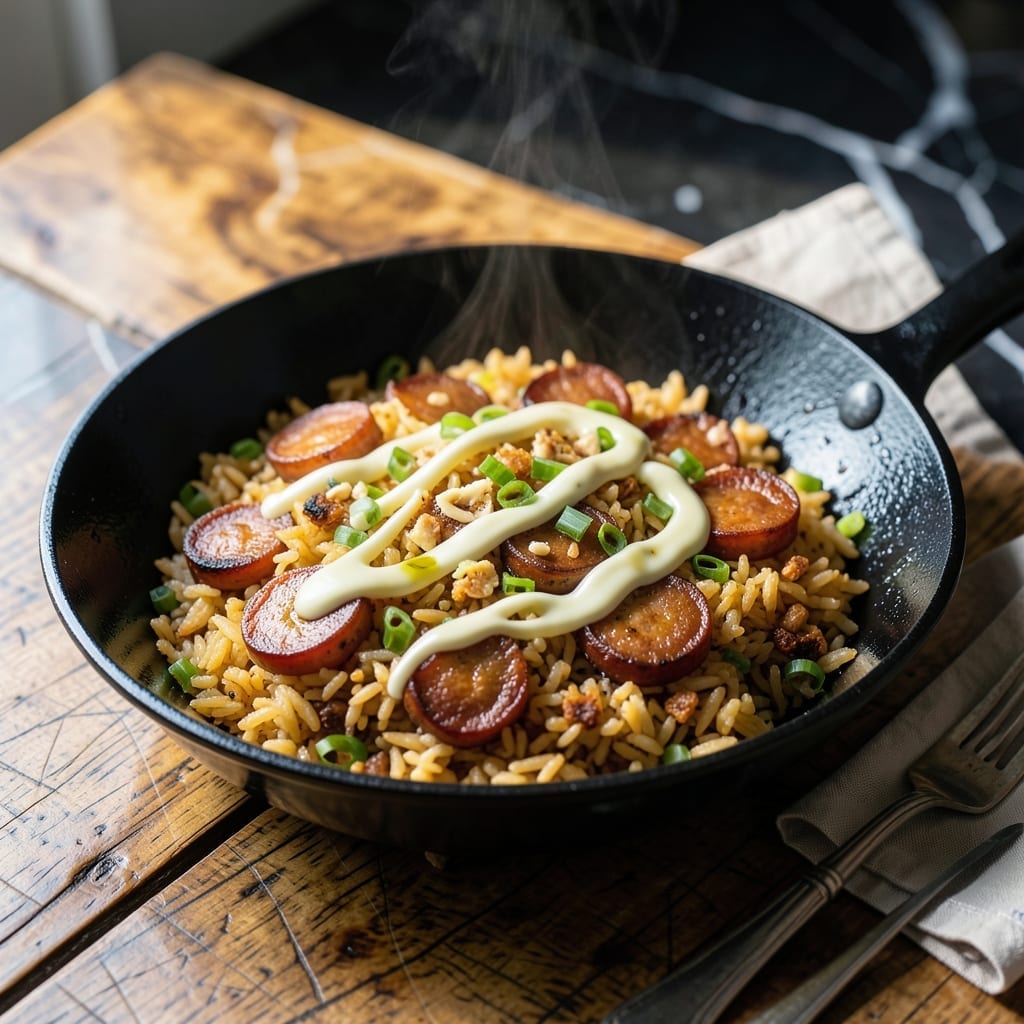
This island-style fried rice brings sweet lup cheong sausage and wok char flavor to your home kitchen. I developed this recipe to capture Hawaii’s unique fusion of Chinese technique and local ingredients.
The key is high heat and proper prep—cook the rice a day ahead and cut the sausage into small pieces for even distribution. Each grain absorbs the smoky-sweet flavor while maintaining that signature wok hei aroma.
What you get is a dish with caramelized edges, tender sausage, and a subtle sweetness that balances perfectly with the savory rice. It’s a taste of the islands without leaving your stove.
Ready in 20 minutes, this fried rice works for weeknights or weekend brunch. Here’s how to make it right.
Ingredients for Lup Cheong Fried Rice Recipe Hawaii
Sweet sausage, day-old rice, and bold Asian flavors make this island classic sing.
| Ingredient | Amount | Notes |
|---|---|---|
| Cooked White Rice 🍚 | 4 cups | Day-old, chilled (essential) |
| Lup Cheong Sausage 🌭 | ¾ lb | Chinese sweet sausage, diced |
| Large Eggs 🥚 | 2 whole | Lightly beaten for scrambling |
| Green Onions 🧅 | 4 whole | Thinly sliced, whites and greens separated |
| Garlic Cloves 🧄 | 3 cloves | Minced for maximum flavor |
| Fresh Ginger 🌿 | 1 tbsp | Peeled and grated (or minced) |
| Soy Sauce 🫒 | 2 tbsp | Low-sodium preferred for balance |
| Oyster Sauce 🫒 | 1 tbsp | Or vegetarian oyster sauce |
| Sesame Oil 🫒 | 1 tsp | Toasted, for finishing |
| Neutral Cooking Oil 🫒 | 3 tbsp | High smoke point (peanut or vegetable) |
| Frozen Peas 🌱 | ½ cup | Thawed, for color and texture |
| Carrot 🥕 | 1 whole | Small dice for even cooking |
| Fish Sauce 🐟 | 1 tsp | Optional for umami depth |
| White Pepper 🌶️ | ¼ tsp | Freshly ground for aroma |
| Salt 🧂 | ½ tsp | Adjust to taste at end |
The lup cheong is non-negotiable here. Look for it in the frozen section at Asian markets—brands like Kam Yen Jan or Sun Hing are solid. If you’re in Hawaii, Marukai or Foodland will have it fresh. The rice needs to be dry and cold (day-old works best), so plan ahead. Fresh rice turns to mush in the wok. For the soy sauce, Pearl River Bridge or Kikkoman are my go-tos.
No lup cheong? Italian sweet sausage in a pinch, but the flavor won’t be quite the same. Skip the fish sauce for vegetarian, or use mushroom soy sauce for depth. Oyster sauce can be swapped with hoisin at half the amount. The ginger and garlic are fresh-or-nothing here (dried won’t cut it). If you’re missing sesame oil, toasted peanut oil adds a nice nutty note instead.
Leftovers keep 3-4 days in the fridge, but honestly, it’s best fresh. Reheat in a wok or skillet to revive that wok hei. Freezes okay for 1 month, but the texture softens. Always cook the rice a day ahead—this is the secret to that perfect, separate grain texture (trust me on this one).
Why You’ll Love This Recipe
- One Pan Meal: I love that this comes together in a single wok—just toss in the rice, lup cheong, eggs, and garlic, and dinner’s done.
- Umami Bomb: The sweet-savory lup cheong sausage pairs with the garlic and green onions for a flavor that’s ridiculously good.
- Weeknight Rescue: Honestly, it’s my go-to for busy evenings when I need something fast, filling, and family-approved.
- Budget Stretch: Leftovers taste even better the next day, and a little lup cheong goes a long way to feed a crowd.
Step-by-Step Instructions for Lup Cheong Fried Rice
This island-style method delivers that signature wok hei flavor with minimal effort.
Step 1: Prep and Sear the Lup Cheong Sausage
Heat 1 tablespoon neutral cooking oil in a wok or large skillet over medium-high heat until shimmering. Add the 0.75 lb Lup Cheong sausage and cook for 3-4 minutes, stirring occasionally, until the sausage releases its fat and develops a light golden brown crust.
The sausage will render out its sweet, fatty juices—this is the flavor base of your dish. Remove the sausage with a slotted spoon and set aside, but leave all that glorious rendered fat in the pan. This fat is pure flavor and will coat every grain of rice beautifully.
Step 2: Scramble Eggs and Aromatics
In the same pan, add another 1 tablespoon neutral cooking oil if needed. Pour in the 2 whole large eggs and scramble quickly with a spatula until just set but still slightly soft. Don’t overcook—they’ll finish when combined with the rice.
Push the eggs to one side and add the remaining 1 tablespoon neutral cooking oil, then toss in the 3 cloves garlic cloves, 1 tbsp fresh ginger, and whites of the 4 whole green onions. Stir-fry for 30 seconds until fragrant but not browned—this ensures the aromatics release their oils without burning.
Step 3: Combine Rice and Vegetables
Add the 4 cups cooked white rice, breaking up any clumps with your spatula. The rice should be chilled—this prevents it from turning mushy when stir-fried. Stir-fry for 2 minutes until every grain is coated with oil and starting to toast slightly.
Incorporate the 0.5 cup frozen peas, diced 1 whole carrot, and reserved lup cheong. Drizzle the 2 tbsp soy sauce, 1 tbsp oyster sauce, and 1 tsp fish sauce evenly over the rice. Stir-fry for another 2-3 minutes until everything is heated through and the rice develops a lightly crispy texture.
Step 4: Finish and Serve
Remove from heat and stir in the 0.25 tsp white pepper and 0.5 tsp salt. Taste and adjust seasoning if needed. Finally, drizzle with 1 tsp sesame oil and scatter the green onion tops over the top.
The sesame oil adds that final aromatic touch. Serve immediately while hot—the rice should have distinct grains, each coated with sauce and studded with sweet sausage and vibrant vegetables. The wok hei, or breath of the wok, should be evident in that satisfying smoky aroma.
Pro Tips For Making Lup Cheong Fried Rice Recipe Hawaii
- Use Day-Old Rice: Fresh rice turns mushy in the wok—spread leftover cooked rice on a tray and refrigerate overnight so it dries out and fries up fluffy. I learned this the hard way after my first three batches ended up gummy.
- Slice Sausage Thin: Cut the lup cheong into ¼-inch coins so they crisp up quickly and release their fatty, sweet flavor into every bite. Sounds fussy, but it actually changes the outcome.
- Hot Wok, Cold Oil: Heat the wok until it smokes, then add the oil and swirl to coat—this prevents the garlic and eggs from sticking and guarantees that golden sear on the rice.
- Push Eggs to Side: Scramble the eggs in one corner of the wok first, then push them aside to finish cooking while you start the rice. Steer clear of mixing too soon or they’ll disappear into the grains.
Wine and Beer Pairings for lup cheong fried rice recipe hawaii
Crisp White Wines
A dry Riesling from Washington State cuts through the sweetness of the lup cheong beautifully. Its bright acidity and citrus notes balance the rich, savory flavors of the dish. I love how the slight mineral finish cleanses your palate between bites. 🍷
Light Beers
A Hawaiian-style light lager like Maui Brewing Co.’s Bikini Blonde complements the island vibe perfectly. The crisp, slightly sweet profile enhances the sausage’s natural sweetness without overpowering the dish. Serve it ice cold for the full experience.
Sparkling Options
For a celebratory touch, try a brut sparkling wine or dry prosecco. The effervescence lifts the dish’s rich flavors, while the subtle yeast notes pair well with the wok-charred rice. I find it adds a festive touch to any meal.
Asian-Inspired Brews
A Japanese lager like Sapporo or Asahi offers a clean, crisp contrast to the fried rice. The light body and mild hop bitterness complement the umami depth from the soy and oyster sauces. 🍺
Rosés
A dry rosé from Provence works surprisingly well, especially in warmer weather. Its red fruit notes and crisp finish balance the sweet and savory elements of the dish. I prefer chilled rosé for that refreshing contrast.
Non-Alcoholic Pairing
For a booze-free option, serve lychee iced tea with a squeeze of lime. The floral sweetness mirrors the lup cheong’s flavor while the citrus cuts through the richness. It’s my go-to for weeknight dinners. ✨
Nutrition Facts
Frequently Asked Questions
Can I use fresh rice instead of day-old?
Fresh rice will turn mushy when stir-fried. Always use day-old, chilled rice for that perfect, separate grain texture. The dryness helps it absorb flavors without clumping.
Where can I find lup cheong in Hawaii?
Check Marukai or Foodland for fresh lup cheong. On the mainland, look in the frozen section of Asian markets for brands like Kam Yen Jan or Sun Hing.
What’s the best substitute for lup cheong?
Italian sweet sausage works in a pinch, but the flavor won’t be identical. For a vegetarian option, try tofu marinated in soy sauce and sugar.
How do I get that smoky wok hei flavor at home?
Use high heat and a well-seasoned wok. Cook in small batches to avoid steaming the rice. The key is quick stir-frying to develop those caramelized edges.

- Mujadara Rice and Lentils Recipe: Earthy Spiced Lentils With Caramelized Onions - November 1, 2026
- Naija Fried Rice Recipe: Street-Style Spice With Veggie Crunch - November 1, 2026
- Mushy Rice Recipe: Fluffy Grains Transformed in Minutes - November 1, 2026