
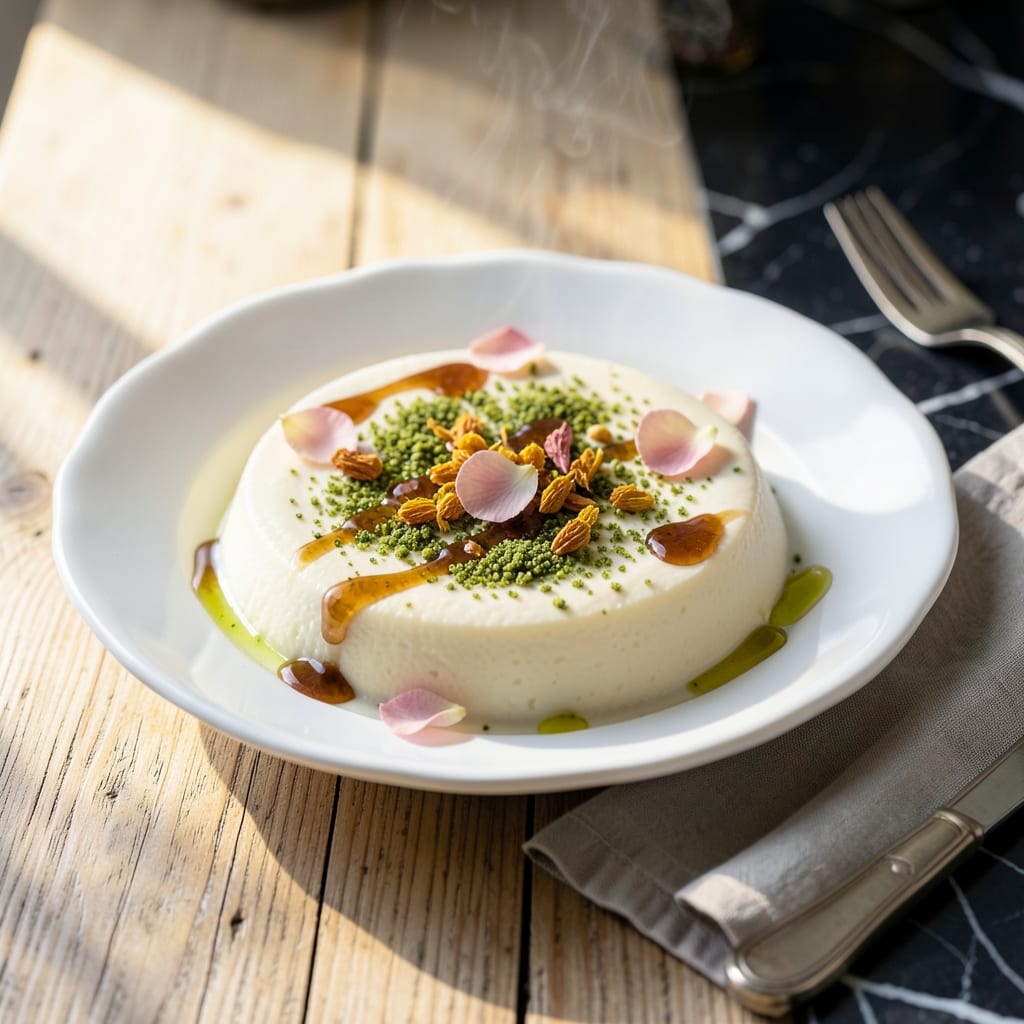
This traditional Middle Eastern milk pudding relies on rice flour for its signature silky texture and delicate flavor. I’ve refined this method to ensure a smooth, creamy result every time without the risk of lumps.
The rice flour acts as a gentle thickener, creating a custard-like consistency that’s rich yet light. A touch of rose water or orange blossom water adds authentic floral notes that define this classic dessert.
What you’ll achieve is a velvety pudding with a pure white color and subtle sweetness, perfect for chilling and serving with pistachios or pomegranate seeds. The process is straightforward but requires careful attention to temperature.
This dish brings a taste of the Levant to your table with minimal effort and maximum reward. Here’s how to make it properly.
Ingredients for Mahalabia Recipe with Rice Flour
Whole milk, rice flour, and floral waters create this creamy Middle Eastern classic with minimal effort.
| Ingredient | Amount | Notes |
|---|---|---|
| Whole Milk 🥛 | 4 cups | Full-fat for creaminess |
| Rice Flour 🌾 | ½ cup | Fine, white variety |
| Granulated Sugar 🍚 | ¾ cup | Adjust to taste preference |
| Cornstarch 🌽 | 2 tbsp | For extra thickening power |
| Rose Water 🌹 | 1 tsp | Authentic floral flavor |
| Orange Blossom Water 🍊 | 1 tsp | Substitute with more rose water |
| Vanilla Extract 🌿 | 1 tsp | Pure for best flavor |
| Ground Cardamom 🌶️ | ¼ tsp | Optional for depth |
| Pistachios 🌰 | ¼ cup | Chopped, for garnish |
| Pomegranate Seeds 🍇 | ¼ cup | Fresh for topping |
| Ground Cinnamon 🌿 | ¼ tsp | For dusting on top |
The rice flour is non-negotiable here. Bob’s Red Mill or any fine white rice flour works—just avoid coarse or brown rice flour, which won’t give that signature silkiness. Whole milk is ideal (the higher fat, the creamier), but 2% in a pinch. I get my rose and orange blossom waters from Middle Eastern markets—look for Cortas or Al Wadi brands for authentic quality.
No rose water? Skip it entirely—don’t substitute with anything artificial. Cornstarch helps prevent lumps, but you can use all rice flour at 3/4 cup total if needed. For a vegan version, full-fat coconut milk works surprisingly well. The sugar can be reduced to 1/2 cup if you prefer less sweetness, but don’t go below that or the texture suffers.
This pudding needs at least 4 hours to chill and set properly. Leftovers keep 3-4 days refrigerated in an airtight container. The pistachios and pomegranate seeds are best added fresh when serving—don’t mix them in ahead or they’ll soften.
Why You’ll Love This Recipe
- Stir and Done: I love that it comes together with just a whisk and a pot—no fancy tools, and the rice flour thickens it perfectly without clumping.
- Rosewater Bliss: The floral aroma from the rose water paired with the creamy milk is like a warm hug in dessert form.
- Crowd Pleaser: Honestly, it’s my go-to for potlucks because kids and adults both devour it, and it looks elegant with a sprinkle of pistachios.
- Budget Friendly: A handful of pantry staples and whole milk is all it takes, and it’s way cheaper than store-bought puddings.
Step-by-Step Instructions for Silky Middle Eastern Milk Pudding
This traditional method ensures a perfectly smooth texture with authentic floral notes every time.
Step 1: Combine Milk, Sugar, and Thickeners
In a medium saucepan, whisk together the 4 cups Whole Milk and 0.75 cup Granulated Sugar over medium heat until the sugar dissolves completely. I stir constantly during this phase to prevent scorching at the bottom.
In a separate bowl, combine the 0.5 cup Rice Flour and 2 tbsp Cornstarch. This dual-thickener approach guarantees the silkiest texture. Slowly whisk the dry mixture into the warm milk in a thin, steady stream to prevent lumps from forming.
Step 2: Cook Until Thickened
Continue cooking the mixture over medium-low heat, stirring constantly with a wooden spoon or silicone spatula. The key here is patience—you’ll notice the mixture begin to thicken after about 8-10 minutes.
You’re aiming for a consistency that coats the back of a spoon with a thick, custard-like texture. If you draw a line through the mixture on the spoon, it should hold its shape briefly before slowly running together. This visual test ensures perfect thickness.
Step 3: Add Floral and Vanilla Flavors
Once thickened, remove the saucepan from heat. Stir in the 1 tsp Rose Water, 1 tsp Orange Blossom Water, and 1 tsp Vanilla Extract. I always add these off-heat to preserve their delicate aromas.
Also add the 0.25 tsp Ground Cardamom at this stage. The heat from the pudding will activate its warm, citrusy notes. Stir thoroughly for 1 minute to distribute all flavors evenly throughout the mixture.
Step 4: Chill and Set
Pour the pudding into individual serving bowls or one large dish. Cover the surface directly with plastic wrap to prevent a skin from forming as it cools. Refrigerate for at least 4 hours, or until completely set.
This chilling time is crucial—it allows the rice flour and cornstarch to fully hydrate and create that signature silky texture. The pudding should be firm enough to hold its shape when scooped, but still have a melt-in-your-mouth quality.
Step 5: Garnish and Serve
Just before serving, sprinkle each portion with the 0.25 cup Pistachios and 0.25 cup Pomegranate Seeds. The pistachios add a satisfying crunch while the pomegranate seeds provide a burst of freshness.
Finish with a light dusting of 0.25 tsp Ground Cinnamon for warmth and visual appeal. Serve well-chilled for the most refreshing experience. The contrast between the cool, creamy pudding and the vibrant toppings makes every bite exceptional.
Pro Tips For Making Mahalabia Recipe With Rice Flour
- Whisk Rice Flour First: Mix the rice flour with a little cold milk before adding it to the hot milk to prevent lumps—I learned this the hard way after ending up with a clumpy mess.
- Low and Slow Heat: Keep the heat at medium-low once the mixture thickens; high heat will make it curdle or stick to the bottom of the pot.
- Bloom the Rose Water: Stir in the rose water at the very end, after removing from heat, so its delicate flavor doesn’t evaporate during cooking.
- Chill Completely: Give it at least 4 hours in the fridge—rushing this step leaves you with a runny dessert instead of the silky texture you want.
Common Mistakes When Making Great mahalabia recipe with rice flour
Lumpy Pudding
Whisk the rice flour and cornstarch into cold milk first, not hot, to prevent clumping. I learned this the hard way when my first batch looked like cottage cheese. Add the dry mixture to warm milk only after it’s fully dissolved in cold liquid.
Overcooking
Cook over medium-low heat and stir constantly. If you notice the mixture sticking to the bottom or turning yellow, you’ve gone too far. The perfect consistency should coat a spoon but still drip slowly. I use a silicone spatula to reach all edges of the pan.
Skin Formation
Press plastic wrap directly onto the surface before chilling. This simple step prevents that unappetizing skin from forming. I’ve found that parchment paper works too, but plastic wrap creates the best seal. 💡
Weak Flavors
Add rose water and orange blossom water only after removing from heat. The delicate floral notes evaporate quickly under direct heat. I always taste first—you can add more, but you can’t take it out once it’s in.
Improper Chilling
Don’t rush the chilling process. The pudding needs at least 4 hours in the fridge to set properly. I once served it after 2 hours and it was still soupy. The rice flour needs time to fully hydrate.
Grainy Texture
Use fine white rice flour, not coarse or brown varieties. I recommend Bob’s Red Mill for consistent results. Straining the mixture through a fine-mesh sieve after cooking catches any remaining lumps.
Nutrition Facts
Frequently Asked Questions
Can I use a different type of flour?
Fine white rice flour is essential for the authentic silky texture. Coarse or brown rice flour will create a grainy pudding. For a gluten-free option, stick with rice flour as cornstarch alone won’t provide the same consistency.
Why does my pudding turn out lumpy?
Lumps usually form when the rice flour isn’t fully dissolved before heating. Always whisk it into cold milk first, then slowly add to warm milk while stirring constantly. Straining the mixture afterward helps catch any remaining bits.
How long will it keep in the fridge?
Properly stored in an airtight container, it stays fresh for 3-4 days. Add toppings like pistachios or pomegranate seeds fresh when serving to maintain texture and flavor.
Can I make it vegan?
Yes! Replace whole milk with full-fat coconut milk for a creamy, dairy-free version. The rice flour and cornstarch will still thicken it perfectly, and floral waters work the same way.

- Mujadara Rice and Lentils Recipe: Earthy Spiced Lentils With Caramelized Onions - November 1, 2026
- Naija Fried Rice Recipe: Street-Style Spice With Veggie Crunch - November 1, 2026
- Mushy Rice Recipe: Fluffy Grains Transformed in Minutes - November 1, 2026