
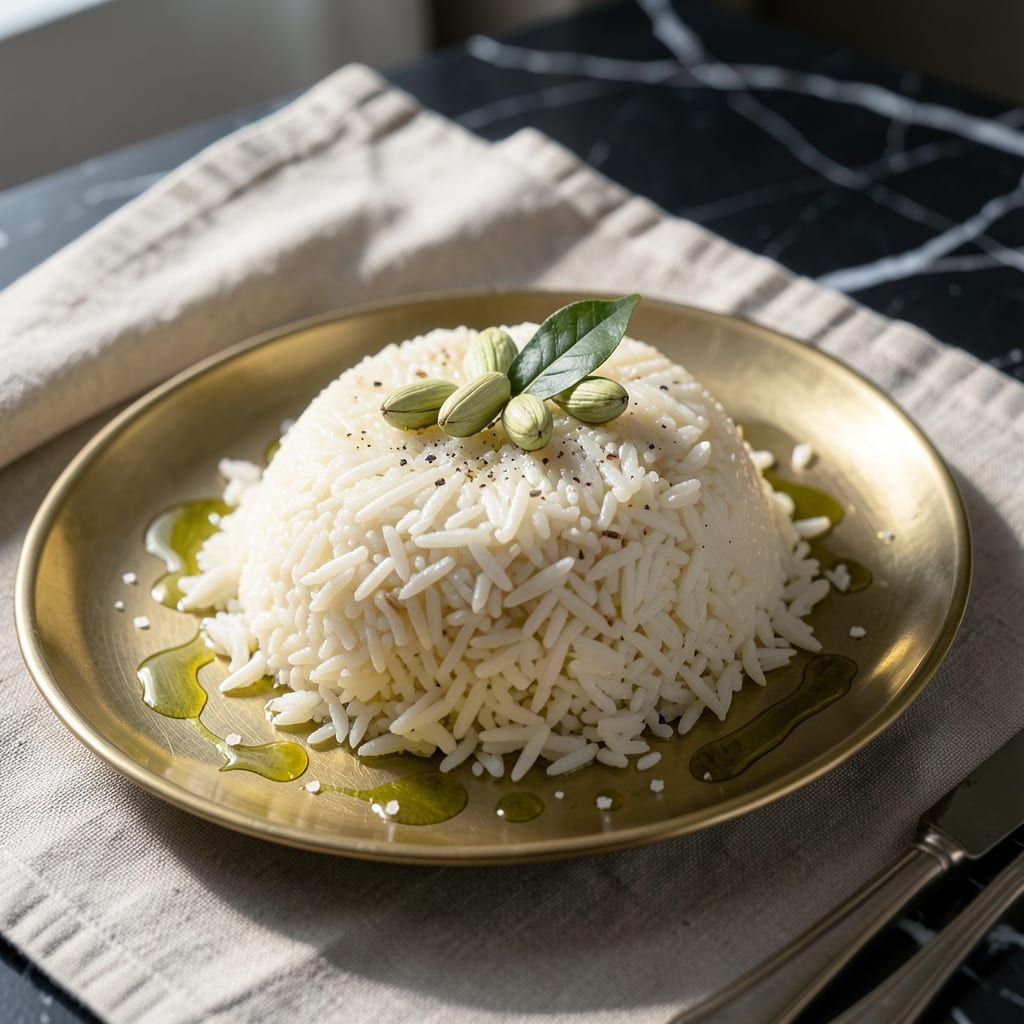
Achieving perfectly fluffy basmati rice every time comes down to proper technique and patience. This method ensures each grain stays separate and fragrant, with that signature long-grain elegance.
The secret is soaking the rice before cooking, which allows the grains to absorb water evenly and prevents them from breaking. A precise water-to-rice ratio guarantees consistency, whether you’re using a pot or rice cooker.
You’ll end up with light, aromatic rice that pairs beautifully with curries, stews, or grilled meats. The texture is always ideal—never sticky or mushy.
Once you master this approach, you’ll never settle for less than perfect results again.
Ingredients for Mahatma Basmati Rice
Simple pantry staples create fragrant, long-grain basmati rice with perfect texture every time.
| Ingredient | Amount | Notes |
|---|---|---|
| Mahatma Basmati Rice 🌾 | 2 cups | Rinsed until water runs clear |
| Water 💧 | 3 ½ cups | Filtered or spring for best flavor |
| Sea Salt 🧂 | 1 tsp | Fine grain preferred for even dissolution |
| Extra-Virgin Olive Oil 🫒 | 1 tbsp | Optional for added aroma |
| Bay Leaf 🍃 | 1 whole | Optional for subtle depth |
| Cardamom Pods 🌿 | 2 whole | Lightly crushed for fragrance |
| Cinnamon Stick 🌰 | 1 piece | Optional for warm undertones |
| Fresh Cilantro 🌿 | ¼ cup | Chopped for garnish |
| Lemon Juice 🍋 | 1 tsp | Freshly squeezed for brightness |
| Garlic Cloves 🧄 | 2 cloves | Smashed for infusion |
The rice is everything here. Mahatma basmati is my go-to—consistent quality, widely available at Walmart, Target, or any major grocery. Look for grains that are long and uniform (avoid broken pieces at the bottom of the bag). Soaking is non-negotiable—use filtered water if your tap has a strong taste. A pinch of salt in the soak enhances flavor without overpowering.
No basmati? Jasmine rice works in a pinch, but texture will differ. Skip the bay leaf if you don’t have it (the cardamom and cinnamon add enough depth). For a richer finish, toasted cumin seeds can replace the cardamom. The cilantro and lemon are optional but highly recommended—they brighten up the final dish beautifully.
Store uncooked rice in an airtight container in a cool, dark place for up to 12 months. Cooked rice keeps 4-5 days in the fridge or 3 months frozen. Always let it cool before storing to prevent sogginess.
Why You’ll Love This Recipe
- One Pot Wonder: So simple—just rice, water, a bay leaf, and a pinch of salt. I set it and forget it until the aroma fills the kitchen.
- Buttery Aroma: The olive oil and bay leaf infuse the basmati with this warm, nutty scent that makes my whole house smell like a cozy restaurant.
- Pairs with Anything: I serve it with grilled chicken one night, then toss the leftovers into a veggie bowl the next. Never gets old.
- Budget Stretch: A two-pound bag of Mahatma Basmati lasts me weeks. Honestly, it’s my most reliable pantry staple.
Step-by-Step Instructions for Fragrant Basmati Rice
Here’s my tried-and-true approach for perfectly fluffy, aromatic rice that never disappoints.
Step 1: Rinse and Soak the Basmati Rice
Place the 2 cups Mahatma Basmati Rice in a fine-mesh strainer and rinse under cold water until the water runs completely clear. This crucial step removes excess starch that would otherwise make the grains gummy. I like to swirl the rice with my fingers to ensure every grain gets rinsed.
After rinsing, transfer the rice to a bowl and cover with cool water by 1 inch. Let it soak for 20-30 minutes. This soaking period allows the grains to absorb moisture evenly, which prevents them from cracking during cooking and ensures they’ll expand to their full, elegant length.
Step 2: Bloom the Aromatics and Prepare the Cooking Liquid
In a medium saucepan, heat the 1 tbsp Extra-Virgin Olive Oil over medium heat until it shimmers. Add the 2 cloves Garlic Cloves (smashed), 1 whole Bay Leaf, 2 whole Cardamom Pods (lightly crushed), and 1 piece Cinnamon Stick. Toast these for 30-45 seconds until fragrant—just until the spices release their oils but before they brown.
Pour in the 3.5 cups Water and add the 1 tsp Sea Salt. Bring this to a gentle boil, then immediately reduce the heat to maintain a simmer. This infused liquid will transfer all those warm, complex flavors directly into your rice as it cooks.
Step 3: Cook the Rice with Careful Attention
Drain the soaked 2 cups Mahatma Basmati Rice completely and add it to the simmering, spiced water. Stir once gently to distribute the grains, then don’t touch it again. Bring the mixture back to a full boil, then immediately reduce the heat to low, cover the pot with a tight-fitting lid, and cook for 12-15 minutes.
Resist the urge to peek during cooking—the steam is what cooks the rice perfectly. You’ll know it’s done when all the liquid has been absorbed and small steam holes appear on the surface. The grains should be tender but still distinct, with no hard center when you taste one.
Step 4: Rest and Finish with Brightness
Remove the pot from heat and let it sit, covered, for an additional 10 minutes. This resting period allows the rice to steam in its own moisture, which makes the grains even more tender and ensures they won’t stick together. Don’t skip this—it’s the secret to that perfect, separate-grain texture.
After resting, fluff the rice gently with a fork and discard the whole spices. Stir in the 1 tsp Lemon Juice for a bright finish that cuts through the richness. Transfer to a serving dish and garnish with the 0.25 cup Fresh Cilantro, chopped. The cilantro adds a pop of freshness that complements the warm spices beautifully.
Pro Tips For Making Mahatma Basmati Rice
- Soak the Rice: Rinse the Mahatma basmati rice until the water runs clear, then soak it for 20-30 minutes—I learned this the hard way: skipping this step leaves grains starchy and clumped.
- Use a 1:1.5 Ratio: For perfectly fluffy grains, stick to 1 part rice to 1.5 parts water. Sounds weird, but it works: basmati absorbs less than other long-grain varieties.
- Skip the Stirring: Resist the urge to stir the rice while it cooks—it breaks the grains and turns your pot into a mushy mess.
- Rest Under Lid: After the water’s absorbed, let the rice sit covered for 10 minutes off the heat. My grandmother swore by this, and she was right: it steams the grains to ideal tenderness.
Essential Equipment for This Dish
Quality Cookware
A heavy-bottomed pot with a tight-fitting lid is essential for even heat distribution. I swear by my All-Clad 3-quart saucepan—it prevents hot spots that could burn your rice. The sturdy construction maintains consistent low heat during the 12-15 minute cooking phase. 🔥
Fine-Mesh Strainer
For rinsing, use a fine-mesh strainer like the OXO Good Grips model. It catches every grain while allowing water to flow through freely. This ensures complete starch removal, which is critical for achieving those separate, fluffy grains.
Precision Thermometer
While not mandatory, a digital instant-read thermometer helps monitor water temperature. I use the ThermoWorks ThermoPop to confirm my simmer stays between 195-205°F. This prevents boiling over while ensuring the rice cooks evenly.
Wooden Spoon & Fork
A wooden spoon is ideal for the initial stir, as it won’t scratch your pot. For fluffing, a long-tined fork separates grains without crushing them. I keep both within reach during the entire cooking process.
Rice Cooker Option
If using a rice cooker, the same 1:1.75 rice-to-water ratio applies. My Zojirushi 3-cup model has a basmati setting that nails the texture every time. Just follow the same soaking and resting steps for identical results.
Storage Containers
For leftovers, glass containers with snap-lid seals keep rice fresh for 4-5 days in the fridge. I prefer Pyrex because it’s microwave-safe and won’t absorb odors. Always cool completely before sealing to prevent condensation. ❄️
Nutrition Facts
Frequently Asked Questions
Do I need to soak basmati rice before cooking?
Yes, soaking for 20-30 minutes is crucial. It prevents cracking and ensures even expansion for perfectly long, separate grains. Skip this step and you risk uneven cooking or mushy texture.
What’s the ideal water-to-rice ratio?
Use 1.75 cups water per 1 cup rice. This ratio works for both stovetop and rice cooker methods. Too much water makes it soggy; too little leaves it undercooked.
Why did my rice turn out sticky?
Sticky rice usually means either insufficient rinsing or stirring during cooking. Always rinse until water runs clear and avoid stirring after adding rice to the pot.
Can I make this in a rice cooker?
Use the same 1:1.75 ratio and soak as directed. Most rice cookers have a basmati setting that produces identical results to stovetop methods.

- Mujadara Rice and Lentils Recipe: Earthy Spiced Lentils With Caramelized Onions - November 1, 2026
- Naija Fried Rice Recipe: Street-Style Spice With Veggie Crunch - November 1, 2026
- Mushy Rice Recipe: Fluffy Grains Transformed in Minutes - November 1, 2026