
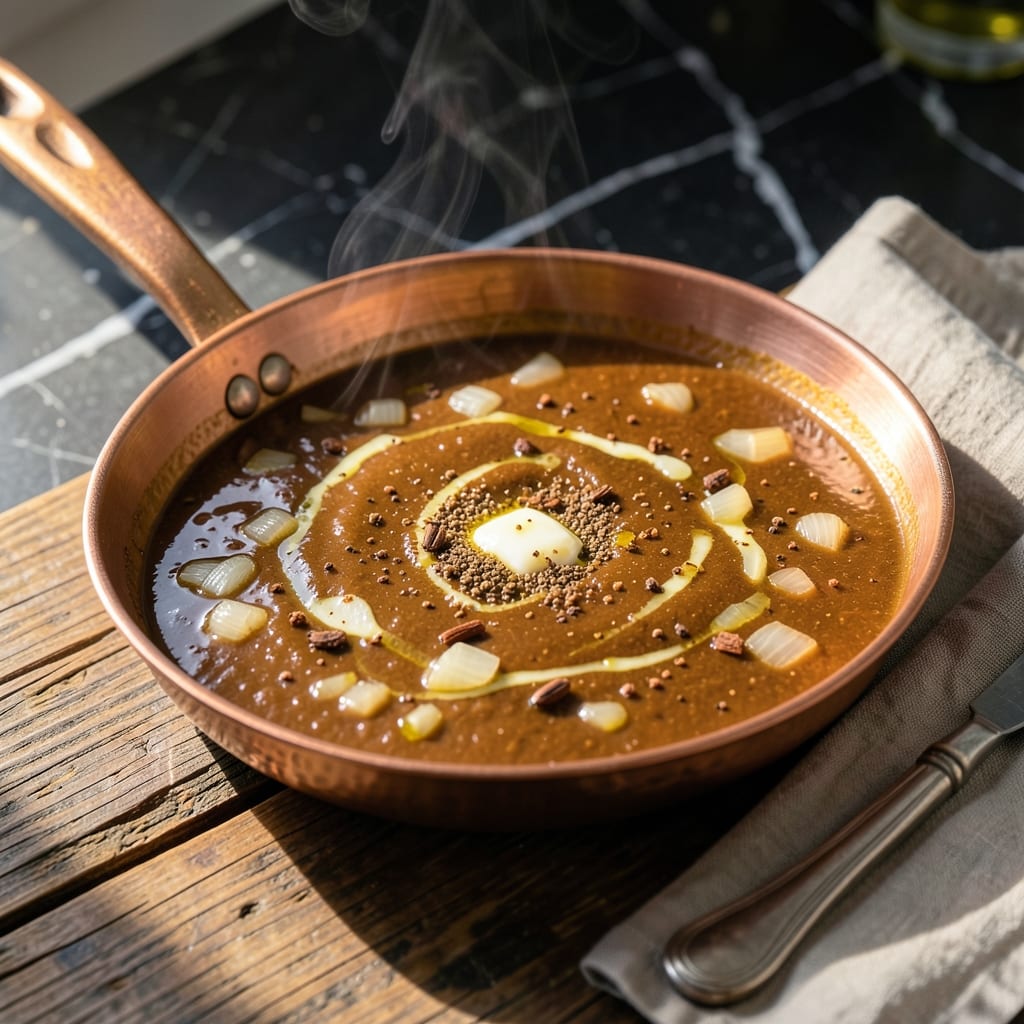
This aromatic sauce transforms plain basmati rice into a restaurant-quality side dish with minimal effort. The blend of fragrant spices and rich liquids creates a versatile accompaniment that elevates any meal.
With a balance of savory and subtle sweetness, this liquid gold clings perfectly to each grain. It stores well in the fridge for up to five days, making it ideal for meal prep.
Ingredients for Basmati Rice Sauce
Nine ingredients. Restaurant-quality flavor. Perfect for basmati rice every time.
| Ingredient | Amount | Notes |
|---|---|---|
| Unsalted Butter 🧈 | ½ cup | Melted for rich base |
| Yellow Onion 🧅 | 1 whole | Finely diced for flavor |
| Garlic Cloves 🧄 | 4 cloves | Minced for aromatic depth |
| Ground Cumin 🌿 | 1 tsp | Toasted for warmth |
| Ground Cardamom 🌿 | ½ tsp | Freshly ground preferred |
| Ground Cinnamon 🌿 | ¼ tsp | Adds subtle sweetness |
| Chicken Broth 🥣 | 1 ½ cups | Low-sodium for balance |
| Heavy Cream 🥛 | ½ cup | For creamy texture |
| Lemon Juice 🍋 | 1 tbsp | Freshly squeezed for brightness |
| Salt 🧂 | ½ tsp | Kosher or sea salt |
The butter sets the foundation for this sauce. Use high-quality unsalted butter—salted can make the dish too salty. Plugrá or Kerrygold are excellent brands. The onions should be yellow, not white or red, for the right sweetness. Cardamom is key here—freshly ground from pods if you can find them at Whole Foods or a Middle Eastern market. It makes a noticeable difference in the aromatic profile.
No heavy cream? Full-fat coconut milk works as a dairy-free alternative. For a lighter version, half-and-half can replace it at the same quantity. Chicken broth can be swapped for vegetable broth without issue. Short on time? Pre-minced garlic (the kind in jars) works fine, though fresh is always better. The cinnamon is subtle but important—Ceylon if you have it, though regular works too.
This sauce keeps beautifully. Store in an airtight container for up to 5 days in the fridge. It freezes for up to 3 months—just thaw and reheat gently. The flavors deepen after a day, so making it ahead is ideal. Stir well before using, as the spices may settle.
Why You’ll Love This Recipe
- One-Pot Wonder: I melt the butter, sauté the onion and garlic, then stir in the cumin and cardamom—all in the same pan.
- Warm Spice Hug: That first whiff of cardamom and cumin blooming in butter with sweet onion? Honestly, it smells like home.
- Pairs With Anything: I’ve drizzled this over rice, roasted veggies, even grilled chicken, and it works every time.
- Stretches Easily: A double batch keeps in the fridge for days, and I love having that rich, aromatic sauce ready to transform leftovers.
Step-by-Step Instructions for Basmati Rice Sauce
This refined technique ensures a perfectly balanced, aromatic sauce to elevate your rice.
Step 1: Build the Aromatic Base
Melt the 0.5 cup unsalted butter in a heavy saucepan over medium heat. Add the finely diced yellow onion and saute for 8-10 minutes until translucent and soft, stirring occasionally to prevent browning.
This slow cooking develops the onion’s natural sweetness without color. Add the minced garlic cloves and cook for 1 minute until fragrant. The garlic should sizzle but not brown—burnt garlic will impart bitterness to this delicate sauce.
Step 2: Bloom the Spices
Stir in the ground cumin, ground cardamom, and ground cinnamon. Cook for 30-45 seconds until deeply aromatic, stirring constantly. This brief toasting releases the spices’ essential oils, creating a more complex flavor profile.
Watch carefully—the spices can burn quickly in the hot butter. You’ll notice the mixture becoming slightly pasty as the spices absorb the fat. This is normal and indicates proper blooming. The aroma should be warm and inviting at this stage.
Step 3: Develop the Liquid Foundation
Pour in the 1.5 cups chicken broth and 0.5 tsp salt. Increase heat to medium-high and bring to a gentle boil, then reduce to medium-low to maintain a steady simmer. Cook for 10-12 minutes until the liquid reduces by about one-third.
The sauce should begin to thicken slightly and develop a glossy sheen. The reduced broth will concentrate its chicken flavor while allowing the aromatic base to infuse throughout. Stir occasionally to prevent any sticking at the bottom of the pan.
Step 4: Finish with Cream and Acid
Reduce heat to low and stir in the 0.5 cup heavy cream. Simmer gently for 5-7 minutes until the sauce coats the back of a spoon. Avoid boiling vigorously, as this can cause the cream to separate.
Remove from heat and stir in the 1 tbsp lemon juice. This final addition brightens all the rich, warm flavors with a subtle acidity. The sauce should now have a velvety texture and a balance of warmth, sweetness, and tang that will complement the basmati rice perfectly.
Pro Tips For Making Basmati Rice Sauce
- Brown the Onions: Cook the yellow onions low and slow—about 15 minutes—until they’re deeply golden. I learned this the hard way: rushed onions taste raw and ruin the sauce’s depth.
- Bloom the Spices: After the onions, toast the cumin and cardamom in the butter for 30 seconds before adding liquids. Sounds weird, but it actually changes the outcome by waking up their flavors.
- Skip the Salted Butter: Use unsalted butter so you can control the seasoning. My grandmother swore by this, and she was right: salted butter makes the sauce unpredictably salty.
- Add Garlic Late: Stir in the minced garlic only after the onions are caramelized and spices are toasted. Adding it too early burns the garlic, leaving a bitter taste that’s hard to fix.
Storing and Reheating Leftovers
Refrigerator Storage
Let the sauce cool completely at room temperature for no more than 2 hours. Transfer to an airtight container—I use glass jars with screw-top lids. Store in the fridge at 40°F or below for up to 5 days. ❄️
Freezer Storage
For longer storage, pour cooled sauce into freezer-safe containers or heavy-duty zip-top bags. Leave ½ inch headspace for expansion. It keeps beautifully for up to 3 months without losing flavor. Label with the date to track freshness.
Stovetop Reheating
Gently reheat in a saucepan over low-medium heat, stirring frequently to prevent separation. Add 1-2 tbsp water or broth if it thickens too much. Bring to 165°F for safe serving temperature. 🔥
Microwave Reheating
Place individual portions in a microwave-safe dish and cover loosely with a damp paper towel. Heat on 50% power in 30-second intervals, stirring between each, until reaching 165°F. This prevents hot spots and maintains texture.
Revival Tip
If the sauce separates after storage, whisk vigorously over low heat until smooth. A splash of heavy cream can restore its velvety consistency. The flavors often deepen after a day, making leftovers taste even better.
Nutrition Facts
Frequently Asked Questions
Can I make this sauce dairy-free?
Swap the butter for olive oil and the heavy cream for full-fat coconut milk. The flavor profile will change slightly but remain rich and aromatic.
What if my sauce is too thin?
Simmer it uncovered for 5-7 minutes longer until it thickens. If you’re in a hurry, mix 1 tsp cornstarch with 1 tbsp cold water and stir it in while heating.
Can I use this sauce with other grains?
Yes! It pairs beautifully with jasmine rice, quinoa, or even couscous. The warm spices complement most neutral grains.
How do I fix bitter-tasting sauce?
Balanced flavors are key. Add 1 tsp honey or 1 tbsp yogurt to neutralize bitterness, then adjust salt if needed.

- Jollof Rice Sauce Recipe: West African Tomato and Spice Infusion - September 25, 2026
- Japanese Rice Soup Recipe: Umami-Rich Comfort in a Bowl - September 25, 2026
- Homemade Cream Of Rice Recipe: Silk-Smooth Breakfast in Minutes - September 25, 2026