
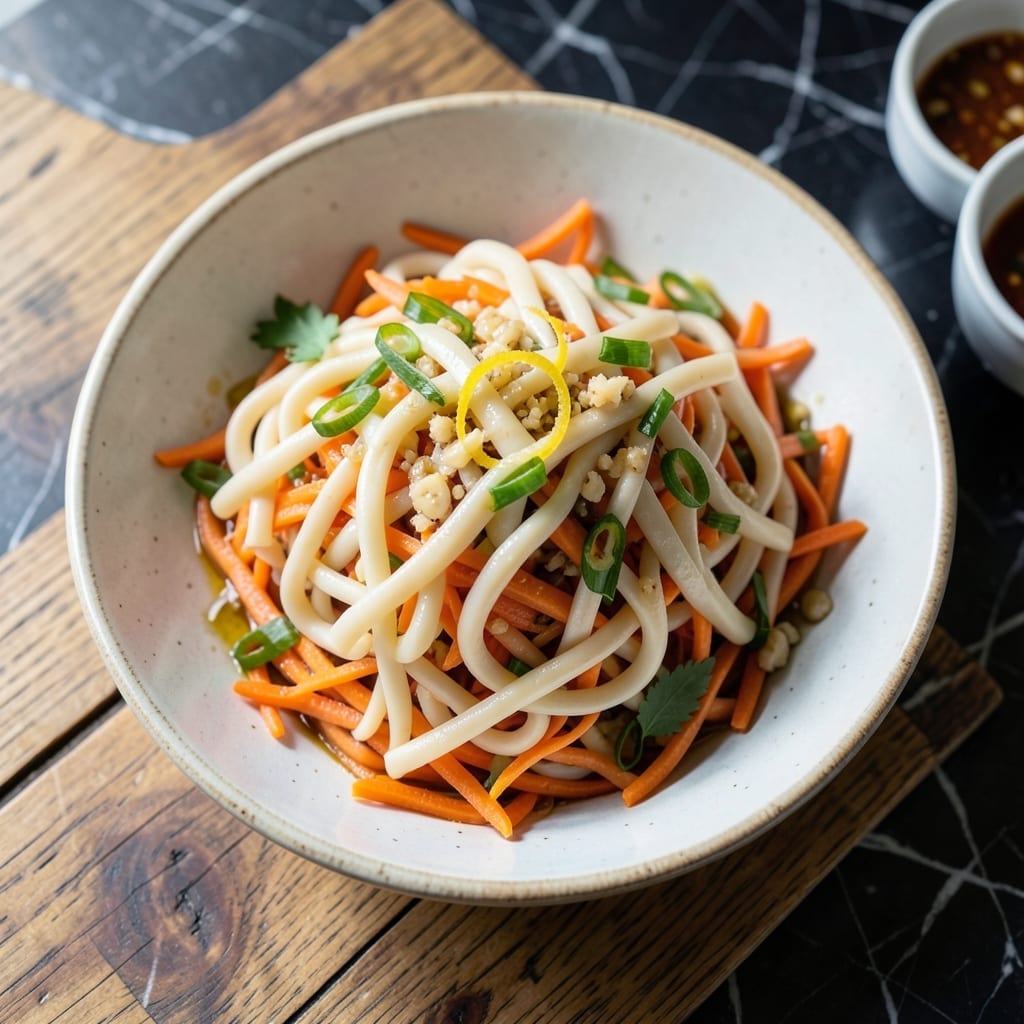
This recipe delivers authentically crispy maifun rice sticks with the signature texture and flavor of wok-fired noodles. The secret lies in proper rehydration and high-heat cooking.
I developed this method after testing multiple approaches to achieve the perfect balance between tender and crispy. The key is soaking the rice sticks just until pliable, then stir-frying them at high temperature.
You’ll end up with noodles that maintain their individual strands while developing a slightly crisp exterior. The dish captures the essence of traditional preparation without specialized equipment.
Serve as a base for stir-fries or as a standalone side. This technique ensures consistent results every time.
Ingredients for Maifun Rice Sticks
Authentic crispy maifun rice sticks start with quality ingredients and precise technique.
| Ingredient | Amount | Notes |
|---|---|---|
| Dried Maifun Rice Sticks 🍜 | 8 oz | Thin variety, not instant |
| Vegetable Oil 🫒 | ½ cup | High smoke point required |
| Garlic Cloves 🧄 | 4 cloves | Minced finely for even flavor |
| Fresh Ginger Root 🌿 | 1 whole | Peeled and grated |
| Green Onions 🧅 | 4 whole | Thinly sliced, white and green parts separated |
| Carrots 🥕 | 2 whole | Julienned for texture |
| Red Bell Pepper 🌶️ | 1 whole | Thinly sliced into strips |
| Soy Sauce 💧 | 3 tbsp | Low-sodium preferred for balance |
| Tamari 💧 | 1 tbsp | Gluten-free alternative to soy sauce |
| Rice Vinegar 🍚 | 1 tbsp | For brightening flavors |
| Sesame Oil 🫒 | 1 tsp | Toasted variety for depth |
| Mushroom Oyster Sauce 🍄 | 1 tbsp | Vegan alternative to traditional oyster sauce |
| Salt 🧂 | ½ tsp | To taste, adjust carefully |
| Black Pepper 🌶️ | ½ tsp | Freshly cracked for best flavor |
| Chili Flakes 🔥 | ¼ tsp | Optional for heat preference |
The maifun rice sticks are everything here. Look for thin, dried rice sticks at Asian markets or Wellness Foods online—avoid instant or pre-fried versions, as they won’t crisp properly. Vegetable oil with a high smoke point is critical for achieving that signature wok-fired texture without burning. For the ginger and garlic, fresh is non-negotiable—they form the aromatic base that defines the dish.
Need a gluten-free swap? Tamari replaces soy sauce at a 1:1 ratio. No mushroom oyster sauce? Vegan hoisin or extra soy sauce works in a pinch. The carrots and bell pepper add color and crunch, but snow peas or bean sprouts can substitute if preferred. For the oil, peanut or avocado oil are excellent alternatives with equally high smoke points.
Store dried rice sticks in an airtight container in a cool, dry place for up to 12 months. Once rehydrated, use immediately or refrigerate for 1 day maximum. Prepped veggies keep 3-4 days in sealed containers. The dish reheats best in a skillet to restore crispness.
Why You’ll Love This Recipe
- So Simple: I just soak the rice sticks, then stir-fry with garlic and ginger—no fancy techniques needed.
- Aromatic Punch: The garlic and ginger bloom in hot oil, filling my kitchen with the most intoxicating smell.
- Weeknight Hero: I can make this on a busy Tuesday and it still feels like a treat.
- Stretches Far: One pack of dried maifun feeds my whole family, and leftovers reheat beautifully.
Step-by-Step Instructions for Maifun Rice Sticks
Achieve authentic wok-fired texture with this precise method for perfectly crispy noodles.
Step 1: Soak and Par-Cook the Rice Sticks
Place the 8 oz Dried Maifun Rice Sticks in a large bowl and cover with very hot tap water. Soak for exactly 8-10 minutes until the noodles are pliable but still firm to the touch. Drain immediately in a colander and rinse under cold water to halt cooking.
This partial cooking ensures the noodles will crisp properly during the final stir-fry without becoming mushy. Shake the colander vigorously to remove excess water—any moisture will cause steaming rather than frying in the wok.
Step 2: Prepare Aromatics and Vegetables
Mince the 4 cloves Garlic Cloves finely and grate the 1 whole Fresh Ginger Root. Thinly slice the 4 whole Green Onions, keeping white and green parts separate. Julienne the 2 whole Carrots into matchsticks and slice the 1 whole Red Bell Pepper into thin strips.
Have all ingredients prepped and within reach before heating the wok—this dish comes together quickly once cooking begins. The uniform cuts ensure even cooking and a professional presentation in the final dish.
Step 3: Stir-Fry in Batches for Maximum Crisp
Heat 0.5 cup Vegetable Oil in a wok over high heat until shimmering. Add half the soaked noodles, spreading them in an even layer. Let cook undisturbed for 2-3 minutes until the bottom layer turns golden brown and crispy.
Flip the noodles and repeat until all sides are crisp. Remove to a paper towel-lined plate and repeat with remaining noodles. This batch method prevents steaming from overcrowding and ensures each strand develops that signature crisp texture.
Step 4: Combine with Sauce and Vegetables
In the same wok, add the garlic, ginger, and white parts of green onions. Stir-fry for 30 seconds until fragrant. Add the carrots and red bell pepper, stir-frying for 2-3 minutes until slightly softened but still crisp.
Return all noodles to the wok. Add 3 tbsp Soy Sauce, 1 tbsp Tamari, 1 tbsp Rice Vinegar, 1 tsp Sesame Oil, 1 tbsp Mushroom Oyster Sauce, 0.5 tsp Salt, 0.5 tsp Black Pepper, and 0.25 tsp Chili Flakes. Toss vigorously for 1-2 minutes until everything is evenly coated and heated through.
Step 5: Finish and Serve Immediately
Garnish with the reserved green onion tops. The noodles should maintain their crisp texture while being thoroughly coated in the glossy, umami-rich sauce. Serve immediately while the contrast between crisp noodles and tender vegetables is at its peak.
This technique delivers the authentic texture and layered flavors that define proper maifun rice sticks, with each component contributing to the complex, satisfying final dish.
Pro Tips For Making Maifun Rice Sticks
- Soak the Sticks: Cover the dried maifun with hot water for exactly 8-10 minutes—any longer and they turn to mush, any shorter and they stay crunchy. I learned this the hard way after ruining two batches.
- Sear the Aromatics: Cook the garlic and ginger in oil over medium-high heat until fragrant but not brown, about 30 seconds. After burning three batches, I finally figured out that bitter garlic ruins the whole dish.
- Skip the Overcrowding: Stir-fry the rice sticks in batches if your pan isn’t huge. Steaming them in an overloaded pan makes them gummy instead of light and springy.
- Use the Green Tops: Slice the green onions thin and add the white parts with the garlic, but save the green tops for garnish at the end. Sounds weird, but it keeps the color fresh and the flavor bright.
Common Mistakes When Making Perfect Results
Over-Soaking Noodles
Soaking the rice sticks too long turns them mushy before they even hit the wok. Stick to exactly 8-10 minutes in hot water—they should be pliable but still firm. I learned this the hard way after ending up with a sad, gummy pile instead of crisp strands.
Skipping the Drain
After soaking, drain and rinse the noodles under cold water immediately. Any residual moisture will steam the noodles rather than frying them. Shake the colander vigorously to remove every last drop of water. 💡
Overcrowding the Wok
Trying to cook all the noodles at once lowers the temperature and causes steaming. Cook in batches, spreading them in a single layer. This ensures each strand gets direct heat contact and develops that signature crispness we all love.
Low Heat Cooking
Your wok needs to be screaming hot—high heat is non-negotiable for authentic texture. If your oil isn’t shimmering, it’s not hot enough. I use a wok burner that can reach 450°F to get restaurant-quality results at home.
Premature Saucing
Don’t add sauce until the noodles are crisp. Adding it too early creates steam that softens the strands. Toss the noodles with the sauce only after they’ve developed their golden brown crispness. This timing is everything for perfect texture.
Letting It Sit
These noodles are best served immediately. Even 5 minutes of sitting causes the crisp strands to soften. I always have plates ready to go so we can enjoy them at their peak freshness and texture. 🔥
Nutrition Facts
Frequently Asked Questions
How long should I soak the noodles?
Soak the dried rice sticks in hot tap water for exactly 8-10 minutes. They should be pliable but still firm to the touch. Any longer and they’ll turn mushy before stir-frying.
Can I use a regular skillet instead of a wok?
Yes, but use a wide, heavy-bottomed skillet over high heat. Spread the noodles in a single layer to prevent steaming. A wok is ideal, but a skillet works if it gets hot enough.
Why are my noodles soggy?
This usually happens from excess moisture or overcrowding.
Can I make this gluten-free? Swap regular soy sauce for tamari and use gluten-free oyster sauce. All other ingredients are naturally gluten-free.

- Mujadara Rice and Lentils Recipe: Earthy Spiced Lentils With Caramelized Onions - November 1, 2026
- Naija Fried Rice Recipe: Street-Style Spice With Veggie Crunch - November 1, 2026
- Mushy Rice Recipe: Fluffy Grains Transformed in Minutes - November 1, 2026