
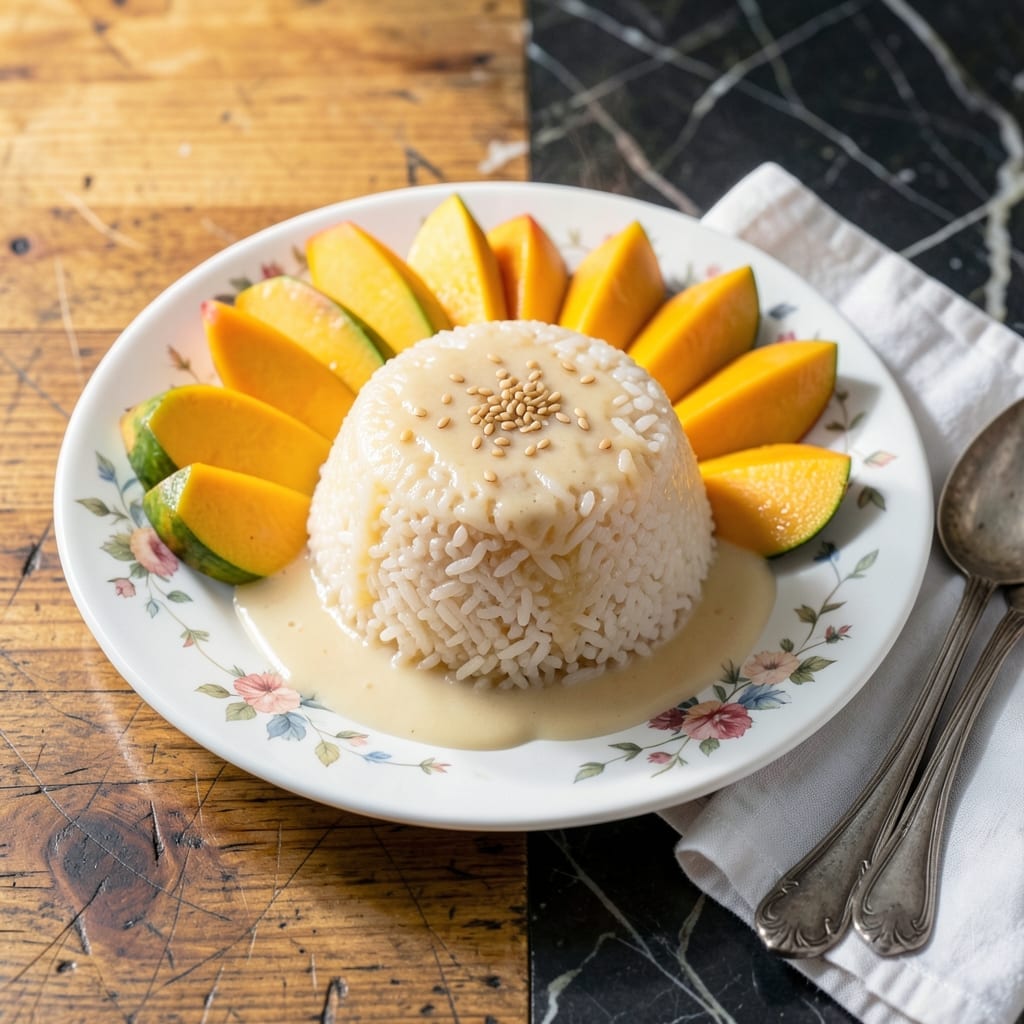
This traditional Thai dessert combines sweet mango with creamy coconut-infused sticky rice for a perfect balance of flavors and textures. The dish showcases the natural sweetness of ripe mangoes against the rich, slightly salty coconut sauce.
I’ve refined this recipe to ensure the rice achieves the ideal sticky consistency while maintaining its individual grains. The mangoes are best when perfectly ripe but still firm enough to hold their shape.
The secret lies in soaking the glutinous rice before steaming, which guarantees even cooking and that signature chewy texture. The coconut sauce is simply a matter of heating coconut milk with sugar and a pinch of salt.
Serve warm rice with cool mango slices and a generous drizzle of the coconut sauce. This authentic combination never fails to impress.
Ingredients for Mango Stick Rice
Sweet mangoes meet creamy coconut rice in this classic Thai dessert pairing.
| Ingredient | Amount | Notes |
|---|---|---|
| Glutinous Rice 🍚 | 1 ½ cups | Also called sweet rice, soaked overnight |
| Water 💧 | 2 ½ cups | For soaking rice |
| Coconut Milk 🥥 | 1 ½ cups | Full-fat, canned for richness |
| Granulated Sugar 🍚 | ¾ cup | Adjust to taste preference |
| Salt 🧂 | ½ tsp | Divided for rice and sauce |
| Ripe Mangoes 🥭 | 2 whole | Ataulfo or Nam Dok Mai preferred |
| Palm Sugar 🍯 | 2 tbsp | Optional, for authentic flavor |
| Cornstarch 🌾 | 1 tbsp | Mixed with water for thickening |
| Water 💧 | 2 tbsp | For cornstarch slurry |
| Toasted Sesame Seeds 🌰 | 1 tbsp | For garnish, optional |
Glutinous rice is non-negotiable here—look for Thai brands like Khao Niao at Asian markets or well-stocked Whole Foods. The rice should be opaque white, not translucent. Full-fat coconut milk makes all the difference; Thai Kitchen or Chaokoh are reliable brands. Don’t shake the can before opening—you want the thick cream that rises to the top for the sauce.
No palm sugar? Brown sugar works in a pinch. Fresh mangoes are essential—Ataulfo (champagne mangoes) are my go-to for their buttery texture. If your mangoes are extra sweet, dial back the sugar in the sauce by a tablespoon or two. For a quicker soak, use hot water and let the rice sit for just 4 hours instead of overnight.
This keeps 2-3 days in the fridge (the rice hardens as it cools, so reheat gently with a splash of coconut milk). Best served warm rice with cool mango slices. The coconut sauce will thicken as it cools—stir in a bit of hot water to loosen.
Why You’ll Love This Recipe
- One Pot Magic: I love that this comes together in a single pot—just glutinous rice, coconut milk, and a pinch of salt simmering while I prep the mango.
- Sweet & Creamy: The coconut milk soaks into the rice so every bite is rich, and the sugar caramelizes just enough to make it irresistibly sweet.
- Feeds a Crowd: Honestly, it’s my go-to for potlucks because it’s filling, impressive, and scales effortlessly.
- Leftovers? Yes Please: Tastes even better the next day—cold, straight from the fridge, with the mango still bright and fresh.
Step-by-Step Instructions for Mango Sticky Rice
This traditional method ensures perfectly cooked rice and a rich coconut sauce every time.
Step 1: Soak and Steam the Glutinous Rice
Rinse the 1.5 cups Glutinous Rice thoroughly under cold water until the water runs clear. This removes excess starch and prevents the rice from becoming gummy. Drain well, then soak in 2.5 cups Water for at least 4 hours or overnight in the refrigerator.
When ready to cook, drain the soaked rice and place it in a steamer basket lined with cheesecloth. Steam over boiling water for 20-25 minutes until the grains are tender but still slightly chewy. The rice is done when it turns translucent and no longer has a hard center.
Step 2: Prepare the Mangoes and Coconut Sauce Base
Peel the 2 whole Ripe Mangoes and slice them into thin, even pieces. Set aside. In a small saucepan, combine 1.5 cups Coconut Milk, 0.75 cup Granulated Sugar, and 0.25 tsp Salt. Heat over medium-low heat until the sugar and salt dissolve completely.
Stir occasionally to prevent scorching on the bottom. Once dissolved, remove from heat and reserve ½ cup of the coconut mixture for serving. Pour the remaining coconut sauce over the hot steamed rice, then stir gently to coat evenly. Cover and let it sit for 10 minutes to absorb the flavors.
Step 3: Thicken the Coconut Sauce
In a small bowl, mix the 1 tbsp Cornstarch with 2 tbsp Water to create a smooth slurry. Return the reserved ½ cup coconut mixture to the saucepan and heat over medium-low heat. Stir in the 2 tbsp Palm Sugar until fully dissolved.
Gradually whisk in the cornstarch slurry and cook for 2-3 minutes until the sauce thickens enough to coat the back of a spoon. Remove from heat and stir in the remaining 0.25 tsp Salt. The sauce should be glossy and slightly syrupy.
Step 4: Assemble and Garnish
Divide the coconut-infused rice among serving plates. Arrange the sliced mangoes alongside the rice in an overlapping pattern. Drizzle the thickened coconut sauce generously over both the rice and mangoes, allowing some to pool on the plate.
Sprinkle with 1 tbsp Toasted Sesame Seeds for added texture and visual appeal. Serve immediately while the rice is still warm and the sauce is at its best consistency. The contrast between the creamy rice, sweet mango, and rich coconut sauce should be perfectly balanced in every bite.
Pro Tips For Making Mango Stick Rice
- Soak the Rice: I learned this the hard way—soak the glutinous rice for at least 4 hours (overnight is better). It cuts the steaming time in half and guarantees even, sticky perfection.
- Warm the Coconut Milk: Sounds weird, but it works: gently heat the coconut milk before mixing with sugar and salt. Cold milk makes the sugar clump and the sauce separate.
- Skip the Rinse: Resist the urge to rinse the rice after soaking—you’ll wash away the starch that makes it deliciously sticky. Just drain it well and steam.
- Press While Warm: Shape the rice into sticks right after steaming, while it’s still pliable. Waiting until it cools makes it crumbly and hard to mold.
Essential Equipment for Great mango stick rice
Rice Steamer Basket
A bamboo steamer basket with a tight-fitting lid is essential for even cooking. I use a 12-inch diameter basket that fits perfectly over my stockpot. Line it with cheesecloth to prevent rice from sticking through the slats. 💪
Heavy Stockpot
You need a 5-6 quart stockpot with a tight lid to create the steam environment. I recommend All-Clad stainless steel for even heat distribution. Fill with 2-3 inches of water and bring to a rolling boil before steaming.
Small Saucepan
A 2-quart saucepan works perfectly for the coconut sauce. I prefer enamel-coated cast iron for its heat retention. The heavy base prevents scorching when heating the coconut milk over medium-low heat.
Sharp Chef’s Knife
For slicing mangoes, a 8-inch chef’s knife gives you the control needed for thin, even slices. I use Wüsthof—it maintains its edge through multiple uses. A sharp knife makes all the difference when working with ripe fruit.
Fine Mesh Strainer
Rinsing glutinous rice requires a fine mesh strainer to catch all the small grains. I have a stainless steel one from OXO that’s lasted me years. Rinse until the water runs completely clear to remove excess starch.
Wooden Spoon
A wooden spoon is ideal for stirring the coconut sauce without scratching your pan. I keep a 12-inch one dedicated to sauces. The flat edge helps you get into the corners of your saucepan when dissolving the sugar. ✨
Nutrition Facts
Frequently Asked Questions
Can I use regular rice instead of glutinous rice?
No, regular rice won’t give you the same sticky texture. Glutinous rice is essential for that signature chewy consistency. If you can’t find it, look for “sweet rice” at Asian markets.
How do I know when the mangoes are ripe enough?
Ripe mangoes should yield slightly to gentle pressure and have a sweet fragrance at the stem. Ataulfo mangoes turn golden yellow when ready. Avoid green or overly soft fruit.
Can I make this ahead of time?
Yes! Store components separately in the fridge for up to 2-3 days. Reheat the rice gently with a splash of coconut milk to restore creaminess before serving.
Why did my coconut sauce separate?
This happens if the sauce gets too hot. Keep the heat at medium-low and stir constantly. If it separates, whisk in a bit of hot water to smooth it out.

- Mujadara Rice and Lentils Recipe: Earthy Spiced Lentils With Caramelized Onions - November 1, 2026
- Naija Fried Rice Recipe: Street-Style Spice With Veggie Crunch - November 1, 2026
- Mushy Rice Recipe: Fluffy Grains Transformed in Minutes - November 1, 2026