
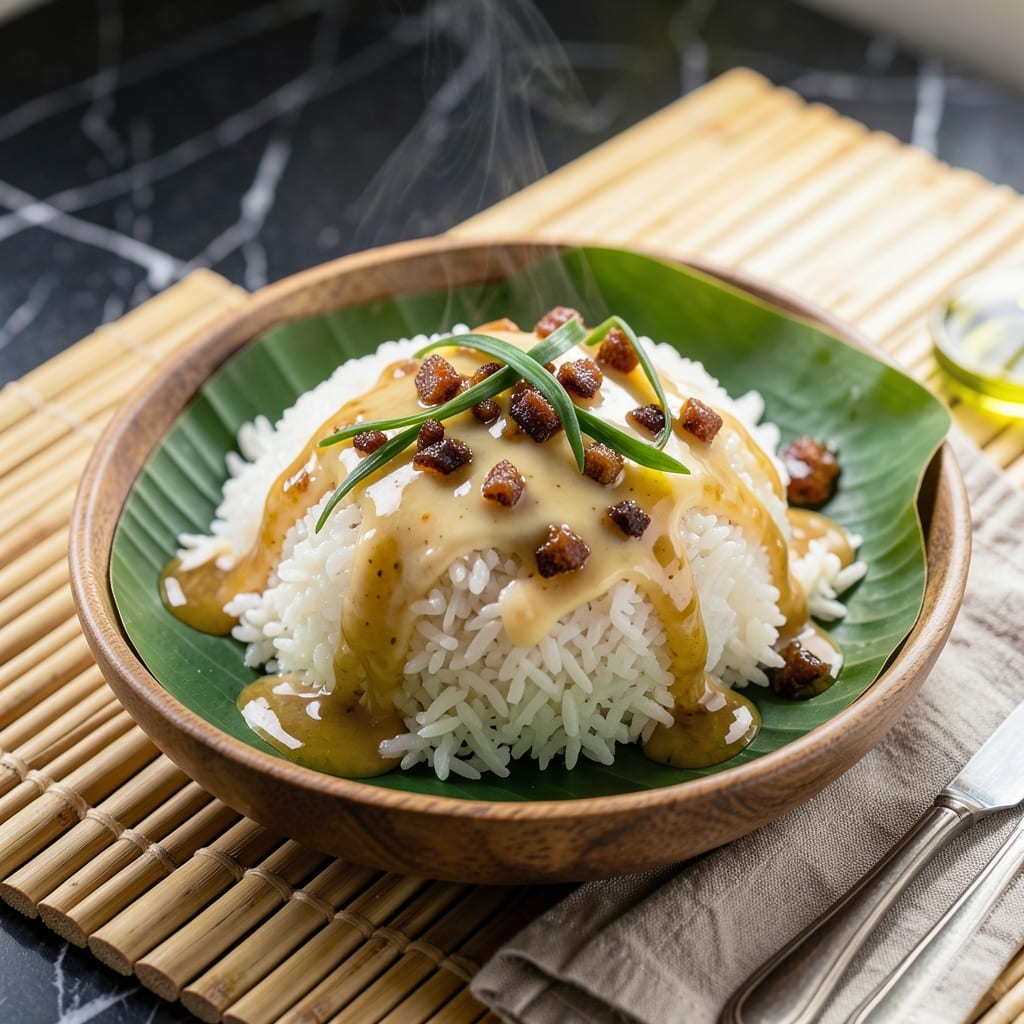
Malagkit rice holds a special place in Filipino cuisine, known for its sticky texture and sweet applications. This recipe transforms simple glutinous rice into a rich, coconut-infused treat that’s both comforting and authentic.
Traditionally used in kakanin and biko, the rice absorbs coconut milk during cooking, creating a naturally sweet base. The process requires patience, allowing the grains to soften completely while developing that signature chewy consistency.
What emerges is a dish that’s both humble and extraordinary—soft, slightly sweet rice with a subtle coconut aroma. It serves as the perfect foundation for both sweet and savory Filipino preparations.
The beauty lies in its versatility. Serve it warm as a dessert, or let it cool for use in other traditional recipes.
Ingredients for Malagkit Rice
Transform glutinous rice into a coconut-infused Filipino staple with these simple ingredients.
| Ingredient | Amount | Notes |
|---|---|---|
| Glutinous Rice 🌾 | 2 cups | Also called malagkit or sweet rice |
| Coconut Milk 🥥 | 2 cups | Full-fat for creaminess |
| Water 💧 | 2 cups | For initial soaking |
| Brown Sugar 🍚 | ½ cup | Or coconut sugar for depth |
| Salt 🧂 | ½ tsp | Balances the sweetness |
| Pandan Leaves 🌿 | 2 pieces | Optional for authentic aroma |
| Vanilla Extract 🌿 | 1 tsp | Pure for best flavor |
| Toasted Sesame Seeds 🌰 | 1 tbsp | For garnish and texture |
| Coconut Flakes 🥥 | ¼ cup | Toasted, for topping |
| Mango Slices 🥭 | 1 cup | Fresh, for serving (optional) |
| Lime Zest 🍈 | 1 tsp | Brightens the dish |
The glutinous rice must be the short-grain variety—look for malagkit rice at Asian markets or the international aisle. Full-fat coconut milk is non-negotiable; light versions won’t deliver the same richness. For best results, soak the rice overnight (or at least 4 hours) to ensure even cooking and that signature sticky texture.
No pandan leaves? Skip them—the dish will still be delicious. Brown sugar can be swapped for coconut sugar at a 1:1 ratio for a deeper, caramel-like note. If avoiding refined sugar, maple syrup at three-quarters the quantity works well, though it may slightly alter the texture. The sesame seeds are optional but add a nutty contrast.
Cooked malagkit keeps well in the fridge for 4-5 days in an airtight container. Reheat with a splash of coconut milk to restore creaminess. For longer storage, freeze portions for up to 3 months—thaw overnight before reheating.
Why You’ll Love This Recipe
- One Pot Wonder: It’s just glutinous rice, coconut milk, and a pinch of salt—simmer and forget while the rice soaks up every creamy, sweet drop.
- Sticky Sweet Fix: Brown sugar caramelizes into the grains, giving that rich, almost toffee-like depth with every bite.
- Feeds the Crowd: I make a big batch for potlucks, and it’s always the first to disappear.
- Budget Stretch: A pound of glutinous rice and a can of coconut milk feed four for less than the cost of takeout.
Step-by-Step Instructions for Malagkit Rice
Here is the tested method for achieving perfectly tender, fragrant sweet rice every time.
Step 1: Soak and Prepare the Glutinous Rice
Rinse the 2 cups Glutinous Rice thoroughly under cold water until the water runs clear. This removes excess starch and prevents a gummy texture. Drain completely in a fine-mesh sieve, shaking gently to eliminate all moisture.
Transfer the rice to a large bowl and add the 2 cups Water. The water should cover the rice by about 1 inch. Add the 2 pieces Pandan Leaves, if using, which infuse the rice with a delicate floral aroma. Soak for at least 4 hours or overnight for optimal texture and flavor absorption.
Step 2: Cook the Rice with Coconut Milk and Sweeteners
Drain the soaked glutinous rice and discard the pandan leaves. In a heavy-bottomed pot, combine the drained rice with the 2 cups Coconut Milk, 0.5 cup Brown Sugar, and 0.5 tsp Salt. Stir well to dissolve the sugar and distribute the salt evenly.
Bring the mixture to a gentle boil over medium heat, stirring occasionally to prevent sticking. Once boiling, reduce the heat to low, cover with a tight-fitting lid, and simmer for 20-25 minutes until the liquid is fully absorbed. You’ll know it’s done when the rice is tender and the surface appears slightly dry with small steam holes.
Step 3: Infuse with Vanilla and Rest
Remove the pot from heat and stir in the 1 tsp Vanilla Extract. This enhances the natural sweetness and adds depth to the coconut flavor. Cover the pot again and let the rice rest for 10-15 minutes. This resting period allows the rice to steam in its own residual heat, ensuring even tenderness throughout.
Gently fluff the rice with a fork to separate the grains. Be careful not to overmix, as glutinous rice can become paste-like if handled too vigorously. The texture should be sticky yet distinct, with each grain glistening from the coconut milk.
Step 4: Garnish and Serve
Transfer the malagkit rice to a serving dish. Sprinkle the top evenly with the 1 tbsp Toasted Sesame Seeds and 0.25 cup Coconut Flakes for added texture and visual appeal. The sesame seeds provide a subtle nutty crunch, while the coconut flakes reinforce the dish’s rich, tropical profile.
For a bright finish, top with the 1 cup Mango Slices and a sprinkle of 1 tsp Lime Zest. The lime zest cuts through the sweetness, balancing the flavors beautifully. Serve warm or at room temperature, as the rice holds its texture well either way.
Pro Tips For Making Malagkit Rice
- Soak the Rice: Give the glutinous rice a good 2-4 hour soak in water—it cuts the cooking time in half and guarantees even tenderness, no hard centers.
- Use Full-Fat Coconut Milk: I learned this the hard way—light coconut milk just doesn’t deliver the same rich, creamy texture that makes malagkit rice so indulgent.
- Stir Occasionally: Sounds weird, but it works: gently stir the rice every 10 minutes or so to prevent it from sticking to the bottom and burning.
- Sweetened Coconut Shortcut: Skip measuring sugar and milk separately—use sweetened coconut milk (the kind in a can) for a faster, just-as-delicious version.
Regional Styles of This Dish
Filipino Biko Style
This traditional preparation layers cooked malagkit with a coconut caramel topping called latik. Simmer 1 cup coconut milk until it separates into oil and browned curds, then mix with ½ cup brown sugar for a rich, sticky glaze. Spread over warm rice and let set. 🗺️
Visayan Binagol
In the Visayas region, they wrap the rice mixture in banana leaves with grated coconut and peanut butter. I use 2 tbsp smooth peanut butter mixed into the cooked rice before wrapping. Steam for 30 minutes to infuse the leaves’ aroma.
Luzon Kutsinta
This steamed version incorporates 1 cup rice flour and ½ cup brown sugar into the soaked malagkit for a jelly-like texture. Top with fresh grated coconut before serving. The key is steaming for 45-60 minutes until transluscent.
Mindanao Puto Bumbong
Purple malagkit rice is steamed in bamboo tubes, then slathered with butter, sugar, and grated coconut. I add 2 drops ube extract to regular malagkit for that signature violet hue. Serve with 1 tbsp margarine and 2 tbsp sugar.
Modern Fusion
For a contemporary twist, bake the cooked rice with ½ cup condensed milk and 1 egg at 350°F for 20 minutes. This creates a custardy texture that’s popular in Filipino bakeries. Top with toasted coconut flakes.
Nutrition Facts
Frequently Asked Questions
Can I use regular rice instead of glutinous?
No, regular rice won’t give you the same sticky texture. Glutinous rice is essential for that signature chewy consistency. Other varieties will turn out dry and separated.
How do I fix undercooked rice?
Add ¼ cup more coconut milk and simmer for an additional 5-10 minutes on low heat. Cover tightly to trap steam. Check for doneness before adding more liquid.
Can I make this ahead of time?
Cooked rice keeps well in the fridge for 4-5 days. Reheat gently with a splash of coconut milk to restore creaminess. It also freezes well for up to 3 months.
What can I use instead of pandan leaves?
Skip them entirely or use 1 tsp vanilla extract for similar aromatic depth. Some cooks add a strip of orange zest for a different citrus note.

- Peri Peri Rice Recipe: Spicy Portuguese One-Pot Harmony - November 6, 2026
- Mexican Flavoured Rice Recipe: Authentic Spice-Infused One-Pot Meal - November 6, 2026
- Lao Gan Ma Fried Rice Recipe: Spicy Wok-Tossed Perfection - November 6, 2026