
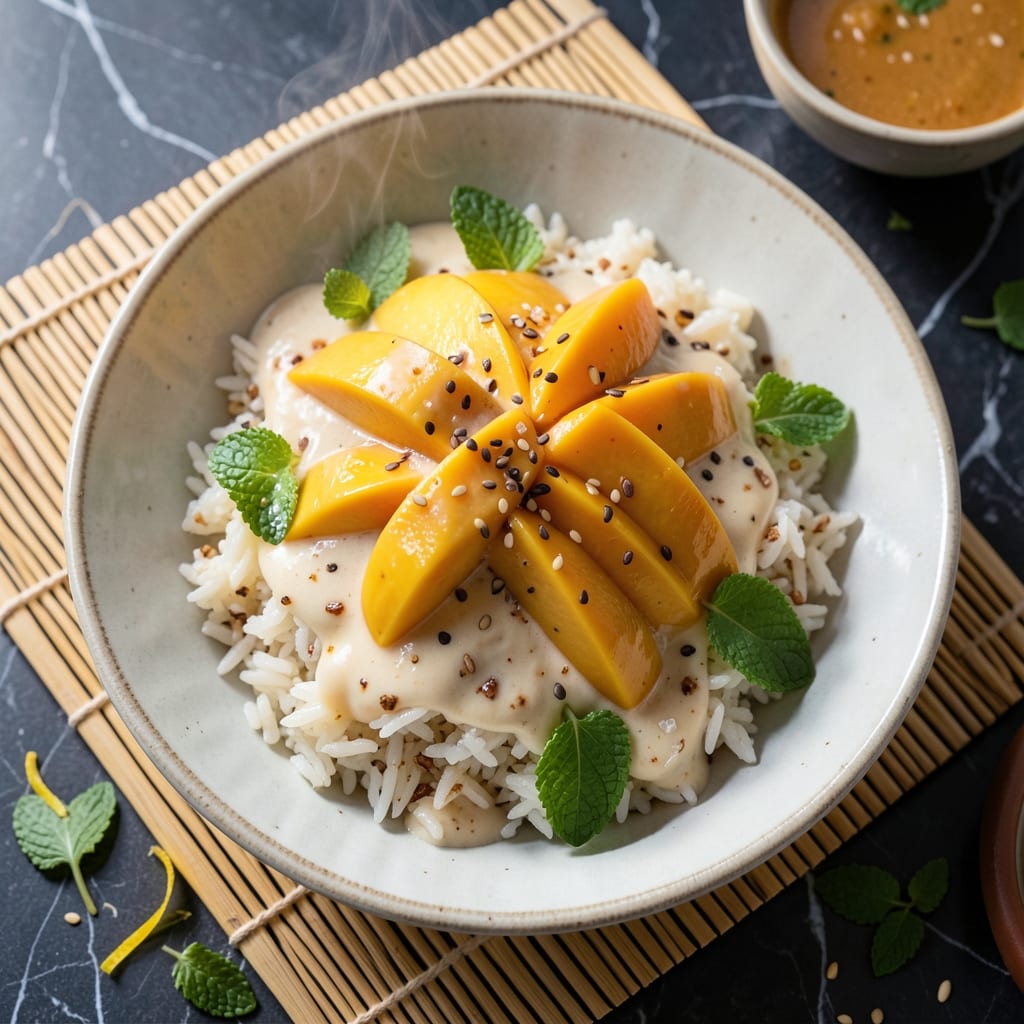
This dish brings Southeast Asian flavors to your kitchen with a balance of sweet, rich coconut and fresh mango. I first tasted it during a trip to Thailand, and it’s been a favorite ever since.
The glutinous rice soaks up the coconut milk, becoming tender and slightly sticky, while the ripe mango adds natural sweetness. The traditional method involves steaming the rice, but I’ve adapted it for home cooks with a simpler approach.
What you’ll get is a dessert that’s creamy, fragrant, and just sweet enough. The contrast between the warm coconut rice and cool mango is irresistible.
Perfect for a special occasion or when you want to treat yourself. Here’s how to make it.
Ingredients for Mango Glutinous Rice
Creamy coconut rice meets juicy mango for a taste of Thailand at home.
| Ingredient | Amount | Notes |
|---|---|---|
| Glutinous Rice 🌾 | 1 ½ cups | Rinsed thoroughly, also called sweet rice |
| Coconut Milk 🥥 | 1 ½ cups | Full-fat for richness |
| Granulated Sugar 🍚 | ½ cup | Adjust to taste preference |
| Salt 🧂 | ½ tsp | Fine grain preferred |
| Ripe Mangoes 🥭 | 2 whole | Ataulfo or Keitt varieties ideal |
| Water 💧 | 1 ½ cups | For soaking rice |
| Vanilla Extract 🌿 | 1 tsp | Pure for best flavor |
| Cornstarch 🌾 | 1 tbsp | For thickening coconut sauce |
| Toasted Sesame Seeds 🌰 | 1 tbsp | Optional garnish for crunch |
| Fresh Mint Leaves 🍃 | ¼ cup | Chopped, for garnish |
The glutinous rice is non-negotiable here—look for it in the Asian aisle or at Whole Foods. It’s often labeled as sweet rice or sticky rice (just avoid jasmine or basmati). For coconut milk, Thai Kitchen or Chaokoh brands are my go-to—they’re thick, creamy, and don’t separate weirdly. Ripe mangoes are key; Ataulfo (the yellow ones) are my favorite for this—they’re sweeter and less fibrous.
No glutinous rice? You’re out of luck—regular rice won’t give you that sticky texture. Short on mango? Peaches or pineapple work in a pinch (though the vibe changes). For a quicker version, use canned coconut milk but don’t skip the full-fat—light versions water down the flavor. Vanilla can be swapped for pandan extract if you want to get fancy (find it at Asian markets).
This keeps 2-3 days in the fridge—reheat the rice gently with a splash of water. The mango is best fresh, so add it just before serving. Leftovers? Not a chance—this disappears fast (worth the extra minute to garnish with sesame seeds).
Why You’ll Love This Recipe
- One Pot Magic: I just soak the rice, cook it in coconut milk, and let the mangoes do the rest.
- Sweet & Creamy: That first bite of cool mango with the warm, coconut-infused rice? Ridiculously good.
- Dessert or Brunch: I’ve served this at Sunday brunches and midnight cravings—works every time.
- Budget Friendly: Ripe mangoes on sale plus pantry staples, and I’ve got a showstopper for under five bucks.
Step-by-Step Instructions for Mango Glutinous Rice
Here’s my tried-and-true method for achieving perfectly sticky rice with a rich coconut sauce.
Step 1: Soak the Glutinous Rice
Place the 1.5 cups Glutinous Rice in a large bowl and cover it with the 1.5 cups Water. Rinse the rice thoroughly under cold water, swirling it with your hand until the water runs clear. Drain the rice completely, then return it to the bowl and add fresh 1.5 cups Water.
Let the rice soak for at least 4 hours, or ideally overnight. Soaking softens the grains, ensuring they cook evenly and absorb the coconut milk beautifully. You’ll notice the rice plumps up significantly during this time.
Step 2: Steam the Rice Until Tender
Drain the soaked glutinous rice and transfer it to a steamer basket lined with cheesecloth or a clean kitchen towel. Bring a pot of water to a boil, then place the steamer basket over it, cover with a lid, and steam for 25-30 minutes until the rice is tender and translucent.
Check the rice by biting into a grain—it should be soft with no hard center. If it’s still firm, continue steaming for another 5 minutes. Keep an eye on the water level in the pot to prevent it from boiling dry.
Step 3: Prepare the Coconut Sauce
In a small saucepan, combine the 1.5 cups Coconut Milk, 0.5 cup Granulated Sugar, and 0.5 tsp Salt. Stir over medium heat until the sugar and salt dissolve completely, about 3-4 minutes. Remove from heat and stir in the 1 tsp Vanilla Extract.
In a small bowl, mix the 1 tbsp Cornstarch with 2 tablespoons of the warm coconut milk mixture until smooth. Pour this slurry back into the saucepan and return it to low heat. Cook, stirring constantly, until the sauce thickens slightly, about 2-3 minutes. The sauce should coat the back of a spoon but still be pourable.
Step 4: Assemble and Infuse the Rice
Transfer the steamed glutinous rice to a large bowl. Pour about ¾ cup of the warm coconut sauce over the rice, reserving the rest for serving. Gently fold the sauce into the rice using a spatula until every grain is coated. The rice should glisten and clump slightly, with a rich coconut aroma.
Cover the bowl with a clean kitchen towel and let it sit for 10 minutes. This allows the rice to absorb the coconut flavors fully. Stir once more before serving to redistribute the sauce evenly.
Step 5: Prepare the Mangoes and Garnish
Peel the 2 whole Ripe Mangoes and slice them into thin, even pieces. Arrange the mango slices over the coconut rice in serving bowls or plates. Drizzle the remaining coconut sauce generously over the top.
Sprinkle the dish with the 1 tbsp Toasted Sesame Seeds and the 0.25 cup Fresh Mint Leaves for a pop of color and freshness. Serve warm or at room temperature for the best texture and flavor harmony.
Pro Tips For Making Mango Glutinous Rice
- Soak the Rice: Cover glutinous rice with water for at least 30 minutes—this prevents hard, uncooked centers and guarantees even absorption of the coconut milk later.
- Use Full-Fat Coconut Milk: I learned this the hard way—light coconut milk makes the dish watery and less rich. Stick with full-fat for that creamy, luxurious texture.
- Salt the Coconut Mixture: Sounds weird, but it works: add a pinch of salt to the coconut milk and sugar mixture to balance the sweetness and enhance the mango’s flavor.
- Serve Warm, Not Hot: Let the rice cool slightly for 5-10 minutes after cooking—it thickens the coconut sauce and keeps it from turning the mangoes mushy.
Regional Styles of This Dish
Thai Tradition
In Thailand, this dessert is called khao neeo mamuang, where street vendors serve it in banana leaves. The rice is typically steamed in a bamboo basket over charcoal, giving it a subtle smoky note. I first tried it from a cart in Bangkok, and the balance of warm coconut rice with cool mango was unforgettable. 🌟
Laotian Approach
Laotian versions often use black glutinous rice for a dramatic purple hue and nuttier flavor. The rice is soaked overnight, then steamed with coconut milk and palm sugar. David prefers this variation—he says it reminds him of the sticky rice his Lao grandmother made.
Vietnamese Twist
In Vietnam, you’ll find xôi xoài with ripe mango and a layer of sweet mung bean paste beneath the rice. The mung bean adds protein and a soft texture. I like adding 1 tbsp mung bean paste between the rice and mango for extra richness.
Malaysian Style
Malaysian versions often include pandan leaf in the coconut milk for a floral aroma. The rice is sometimes cooked with screw pine leaves, which give it a vibrant green color and unique fragrance. I’ve found pandan extract at Central Market in Austin.
Filipino Adaptation
The Philippines has biko, where glutinous rice is cooked with coconut milk and brown sugar, then topped with latik (coconut curds). For a Filipino-inspired version, I toast ½ cup coconut flakes until golden and sprinkle them over the mango. 💛
Modern Fusion
In trendy Bangkok cafes, you’ll see deconstructed versions with coconut panna cotta and mango puree. At home, I’ve layered the rice in glasses with Greek yogurt and fresh berries for a fun twist. Emma and Jack love this “parfait” version.
Nutrition Facts
Frequently Asked Questions
Can I use regular rice instead of glutinous?
No, regular rice won’t give you the right texture. Glutinous rice is essential for that sticky, chewy consistency. Look for it labeled as sweet or sticky rice in Asian markets.
How do I know when the rice is done?
Test by biting a grain—it should be soft with no hard center. This usually takes 25-30 minutes of steaming. If it’s still firm, keep steaming for another 5 minutes.
Can I make this ahead of time?
Yes! The rice keeps well for 2-3 days in the fridge. Reheat gently with a splash of water, and add fresh mango just before serving for the best texture.
What if my coconut sauce is too thin?
Mix 1 tablespoon cornstarch with 2 tablespoons of the warm sauce, then stir it back into the pan. Cook for 2-3 minutes until thickened.

- Mujadara Rice and Lentils Recipe: Earthy Spiced Lentils With Caramelized Onions - November 1, 2026
- Naija Fried Rice Recipe: Street-Style Spice With Veggie Crunch - November 1, 2026
- Mushy Rice Recipe: Fluffy Grains Transformed in Minutes - November 1, 2026