
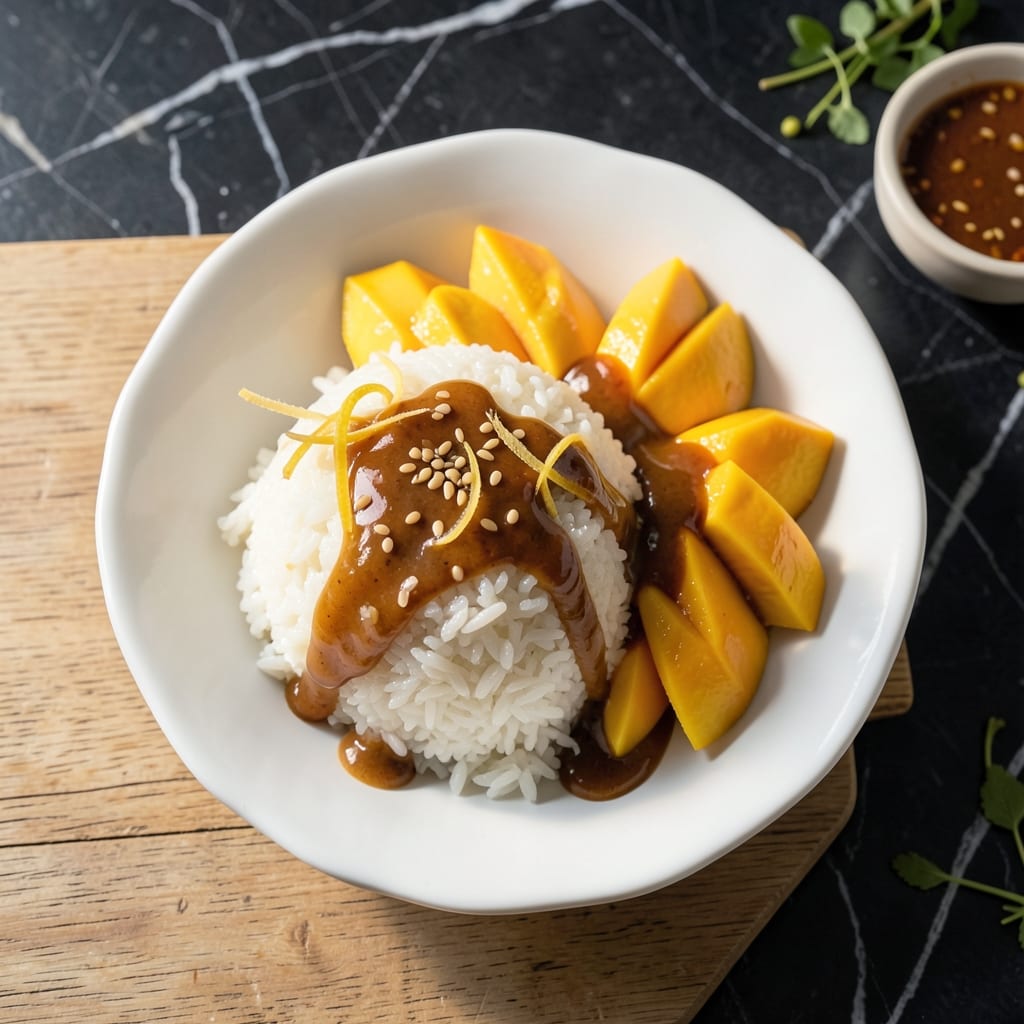
This Thai-inspired dish brings tropical flavors to your table with perfectly balanced sweetness and creaminess. The combination of ripe mango, fragrant coconut, and sticky rice creates a dessert that feels indulgent yet light.
I’ve refined this method to ensure the rice achieves that signature sticky texture while the coconut cream absorbs just enough sweetness. The key is patience—letting the rice soak and the flavors meld together.
You’ll end up with a plate of warm, glossy rice, fresh mango slices, and a drizzle of rich coconut sauce. It’s a dessert that’s as beautiful as it is delicious, with every bite layered with texture and flavor.
Simple ingredients, a few techniques, and a stunning result that tastes like it came from a Bangkok street vendor.
Ingredients for Mango Sticky Rice Recipe Marion
Sweet rice, creamy coconut, and juicy mango come together for this tropical treat.
| Ingredient | Amount | Notes |
|---|---|---|
| Glutinous Rice 🍚 | 1 ½ cups | Sweet or sticky rice variety |
| Full-Fat Coconut Milk 🥥 | 1 can | 13.5 oz can, unsweetened |
| Granulated Sugar 🧈 | ½ cup | Or coconut sugar for depth |
| Ripe Mangoes 🥭 | 2 whole | Ataulfo or Champagne preferred |
| Salt 🧂 | ½ tsp | Fine sea salt for balance |
| Vanilla Extract 🌿 | 1 tsp | Pure extract for aroma |
| Cornstarch 🌾 | 1 tbsp | For thickening coconut sauce |
| Water 💧 | 2 ½ cups | For soaking and cooking rice |
| Toasted Sesame Seeds 🌰 | 1 tbsp | For garnish, optional |
| Fresh Lime 🍈 | 1 whole | Zested and juiced for brightness |
| Coconut Cream 🥥 | ¼ cup | Thick, from canned coconut milk |
The rice is everything here. Look for glutinous or sweet rice in the Asian aisle—jasmine or basmati won’t give you that signature sticky texture. I grab mine from H Mart or 99 Ranch when I’m restocking. The coconut milk needs to be full-fat (the lite stuff just won’t cut it). Thai Kitchen or Chaokoh brands are reliable and easy to find at most supermarkets.
No Ataulfo mangoes? Any ripe mango works—just pick ones that yield slightly when squeezed. Swap granulated sugar for brown sugar or palm sugar if you want a deeper caramel note. Skip the sesame seeds? Crushed peanuts or toasted coconut flakes add a nice crunch. The lime is non-negotiable though—that hit of acid cuts through the richness.
The rice keeps well covered at room temp for 2 days, but the mango is best sliced fresh. Leftovers? Store components separately—rice and sauce for up to 4 days in the fridge. Reheat the rice with a splash of water to restore that sticky texture (the good stuff, not the pre-shredded kind).
Why You’ll Love This Recipe
- Sticky Rice Shortcut: I just soak the glutinous rice overnight and steam it while I slice the mangoes—no fancy techniques needed.
- Sweet & Salty Magic: The coconut milk and sugar create this creamy, rich sauce that perfectly balances the ripe mango’s natural sweetness.
- Dessert for Days: I make a big batch and portion it out for the week—it keeps beautifully, and the flavors only get better.
- Budget-Friendly Treat: Between us, ripe mangoes and a bag of glutinous rice cost less than a single restaurant dessert but taste way more indulgent.
Step-by-Step Instructions for Mango Sticky Rice
Here’s the method. Straightforward, tested, works every time.
Step 1: Soak the Glutinous Rice Overnight
Rinse the 1.5 cups glutinous rice thoroughly under cold water until the water runs clear. This removes excess starch and prevents a gummy texture. Place the drained rice in a large bowl and cover with the 2.5 cups water.
Let it soak at room temperature for at least 4 hours, or preferably overnight. The rice grains should double in size and become slightly translucent when fully soaked. This step ensures even cooking and that perfect sticky consistency.
Step 2: Steam the Rice to Tender Perfection
Drain the soaked rice completely—any excess water will dilute the coconut flavor. Transfer it to a steamer basket lined with cheesecloth to prevent sticking. Steam over boiling water for 20-25 minutes until the grains are tender but still hold their shape.
You’ll know it’s done when the rice is uniformly tender with no hard centers. Remove from heat and let it sit covered in the steamer for 5 minutes to finish absorbing steam.
Step 3: Prepare the Coconut Sauce
In a saucepan, combine the 1 can full-fat coconut milk, 0.5 cup granulated sugar, and 0.5 tsp salt. Stir in the 1 tbsp cornstarch mixed with a splash of the coconut milk to create a smooth slurry.
Heat over medium heat while stirring constantly until the mixture thickens to a custard-like consistency, about 5-7 minutes. Remove from heat and stir in the 1 tsp vanilla extract and 0.25 cup coconut cream until smooth.
Step 4: Assemble and Infuse
Transfer the hot rice to a heatproof bowl. Pour ¾ of the coconut sauce over the rice and fold gently to coat each grain evenly. Cover and let it sit for 10 minutes—this allows the rice to absorb the rich coconut flavor deeply.
The rice should glisten with sauce but not be swimming in it. Reserve the remaining sauce for drizzling later.
Step 5: Serve with Mangoes and Garnish
Peel and slice the 2 whole ripe mangoes into thin, even pieces. Arrange a portion of the warm sticky rice on each plate, top with mango slices, and drizzle with the reserved coconut sauce.
Finish with a squeeze of fresh lime for brightness and a sprinkle of 1 tbsp toasted sesame seeds for texture. Serve immediately while the rice is still warm and the coconut sauce is creamy.
Pro Tips For Making Mango Sticky Rice Recipe Marion
- Soak the Rice Overnight: I learned this the hard way—glutinous rice needs at least 4 hours (but overnight is better) in cold water to soften properly, or your sticky rice will turn out gummy, not tender.
- Use Full-Fat Coconut Milk: Skip the light versions; the full-fat kind is non-negotiable here for that rich, creamy sauce that actually clings to the rice.
- Salt the Coconut Mixture: Sounds weird, but it works: add a pinch of salt to the coconut milk and sugar as it simmers—it balances the sweetness and makes all the flavors pop.
- Warm the Mangoes: My grandmother swore by this, and she was right: serve the mango slices at room temperature (or even slightly warmed) to contrast with the cool rice—it’s a game-changer.
Regional Styles of This Recipe
Thai Street Style
In Thailand, this dessert is called khao neeo mamuang and is sold from carts with rice steamed in bamboo baskets. Vendors use nam wan (Thai coconut milk) and often add pandan leaf for floral aroma. The mango is always Ataulfo for its honey-like sweetness. 🗺️
Laotian Version
Laotian cooks replace mango with ripe banana or jackfruit when not in season. They use sticky purple rice for a dramatic color contrast and sweeten the coconut milk with palm sugar for a deeper caramel flavor.
Vietnamese Twist
In Vietnam, this becomes xôi xoài with the addition of mung bean paste swirled into the rice. They often serve it warm with a sprinkle of crushed peanuts and a drizzle of condensed milk for extra richness.
Malaysian Style
Malaysian versions incorporate sago pearls into the sticky rice for added texture. The coconut sauce is often infused with lemongrass and kaffir lime leaves for a citrusy aroma. Some add rose water for a floral touch.
Western Fusion
In the US, some chefs create a deconstructed version with mango purée under the rice and a coconut tuile garnish. Others add chili flakes for a sweet-spicy contrast that surprises the palate. 💫
Nutrition Facts
Frequently Asked Questions
Can I use regular rice instead of glutinous rice?
No, regular rice won’t give you the signature sticky texture. Glutinous rice is essential for that chewy, clingy consistency that holds the coconut sauce so well.
How ripe should the mangoes be?
Use mangoes that yield slightly to gentle pressure and have a sweet aroma at the stem. Ataulfo or Champagne varieties are ideal for their natural sweetness and smooth texture.
Can I make this ahead of time?
Yes! Prepare the rice and sauce up to 2 days ahead, but slice mangoes fresh. Reheat rice with a splash of water to restore its sticky texture before serving.
Why did my coconut sauce separate?
This happens if the sauce boils too vigorously. Keep heat at medium and stir constantly. If it separates, whisk in a splash of hot water to bring it back together.

- Mujadara Rice and Lentils Recipe: Earthy Spiced Lentils With Caramelized Onions - November 1, 2026
- Naija Fried Rice Recipe: Street-Style Spice With Veggie Crunch - November 1, 2026
- Mushy Rice Recipe: Fluffy Grains Transformed in Minutes - November 1, 2026