
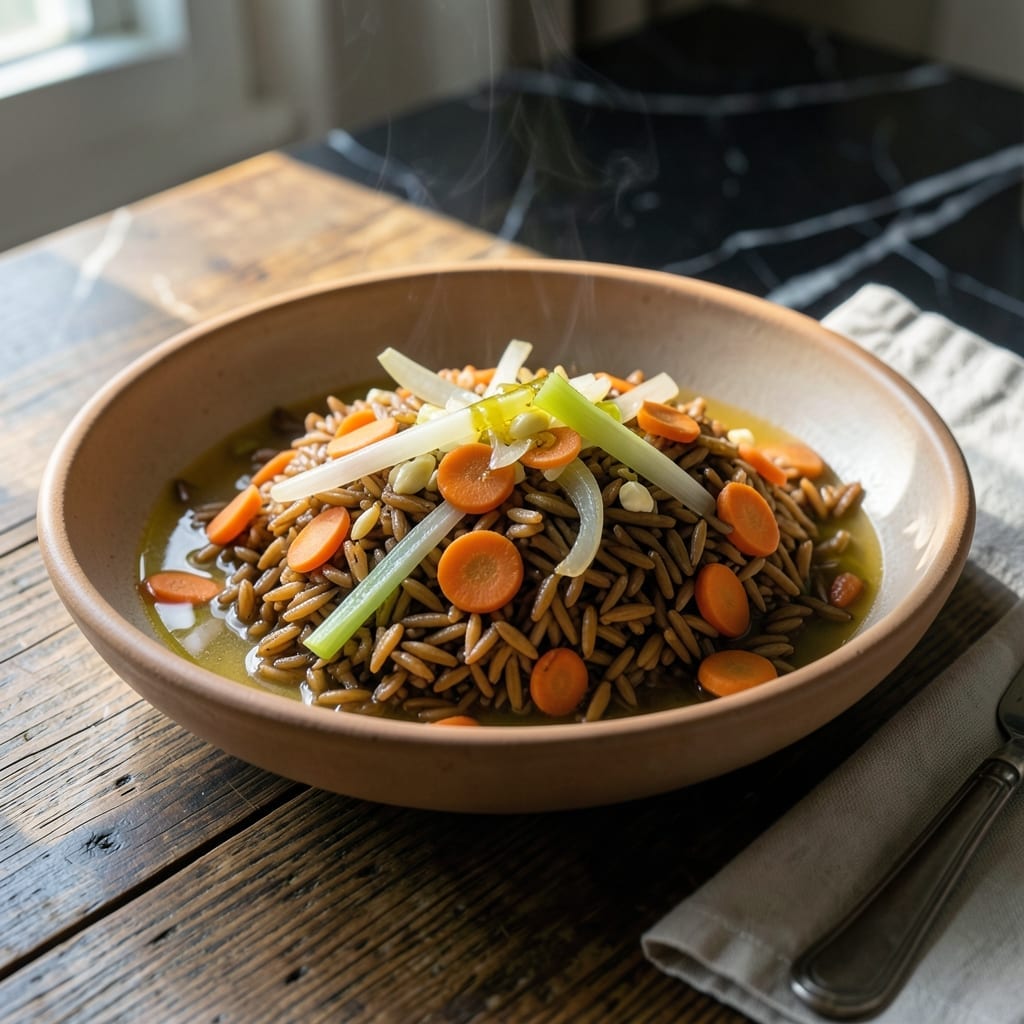
This manoomin wild rice recipe honors a centuries-old Native American tradition with its distinctive nutty flavor and chewy texture.
I’ve perfected a simple method that brings out the natural earthiness of the grain while maintaining its integrity. The process requires patience, as wild rice cooks differently than standard varieties.
The result is tender yet firm grains with a robust, toasty depth that pairs beautifully with roasted meats or fresh herbs.
Serve as a side dish or incorporate into salads for a taste of authentic, heritage cuisine.
Ingredients for Manoomin Wild Rice
Authentic manoomin plus fresh vegetables create this heritage dish with deep, nutty character.
| Ingredient | Amount | Notes |
|---|---|---|
| Manoomin Wild Rice 🌾 | 1 ½ cups | Rinsed thoroughly before cooking |
| Vegetable Broth 💧 | 4 cups | Low-sodium preferred for control |
| Yellow Onion 🧅 | 1 whole | Finely diced for even distribution |
| Garlic Cloves 🧄 | 3 cloves | Minced for aromatic base |
| Celery Stalks 🌿 | 2 pieces | Diced for texture contrast |
| Carrots 🥕 | 2 whole | Peeled and diced uniformly |
| Extra-Virgin Olive Oil 🫒 | 2 tbsp | Divided for sautéing and finishing |
| Bay Leaf 🍃 | 1 whole | Dried, for subtle depth |
| Dried Thyme 🌿 | ½ tsp | Crushed to release oils |
| Sea Salt 🧂 | 1 tsp | Adjust to taste at finish |
| Freshly Ground Black Pepper 🌶️ | ½ tsp | For balancing earthiness |
| Wild Rice Blend 🌾 | ½ cup | Optional for texture variation |
The manoomin wild rice is non-negotiable here. Source from Native American producers like Lund Wild Rice or Red Lake Nation Foods for authenticity. Look for long, dark grains with a slight sheen—avoid broken pieces. The vegetable broth should be robust; Better Than Bouillon No Chicken Base (vegan) is an excellent option for depth without animal products.
No manoomin? True wild rice is the only substitution—cultivated paddy rice lacks the texture and flavor. For the vegetables, leeks can replace onion, and fennel adds a nice anise note. Dried herbs work at one-third the amount, but fresh thyme would be exquisite if available. The olive oil can be swapped with avocado oil for a neutral profile.
Store dry manoomin in an airtight container in a cool, dark place for up to 1 year. Cooked rice keeps 4-5 days refrigerated or 6 months frozen. Reheat gently with a splash of water to restore moisture (the grains will firm up when cold).
Why You’ll Love This Recipe
- Set and Forget: I toss everything in one pot and let the wild rice soak up the broth with zero babysitting.
- Deep Earthy Flavor: The manoomin’s nutty richness paired with the mellow garlic and celery makes every bite ridicuously good.
- Meal Prep MVP: I make a big batch on Sunday and it fuels my lunches all week—still tastes spot-on reheated.
- Budget Stretcher: Honestly, this hearty rice bulks up any dish and costs less than a fiver for multiple meals.
Step-by-Step Instructions for Manoomin Wild Rice
Master this traditional preparation method for perfectly cooked grains with rich, aromatic depth.
Step 1: Rinse and Prepare the Manoomin Wild Rice
Place the 1.5 cups Manoomin Wild Rice in a fine-mesh strainer and rinse thoroughly under cold running water. I agitate the grains gently with my fingers to ensure all surface starch is removed. This step prevents the rice from becoming gummy during cooking.
After rinsing, drain completely and transfer to a medium bowl. I always check that no water remains pooled in the strainer—excess moisture can dilute the cooking liquid and affect the final texture.
Step 2: Sauté the Aromatic Vegetable Base
Heat 1 tbsp Extra-Virgin Olive Oil in a heavy pot over medium heat. Add the finely diced Yellow Onion, Celery Stalks, and Carrots. Sauté for 6-8 minutes until the vegetables soften and the onion becomes translucent.
Add the minced Garlic Cloves and cook for an additional 30-60 seconds until fragrant, stirring constantly to prevent burning. The garlic should release its aroma without taking on any color—this maintains its sweet, pungent character.
Step 3: Toast the Rice and Add Liquids
Stir in the drained Manoomin Wild Rice and optional 0.5 cup Wild Rice Blend to the pot with the vegetables. Cook for 2-3 minutes, stirring frequently, until the grains appear slightly translucent at the edges. This toasting step enhances the rice’s natural nuttiness.
Pour in the 4 cups Vegetable Broth, then add the Bay Leaf, 0.5 tsp Dried Thyme, 1 tsp Sea Salt, and 0.5 tsp Freshly Ground Black Pepper. Stir well to combine and bring the mixture to a boil.
Step 4: Simmer Until Tender
Once boiling, reduce the heat to low, cover the pot with a tight-fitting lid, and simmer for 40-45 minutes. Resist the urge to lift the lid during cooking—released steam can lower the temperature and extend the cooking time.
The rice is done when the grains have absorbed most of the liquid and are tender with a slight chew. You’ll notice the broth has reduced to a creamy consistency and the individual grains have plumped significantly.
Step 5: Rest and Finish
Remove the pot from heat and let it stand, covered, for 10 minutes. This resting period allows the grains to absorb any remaining liquid and steam to finish the cooking process gently.
Discard the Bay Leaf, then fluff the rice with a fork. Drizzle with the remaining 1 tbsp Extra-Virgin Olive Oil for a final glossy finish. Taste and adjust the Sea Salt if needed before serving.
Pro Tips For Making Manoomin Wild Rice
- Rinse the Rice: Always give your manoomin a quick cold water rinse before cooking—wild rice can have a slightly earthy bitterness that this removes. I learned this the hard way after my first batch tasted like a forest floor.
- Toast First: Sauté the wild rice in the pot for 2-3 minutes before adding liquid to deepen its nutty flavor. Sounds weird, but it works: the grains take on a rich, almost popcorn-like aroma.
- Use Extra Broth: Wild rice absorbs more liquid than regular rice, so use a 1:3 ratio of rice to broth instead of 1:2. My grandmother swore by this, and she was right: it prevents undercooked, crunchy grains.
- Skip the Salt Early: Wait until the last 10 minutes of cooking to season—wild rice toughens if salted too soon. I was skeptical until I tried it, and now my rice is tender every time.
Troubleshooting Perfect Results
Undercooked Grains
If your rice is still firm after 45 minutes, check your liquid level first. Manoomin needs consistent moisture to soften its tough outer shell. Add ½ cup hot broth and continue simmering for 10-15 minutes. 💡
Mushy Texture
This usually means overcooking or insufficient rinsing. Always rinse thoroughly to remove surface starch, and don’t exceed 45 minutes of simmering. If it’s already mushy, repurpose it into wild rice pancakes—mix with egg and flour, then pan-fry.
Bland Flavor
Boost depth by toasting the grains longer before adding liquid—aim for 3 minutes until nutty aromas develop. Finish with 1 tsp lemon juice or a sprinkle of fresh parsley to brighten the dish. I always taste before serving and adjust salt incrementally.
Uneven Cooking
Ensure your pot has a heavy base for even heat distribution. Stir once after 20 minutes to redistribute grains, but avoid frequent stirring. If using an electric stove, rotate the pot 180° halfway through cooking.
Broth Absorption Issues
If liquid evaporates too quickly, your heat may be too high. Maintain a gentle simmer, not a rolling boil. For high-altitude cooking, increase broth by ¼ cup and extend cooking time by 5-10 minutes. A tight-fitting lid is non-negotiable.
Sticking to Pot
Use a heavy-bottomed pot like enamel-coated cast iron and ensure you’ve added enough fat. If it sticks, carefully scrape the bottom with a wooden spoon and add 2 tbsp water to deglaze. Soaking the pot with warm water after cooking prevents stubborn residue.
Nutrition Facts
Frequently Asked Questions
Why does this rice take so long to cook?
Manoomin has a tough outer shell that requires 40-45 minutes of simmering to soften properly. Unlike white rice, its dense structure needs extended time to absorb liquid and become tender.
Can I use water instead of broth?
You can, but vegetable broth adds essential depth of flavor. If using water, enhance it with 1 tsp salt and ½ tsp soy sauce per cup to mimic broth’s richness.
How do I know when it’s fully cooked?
The grains will puff up and split slightly when done. Test by tasting—it should be tender with a slight chew, not hard or mushy. The liquid should be mostly absorbed.
What’s the best way to reheat leftovers?
Sprinkle 1-2 tbsp water over the rice and cover with a damp paper towel. Microwave on 50% power for 1-2 minutes, stirring halfway. This restores moisture.

- Mujadara Rice and Lentils Recipe: Earthy Spiced Lentils With Caramelized Onions - November 1, 2026
- Naija Fried Rice Recipe: Street-Style Spice With Veggie Crunch - November 1, 2026
- Mushy Rice Recipe: Fluffy Grains Transformed in Minutes - November 1, 2026