
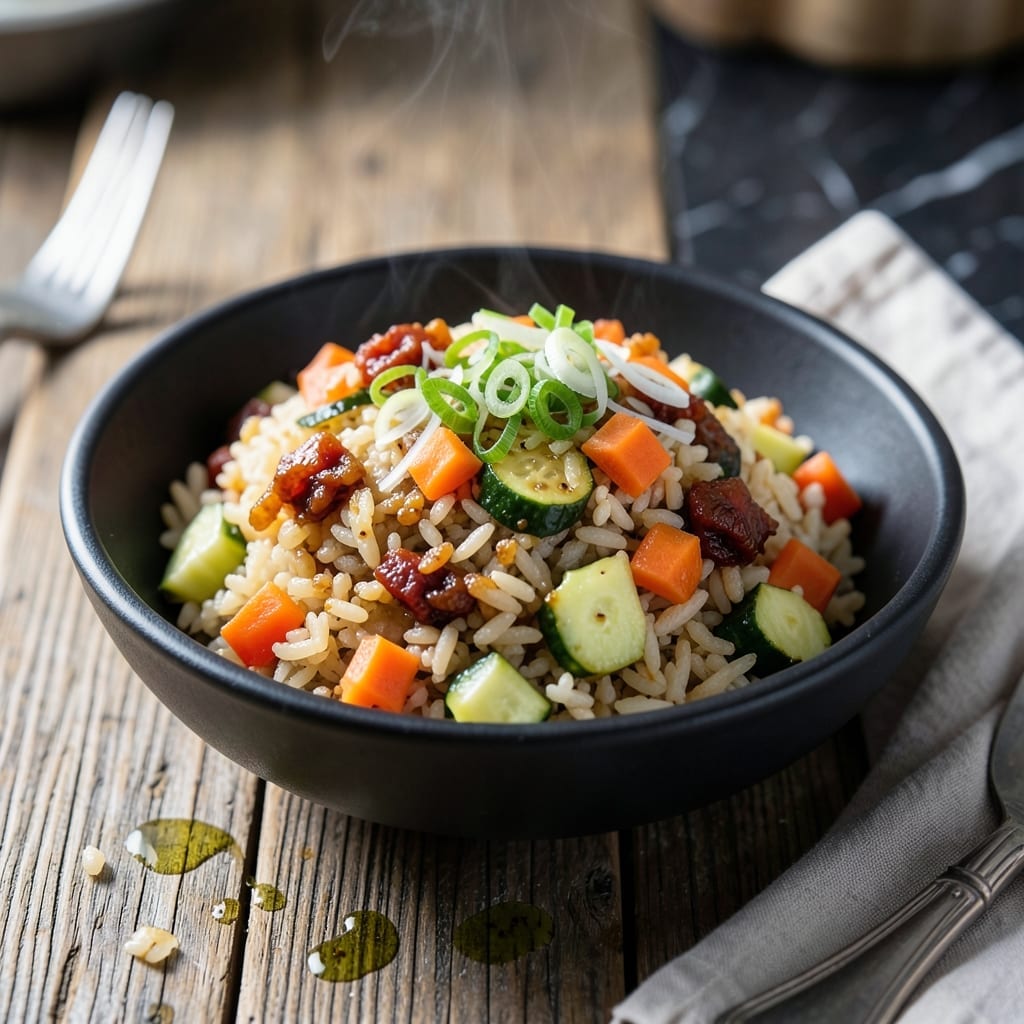
This vegetarian kimchi fried rice delivers bold flavor without compromising on the traditional spicy, tangy kick you expect. The fermented kimchi provides depth while fresh vegetables add crunch and color to every bite.
The key is using well-fermented kimchi for maximum flavor impact. I cook the rice in advance and let it cool completely, which prevents mushiness when stir-frying. A touch of sesame oil at the end ties all the ingredients together beautifully.
You’ll end up with a dish that’s both hearty and light, with the perfect balance of heat, umami, and freshness. The rice grains stay separate, each coated with the flavorful kimchi and vegetable mixture.
Serve this as a main course or alongside your favorite protein. It keeps well for leftovers too.
Ingredients for Kimchi Fried Rice Recipe Vegetarian
Bold kimchi, crisp veggies, and chewy rice make this dish sing with flavor.
| Ingredient | Amount | Notes |
|---|---|---|
| Cooked White Rice 🍚 | 4 cups | Day-old, cooled completely |
| Kimchi 🥬 | 1 ½ cups | Well-fermented, chopped coarse |
| Vegetable Oil 🫒 | 2 tbsp | Divided for cooking |
| Carrot 🥕 | 1 whole | Medium, finely diced |
| Zucchini 🥒 | 1 whole | Medium, finely diced |
| Green Onions 🧅 | 4 whole | Thinly sliced, whites and greens separated |
| Garlic Cloves 🧄 | 3 cloves | Minced finely |
| Soy Sauce 💧 | 2 tbsp | Low-sodium preferred |
| Sesame Oil 🫒 | 1 tsp | Toasted, for finishing |
| Gochujang 🌶️ | 1 tbsp | Korean chili paste |
| Sugar 🍚 | ½ tsp | Optional for balance |
| Tofu 🧈 | 8 oz | Firm, pressed and cubed |
| Sesame Seeds 🌰 | 1 tsp | Toasted, for garnish |
The kimchi is non-negotiable here—look for well-fermented, tangy napa cabbage kimchi at an Asian market or H-Mart. The rice must be cold (day-old is perfect) to avoid a mushy texture. I always use jasmine or short-grain for that classic sticky bite. For tofu, extra-firm from Nasoya or Wildwood holds up best to stir-frying without crumbling.
No gochujang? Sriracha plus a little miso paste gets you close. Swap zucchini for mushrooms or bell peppers if that’s what’s in the crisper. Vegetable oil can be any neutral oil—avocado or grapeseed work great. For extra umami, add a splash of vegetarian fish sauce (like Ocean’s Halo) or more soy sauce.
This keeps beautifully—actually tastes better the next day once flavors meld. Store in the fridge for up to 4 days or freeze for 3 months. Reheat in a skillet with a splash of water to revive the texture (microwave works too, but skillet is better).
Why You’ll Love This Recipe
- 20-Minute Meal: I can get this from fridge to plate faster than ordering takeout, and the zucchini cooks in the same pan as the rice.
- Funky Umami Bomb: The kimchi’s fermented kick plus carrot’s sweet crunch is the flavor combo I didn’t know I needed.
- Leftover Hero: Day-old rice fries up better, so this is my sneaky way to use what’s sitting in the fridge.
- Budget Stretcher: A handful of veggies and a jar of kimchi feed us for two nights without breaking the bank.
Step-by-Step Instructions for Kimchi Fried Rice Vegetarian
Here’s my tested method that delivers bold flavor and perfect texture with every bite.
Step 1: Prep All Vegetables and Tofu
Finely dice the carrot and zucchini into uniform ¼-inch pieces so they cook evenly. Thinly slice the 4 whole green onions, keeping whites and greens separate for layered flavor. Mince the 3 cloves garlic cloves finely—you want it to melt into the dish.
Press and cube the 8 oz tofu, then blot it dry with paper towels. This removes excess moisture so it gets crispy in the pan. I chop the 1.5 cups kimchi coarsely if it isn’t pre-chopped, preserving some texture for contrast.
Step 2: Cook Aromatics and Vegetables
Heat 1 tbsp of the 2 tbsp vegetable oil in a large skillet or wok over medium-high heat until it shimmers. Add the diced carrot and cook for 2 minutes until it starts to soften.
Add the diced zucchini, green onion whites, and garlic cloves. Stir-fry for 3-4 minutes until the vegetables are tender but still have a slight bite. The garlic should be fragrant but not browned—if it burns, it turns bitter.
Step 3: Crisp the Tofu and Add Kimchi
Push the vegetables to one side of the pan and add the remaining 1 tbsp vegetable oil. Add the cubed 8 oz tofu and cook undisturbed for 2-3 minutes until the undersides are golden brown. Flip and cook another 2 minutes for even crispiness.
Add the chopped 1.5 cups kimchi and cook for 2-3 minutes, stirring occasionally. The kimchi should sizzle and deepen in color, releasing its tangy, spicy juices into the pan. This is when the dish starts smelling incredible.
Step 4: Combine Rice and Seasonings
Break up the 4 cups cooked white rice with your hands and add it to the pan. Stir well to combine with the vegetables and tofu. The rice should be slightly dry and separate easily—this ensures it fries rather than steams.
Add the 2 tbsp soy sauce, 1 tbsp gochujang, and 0.5 tsp sugar. Stir-fry for 3-4 minutes until the rice is heated through and slightly crispy in spots. Taste and adjust seasoning—this is your chance to balance the heat and umami.
Step 5: Finish and Garnish
Drizzle the 1 tsp sesame oil over the fried rice and stir to incorporate. Remove from heat and fold in the green onion greens, reserving a pinch for garnish. The heat from the rice will soften the greens just enough.
Transfer to serving plates and top with the remaining green onions and 1 tsp sesame seeds. The sesame seeds add a nutty crunch that contrasts beautifully with the soft rice and crispy tofu. Serve immediately while hot for the best texture.
Pro Tips For Making Kimchi Fried Rice Recipe Vegetarian
- Use Day-Old Rice: Fresh rice turns mushy—I learned this the hard way after my first batch came out like porridge. Day-old, cold rice from the fridge holds its shape and fries up perfectly.
- Squeeze the Kimchi: Drain and squeeze out excess liquid from the kimchi first, or your fried rice will steam instead of sizzle.
- High Heat Only: Crank the burner to high and keep it there. Sounds obvious, but I used to hesitate and ended up with pale, soggy veggies instead of that coveted golden sear.
- Dice Small, Cook Fast: Cut the carrot and zucchini into tiny, even pieces—about ¼-inch cubes—so they soften quickly without overcooking the rice.
Make-Ahead Tips for This kimchi fried rice recipe vegetarian
Prep Ahead Strategy
Cook your 4 cups rice the day before and spread it on a baking sheet to cool completely. This prevents the dreaded mushy texture when stir-frying. I always use jasmine or short-grain for that perfect sticky bite. 💡
Kimchi Prep
Chop your 1.5 cups kimchi coarsely and let it drain in a colander for 10 minutes to remove excess liquid. This intensifies the flavor and prevents a watery dish. Store in an airtight container in the fridge until ready to use.
Vegetable Prep
Finely dice the carrot and zucchini into ¼-inch pieces and store together in a container. Thinly slice the 4 green onions, keeping whites and greens separate. Mince the 3 garlic cloves and store with the onion whites.
Tofu Prep
Press and cube the 8 oz tofu, then blot it dry with paper towels. Store in an airtight container in the fridge. For extra crispiness, toss the cubed tofu with 1 tsp cornstarch before cooking.
Sauce Mix
Combine the 2 tbsp soy sauce, 1 tbsp gochujang, and 0.5 tsp sugar in a small bowl. This saves time during the cooking process and ensures even distribution of flavors. 🌟
Storage
All prepped ingredients can be stored in the fridge for up to 2 days before cooking. This makes the actual cooking process quick and efficient, perfect for a fast weeknight meal.
Nutrition Facts
Frequently Asked Questions
Can I use fresh rice instead of day-old?
No, fresh rice contains too much moisture and will turn mushy. Always use cooled, day-old rice for best texture. Spread hot rice on a tray to cool quickly if needed.
What can I substitute for gochujang?
Mix 1 tbsp sriracha with ½ tsp miso paste for a similar spicy, umami flavor. Or use extra soy sauce plus a pinch of sugar if avoiding heat.
How do I make this dish gluten-free?
Swap regular soy sauce for tamari or a certified gluten-free soy sauce. Ensure your kimchi and gochujang are also gluten-free.
Why did my tofu turn out soggy?
You likely didn’t press it enough. Press tofu for 15-20 minutes under a heavy pan and blot dry before cooking. This removes excess moisture for crispy results.

- Mujadara Rice and Lentils Recipe: Earthy Spiced Lentils With Caramelized Onions - November 1, 2026
- Naija Fried Rice Recipe: Street-Style Spice With Veggie Crunch - November 1, 2026
- Mushy Rice Recipe: Fluffy Grains Transformed in Minutes - November 1, 2026