
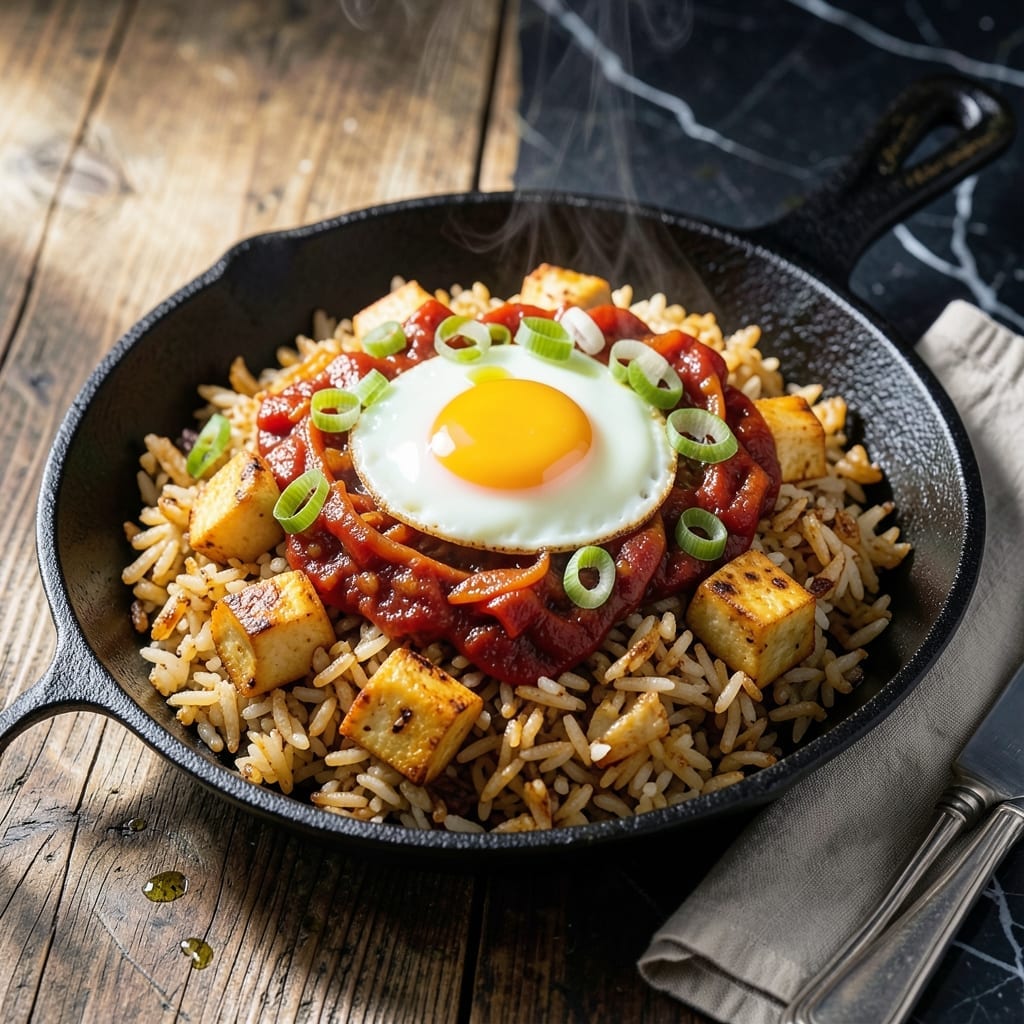
This kimchi fried rice delivers bold Korean flavors with minimal effort. The combination of fermented kimchi, savory gochujang, and crispy rice creates a dish that’s both comforting and exciting.
The gochujang paste is the star, adding deep, spicy-sweet complexity that balances the kimchi’s tang. I’ve perfected the technique to ensure each grain stays separate and slightly crispy, with just enough sauce to coat without becoming mushy.
Customize it with your choice of protein—tofu for vegetarians or pork for meat lovers. The eggs add richness, but they’re optional for a vegan version.
Ready in under 20 minutes, this is the kind of meal that makes weeknight dinners feel special.
Ingredients for Kimchi Fried Rice Recipe Gochujang
Bold Korean flavors come from fermented kimchi and spicy gochujang paste with crispy rice.
| Ingredient | Amount | Notes |
|---|---|---|
| Cooked White Rice 🍚 | 4 cups | Day-old, chilled preferred |
| Kimchi 🥬 | 1 ½ cups | Fermented, chopped with juices |
| Gochujang Paste 🌶️ | 2 tbsp | Korean chili paste essential |
| Firm Tofu 🧈 | 12 oz | Pressed, cubed for protein |
| Large Eggs 🥚 | 4 whole | Optional for topping |
| Green Onions 🧅 | 4 whole | Sliced for garnish |
| Garlic Cloves 🧄 | 4 cloves | Minced for aroma |
| Sesame Oil 🫒 | 1 tbsp | Toasted for depth |
| Soy Sauce 💧 | 2 tbsp | Low-sodium preferred |
| Vegetable Oil 🫒 | 2 tbsp | Neutral for frying |
| Sesame Seeds 🌿 | 1 tsp | Toasted for crunch |
| Sugar 🍚 | 1 tsp | Balances gochujang spice |
| Ground Black Pepper 🌶️ | ½ tsp | Freshly ground preferred |
The gochujang is non-negotiable here. Sempio or Koon brands are widely available at H Mart or Asian markets—avoid the ones with added sugar if possible. Kimchi quality varies wildly; look for vibrant red color and active fermentation bubbles. Day-old rice is key—fresh rice turns to mush. I prefer jasmine or short-grain, but leftover takeout rice works in a pinch (don’t judge).
No gochujang? Sriracha plus miso paste gets you close but won’t be the same. Tofu can be swapped for edamame or tempeh. Skip the eggs and add extra tofu for vegan. Green onions can be scallions or chives—whatever’s in the crisper. If your kimchi isn’t very sour, add a splash of rice vinegar to brighten it up.
This keeps 3-4 days in the fridge—reheat in a skillet to crisp the rice again. Leftovers make great stuffed peppers or lettuce wraps. Freeze without eggs for up to 3 months (add eggs fresh when reheating).
Why You’ll Love This Recipe
- One Pan Wonder: I toss the kimchi, rice, and gochujang in one pan, and dinner’s ready before the tofu even finishes pressing.
- Umami Bomb: The fermented kimchi and spicy gochujang create this deep, tangy heat that makes every bite ridicuously good.
- Feeds a Crowd: I stretch it with extra rice for my son’s friends, and the eggs on top make it feel special without extra effort.
- Leftovers Champion: Honestly, it tastes even better the next day when the gochujang soaks into the rice overnight.
Step-by-Step Instructions for Kimchi Fried Rice with Gochujang
Master the technique for this bold, spicy dish with perfect texture and layered flavors.
Step 1: Prepare the Tofu and Aromatics
Press the 12 oz Firm Tofu between paper towels for 10 minutes to remove excess moisture, then cut into ½-inch cubes. This ensures crispy edges when fried. Meanwhile, mince the 4 cloves Garlic Cloves finely and slice the 4 whole Green Onions into thin rounds, keeping the white and green parts separate.
Heat 1 tablespoon of the 2 tbsp Vegetable Oil in a large skillet over medium-high heat. Add the tofu cubes in a single layer and cook undisturbed for 3-4 minutes per side until golden brown and crispy. Transfer to a plate and set aside.
Step 2: Sauté the Kimchi and Build the Base
In the same skillet, add the remaining 1 tablespoon Vegetable Oil and heat until shimmering. Add the 1.5 cups Kimchi (with its juices) and cook for 3-4 minutes, stirring occasionally, until the edges begin to caramelize and the liquid has mostly evaporated.
Stir in the minced garlic and cook for 30 seconds until fragrant. Add the 2 tbsp Gochujang Paste, 1 tsp Sugar, and 2 tbsp Soy Sauce, mixing well to coat the kimchi evenly. This creates a rich, spicy-sweet foundation for the dish.
Step 3: Incorporate the Rice and Tofu
Add the 4 cups Cooked White Rice to the skillet, breaking up any clumps with a wooden spoon. Stir-fry for 4-5 minutes over medium-high heat until the rice is thoroughly coated in the sauce and heated through. The rice should take on a vibrant red-orange hue.
Return the crispy tofu to the skillet and fold it into the rice mixture gently to avoid breaking the cubes. Season with 0.5 tsp Ground Black Pepper and drizzle with the 1 tbsp Sesame Oil, stirring to distribute the flavor evenly. Cook for an additional 1-2 minutes until everything is well combined.
Step 4: Finish with Eggs and Garnish
Create four small wells in the rice mixture and crack one Large Egg into each. Cover the skillet and cook for 2-3 minutes until the egg whites are set but the yolks remain runny. For a fully cooked egg, stir gently and cook until the eggs are no longer translucent.
Garnish with the sliced green onions and 1 tsp Sesame Seeds. The eggs should be nestled into the rice, with the yolks adding a creamy richness to each bite. Serve immediately while hot, ensuring every portion has a balance of rice, tofu, and egg.
Pro Tips For Making Kimchi Fried Rice Recipe Gochujang
- Use Day-Old Rice: Fresh rice is too moist and will turn mushy—I learned this the hard way after making gluey fried rice too many times. Day-old, cold rice from the fridge fries up perfectly with distinct grains.
- Sear the Tofu First: Press the tofu for 10 minutes to remove excess water, then pan-fry it in a little oil until golden. It holds its shape better in the rice and actually changes the outcome with a nice chewy texture.
- Drain the Kimchi: Squeeze out excess liquid from the kimchi before adding it to the pan—about 1-2 tablespoons of juice per cup of kimchi. Skip this and you’ll end up with soggy rice instead of that perfect slightly crisp texture.
- Mix Gochujang First: Whisk 1-2 tablespoons of gochujang with a splash of water or kimchi juice before adding it to the pan. Sounds weird, but it works—this prevents clumping and helps distribute the spicy-sweet flavor evenly.
Common Mistakes When Making This Dish
Overcrowding the Pan
Using a pan that’s too small leads to steamed rice instead of crispy. I always use a 12-inch skillet to give everything room. Cook in batches if needed—your patience will be rewarded with that coveted crispy texture. 💡
Fresh Rice Disaster
Freshly cooked rice turns to mush in the pan. Always use day-old, chilled rice from the fridge. The dried-out grains fry up perfectly, absorbing the gochujang sauce without breaking apart.
Skipping the Press
Unpressed tofu releases too much moisture, making your dish soggy. I press my 12 oz tofu between paper towels with a heavy pan on top for 10 minutes. This ensures crispy cubes that hold their shape.
Uneven Gochujang Distribution
Clumpy gochujang means uneven flavor. Mix the 2 tbsp gochujang with the soy sauce and sugar first to create a smooth paste before adding to the pan. This guarantees every bite packs that signature spicy-sweet punch.
Overcooking the Eggs
Hard-cooked eggs lose their creamy richness. Create wells in the rice, crack in the eggs, then cover for just 2-3 minutes. The residual heat finishes them perfectly with runny yolks. 🔥
Neglecting the Kimchi Juice
Pouring off the kimchi liquid wastes flavor. I always include the juices from my 1.5 cups kimchi—it caramelizes beautifully and adds depth. Just cook it down until most of the liquid evaporates.
Nutrition Facts
Frequently Asked Questions
Can I use fresh rice instead of day-old?
Fresh rice will turn mushy when stir-fried. Always use day-old, chilled rice from the fridge for the best texture.
What can I substitute for gochujang?
Mix 1 tbsp sriracha with 1 tbsp miso paste for a similar spicy-sweet flavor. It won’t be identical but works in a pinch.
How do I make this vegan?
Skip the eggs and add extra 12 oz tofu or edamame. The dish remains delicious with just plant-based ingredients.
Can I add meat to this recipe?
Swap tofu for pork belly or chicken. Cook the meat first, then set aside before stir-frying the rice.

- Mujadara Rice and Lentils Recipe: Earthy Spiced Lentils With Caramelized Onions - November 1, 2026
- Naija Fried Rice Recipe: Street-Style Spice With Veggie Crunch - November 1, 2026
- Mushy Rice Recipe: Fluffy Grains Transformed in Minutes - November 1, 2026