
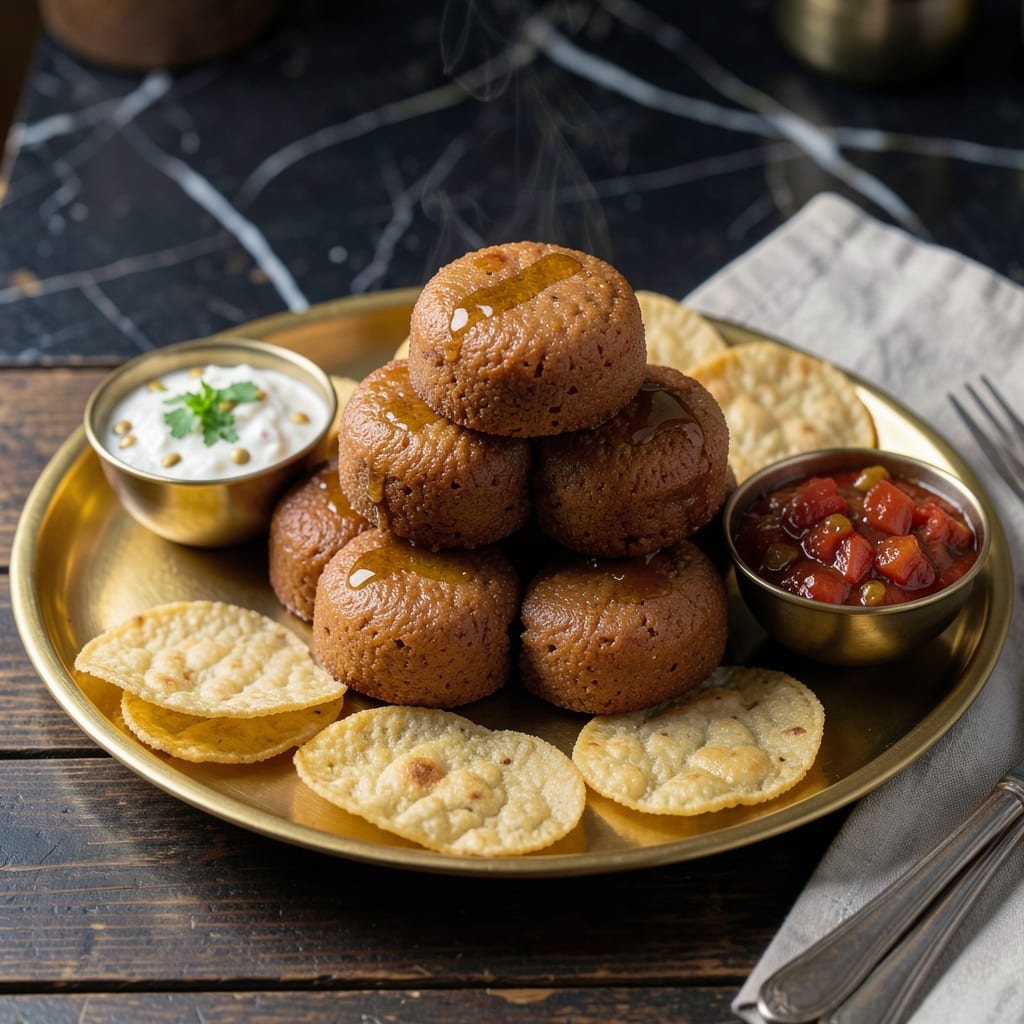
This traditional South Indian dish transforms humble matta rice into light, airy idlis through a time-tested fermentation process.
The key lies in proper soaking and grinding to achieve the perfect batter consistency. Fermentation develops the characteristic tangy flavor and fluffy texture that define authentic idlis.
Steaming the batter in special molds yields soft, pillowy results every time. The vegan preparation maintains cultural authenticity while delivering restaurant-quality outcomes at home.
Serve these with coconut chutney and sambar for a complete South Indian breakfast experience. This method ensures consistent results with minimal effort.
Ingredients for Matta Rice Idli
Traditional matta rice and urad dal create the base for these fermented South Indian idlis.
| Ingredient | Amount | Notes |
|---|---|---|
| Matta Rice 🌾 | 2 cups | Uncooked, short-grain variety |
| Urad Dal 🌱 | ¾ cup | Whole black gram, split |
| Fenugreek Seeds 🌿 | ½ tsp | For fermentation aid |
| Salt 🧂 | 1 ½ tsp | Adjust to taste after fermentation |
| Water 💧 | 4 cups | For soaking and grinding |
| Coconut Oil 🥥 | 1 tbsp | For greasing molds |
| Curry Leaves 🍃 | 10 pieces | Optional, for tempering |
| Mustard Seeds 🌿 | ½ tsp | Optional, for tempering |
| Green Chilies 🌶️ | 2 whole | Finely chopped, optional |
| Fresh Ginger 🌿 | 1 piece | 1-inch, grated, optional |
The matta rice is non-negotiable here—look for Kerala or Tamil Nadu varieties at Indian grocery stores like Patel Brothers or Indian Bazaar. Quality urad dal should be cream-colored, not yellow, indicating freshness. Fenugreek seeds, though small in quantity, are crucial for proper fermentation. Always buy whole seeds rather than powder for better results.
No urad dal? Split mung beans can substitute in a pinch, though texture will differ slightly. Matta rice can be replaced with parboiled rice at a 1:1 ratio, but the flavor profile changes. For tempering, skip curry leaves if unavailable—asafoetida (hing) adds depth. Green chilies can be omitted or replaced with black pepper for mild heat.
Soaked rice and dal keep in the fridge for 24 hours before grinding. Fermented batter stays good for 2 days refrigerated, though best used fresh. Cooked idlis reheat well—store in airtight containers for up to 3 days.
Why You’ll Love This Recipe
- One-Bowl Magic: Soak, grind, steam—all in one vessel. No fancy tools, just my trusty mixer and a steamer.
- Deep Earthy Flavor: Matta rice brings this nutty, robust taste that pairs perfectly with the slight tang from fermented urad dal.
- Breakfast or Dinner: I’ve served these fluffy idlis for lazy Sunday brunches and quick weeknight dinners alike.
- Budget-Friendly Staple: A kilo of matta rice and a handful of urad dal makes dozens. Honestly, it’s my most cost-effective meal.
Step-by-Step Instructions for Matta Rice Idli
Master the fermentation and steaming process for light, airy idlis with authentic texture and flavor.
Step 1: Soak and Prepare the Grains
Rinse the 2 cups Matta Rice and 0.75 cup Urad Dal separately in multiple changes of water until the liquid runs clear. This removes surface starch and prevents sourness in the final product.
Soak the rice and dal with 0.5 tsp Fenugreek Seeds in separate bowls, each covered with 2 cups Water (using half of the 4 cups Water total). The rice needs at least 6 hours of soaking, while the dal requires 4-6 hours. You’ll notice the urad dal nearly doubles in volume when properly soaked.
Step 2: Grind to Perfect Batter Consistency
Drain the soaked dal completely and grind it first with the remaining soaking water as needed, using 1-2 tablespoons at a time from the reserved 4 cups Water. The dal batter should be smooth and fluffy, with a thick, paste-like consistency.
Next, drain the rice and grind it with just enough water to form a slightly coarse batter. Combine both batters in a large bowl with 1.5 tsp Salt, mixing thoroughly with your hands. The ideal batter should coat the back of a spoon but still fall off slowly when tilted.
Step 3: Ferment for Optimal Fluffiness
Cover the bowl with a clean kitchen towel and let it ferment in a warm place for 8-12 hours. In cooler climates, place it in an oven with the light on or near a warm appliance. The batter will rise significantly and develop a slightly tangy aroma.
You’ll know fermentation is complete when the batter has nearly doubled in volume and appears bubbly with a light, airy texture. At this stage, it should have a pleasant sourness, which is crucial for that authentic idli flavor.
Step 4: Steam the Idlis to Perfection
Lightly grease idli molds with 1 tbsp Coconut Oil, ensuring all surfaces are coated to prevent sticking. Fill each mold with batter up to ¾ full, as the idlis will expand during steaming.
Bring water to a rolling boil in your steamer. Place the molds inside, cover with a lid, and steam for 10-12 minutes on medium-high heat. The idlis are done when a toothpick inserted in the center comes out clean and they’ve pulled away slightly from the edges of the mold.
Step 5: Temper and Serve (Optional)
If desired, prepare a tempering with 1 tbsp Coconut Oil, 0.5 tsp Mustard Seeds, 10 pieces Curry Leaves, 2 whole Green Chilies (finely chopped), and grated 1 piece Fresh Ginger. Heat the oil until the mustard seeds begin to pop, then add the remaining ingredients.
Pour this tempering over the steamed idlis just before serving. Serve the idlis hot with coconut chutney or sambar, enjoying their soft, spongy texture and the subtle nuttiness of the matta rice.
Pro Tips For Making Matta Rice Idli
- Soak Overnight: Matta rice needs a full 8-10 hours in water to soften properly—any less and your idlis will turn out dense. I learned this the hard way after ending up with brick-like idlis twice in a row.
- Grind Urad Dal Cold: Use chilled water when grinding urad dal to prevent overheating, which can ruin the fermentation. Sounds weird, but it works: your batter will rise better and taste lighter.
- Ferment Fully: Resist the urge to rush fermentation—let the batter sit for at least 12 hours in a warm place. After my first few flat idlis, I finally figured out that patience is non-negotiable here.
- Use Enough Salt: Matta rice idlis need more salt than you think, especially since the batter is mild. I skip this when I’m lazy, but the dish is noticeably better when I season it just right—about 1.5 teaspoons for a standard batch.
Best Sauces and Condiments for This Dish
Classic Coconut Chutney
This is my go-to pairing for idlis. Blend 1 cup grated coconut with ½ cup roasted chana dal, 2 green chilies, 1-inch ginger, and a pinch of salt. The texture should be smooth but slightly grainy. 🥥
Spicy Tomato Chutney
For a tangy kick, blend 3 ripe tomatoes, 3 dried red chilies, 1 tsp tamarind paste, and ½ tsp cumin seeds. Temper with 1 tsp mustard seeds and curry leaves in 1 tbsp coconut oil for depth.
Sambar for Dipping
A South Indian staple. Cook ½ cup toor dal with 1 cup mixed vegetables (drumsticks, carrot, eggplant) in 2 cups water. Add 1 tbsp sambar powder and temper with mustard seeds, curry leaves, and asafoetida.
Mint-Coriander Chutney
Combine 1 cup fresh mint, 1 cup cilantro, 2 green chilies, and 1 tbsp lemon juice. Blend with ¼ cup water for a refreshing, herby dip. This cuts through the idli’s mildness beautifully.
Gunpowder Chutney
Mix ½ cup chana dal, 1 tbsp urad dal, 2 tbsp sesame seeds, and 4 dried red chilies. Dry roast, blend with ½ tsp salt, and drizzle with 1 tbsp coconut oil. Sprinkle this spicy powder on top for crunch. ✨
Curd (Yogurt) Dip
Whisk 1 cup plain yogurt with ½ tsp salt, ½ tsp roasted cumin powder, and 1 tbsp chopped cilantro. The coolness balances the idli’s warmth perfectly.
Nutrition Facts
Frequently Asked Questions
Why use matta rice instead of regular rice?
Matta rice has a higher fiber content and nuttier flavor. Its coarse texture helps create fluffier idlis with better structure during fermentation and steaming.
How do I know when the batter is properly fermented?
Look for nearly doubled volume with a bubbly, airy texture. The batter should have a pleasant tangy aroma. In cool climates, this takes 10-12 hours.
Can I make idlis without an idli steamer?
Yes! Use any steamer or even a pressure cooker (without the whistle) with a perforated plate. Grease muffin molds or small cups to use as substitutes.
What if my idlis turn out dense instead of fluffy?
This usually means under-fermentation or over-grinding. Ensure the batter rests in a warm place for at least 8 hours and grind the rice coarsely.

- Mujadara Rice and Lentils Recipe: Earthy Spiced Lentils With Caramelized Onions - November 1, 2026
- Naija Fried Rice Recipe: Street-Style Spice With Veggie Crunch - November 1, 2026
- Mushy Rice Recipe: Fluffy Grains Transformed in Minutes - November 1, 2026