
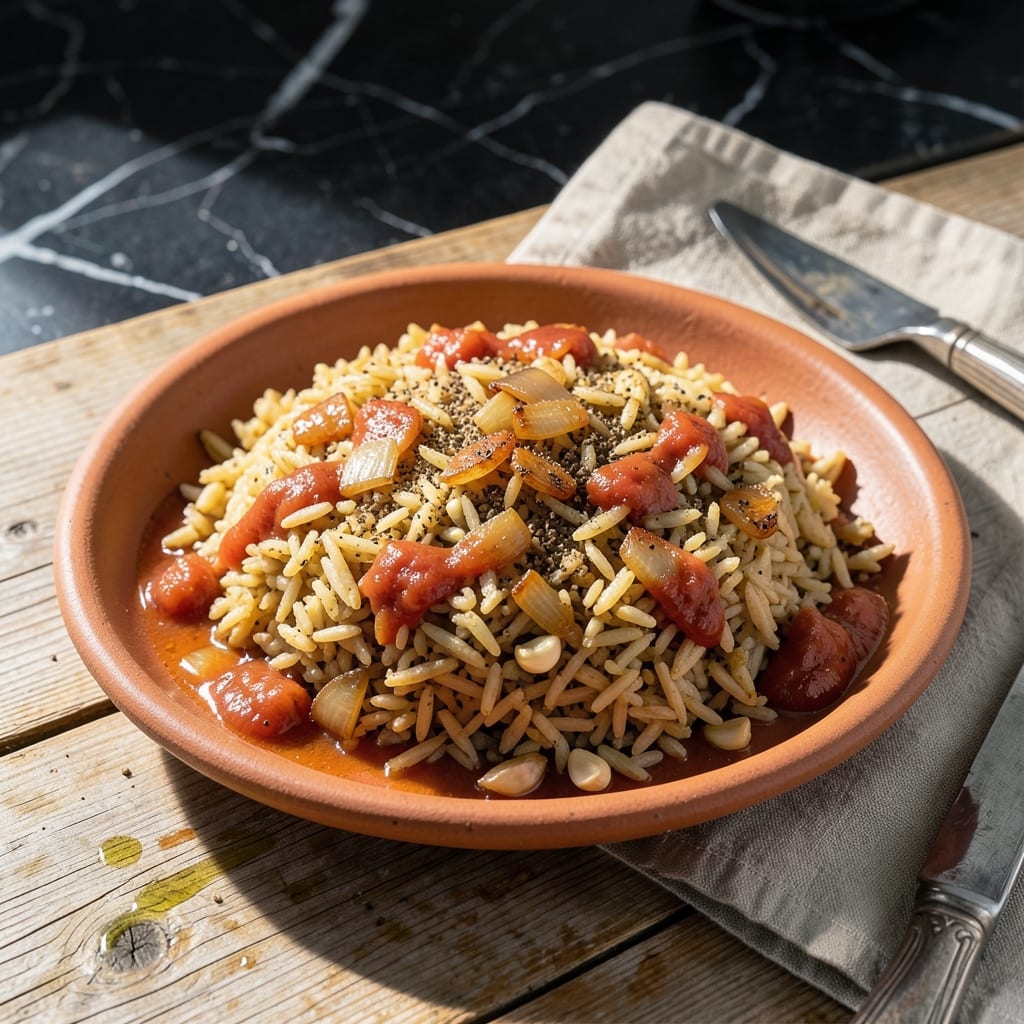
This Mexican rice pilaf transforms simple ingredients into a flavorful side dish that complements any meal. Toasted spices and tomato infusion create a rich, aromatic base that makes every bite memorable.
The process begins with blooming cumin and garlic in oil, then incorporates long-grain rice and tomato sauce. A quick simmer allows the grains to absorb all the bold flavors without turning mushy.
What emerges is perfectly cooked rice with a vibrant color and layered taste—savory from the spices, slightly sweet from the tomatoes, and fragrant throughout. It’s a versatile dish that pairs well with proteins or stands alone.
Ready in under 30 minutes, this recipe delivers restaurant-quality results with minimal effort. The technique ensures consistency every time.
Ingredients for Mexican Rice Pilaf
Transform humble pantry staples into a vibrant, restaurant-quality side dish with these ingredients.
| Ingredient | Amount | Notes |
|---|---|---|
| Long-Grain White Rice 🍚 | 1 ½ cups | Rinsed until water runs clear |
| Tomato Sauce 🍅 | 1 cup | Plain, no herbs added |
| Vegetable Oil 🫒 | ¼ cup | Neutral flavor preferred |
| Garlic Cloves 🧄 | 4 cloves | Minced finely |
| Ground Cumin 🌿 | 1 ½ tsp | Freshly toasted for best flavor |
| Onion 🧅 | 1 whole | Medium, finely diced |
| Chicken Stock 🥣 | 2 ½ cups | Low-sodium preferred |
| Bay Leaf 🍃 | 1 whole | Removed before serving |
| Salt 🧂 | 1 tsp | Diamond Crystal kosher salt |
| Ground Black Pepper 🌶️ | ½ tsp | Freshly ground |
| Fresh Cilantro 🌿 | ¼ cup | Chopped, for garnish |
| Lime 🍈 | 1 whole | Juiced for brightness |
| Green Bell Pepper 🌶️ | 1 whole | Finely diced, seeds removed |
The rice quality matters here. Long-grain white rice like Carolina Gold or Basmati gives the best texture—avoid instant or parboiled varieties. For the cumin, Penzeys or McCormick offer consistent quality. The tomato sauce should be plain—no Italian herbs added. Hunts or Muir Glen are reliable brands for this application.
No tomato sauce? Blended canned tomatoes work in a pinch. For a deeper tomato flavor, add 1 tbsp of tomato paste along with the sauce. The cumin can be substituted with half the amount of ground coriander for a different but complementary profile. Vegetable stock can replace chicken stock for a fully vegetarian version—Better Than Bouillon makes an excellent one.
Store dry rice in an airtight container for up to 2 years. The cooked pilaf keeps in the refrigerator for 4-5 days and freezes well for 3 months. Always reheat gently with a splash of water to restore moisture and prevent drying out.
Why You’ll Love This Recipe
- One Pot Wonder: I love that I only need a single pot—just sauté the garlic in oil, add rice and cumin, then let the tomato sauce work its magic.
- Rich and Warm: The cumin and garlic give this rice a deep, cozy flavor that’s way more exciting than plain white rice.
- Feeds the Crew: It’s my go-to for tacos, burritos, or even as a side—doubles easily for a crowd.
- Budget Stretcher: Long-grain rice and pantry staples mean I can make a big batch for pennies. Leftovers? Even better the next day.
Step-by-Step Instructions for Mexican Rice Pilaf
This method delivers perfectly fluffy grains with layers of toasted spice and tomato depth.
Step 1: Toast the Rice and Aromatics
Heat the 0.25 cup vegetable oil in a large, heavy-bottomed pot over medium heat. Add the 1.5 cups long-grain white rice and stir frequently for 5-7 minutes until the grains turn golden brown and release a nutty aroma.
Immediately add the finely diced onion, finely diced green bell pepper, and minced garlic cloves. Sauté for 3-4 minutes until the vegetables soften and the garlic becomes fragrant. This toasting step is crucial—it creates a deep, nutty base that defines the pilaf’s character.
Step 2: Bloom the Spices and Incorporate Liquids
Stir in the 1.5 tsp ground cumin, 1 tsp salt, and 0.5 tsp ground black pepper. Cook for 30 seconds until the spices become aromatic, being careful not to let them burn. The cumin should release its warm, earthy scent, signaling it’s ready for the next step.
Pour in the 1 cup tomato sauce and 2.5 cups chicken stock, then add the bay leaf. Stir well to combine, scraping up any browned bits from the bottom of the pot. These fond bits are packed with flavor and will dissolve into the cooking liquid.
Step 3: Simmer to Perfection
Bring the mixture to a boil, then reduce the heat to low, cover the pot with a tight-fitting lid, and let it simmer undisturbed for 18-20 minutes. Resist the urge to peek—steam is what cooks the rice evenly and prevents a gummy texture.
After the allotted time, remove the pot from heat and let it sit covered for an additional 5 minutes. This resting period allows the rice to steam in its own moisture, ensuring each grain is tender and separate. Remove and discard the bay leaf before serving.
Step 4: Finish and Garnish
Fluff the rice gently with a fork to separate the grains. The texture should be light and fluffy, with each grain distinct yet cohesive. Taste and adjust seasoning if needed, though the initial measurements should provide perfect balance.
Transfer the pilaf to a serving dish and garnish with the 0.25 cup chopped fresh cilantro and a generous squeeze of lime juice. The acidity from the lime brightens the rich, earthy flavors, while the cilantro adds a fresh, herbal note that complements the dish beautifully.
Pro Tips For Making Mexican Rice Pilaf
- Toast the Rice: Cook the rice in oil for 3-4 minutes until golden—this keeps it from turning mushy when you add the tomato sauce.
- Bloom the Cumin: Add ground cumin to the hot oil with the garlic for 20-30 seconds to wake up its flavor before the liquid goes in.
- Skip the Rinse: I learned this the hard way—don’t rinse the rice first, as the starch helps create that classic slightly sticky texture.
- Use bold tomato sauce: After burning three batches, I finally figured out that a deep, thick tomato sauce gives the rice its rich color and flavor, so don’t water it down.
Troubleshooting Perfect Results
Rice Stays Crunchy
If your rice remains firm after 20 minutes, the heat may be too low. Increase to medium-low and add ¼ cup hot water. Cover and cook for 5 more minutes. I once had this happen with a finicky stove.
Mushy Texture
Overcooked rice often means too much liquid or peeking too soon. Use exactly 2.5 cups stock and resist lifting the lid. Each time you peek, you lose precious steam that’s cooking your rice evenly.
Bland Flavor
If your pilaf lacks depth, toast the rice longer next time—aim for a deeper golden color. Also, ensure your cumin is fresh; old spices lose potency. I keep mine in a cool, dark pantry.
Burnt Bottom
This happens when heat is too high during toasting. Keep it at medium heat and stir constantly. If you see dark brown bits forming too quickly, lower the heat and add the vegetables immediately.
Uneven Cooking
Uneven cooking usually means an ill-fitting lid. Use a heavy pot with a tight lid to trap steam. I swear by my Le Creuset Dutch oven for this. Also, ensure your burner is level.
If one side cooks faster, rotate the pot 180 degrees halfway through cooking. 💡
Nutrition Facts
Frequently Asked Questions
Can I use brown rice instead of white?
Yes, but adjust the liquid to 3 cups stock and simmer for 40-45 minutes. Brown rice needs more water and time to soften. The texture will be chewier but still flavorful.
Why do I need to toast the rice first?
Toasting deepens the nutty flavor and prevents mushiness. The 5-7 minutes of browning creates a base layer that absorbs the spices and tomato sauce better.
How do I fix undercooked rice?
Add ¼ cup hot water, cover, and cook on medium-low heat for 5 more minutes. Avoid stirring—just let the steam finish the job.
Can I make this ahead of time?
Cooked pilaf keeps in the fridge for 4-5 days. Reheat with a splash of water to restore moisture and fluff with a fork.

- Mujadara Rice and Lentils Recipe: Earthy Spiced Lentils With Caramelized Onions - November 1, 2026
- Naija Fried Rice Recipe: Street-Style Spice With Veggie Crunch - November 1, 2026
- Mushy Rice Recipe: Fluffy Grains Transformed in Minutes - November 1, 2026