
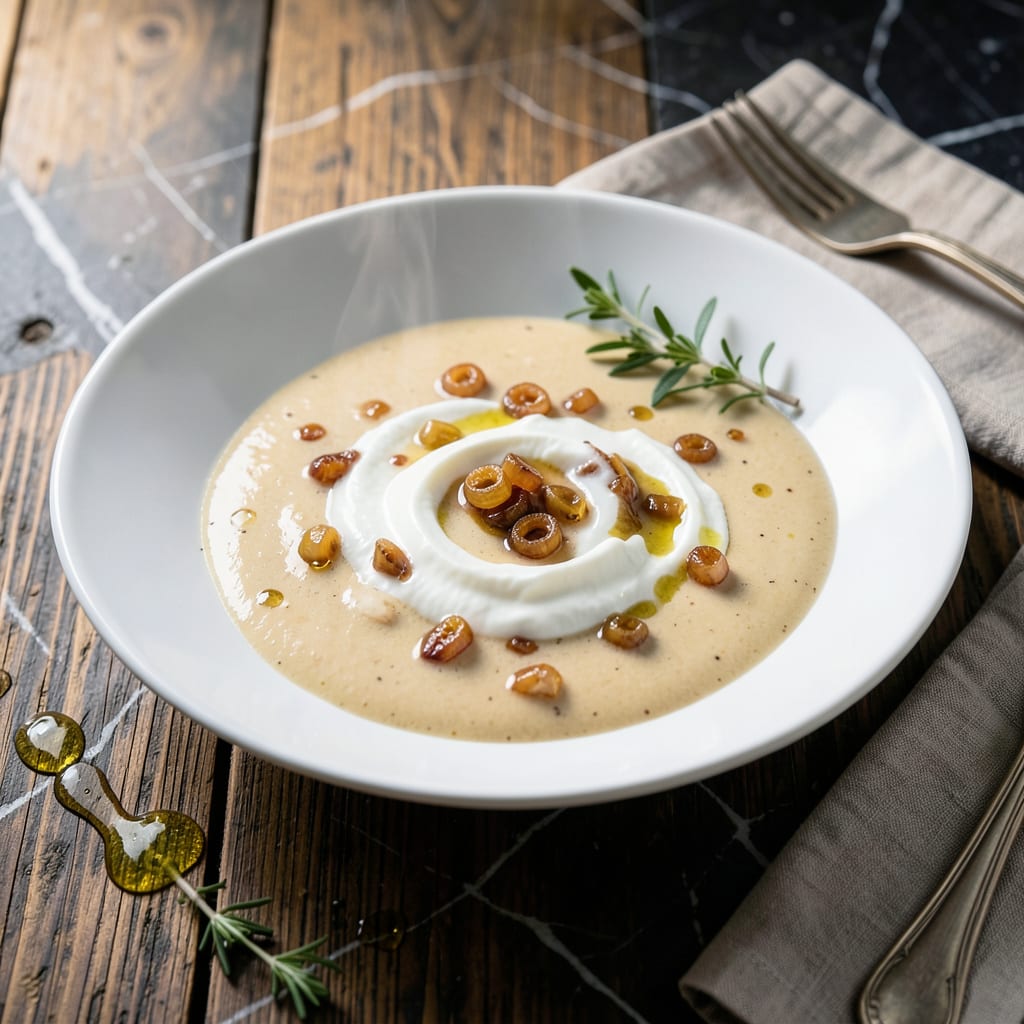
This rich, velvety sauce transforms homemade chicken stock into a gourmet foundation for countless dishes. A simple reduction technique concentrates flavors without overcomplicating the process.
Perfect for finishing sauces, soups, or braises, this base delivers professional results with minimal effort. The key lies in patience and precise temperature control during reduction.
Ingredients for Chicken Stock Sauce
Ten ingredients create a restaurant-quality sauce base with minimal effort required.
| Ingredient | Amount | Notes |
|---|---|---|
| Homemade Chicken Stock 🍲 | 4 cups | High-quality, unsalted preferred |
| Shallots 🧅 | 2 whole | Finely minced for depth |
| Garlic Cloves 🧄 | 3 cloves | Crushed for robust flavor |
| Dry White Wine 🍷 | ½ cup | Sauvignon Blanc or Pinot Grigio |
| Heavy Cream 🥛 | ½ cup | Full-fat for velvety texture |
| Unsalted Butter 🧈 | 2 tbsp | European-style for richness |
| Fresh Thyme Sprigs 🌿 | 3 whole | Stems removed before use |
| Bay Leaf 🍃 | 1 whole | Dried or fresh, whole |
| Kosher Salt 🧂 | ½ tsp | Diamond Crystal preferred |
| Black Peppercorns 🌶️ | ½ tsp | Freshly cracked for aroma |
[recipeingredientscaler]
The stock is non-negotiable—homemade chicken stock yields the deepest flavor. Store-bought works in a pinch, but seek out low-sodium, high-quality brands like Bonafide Provisions or Kettle & Fire. The shallots and garlic should be fresh, firm, and free of sprouts. For the wine, a crisp dry white adds acidity without overpowering. Avoid cooking wines; they lack complexity.
No white wine? Dry vermouth is an excellent substitute. Heavy cream can be replaced with full-fat coconut milk for a dairy-free version (though the flavor profile shifts). If fresh thyme is unavailable, dried thyme at one-third the amount works. The butter should remain unsalted to control seasoning precisely. European-style offers superior fat content for emulsification.
This sauce base keeps for 5 days refrigerated in an airtight container. For longer storage, freeze in ice cube trays for up to 3 months. Reheat gently over low heat, stirring frequently to prevent separation. Avoid boiling to maintain the velvety texture.
Why You’ll Love This Recipe
- I’ll be real: this sauce turns simple roasted chicken into a restaurant-worthy dish, even on a Tuesday night.
- One Pot Wonder: Honestly, just sauté shallots, deglaze with wine, and let the stock simmer—minimal active time, maximum payoff.
- Rich and Velvety: The heavy cream melts into the reduced stock, creating a sauce so lush I’ve caught myself licking the spoon.
- Dinner Party Hero: I’ll be real: this sauce turns simple roasted chicken into a restaurant-worthy dish, even on a Tuesday night.
Step-by-Step Instructions for Chicken Stock Sauce
Transform your base ingredients into a rich, velvety sauce using classic French technique.
Step 1: Build the Aromatic Foundation
Heat a heavy-bottomed saucepan over medium heat. Add the 2 tbsp unsalted butter and allow it to melt until it foams but does not brown. Immediately add the 2 whole shallots (finely minced) and cook for 3-4 minutes until translucent and just beginning to caramelize around the edges.
Add the 3 cloves garlic cloves (crushed) and cook for an additional 30 seconds until fragrant. Be careful not to let the garlic brown, as this will impart a bitter flavor to your sauce. The mixture should smell deeply aromatic at this stage.
Step 2: Deglaze and Infuse with Wine
Pour in the 0.5 cup dry white wine and stir to release any browned bits from the bottom of the pan. Increase heat to medium-high and simmer for 4-5 minutes until the liquid reduces by about half. This step is crucial for building depth of flavor in your sauce.
As the wine reduces, add the 3 whole fresh thyme sprigs and 1 whole bay leaf. These herbs will infuse the sauce with subtle earthy notes. Continue simmering until the alcohol smell dissipates and the mixture takes on a slightly syrupy consistency.
Step 3: Incorporate Stock and Reduce
Add the 4 cups homemade chicken stock and bring to a gentle simmer. Reduce heat to medium-low and let it cook for 15-20 minutes until the liquid reduces by about one-third. You should see small bubbles breaking the surface occasionally, not a rolling boil.
During this reduction, the sauce will begin to develop a richer color and more concentrated flavor. Skim off any foam or impurities that rise to the surface with a fine-mesh skimmer for a cleaner final product.
Step 4: Finish with Cream and Season
Reduce heat to low and stir in the 0.5 cup heavy cream. Simmer gently for 5-7 minutes until the sauce thickens enough to coat the back of a spoon. The cream should create a velvety texture without curdling.
Remove from heat and discard the thyme sprigs and bay leaf. Season with the 0.5 tsp kosher salt and 0.5 tsp black peppercorns (freshly cracked). Taste and adjust seasoning if needed, remembering that the sauce will be further reduced when used in other dishes.
Step 5: Strain and Serve
Strain the sauce through a fine-mesh sieve into a clean saucepan or bowl. Press gently on the solids to extract all the flavor, but avoid forcing through any sediment that might make the sauce cloudy.
Your sauce is now ready to use as a base for other dishes or served as-is over pasta, poultry, or vegetables. For best results, use immediately or store in an airtight container in the refrigerator for up to 3 days.
Pro Tips For Making Chicken Stock Sauce
- Reduce First: I learned this the hard way—boil down your homemade chicken stock by half before adding anything else. The flavor gets concentrated, and you’ll skip that watery, thin sauce disappointment.
- Sweat the Shallots: Cook your finely diced shallots in a little fat until translucent, about 3-4 minutes—no color, just softness. It builds a sweet base that raw shallots just can’t match.
- Deglaze with Wine: After sautéing garlic, pour in the dry white wine and scrape up those browned bits. Sounds small, but those stuck-on bits are pure flavor waiting to dissolve into your sauce.
- Temper the Cream: Before stirring in the heavy cream, mix in a spoonful of the hot stock first. It prevents curdling and gives you a silky, stable sauce every time.
Wine and Beer Pairings for These Flavors
White Wine Pairings
A crisp Sauvignon Blanc from New Zealand mirrors the wine used in the sauce, enhancing its bright acidity. I love how the citrus notes complement the shallots and garlic. For a richer option, try a Chardonnay from Burgundy with its buttery profile. 🍷
Red Wine Options
If you prefer red, a light-bodied Pinot Noir from Oregon works beautifully with the chicken stock base. Its earthy notes pair well with the thyme and bay leaf. Avoid heavy tannic reds like Cabernet Sauvignon that can overwhelm the sauce.
Beer Pairings
A Belgian witbier like Hoegaarden offers citrus and spice notes that cut through the creaminess. For something darker, a German Helles lager provides clean, crisp refreshment without competing with the sauce’s delicate flavors.
Sparkling Choices
Dry sparkling wines like Prosecco or Cava cleanse the palate between bites. The bubbles contrast nicely with the velvety texture. I find a chilled glass of Brut Champagne elevates any dish featuring this sauce. ✨
Serve at 45-50°F for optimal effervescence and flavor.
Non-Alcoholic Options
For alcohol-free pairings, try a sparkling apple cider with its crisp acidity. A dry ginger beer also works well, as its spice notes complement the sauce’s depth without overpowering it.
Nutrition Facts
Frequently Asked Questions
Can I use store-bought stock instead of homemade?
Yes, but choose low-sodium, high-quality brands like Bonafide Provisions. Homemade offers deeper flavor, while store-bought works in a pinch. The reduction process will intensify whatever stock you use.
How do I prevent the sauce from breaking or curdling?
Keep heat at low when adding cream, and stir constantly. Avoid boiling after cream is added. If it starts to separate, whisk in 1 tsp cold butter to re-emulsify.
What’s the best way to thicken it if needed?
Create a slurry with 1 tsp cornstarch and 1 tbsp cold water, then whisk into simmering sauce. Cook for 1-2 minutes until thickened. Never add dry cornstarch directly.
Can I make this sauce dairy-free?
Replace heavy cream with full-fat coconut milk. Use vegan butter for sautéing. The flavor will differ slightly but still deliver a rich, velvety texture.

- Jollof Rice Sauce Recipe: West African Tomato and Spice Infusion - September 25, 2026
- Japanese Rice Soup Recipe: Umami-Rich Comfort in a Bowl - September 25, 2026
- Homemade Cream Of Rice Recipe: Silk-Smooth Breakfast in Minutes - September 25, 2026