
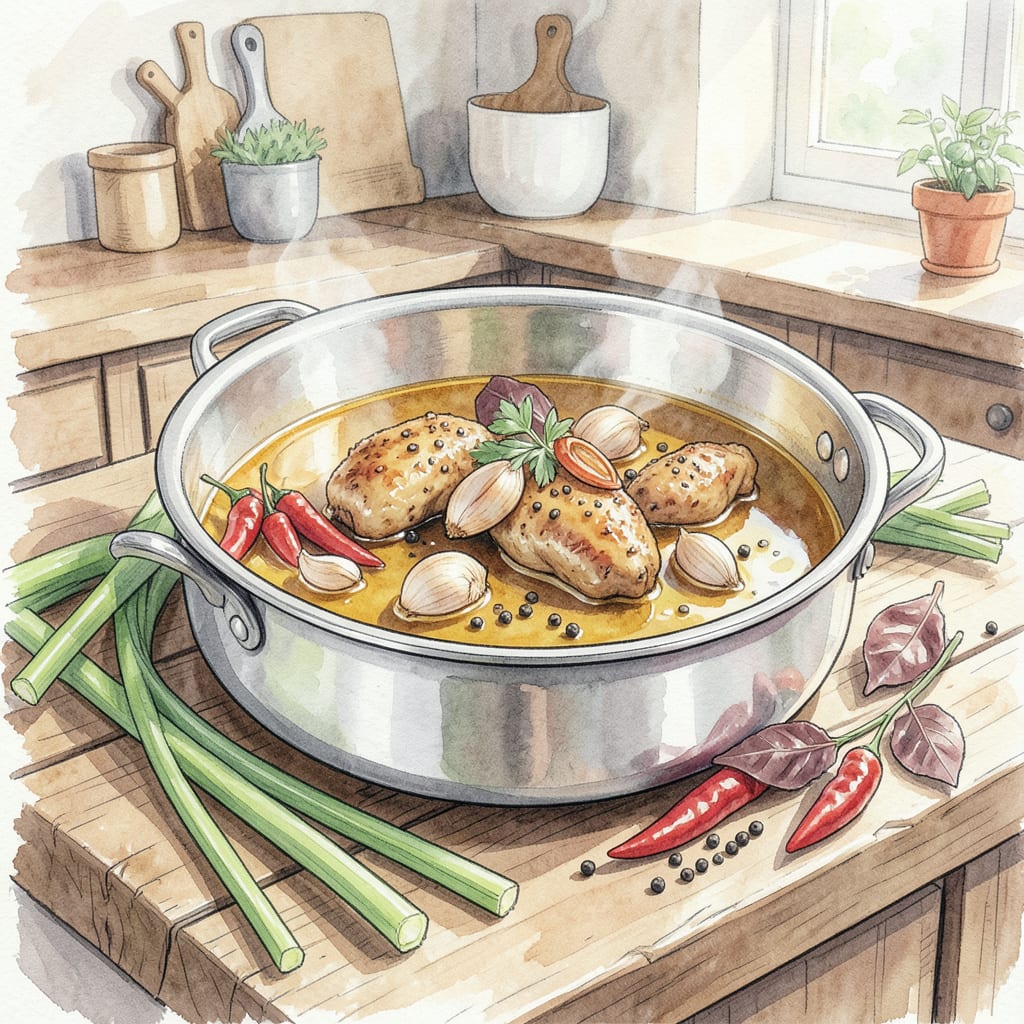
I’ve perfected a Mang Inasal-style chicken oil recipe that captures the authentic flavor of Filipino cooking. This aromatic oil is a game-changer for enhancing the taste of your favorite dishes.
By combining high-quality ingredients and a simple preparation method, you’ll create a rich, savory oil that’s perfect for cooking or as a finishing touch. This recipe stays true to the traditional Filipino flavor profile that Mang Inasal is known for.
Ingredients for Mang Inasal Chicken Oil
Simple ingredients create this authentic Mang Inasal-style chicken oil.
| Ingredient | Amount | Notes |
|---|---|---|
| Vegetable Oil 🫒 | 2 cups | Neutral flavor preferred |
| Garlic Cloves 🧄 | 6 cloves | Peeled, smashed |
| Bay Leaves 🌿 | 4 whole | Fresh or dried |
| Black Peppercorns 🌶️ | 2 tbsp | Lightly crushed |
| Red Chili Peppers 🌶️ | 4 pieces | Sliced, seeds removed |
| Lemongrass Stalks 🌿 | 2 whole | Bruised |
For authentic flavor, use high-quality ingredients. Costco or Asian markets often have fresh lemongrass. Fresh bay leaves are ideal, but dried work too. The chili peppers can be adjusted based on desired heat level.
No lemongrass? Omit or substitute with lemon zest. For more heat, add extra chili peppers or use cayenne pepper to taste. The garlic can be minced if you prefer a stronger flavor throughout the oil.
Store the chicken oil in an airtight container in the refrigerator for up to 2 weeks. Reheat gently before use to restore the flavors and aroma.
Step-by-Step Instructions for Mang Inasal Chicken Oil
Creating this authentic Filipino flavor enhancer is straightforward with these detailed steps.
Step 1: Combine Aromatics and Oil
Begin by heating the 2 cups Vegetable Oil in a medium saucepan over medium-low heat. I’ve found that using a neutral-flavored oil works best here, as it allows the other ingredients to shine. Once the oil reaches 250°F, add the 6 cloves Garlic Cloves, 4 whole Bay Leaves, 2 tbsp Black Peppercorns, 4 pieces Red Chili Peppers, and 2 whole Lemongrass Stalks. The mixture should be fragrant and slightly simmering.
Be careful not to let the oil get too hot—the garlic can burn quickly if the temperature spikes. Stir gently to distribute the aromatics evenly throughout the oil. You’ll notice the oil starting to take on the flavors of the aromatics almost immediately.
Step 2: Infuse the Oil
Maintain the oil temperature between 200°F to 250°F for 30-45 minutes, stirring occasionally. This slow infusion process allows the flavors to meld together beautifully. You’ll see the oil take on a slightly darker hue and become more fragrant as it infuses.
During this time, keep an eye on the garlic—if it starts to turn golden brown, remove it immediately to prevent bitterness. The bay leaves should be fully fragrant, and the lemongrass should be slightly softened when done.
Step 3: Strain and Cool the Oil
After the infusion period, remove the saucepan from the heat. Carefully strain the oil through a fine-mesh sieve or cheesecloth into a clean, heat-proof container. Discard the solids—the aromatics have done their job. Let the oil cool completely to room temperature before transferring it to an airtight container.
Once cooled, store the chicken oil in a cool, dark place. It will keep for several weeks when properly stored. The oil will thicken slightly when chilled, but it should return to its liquid state when warmed gently.
Pro Cooking Tips for Perfect Results
Temperature Control Tips
Maintaining the right temperature is crucial for this chicken oil recipe. Heat the oil to 250°F initially, then reduce to 200-250°F for infusion. I use a thermometer to monitor the temperature closely and adjust the heat as needed.
Aromatic Ingredient Prep
Proper preparation of aromatics enhances the flavor. Slightly crush the peppercorns to release their oils, and bruise the lemongrass stalks to release their citrusy flavor. This step makes a noticeable difference in the final product’s aroma.
Infusion Time Management
The 30-45 minute infusion time allows flavors to meld beautifully. Stir occasionally to prevent aromatics from settling. I find that setting a timer helps me
Straining Techniques
Use a fine-mesh sieve or cheesecloth to strain the oil effectively. This removes all solids, resulting in a clear, clean oil. Be patient and pour slowly to avoid disturbing the sediment.
Storage Best Practices
Store the chicken oil in an airtight container in a cool, dark place. It keeps for several weeks when stored properly. I like to use glass jars with tight-fitting lids for storage.
Reheating Tips
When you’re ready to use the chicken oil, gently reheat it to restore its liquid state and flavor. Avoid overheating, as this can degrade the oil’s quality. A short warm-up on low heat is all you need. 🔥
Nutrition Facts

- Jollof Rice Sauce Recipe: West African Tomato and Spice Infusion - September 25, 2026
- Japanese Rice Soup Recipe: Umami-Rich Comfort in a Bowl - September 25, 2026
- Homemade Cream Of Rice Recipe: Silk-Smooth Breakfast in Minutes - September 25, 2026