
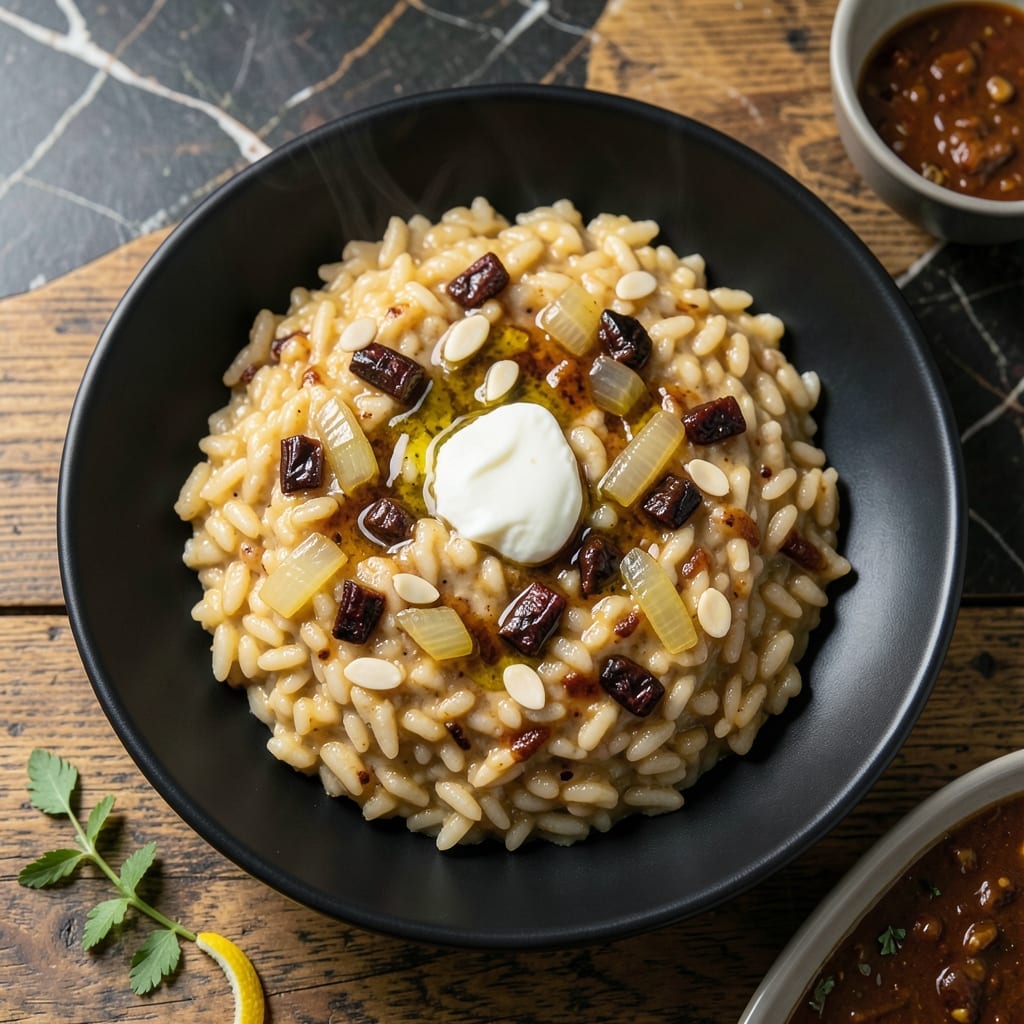
This Mexican-style risotto transforms traditional Arborio rice with bold, smoky flavors that redefine comfort food. The slow-cooking technique ensures a creamy texture while chipotle adds depth without overpowering the dish.
I developed this recipe to bring restaurant-quality results to your home kitchen. The method requires patience but rewards with perfectly al dente rice in a rich, velvety sauce. Every spoonful delivers complex layers of flavor.
What makes this version special is the balance of heat and creaminess. The chipotle provides just enough smokiness to elevate the dish, while the Arborio rice maintains its signature creamy consistency.
Serve as a side or main dish. This technique guarantees professional results every time.
Ingredients for Mexican Risotto Rice
Arborio rice meets smoky chipotle in this elevated vegetarian dish with professional flair.
| Ingredient | Amount | Notes |
|---|---|---|
| Arborio Rice 🍚 | 1 ½ cups | Short-grain for creamy texture |
| Vegetable Stock 🥣 | 6 cups | Low-sodium preferred, kept warm |
| Chipotle Peppers in Adobo Sauce 🌶️ | 2 whole | Minced, adjust for heat preference |
| Yellow Onion 🧅 | 1 whole | Finely diced for even cooking |
| Garlic Cloves 🧄 | 4 cloves | Minced for maximum flavor infusion |
| Unsalted Butter 🧈 | 4 tbsp | Divided for toasting and finishing |
| Extra-Virgin Olive Oil 🫒 | 2 tbsp | For initial sautéing |
| Dry White Wine 🍷 | ½ cup | Sauvignon Blanc or Pinot Grigio recommended |
| Parmesan Cheese 🧀 | ¾ cup | Freshly grated for authentic finish |
| Heavy Cream 🥛 | ¼ cup | For final creamy enrichment |
| Ground Cumin 🌿 | 1 tsp | Toasted for depth of flavor |
| Smoked Paprika 🌶️ | 1 tsp | Enhances chipotle’s smokiness |
| Kosher Salt 🧂 | 1 ½ tsp | Adjust to taste as needed |
| Freshly Ground Black Pepper 🌶️ | ½ tsp | For finishing the dish |
| Fresh Cilantro 🌿 | ¼ cup | Chopped, for bright garnish |
The Arborio rice is non-negotiable for authentic risotto texture. Look for Italian-grown brands like Acquerello or Carnaroli at specialty grocers such as Eataly or Whole Foods. The vegetable stock should be high-quality—Imagine or Pacific Foods offer robust options. For the chipotles, San Marcos or La Costeña cans provide consistent heat and smokiness. Select firm, plump peppers without excessive sauce.
No white wine? Dry vermouth works perfectly as a substitute. For a non-alcoholic option, use additional warm vegetable stock with a splash of lemon juice. The Parmesan can be swapped for Pecorino Romano (more assertive) or Gran Padano (milder). If avoiding dairy, use nutritional yeast at half the quantity, though texture will differ. The cream can be omitted for a lighter version.
Store Arborio rice in an airtight container for up to 1 year. Opened chipotles keep submerged in sauce in the fridge for 2 weeks or freeze for 6 months. Finished risotto is best served immediately but can be reheated with a splash of stock to restore creaminess.
Why You’ll Love This Recipe
- One Pot Wonder: I love that this comes together in a single pot—just stir, sip stock, and let the Arborio soak up all the smoky chipotle flavor.
- Smoky Heat: The adobo sauce from those canned chipotles gives it this deep, smoky kick that’s way more interesting than plain rice.
- Weeknight Hero: Honestly, it’s my go-to for busy evenings when I need something hearty but hands-off.
- Feeds More Later: Leftovers taste even better the next day, and the rice plumps up perfectly when reheated with a splash of stock.
Step-by-Step Instructions for Mexican Risotto Rice
Master the technique of building creamy texture while layering bold Mexican flavors throughout.
Step 1: Toast the Rice and Aromatics
Heat the 2 tbsp Extra-Virgin Olive Oil and 2 tbsp Unsalted Butter in a wide, heavy-bottomed pot over medium heat. Add the finely diced Yellow Onion and cook for 3-4 minutes until translucent and soft.
Stir in the minced Garlic Cloves, 1 tsp Ground Cumin, and 1 tsp Smoked Paprika, cooking for 1 minute until fragrant. Immediately add the 1.5 cups Arborio Rice and toast for 2 minutes, stirring constantly, until the edges appear slightly translucent.
This toasting step develops nutty depth in the rice and prevents a gummy final texture. The spices should bloom in the fat, releasing their aromatic oils into the base of your dish.
Step 2: Deglaze and Begin the Risotto Process
Pour in the 0.5 cup Dry White Wine and stir until the liquid has been fully absorbed by the rice. The alcohol should cook off completely, leaving behind its bright acidity to balance the richness.
Add the minced Chipotle Peppers in Adobo Sauce and 1.5 tsp Kosher Salt at this stage. The chipotles will infuse their smoky heat into the rice as the liquid absorbs. Begin adding the 6 cups Vegetable Stock, 1 cup at a time, stirring frequently.
Wait until each addition is nearly fully absorbed before adding the next. This gradual process coaxes the starches out of the rice, creating the signature creamy consistency. The mixture should maintain a gentle simmer throughout.
Step 3: Build Creaminess Through Patience
Continue adding the Vegetable Stock and stirring for 18-20 minutes total. The rice should be al dente—tender with a slight firmness at the center—when fully cooked. Taste frequently during the final 5 minutes to catch it at the perfect moment.
If you run out of stock before the rice is done, use hot water to finish. The grains should be plump and suspended in a thick, creamy sauce that ribbons off your spoon. Avoid the temptation to rush this step; the gradual absorption is what creates the luxurious texture.
Stir in the remaining 2 tbsp Unsalted Butter and 0.25 cup Heavy Cream during the final minute of cooking. This enriches the risotto and adds a velvety finish to the dish.
Step 4: Finish and Rest for Optimal Texture
Remove the pot from heat and stir in the 0.75 cup Parmesan Cheese and 0.5 tsp Freshly Ground Black Pepper. The cheese should melt completely into the risotto, creating a glossy, cohesive sauce that clings to each grain.
Cover the pot and let the risotto rest for 2 minutes. This brief pause allows the final bits of liquid to be absorbed and the flavors to meld together. The texture should be creamy but not soupy, with each grain distinct yet bound by the sauce.
Taste and adjust seasoning if needed, though the Kosher Salt added earlier should provide sufficient flavor. The risotto should have a pronounced smoky heat from the chipotles balanced by the richness of the cheese and cream.
Serve immediately, garnished with the 0.25 cup Fresh Cilantro for a bright, fresh contrast to the deep, smoky flavors. The cilantro adds a pop of color and a clean finish to each bite.
Pro Tips For Making Mexican Risotto Rice
- Toast the Rice First: Cook the Arborio rice in the pot for 2-3 minutes before adding liquid—this builds a nutty base that balances the smoky chipotle. I learned this the hard way after making mushy risotto without it.
- Warm the Stock: Keep your vegetable stock simmering in a separate pot. Adding cold stock slows the cooking and makes the rice seize up, turning your risotto gluey instead of creamy.
- Mince the Chipotles Fine: Those adobo-soaked peppers pack heat and texture, so chop them small to distribute the flavor evenly. Sounds tedious, but it prevents surprise spicy bites.
- Stir, Don’t Overmix: Keep the rice moving just enough to prevent sticking, but don’t stir constantly—overworking releases too much starch and you’ll end up with a dense, gummy dish.
Dietary Considerations for This Recipe
Gluten-Free Friendly
This dish is naturally gluten-free since Arborio rice contains no gluten. Just ensure your vegetable stock is certified gluten-free—I trust Imagine Foods or Pacific Foods brands. Always check labels to avoid hidden gluten in broths or seasonings. 💪
Vegetarian Adaptation
The base recipe is already vegetarian, but for strict vegetarians, confirm your Parmesan cheese uses vegetarian rennet. BelGioioso offers a reliable vegetarian option. The chipotles in adobo are always vegetarian, so no substitutions needed there.
Dairy-Free Version
Swap Parmesan cheese for ½ cup nutritional yeast to maintain a cheesy flavor. Replace heavy cream with full-fat coconut milk for richness. Use olive oil instead of butter throughout. The texture will differ slightly but still deliver great flavor.
Vegan Modifications
Combine the dairy-free swaps above and ensure your white wine is vegan—Frey Vineyards is a dependable choice. The chipotles and rice are already vegan. This version keeps all the smoky depth while being completely plant-based.
Allergen Awareness
This recipe contains dairy from butter, cream, and cheese. For nut allergies, confirm your vegetable stock is nut-free. The dish is egg-free and soy-free as written, making it safe for those common allergies. 🌱
Low-Sodium Option
Use low-sodium vegetable stock and reduce kosher salt to 1 tsp. The chipotles and Parmesan add natural saltiness, so taste before adding extra. This adjustment cuts sodium without sacrificing the dish’s bold flavors.
Nutrition Facts
Frequently Asked Questions
Can I use a different type of rice?
Arborio is ideal for its high starch content, but Carnaroli or Vialone Nano work too. Avoid long-grain varieties like jasmine—they won’t achieve the same creamy texture.
How do I adjust the spice level?
Start with 1 chipotle pepper for mild heat, or add 1 extra for intense smokiness. Remove seeds for less heat. Taste before final seasoning.
Why does my risotto turn out mushy?
Over-stirring or adding too much stock at once can break the rice grains. Stir gently and add stock 1 cup at a time, waiting for absorption.
Can I make this ahead of time?
Risotto is best served fresh, but you can prep ingredients in advance. Store cooked risotto in the fridge for up to 2 days—reheat with extra stock.

- Mujadara Rice and Lentils Recipe: Earthy Spiced Lentils With Caramelized Onions - November 1, 2026
- Naija Fried Rice Recipe: Street-Style Spice With Veggie Crunch - November 1, 2026
- Mushy Rice Recipe: Fluffy Grains Transformed in Minutes - November 1, 2026