
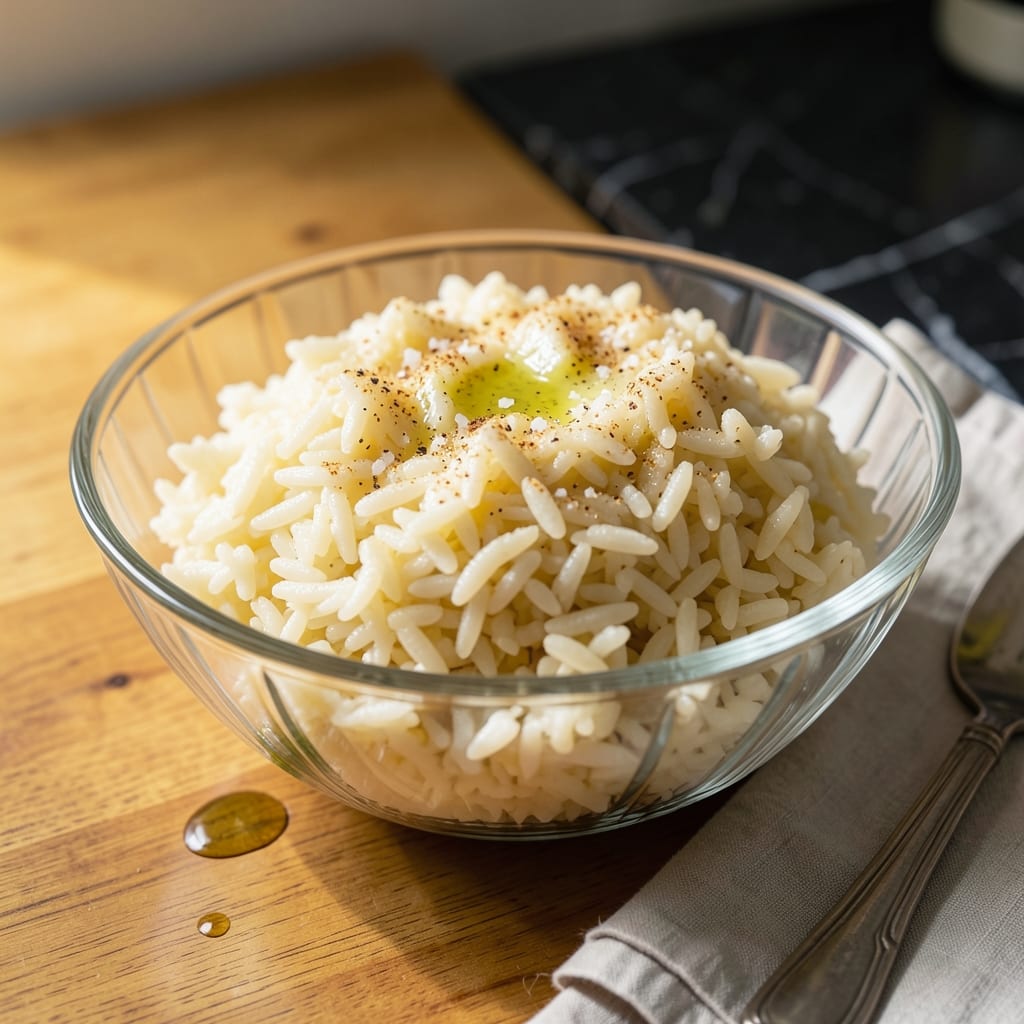
Perfect rice every time doesn’t require a stovetop. This method delivers fluffy, evenly cooked grains using just your microwave and a rice cooker container.
With precise water ratios and cooking times, you’ll achieve restaurant-quality results without monitoring or stirring. No special equipment—just simple, reliable technique.
Ingredients for Microwave Rice Cooker
Ten ingredients deliver restaurant-quality rice with precision and simplicity in your microwave.
| Ingredient | Amount | Notes |
|---|---|---|
| Long-Grain White Rice 🍚 | 2 cups | Rinsed until water runs clear |
| Water 💧 | 4 cups | Filtered or distilled preferred |
| Unsalted Butter 🧈 | 2 tbsp | Optional for richness |
| Sea Salt 🧂 | 1 tsp | Fine grain for even distribution |
| Garlic Powder 🧄 | ½ tsp | For subtle aromatic depth |
| Onion Powder 🧅 | ½ tsp | Complements the garlic |
| Bay Leaf 🌿 | 1 whole | Optional for infused flavor |
| Fresh Parsley 🌿 | 2 tbsp | Chopped, for garnish |
| Lemon Zest 🍋 | 1 tsp | For bright finishing note |
| Extra-Virgin Olive Oil 🫒 | 1 tsp | For serving drizzle |
The rice quality is paramount. Jasmine or basmati provide optimal texture and fragrance for this method. Avoid pre-cooked or minute rice varieties, as they require different hydration. Whole Foods and Trader Joe’s carry high-quality long-grain options. For best results, rinse the grains thoroughly to remove excess starch, which prevents gumminess.
No long-grain white rice? Brown rice works but requires 50% more water and extended cooking time. For a nuttier flavor, wild rice blends can be used, though texture will vary. The butter is optional but adds richness—olive oil or coconut oil serve as excellent vegan alternatives. Bay leaf can be omitted, but it adds subtle depth worth the effort.
Uncooked rice stores indefinitely in a cool, dry pantry. Once prepared, leftovers keep for 4-5 days refrigerated in an airtight container. Reheat with a splash of water to restore moisture. This method scales perfectly—simply maintain the 1:2 rice-to-water ratio.
Why You’ll Love This Recipe
- No-Fuss Cooking: I toss everything in a microwave-safe bowl and walk away—no pots, no stirring, just set it and forget it.
- Buttery Garlic Bite: The butter and garlic powder turn plain rice into something rich and aromatic, with every grain packed with flavor.
- Meal Prep Hero: I make a big batch on Sunday and it pairs perfectly with proteins or veggies all week long.
- Pocket-Friendly Staple: Long-grain white rice stretches a few ingredients into a filling side dish that costs pennies per serving.
Step-by-Step Instructions for Microwave Rice Cooker
Here is the method for achieving perfectly steamed rice with minimal effort and maximum consistency.
Step 1: Rinse and Prepare the Long-Grain White Rice
Place the 2 cups Long-Grain White Rice in a fine-mesh strainer and rinse under cold running water until the water runs completely clear. I use my fingers to agitate the grains gently, which helps remove excess starch that could make the rice gummy.
Draining thoroughly is critical—any residual water will throw off your liquid ratio. I always give the strainer a firm shake and tap it against the sink to remove every last drop. This step ensures each grain remains separate and fluffy in the final dish.
Step 2: Combine Ingredients in Microwave-Safe Container
Transfer the rinsed rice to a large microwave-safe bowl or container with at least 8-cup capacity (the rice expands significantly). Add the 4 cups Water, 2 tbsp Unsalted Butter, 1 tsp Sea Salt, 0.5 tsp Garlic Powder, 0.5 tsp Onion Powder, and 1 whole Bay Leaf. Stir gently to distribute the seasonings evenly.
The butter should melt slightly as you stir, creating a subtle sheen on the water’s surface. Ensure the bay leaf is fully submerged—this infuses the liquid with its aromatic qualities during cooking. The container should be no more than three-quarters full to prevent boiling over.
Step 3: Microwave on High with Strategic Pauses
Cover the container loosely with a microwave-safe lid or damp paper towel. This allows steam to escape while preventing splatters. Microwave on high power for 10 minutes, then carefully remove and stir the rice—watch for escaping steam to avoid burns.
Return to the microwave and cook for another 8-10 minutes on high. At this point, most of the water should be absorbed, and you’ll see the rice grains plumping up. If there’s still standing water, continue in 2-minute increments until the liquid is fully absorbed and the surface appears dry with small steam vents.
Step 4: Rest and Fluff for Optimal Texture
Once the rice is cooked, let it rest covered for 5 minutes. This crucial step allows the grains to steam in their own residual heat, ensuring even doneness throughout. You’ll notice the texture transforms from slightly firm to perfectly tender during this time.
Remove the bay leaf, then use a fork to fluff the rice gently from the bottom up. This separates the grains and releases excess moisture. The rice should be light and airy, with each grain distinct yet cohesive. Taste and adjust seasoning if needed, though the initial measurements should yield perfect balance.
Step 5: Finish and Serve with Aromatic Garnishes
Transfer the rice to a serving dish and sprinkle with the 2 tbsp Fresh Parsley and 1 tsp Lemon Zest. The parsley adds a vibrant pop of color and freshness, while the lemon zest provides a bright citrus note that elevates the dish.
Drizzle with the 1 tsp Extra-Virgin Olive Oil just before serving. This final touch adds a silky mouthfeel and subtle fruitiness that complements the savory rice. Serve immediately while hot, as the texture is best when freshly made.
Pro Tips For Making Microwave Rice Cooker
- Rinse the Rice: Always give your long-grain white rice a quick rinse under cold water before cooking—it removes excess starch and keeps the grains separate instead of gummy.
- Use a Wide Bowl: I learned this the hard way—pick a microwave-safe bowl at least twice as wide as the rice height so it cooks evenly and doesn’t boil over.
- Cover with a Plate: Skip the lid and use a microwave-safe plate tilted slightly to trap steam while letting excess pressure escape, which prevents soggy rice.
- Stir Mid-Cook: Pause halfway through, give it a quick stir, and add a pat of that unsalted butter—this keeps the rice from clumping and adds a rich flavor.
Common Mistakes When Making This Dish
Skipping the Rinse
I always rinse my rice until the water runs clear to remove excess starch. Skipping this step often results in gummy, sticky grains. Even 30 seconds of rinsing makes a noticeable difference in texture. 💡
Wrong Water Ratio
The 1:2 rice-to-water ratio is non-negotiable for long-grain white rice. Too much water leads to mushy results, while too little leaves grains undercooked. I measure precisely with a clear measuring cup for consistency.
Overfilling the Container
Rice expands significantly during cooking. Using a container smaller than 8-cup capacity risks overflow and mess. I learned this the hard way with my first microwave rice attempt—cleanup was a nightmare.
Skipping the Stir
That mid-cook stir after the first 10 minutes is crucial. It redistributes heat and liquid, preventing uneven cooking. I use a long spoon to reach the bottom safely without burning my fingers.
Ignoring the Rest
Letting the rice rest covered for 5 minutes after cooking allows grains to steam evenly. Cutting this short gives you firm, undercooked centers. The waiting is always worth it for that perfect fluffy texture.
Wrong Covering Method
A tight seal traps too much steam, while no cover loses moisture. I use a microwave-safe lid slightly ajar or a damp paper towel for the ideal balance. This small detail prevents both soggy and dry results. ✨
Nutrition Facts
Frequently Asked Questions
Can I use brown rice instead of white?
Yes, but increase water to 1:2.5 rice-to-water ratio and add 10-12 minutes of cooking time. Brown rice needs more hydration and time to soften.
Why does my rice turn out mushy?
Overcooking or too much water are common culprits. Stick to the 1:2 ratio for white rice and avoid extending cooking time beyond 20 minutes total.
Can I make this in a regular bowl?
Only if it’s microwave-safe and has at least 8-cup capacity. A dedicated rice cooker container isn’t required, but the size is critical to prevent overflow.
How do I store leftovers?
Keep in an airtight container in the fridge for up to 4-5 days. Reheat with a splash of water to restore moisture.

- Mujadara Rice and Lentils Recipe: Earthy Spiced Lentils With Caramelized Onions - November 1, 2026
- Naija Fried Rice Recipe: Street-Style Spice With Veggie Crunch - November 1, 2026
- Mushy Rice Recipe: Fluffy Grains Transformed in Minutes - November 1, 2026