
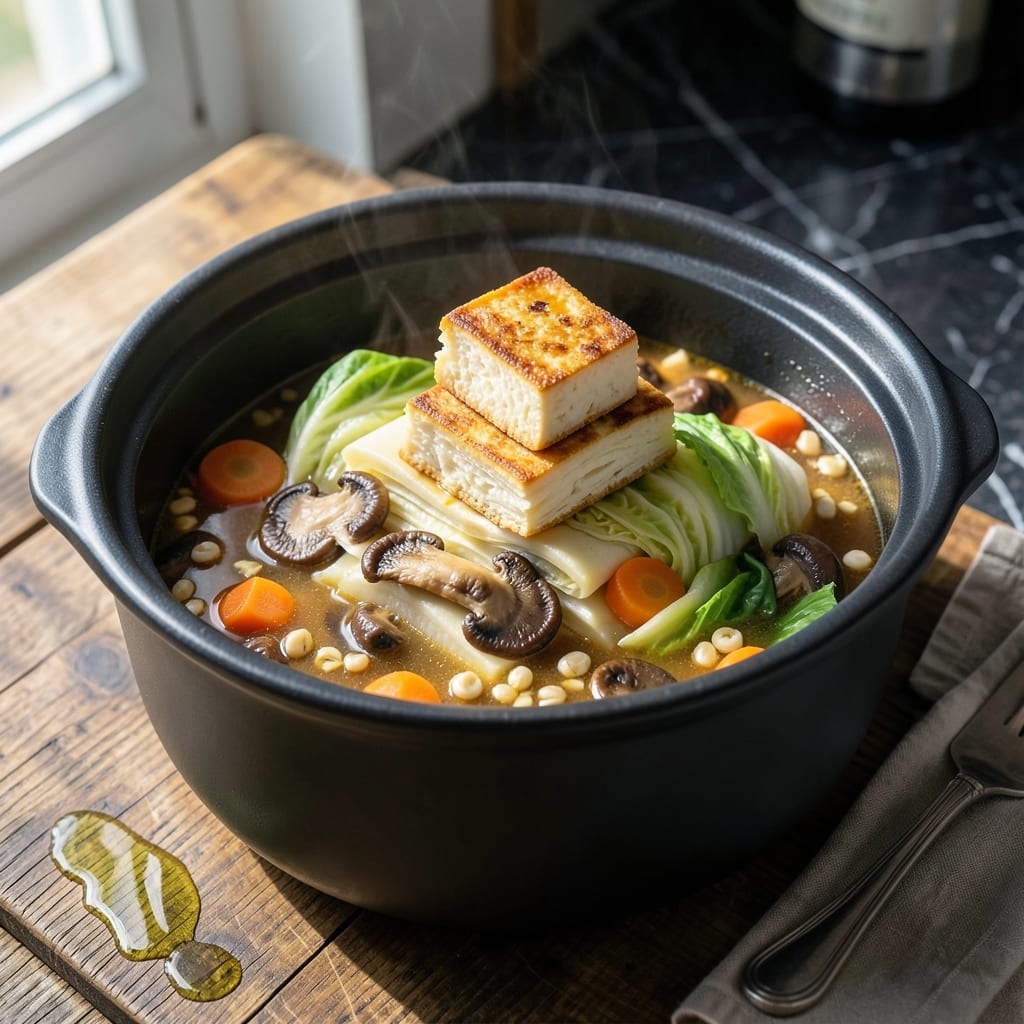
This rice cooker method transforms traditional nabe into an effortless layered masterpiece. The appliance handles the slow simmering, allowing ingredients to steam and meld together perfectly.
Each layer builds flavor as vegetables and proteins absorb the rich broth. The technique creates a visually stunning dish with minimal hands-on time. It’s ideal for weeknight meals or impressive gatherings.
You’ll achieve tender ingredients with a savory depth that rivals stovetop versions. The rice cooker’s consistent heat ensures even cooking without monitoring.
Serve directly from the pot for a communal dining experience. This approach delivers authentic taste with modern convenience.
Ingredients for Mille Feuille Nabe Recipe Rice Cooker
Traditional Japanese ingredients layered for maximum flavor and visual impact in your rice cooker.
| Ingredient | Amount | Notes |
|---|---|---|
| Dashi Broth 🥣 | 4 cups | Traditional Japanese stock base |
| Firm Tofu 🧈 | 14 oz | Drained, pressed, sliced thin |
| Napa Cabbage 🥬 | 1 whole | Thinly sliced, about 4 cups |
| Shiitake Mushrooms 🍄 | 6 pieces | Fresh or rehydrated dried |
| Carrots 🥕 | 2 whole | Julienned for even cooking |
| Daikon Radish 🥬 | 1 whole | Peeled, thinly sliced |
| Shungiku (Edible Chrysanthemum Greens) 🌿 | 1 bunch | Optional, adds authentic flavor |
| Thinly Sliced Beef 🥩 | ½ lb | Ribeye or sirloin recommended |
| Soy Sauce 🫒 | 2 tbsp | Low-sodium preferred |
| Mirin 🍶 | 2 tbsp | Sweet rice wine for depth |
| Sake 🍶 | 2 tbsp | Dry variety for balance |
| Green Onions 🧅 | 4 pieces | Thinly sliced for garnish |
| Sesame Oil 🫒 | 1 tsp | Toasted for finishing |
| Garlic Cloves 🧄 | 3 cloves | Minced for broth infusion |
| Ginger Root 🌿 | 1 whole | Sliced thin, about 1 inch |
Dashi is non-negotiable here. Instant dashi granules from Asian markets work perfectly for beginners, but traditional kombu and bonito flakes deliver superior depth. Mitsuba or Kikkoman brands are reliable. The tofu should be firm enough to hold its shape—Nasoya or House Foods have excellent organic options. For the beef, look for well-marbled cuts like ribeye or sirloin at Japanese specialty grocers for authentic texture.
No dashi? Vegetable broth with a piece of kombu simmered briefly gets you close. Short on shiitake? White button mushrooms work, though they lack the same umami depth. If you can’t find shungiku, substitute with spinach or baby bok choy. The sake and mirin can be swapped for dry white wine and a pinch of sugar, but the flavor profile will shift slightly.
Assemble just before cooking—keeps ingredients crisp. Leftovers hold 2-3 days refrigerated, though the layers lose some visual appeal. Best enjoyed fresh from the rice cooker for the full mille feuille effect.
Why You’ll Love This Recipe
- One-Pot Wonder: I just layer everything—tofu, cabbage, mushrooms—in the rice cooker with dashi, close the lid, and let it work its magic.
- Umami Bomb: The shiitakes soak up that dashi broth until every bite is packed with deep, savory richness.
- Weeknight Hero: Honestly, it’s my go-to for busy evenings when I need something warm and filling fast.
- Budget Stretcher: A block of tofu and a handful of veggies feed my whole family, and the leftovers taste even better the next day.
Step-by-Step Instructions for Mille Feuille Nabe in Rice Cooker
This precise layering technique ensures each ingredient cooks to perfection in the rice cooker.
Step 1: Prepare and Season the Broth Base
Pour the 4 cups Dashi Broth into the rice cooker pot. Add the 2 tbsp soy sauce, 2 tbsp mirin, and 2 tbsp sake, stirring to combine. Peel and slice the ginger root into thin coins, then mince the 3 cloves garlic cloves—add both to the broth.
This aromatic foundation infuses the liquid with depth. I recommend letting it sit for 5 minutes before layering to allow the flavors to begin melding. The alcohol in the sake and mirin will cook off during the process, leaving only their rich, balanced sweetness.
Step 2: Layer the Hearty Vegetables and Protein
Begin with the densest ingredients at the bottom. Thinly slice the 1 whole daikon radish and julienne the 2 whole carrots, arranging them in an even layer. Place the 6 pieces shiitake mushrooms on top, followed by the 14 oz firm tofu slices.
Next, add the 0.5 lb thinly sliced beef in a single layer. This order ensures the root vegetables cook thoroughly while the more delicate tofu and beef steam gently above. The beef’s thin cut guarantees quick, even cooking without toughness.
Step 3: Add the Delicate Greens and Final Touches
Thinly slice the 1 whole napa cabbage and arrange it over the beef. If using, add the 1 bunch shungiku on top. These greens will steam in the rising heat, softening just enough to retain texture. Close the rice cooker lid and set it to the standard cooking cycle.
The key is resisting the urge to stir. The mille feuille effect relies on undisturbed layers, allowing each component to cook in its own time while absorbing the broth’s umami. The process takes about 25-30 minutes, depending on your rice cooker’s wattage.
Step 4: Finish and Serve
Once the cooker switches to “keep warm,” let the nabe rest for 10 minutes to allow the flavors to settle. Carefully transfer portions to deep bowls, ensuring each serving captures all layers. Drizzle with the 1 tsp sesame oil and garnish with the 4 pieces green onions, thinly sliced.
The result should be a visually stunning, layered dish where each ingredient retains its identity while contributing to a harmonious whole. The broth will have reduced slightly, concentrating into a rich, savory liquid perfect for soaking up with rice or noodles.
Pro Tips For Making Mille Feuille Nabe Recipe Rice Cooker
- Layer Evenly: Alternate thin slices of tofu, cabbage, mushrooms, and carrots in the rice cooker, pressing down gently to fit. Sounds tedious, but it actually changes the outcome—each bite gets the same flavor and texture.
- Press the Tofu: Drain and press firm tofu for at least 15 minutes before slicing (I use a heavy pan on top). I learned this the hard way—skipping it leaves the layers watery and the broth diluted.
- Skip the Boiling: Use room-temperature dashi broth to avoid thermal shock to your rice cooker. After ruining a pot with sudden heat, I finally figured out cold or hot liquid can crack the ceramic.
- Slice Thin: Cut carrots and mushrooms into 1/8-inch slices for quick, even cooking. My grandmother swore by this, and she was right—thicker pieces stay crunchy while the cabbage turns to mush.
Make-Ahead Tips for Leftovers
Prep Ahead Strategy
I always prep my vegetables the night before—thinly slice the daikon, julienne the carrots, and shred the napa cabbage. Store them in separate airtight containers in the fridge. This cuts your morning assembly time to just 5 minutes. 💡
Broth Infusion
You can make the dashi broth up to 2 days ahead and refrigerate it. Reheat slightly before adding to the rice cooker. For extra depth, I steep a 2-inch piece of kombu in the broth overnight in the fridge.
Protein Prep
Slice the tofu and beef the morning of cooking and keep them chilled. For the tofu, pressing it for 15 minutes with a heavy pan removes excess water. This ensures it absorbs more of the savory broth during cooking.
Layering Shortcut
If you’re short on time, pre-layer all ingredients in the rice cooker pot the night before. Cover and refrigerate, then cook in the morning. Just add 5 extra minutes to the cook time since ingredients start cold. ❄️
Garnish Prep
Slice the green onions and measure the sesame oil in advance. Store onions in a damp paper towel in a sealed bag. The oil can sit at room temperature. This way, finishing touches take seconds.
Rice Cooker Setup
Measure all your sauces—soy sauce, mirin, and sake—and have them ready in small bowls. I use 1-tbsp measuring spoons for accuracy. This streamlines the broth preparation step.
Nutrition Facts
Frequently Asked Questions
Can I use a different type of broth?
Yes! Chicken or vegetable broth works in a pinch. For best results, add a 2-inch piece of kombu to enhance the umami flavor. The taste will differ slightly but still be delicious.
What if I don’t have a rice cooker?
A deep pot with a tight lid works too. Simmer on low heat for 20-25 minutes, checking occasionally. The layering technique remains the same for that signature effect.
Can I add noodles to this dish?
Add udon or soba noodles on top of the cabbage layer. They’ll absorb the broth beautifully. Increase broth by 1 cup if using noodles.
How do I prevent the layers from sticking?
Lightly grease the rice cooker pot with oil before adding ingredients. Also, avoid overfilling—leave 1 inch of space at the top for steam circulation.

- Mujadara Rice and Lentils Recipe: Earthy Spiced Lentils With Caramelized Onions - November 1, 2026
- Naija Fried Rice Recipe: Street-Style Spice With Veggie Crunch - November 1, 2026
- Mushy Rice Recipe: Fluffy Grains Transformed in Minutes - November 1, 2026