
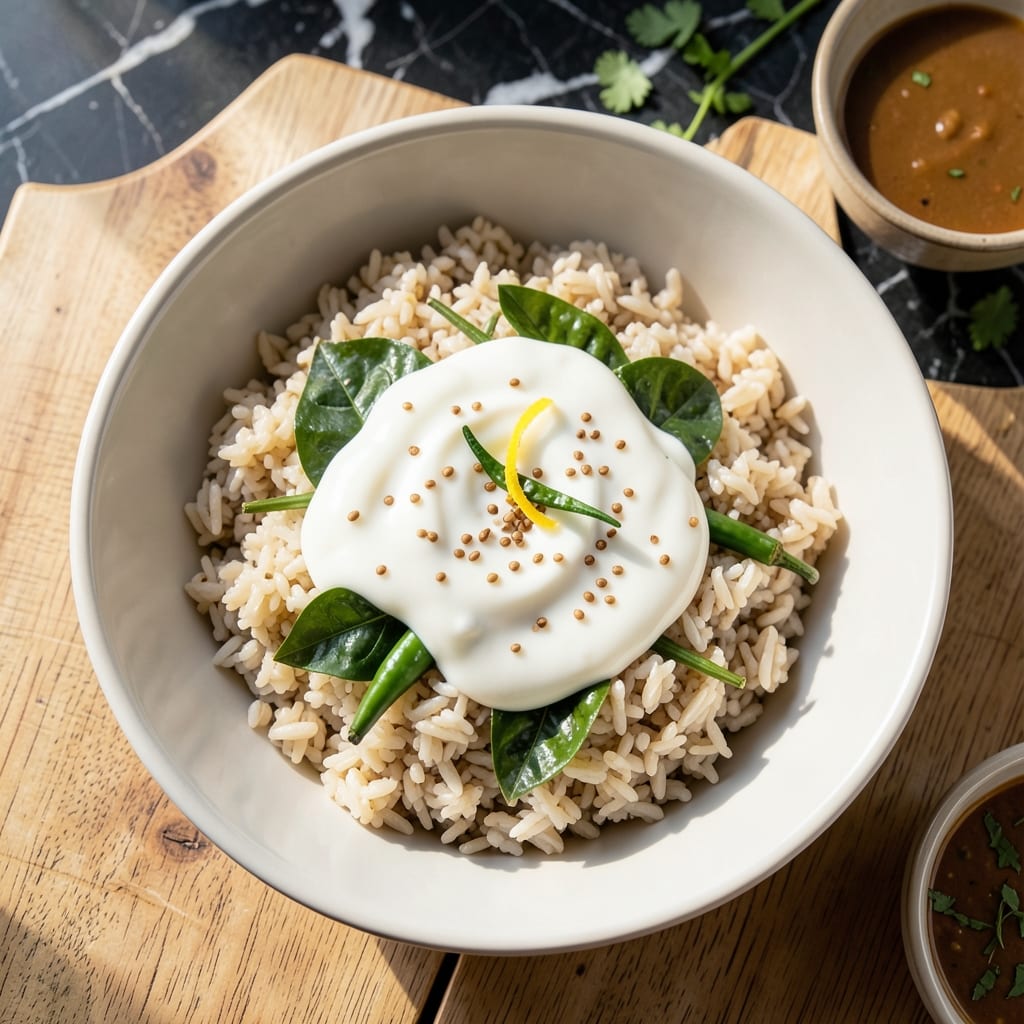
There’s something uniquely satisfying about the combination of nutty millet, fluffy rice, and tangy curd in this traditional dish. I’ve refined this recipe to highlight the natural flavors while maintaining a creamy texture that’s both comforting and refreshing.
The beauty lies in its simplicity. Cooked millet and rice are blended with smooth curd, creating a balanced mixture that’s light yet filling. A tempering of mustard seeds, curry leaves, and green chilies adds depth without overpowering the main ingredients.
This dish works beautifully as a side or light meal, especially during warm weather. The contrast between the soft grains and the slightly tangy curd makes every bite interesting. It’s vegetarian comfort food at its most authentic.
Best served chilled or at room temperature, this creation gets better as the flavors meld together. Here’s how to make it perfectly every time.
Ingredients for Millet Curd Rice
Traditional grains meet creamy yogurt in this simple yet authentic vegetarian dish.
| Ingredient | Amount | Notes |
|---|---|---|
| Millet 🌾 | 1 cup | Rinsed until water runs clear |
| White Rice 🍚 | 1 cup | Basmathi or jasmine preferred |
| Plain Yogurt 🥛 | 2 cups | Whole milk for creaminess |
| Mustard Seeds 🌿 | 1 tsp | Black or yellow variety |
| Curry Leaves 🍃 | 10 pieces | Fresh preferred, dried acceptable |
| Green Chilies 🌶️ | 2 whole | Serrano or Thai, finely chopped |
| Coconut Oil 🥥 | 2 tbsp | Or neutral oil like vegetable |
| Salt 🧂 | 1 tsp | Adjust to taste preference |
| Urad Dal 🌾 | 1 tsp | Split black gram, optional |
| Asafoetida 🌿 | ¼ tsp | Hing, for authentic flavor |
| Fresh Cilantro 🌿 | ¼ cup | Chopped, for garnish |
| Ginger 🌿 | 1 tsp | Fresh, grated or minced |
The millet and rice quality matters here. Indian grocery stores carry the best variety—look for whole millet (not pearled) for that nutty texture. For rice, Basmathi or jasmine gives the perfect fluffiness. The yogurt should be whole milk and unsweetened—Greek yogurt works but may be thicker. Curry leaves are non-negotiable for authenticity; find them fresh at Patel Brothers or other South Asian markets.
No curry leaves? Dried curry leaf powder at half the amount works in a pinch. Can’t find urad dal? Skip it—the dish will still be delicious. For heat control, reduce green chilies to one or remove seeds. The tempering oil can be vegetable or coconut—both work well. If using pre-cooked rice or millet, cool completely before mixing to maintain texture.
Best served chilled, this keeps for 2 days in the fridge. The flavors deepen as it sits, so make it ahead. Freezing isn’t recommended—the yogurt can separate. Garnish with fresh cilantro just before serving for a bright finish.
Why You’ll Love This Recipe
- One Pot Meal: I just dump millet, rice, and yogurt together—no fancy steps, and the mustard seeds sizzle while I fold laundry.
- Tangy Comfort: That first bite of cool curd rice with the crunch of tempered mustard and curry leaves? Ridiculously good.
- Feeds Everyone: Honestly, it’s my go-to for summer lunches, picnics, or when the kids demand something light but filling.
- Stretches Far: Leftovers taste even better the next day, and a single batch feeds us for two meals on a tight budget.
Step-by-Step Instructions for Millet Curd Rice
This method ensures the perfect balance of nutty millet and creamy yogurt in every bite.
Step 1: Prepare the Millet and Rice Base
Rinse the 1 cup Millet and 1 cup White Rice together under cold water until the water runs clear. This removes excess starch and prevents a gummy texture. Drain thoroughly in a fine-mesh strainer.
In a large pot, combine the drained grains with 4 cups water and 1 tsp Salt. Bring to a boil over high heat, then reduce to low heat, cover, and simmer for 15-18 minutes until the water is absorbed and the grains are tender but still distinct.
Spread the cooked grains on a tray to cool slightly. This prevents the yogurt from curdling when combined later. The grains should be warm but not steaming.
Step 2: Temper the Yogurt Mixture
In a large bowl, whisk the 2 cups Plain Yogurt with 1 tsp Ginger until smooth. I use whole milk yogurt for its creamy texture, which is essential for authenticity.
Gradually add ½ cup of the warm cooked grains to the yogurt mixture while whisking constantly. This tempering process prevents the yogurt from separating. Once incorporated, fold in the remaining grains gently to maintain their individual texture.
Step 3: Create the Tempering for Flavor Depth
Heat the 2 tbsp Coconut Oil in a small pan over medium heat. Add the 1 tsp Mustard Seeds and let them sizzle for 10-15 seconds until they begin to pop.
Immediately add the 1 tsp Urad Dal, 10 pieces Curry Leaves, and 2 whole Green Chilies. Sauté for 30-45 seconds until the dal turns light golden brown and the curry leaves become crisp. Remove from heat and stir in the 0.25 tsp Asafoetida—its pungent aroma will mellow beautifully in the hot oil.
Step 4: Combine and Rest for Ideal Consistency
Pour the tempering mixture over the millet-yogurt combination. Fold everything together gently but thoroughly to distribute the flavors evenly. The hot oil will release its aromas into the dish, creating a fragrance that’s impossible to resist.
Cover the bowl and let it rest at room temperature for 15-20 minutes. This allows the grains to absorb the yogurt fully and the flavors to meld. The final texture should be creamy with visible grains, not soupy.
Garnish with the 0.25 cup Fresh Cilantro just before serving. The cilantro adds a fresh contrast to the rich, tangy flavors of the dish.
Pro Tips For Making Millet Curd Rice
- Soak the Millet: I learned this the hard way—soak millet for at least 30 minutes before cooking to cut the cooking time in half and prevent it from turning mushy.
- Temper the Yogurt: After ruining a batch with split curd, I now always mix a spoon of the hot rice into the yogurt first, then stir it back in to keep it smooth.
- Toast Mustard Seeds: Heat the oil until the mustard seeds start popping, then add curry leaves immediately—this releases their full flavor without burning them.
- Use Room-Temp Yogurt: Cold yogurt straight from the fridge can make the rice clump together; I pull mine out 15 minutes early for a creamier texture.
Regional Styles of This Recipe
South Indian Style
In Tamil Nadu, this dish is called Thayir Sadam and is a summer staple. They often use foxtail millet for its delicate texture and add grated cucumber or boiled mung beans for extra freshness. The tempering always includes curry leaves and mustard seeds for that unmistakable South Indian aroma. 🌿
Karnataka Variation
Karnataka’s version, known as Mosaru Anna, often incorporates coconut milk into the yogurt for added creaminess. They prefer little millet and add roasted peanuts for crunch. The tempering here includes chana dal along with the standard mustard seeds.
Andhra Pradesh Touch
Andhra’s spicier take includes red chili powder in the tempering and sometimes finely chopped onions. They use barnyard millet for its slightly sticky texture. The dish is often served with mango pickle on the side for extra tang.
Maharashtrian Style
In Maharashtra, they make Bhat with beaten rice instead of regular rice. The tempering includes cumin seeds and turmeric powder for a golden hue. They often add pomegranate seeds for a sweet-tart contrast. 💛
Kerala Version
Kerala’s version uses coconut oil exclusively for tempering and adds shallots for depth. They prefer brown rice for its nuttiness and sometimes mix in grated coconut for extra richness. The dish is often garnished with fried curry leaves.
Nutrition Facts
Frequently Asked Questions
Can I use Greek yogurt instead of regular?
Yes, but thin it with 2-3 tablespoons water first. Greek yogurt is thicker and may make the dish too dense. The texture should be pourable but not watery.
Why do the grains need to cool before mixing?
Hot grains can curdle the yogurt, creating a lumpy texture. Cooling to warm room temperature ensures a smooth, creamy blend while keeping the grains distinct.
How long can this be stored in the fridge?
It keeps well for 2 days refrigerated. The flavors actually improve overnight as they meld together. Avoid freezing as yogurt may separate.
What if I don’t have curry leaves?
Use ½ tsp dried curry leaf powder as substitute. In a pinch, bay leaves can work but won’t provide the same authentic flavor. The dish will still be tasty.

- Mujadara Rice and Lentils Recipe: Earthy Spiced Lentils With Caramelized Onions - November 1, 2026
- Naija Fried Rice Recipe: Street-Style Spice With Veggie Crunch - November 1, 2026
- Mushy Rice Recipe: Fluffy Grains Transformed in Minutes - November 1, 2026