
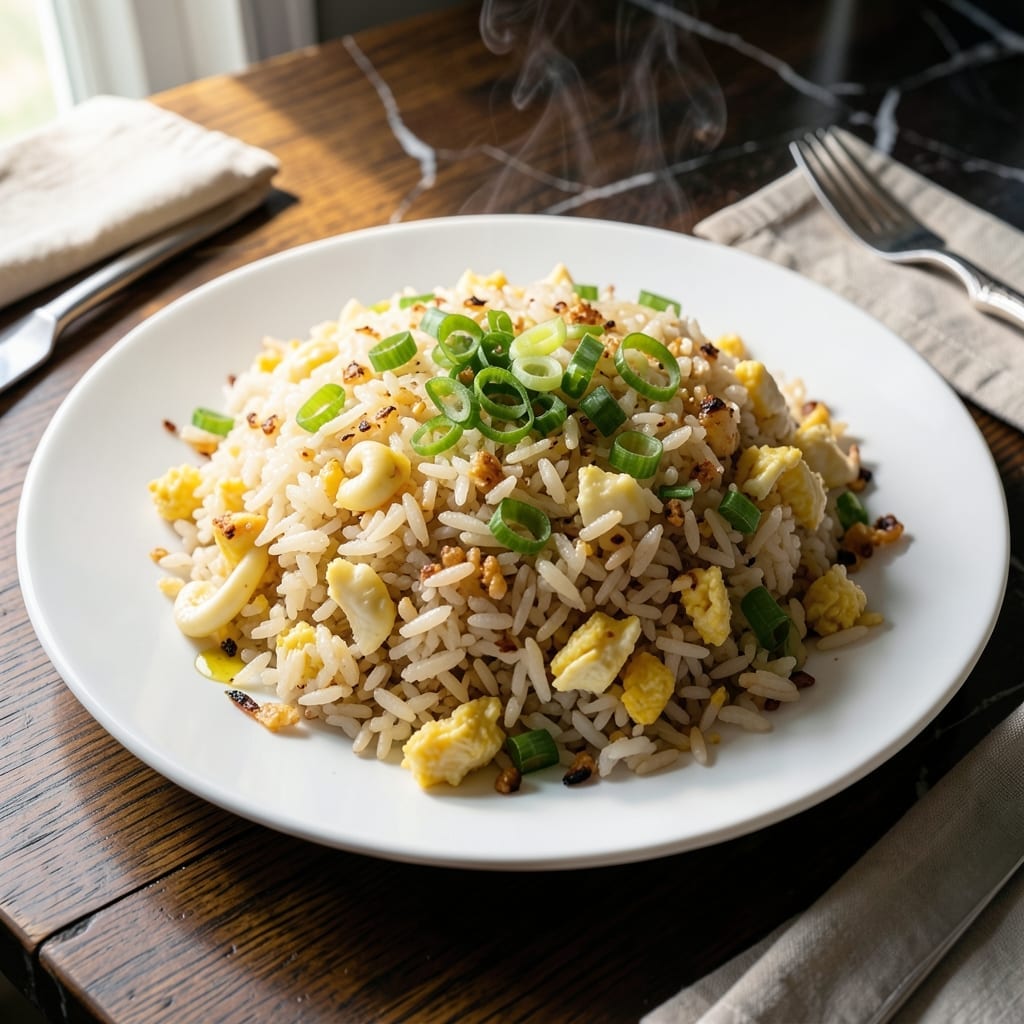
This fried rice delivers restaurant-quality flavor with crispy egg bits that elevate every bite. The wok-searing technique creates that signature texture and depth of flavor.
I’ve perfected this method to ensure each grain stays separate while absorbing the umami-rich sauce. The secret is high heat and constant motion, just like Ming Tsai’s approach.
The crispy egg adds a satisfying contrast to the tender rice and vegetables. It’s a dish that balances simplicity with bold, layered flavors.
With just a few key ingredients and the right technique, you’ll achieve that crispy, savory result every time. Ready to get started?
Ingredients for Ming Tsai Fried Rice
Wok-ready staples deliver restaurant-quality crispy texture and umami depth in every bite.
| Ingredient | Amount | Notes |
|---|---|---|
| Day-Old Cooked Jasmine Rice 🍚 | 4 cups | Chilled overnight, separated |
| Large Eggs 🥚 | 4 whole | Beaten for crispy bits |
| Peanut Oil 🥜 | 3 tbsp | High smoke point essential |
| Garlic Cloves 🧄 | 3 cloves | Minced finely |
| Fresh Ginger Root 🌿 | 1 tbsp | Grated or minced |
| Green Onions 🧅 | 4 whole | Thinly sliced, whites and greens separated |
| Carrots 🥕 | 1 whole | Small dice, uniform size |
| Frozen Peas 🌱 | ¾ cup | Thawed, patted dry |
| Light Soy Sauce 🫒 | 2 tbsp | Low-sodium preferred |
| Dark Soy Sauce 🫒 | 1 tsp | For color depth |
| Sesame Oil 🫒 | 1 tsp | Toasted, for finishing |
| Oyster Sauce 🫒 | 1 tbsp | Vegetarian oyster sauce optional |
| White Pepper 🌶️ | ½ tsp | Freshly ground preferred |
| Kosher Salt 🧂 | ½ tsp | Adjust to taste |
The rice quality is non-negotiable here. Day-old jasmine rice from an Asian market provides the ideal texture—freshly cooked rice turns mushy. Peanut oil is preferred for its high smoke point; avocado oil works as a substitute. For authentic flavor, seek out Pearl River Bridge soy sauces at specialty stores. The ginger and garlic should be freshly grated—pre-minced lacks the necessary punch for this technique-driven dish.
No oyster sauce? Vegetarian mushroom stir-fry sauce offers similar depth. Substitute brown rice at a 1:1 ratio if avoiding gluten, though texture will differ slightly. Frozen peas can be swapped for edamame or diced bell peppers (add with carrots). For extra umami, a dash of fish sauce enhances the profile, but omit for vegetarian versions. The white pepper is traditional but black pepper works in a pinch.
Cooked rice keeps 4-5 days refrigerated. Prep all ingredients before heating the wok—mise en place is critical for high-heat cooking. This dish reheats well for 3 days but loses crispness. Freezing not recommended as rice texture degrades significantly upon thawing.
Why You’ll Love This Recipe
- One Pan Wonder: I toss everything from the day-old jasmine rice to the eggs in a single wok—minimal cleanup, maximum flavor.
- Garlic-Ginger Punch: The peanut oil carries the sharp kick of fresh garlic and ginger through every bite. Honestly, it’s the reason I make this weekly.
- Weeknight Hero: Between us, this is my go-to when I need dinner fast and satisfying (yes, even on a Tuesday night).
- Leftover Magic: That dry, forgotten jasmine rice from yesterday becomes a crisp-edged, egg-studded masterpiece with zero waste.
Step-by-Step Instructions for Wok-Seared Umami Fried Rice
Master the technique for perfect texture and layered flavors in this classic dish.
Step 1: Prepare and Cook the Eggs for Crispy Bits
Beat the large eggs until the yolks and whites are fully combined with no streaks. Heat 1 tablespoon of the peanut oil in a wok or large skillet over medium-high heat until just shimmering. Pour in the beaten eggs, letting them spread into a thin layer.
Cook undisturbed for 30 seconds until the edges begin to set and turn golden brown. Using a spatula, gently scramble the eggs into small, irregular pieces. Continue cooking for another 30-60 seconds until fully set but still slightly soft. Transfer to a plate and set aside.
Step 2: Sauté Aromatics and Vegetables
In the same wok, add the remaining 2 tablespoons of peanut oil and heat over high heat until nearly smoking. Add the minced garlic cloves and grated fresh ginger root, stir-frying for 15-20 seconds until fragrant but not browned.
Immediately add the small-diced carrots and cook for 2 minutes, stirring constantly, until they begin to soften. Add the thawed and patted dry frozen peas and the white parts of the thinly sliced green onions. Stir-fry for an additional 1-2 minutes until the vegetables are tender but still vibrant.
Step 3: Combine Rice and Seasonings
Add the chilled and separated day-old cooked jasmine rice to the wok, breaking up any clumps with your spatula. Press the rice into the wok surface and allow it to sit undisturbed for 30 seconds to develop a slight crust. Stir-fry for 2-3 minutes until the rice is heated through and beginning to crisp.
Drizzle the light soy sauce, dark soy sauce, and oyster sauce evenly over the rice. Add the white pepper and kosher salt. Toss everything together to coat the rice uniformly. The rice should take on a deep, glossy appearance as the sauces are absorbed.
Step 4: Finish with Eggs and Green Onions
Return the cooked egg bits to the wok, along with the green parts of the green onions. Stir-fry for another 1-2 minutes until everything is well combined and heated through. Remove from heat and drizzle with the sesame oil, tossing gently to incorporate.
The final dish should have distinct crispy egg pieces, vibrant vegetables, and rice with a slight sheen from the sauces. Taste and adjust seasoning if needed, though the combination of light and dark soy sauces should provide a balanced umami depth.
Pro Tips For Making Ming Tsai Fried Rice
- Chill the Rice: Use day-old jasmine rice straight from the fridge—it’s drier and fries up fluffier. I learned this the hard way after my first few batches turned mushy.
- High Heat Only: Crank the wok to smoking hot before adding peanut oil, then keep it there. After burning three batches, I finally figured out that lukewarm oil just steams the rice.
- Prep Ginger Small: Grate the fresh ginger root instead of mincing—it distributes better and avoids chewy bits. Sounds weird, but it works.
- Scramble Eggs First: Push the scrambled eggs to one side of the wok before adding rice, so they stay soft instead of overcooking. My grandmother swore by this, and she was right.
Dietary Considerations for This Recipe
Gluten-Free Option
For a gluten-free version, swap regular soy sauces for tamari or coconut aminos. I recommend San-J Tamari as it’s widely available and maintains the same umami depth. Also, use vegetarian oyster sauce or simply omit it.
Vegetarian Adaptation
To make this vegetarian, replace oyster sauce with mushroom stir-fry sauce. I’ve found Lee Kum Kee Vegetarian Stir-Fry Sauce works perfectly. Ensure all sauces are labeled vegetarian, as some brands contain fish or animal derivatives. 🌱
Egg-Free Version
If avoiding eggs, you can omit them entirely or replace with tofu scramble. Use ½ cup crumbled firm tofu sautéed with ¼ tsp turmeric for color. The texture won’t be as crispy, but it still adds protein and body.
Low-Sodium Adjustments
Reduce sodium by using low-sodium soy sauces and omitting added salt. I like Kikkoman Low-Sodium Soy Sauce for this. Boost flavor with extra fresh ginger or garlic instead of salt.
Nut Allergy Note
For those with nut allergies, replace peanut oil with avocado oil or vegetable oil. Both have high smoke points and work beautifully. Always check sauce labels for potential nut cross-contamination. 💡
Extra Protein Boost
Add ½ cup diced cooked chicken or shrimp when stir-frying the vegetables. For plant-based protein, edamame or cubed tofu pairs well. Just ensure all additions are cooked through before combining with the rice.
Nutrition Facts
Frequently Asked Questions
Why use day-old rice for this dish?
Day-old rice has less moisture, preventing mushiness when stir-fried. Fresh rice turns gummy under high heat. Always chill overnight for best texture.
Can I substitute the peanut oil?
Yes! Use any high-smoke-point oil like avocado or vegetable oil. Avoid olive oil—it burns at wok temperatures. 3 tablespoons remains the amount.
How do I get crispier egg bits?
Cook eggs separately first, then remove before stir-frying rice. Use medium-high heat and let them sit undisturbed for 30 seconds to brown.
What if my wok isn’t hot enough?
Prevent soggy results by heating the wok until oil shimmers. Test with a rice grain—it should sizzle immediately. Adjust burner to high heat throughout.

- Peri Peri Rice Recipe: Spicy Portuguese One-Pot Harmony - November 6, 2026
- Mexican Flavoured Rice Recipe: Authentic Spice-Infused One-Pot Meal - November 6, 2026
- Lao Gan Ma Fried Rice Recipe: Spicy Wok-Tossed Perfection - November 6, 2026