
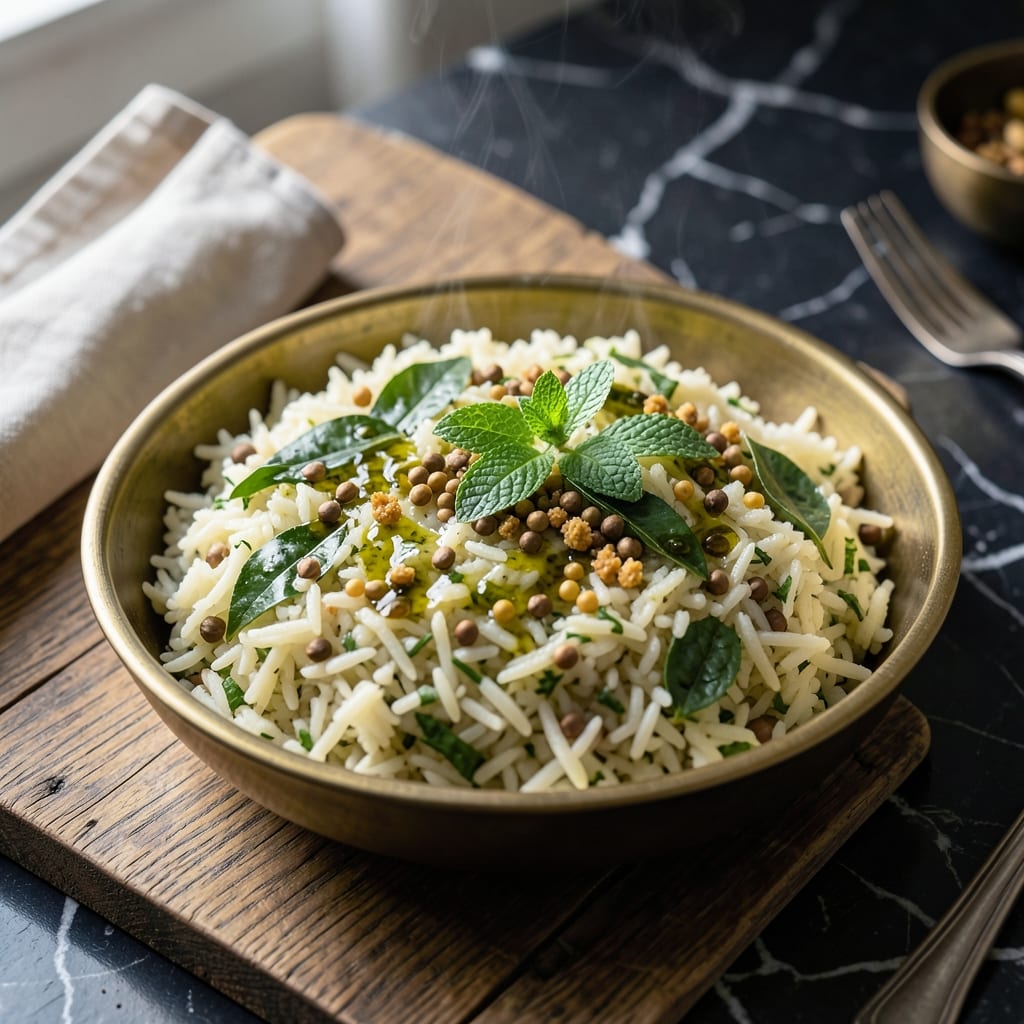
This South Indian mint rice delivers a refreshing burst of herbal flavor in every fluffy grain. The secret lies in blooming fresh mint leaves in hot oil to release their aromatic essence before combining with cooked rice.
Using a simple tempering technique with mustard seeds, curry leaves, and urad dal creates layers of authentic taste. The dish comes together quickly with basic pantry staples and a handful of fresh herbs.
What emerges is fragrant rice with vibrant green flecks, offering a cooling contrast to spicy curries. The grains remain separate and light, absorbing just enough mint oil to taste bright and aromatic.
Perfect as a side or light meal, this rice pairs well with yogurt or vegetable stews. The method ensures consistent results every time.
Ingredients for Mint Rice South Indian
Fresh herbs and pantry spices create this fragrant, cooling rice dish with vibrant green flecks.
| Ingredient | Amount | Notes |
|---|---|---|
| Basmati Rice 🍚 | 1 ½ cups | Rinsed and drained well |
| Fresh Mint Leaves 🌿 | 1 ½ cups | Packed, stems removed |
| Vegetable Oil 🫒 | 3 tbsp | For tempering and cooking |
| Mustard Seeds 🌱 | 1 tsp | Black or yellow variety |
| Urad Dal 🌾 | 1 tbsp | Split black gram lentils |
| Curry Leaves 🍃 | 10 whole | Fresh preferred, dried acceptable |
| Dried Red Chilies 🌶️ | 2 whole | Broken into pieces (adjust to taste) |
| Green Chilies 🌶️ | 2 whole | Slit lengthwise for mild heat |
| Fresh Ginger 🌿 | 1 piece | 1-inch, minced finely |
| Salt 🧂 | 1 ¼ tsp | Adjust to taste |
| Lemon Juice 🍋 | 1 tbsp | Freshly squeezed |
| Water 💧 | 3 cups | For cooking rice |
| Cumin Seeds 🌱 | ½ tsp | Optional for extra depth |
The mint is key here—look for bright green, unblemished leaves at Indian grocery stores or well-stocked supermarkets. Curry leaves and urad dal are staples at Indian markets like Patel Brothers or H-Mart. For best results, use fresh curry leaves; dried ones lack the same aromatic punch. The mustard and cumin seeds should be whole, not ground, to bloom properly in the hot oil.
No urad dal? Chana dal or yellow split peas work as substitutes. Green chilies can be swapped for serranos if that’s what you have. Missing curry leaves? Skip them—the dish will still be delicious, just less authentic. The rice must be basmati for the right texture (jasmine is second choice). For a nutty flavor, toast the rice lightly before cooking.
Store fresh mint wrapped in damp paper towels for up to 3 days. Cooked rice keeps in the fridge for 3-4 days and reheats well. This dish actually tastes better the next day as the flavors meld. Freeze for up to 1 month if needed.
Why You’ll Love This Recipe
- One Pot Wonder: I just dump the basmati rice, mint, and tempered mustard seeds with urad dal into a single pot—no fancy techniques, no mess.
- Fresh Burst: That first bite with the bright mint and nutty urad dal against the fluffy rice? Ridiculously good.
- Lunchbox Hero: Pack it for work or picnics—stays tasty for hours, and my kids actually finish their portions.
- Budget Stretcher: A handful of mint from my garden and pantry staples feed my family of four for under five dollars. Honestly, it’s my go-to when the wallet’s tight.
Step-by-Step Instructions for Mint Rice
Here’s the method. Straightforward, tested, works every time.
Step 1: Prepare and Cook the Rice
Rinse the 1.5 cups Basmati Rice thoroughly under cold water until the water runs clear. This removes excess starch and prevents the grains from sticking together. Drain well in a fine-mesh colander.
In a medium pot, bring the 3 cups Water to a boil. Add the drained rice and 1.25 tsp Salt. Reduce heat to low, cover, and simmer for 15 minutes until the water is absorbed and the rice is tender. Remove from heat and let it sit covered for an additional 5 minutes to steam. Fluff with a fork and set aside.
Step 2: Temper the Spices for Maximum Flavor
Heat the 3 tbsp Vegetable Oil in a large skillet over medium heat. Once hot, add the 1 tsp Mustard Seeds and 1 tbsp Urad Dal. Cook for 1-2 minutes until the mustard seeds begin to pop and the dal turns light golden brown.
Immediately add the 10 whole Curry Leaves, 2 whole Dried Red Chilies, 2 whole Green Chilies, and 0.5 tsp Cumin Seeds. Stir and cook for 30 seconds until aromatic. Be careful—the curry leaves and mustard seeds will splutter.
Step 3: Infuse with Mint and Ginger
Add the 1 piece Fresh Ginger to the skillet and sauté for 30 seconds until fragrant. Then add the 1.5 cups Fresh Mint Leaves. Stir continuously for 2-3 minutes until the mint wilts and releases its aroma. The leaves should turn dark green and soften, but don’t let them burn.
This step is crucial for building the signature herbal flavor. The heat helps release the essential oils from the mint, creating a vibrant and cooling base for your dish.
Step 4: Combine and Finish
Add the cooked rice to the skillet and gently fold everything together, ensuring the rice is evenly coated with the mint and spice mixture. Cook over low heat for an additional 2-3 minutes, stirring occasionally, to allow the flavors to meld.
Remove from heat and stir in the 1 tbsp Lemon Juice. Taste and adjust salt if needed. The lemon juice adds a bright, tangy note that balances the richness of the tempered spices and the herbal freshness of the mint.
Pro Tips For Making Mint Rice South Indian
- Toast the Dal First: Heat the urad dal in oil until golden before adding mustard seeds—I learned this the hard way after my dal stayed raw and crunchy in the final dish.
- Rinse the Rice: Soak basmati rice for 15 minutes then rinse until water runs clear to remove excess starch, or it’ll turn gluey instead of fluffy.
- Low Heat for Mint: Add fresh mint leaves only after tempering the spices, and cook for just 2-3 minutes on low heat to preserve their color and aroma.
- Use Two Oils: Start with 1 tbsp vegetable oil for tempering, then finish with 1 tsp ghee at the end for a richer flavor that doesn’t overpower the mint.
Dietary Considerations for mint rice south indian
Naturally Gluten-Free
This dish is inherently gluten-free since it relies on basmati rice as the base. The tempering uses vegetable oil and whole spices like mustard seeds and urad dal, which contain no gluten. Just ensure your pantry staples are certified gluten-free if cross-contamination is a concern.
Vegan and Vegetarian
With no animal products involved, this creation fits perfectly into vegan and vegetarian diets. The protein comes from urad dal, while fresh mint and ginger provide vibrant flavor. It’s a satisfying plant-based dish that doesn’t skimp on taste.
Nut-Free and Dairy-Free
No nuts or dairy appear in this recipe, making it safe for those with nut allergies or lactose intolerance. The ingredients are simple and straightforward, so you won’t have to worry about hidden allergens. 💪
Low-Fat Option
To reduce fat, cut the vegetable oil to 2 tbsp for tempering. The dish still develops rich flavor from the spices and mint. You could also use coconut oil for a lighter, aromatic twist.
Spice Adjustments
For a milder version, reduce the green chilies to 1 or omit the red chilies entirely. If you prefer heat, add an extra green chili or a pinch of cayenne pepper. The dish adapts easily to your preferred spice level.
Sodium Control
Use low-sodium salt or reduce the amount to ½ tsp initially, then adjust to taste at the end. The lemon juice enhances flavor without adding extra salt, so you can keep it light without sacrificing taste. 🌱
Nutrition Facts
Frequently Asked Questions
Can I use dried mint instead of fresh?
Fresh mint is best for vibrant flavor, but dried works in a pinch. Use 1/3 cup dried for every 1.5 cups fresh, and soak it in warm water for 10 minutes before using. The flavor will be less bright but still aromatic.
What’s the best way to store leftovers?
Store in an airtight container in the fridge for up to 3-4 days. Reheat gently in a pan with a splash of water to restore moisture. It tastes even better the next day as flavors meld.
Can I make this without curry leaves?
Yes! While curry leaves add authenticity, you can skip them. The dish will still be flavorful from the mint, ginger, and spices. For extra depth, add a pinch of asafoetida.
Why did my rice turn mushy?
Overcooking or insufficient rinsing causes mushiness. Rinse rice until water runs clear, and cook for 15 minutes only. Use a 1:2 rice-to-water ratio for perfect fluffiness.

- Mujadara Rice and Lentils Recipe: Earthy Spiced Lentils With Caramelized Onions - November 1, 2026
- Naija Fried Rice Recipe: Street-Style Spice With Veggie Crunch - November 1, 2026
- Mushy Rice Recipe: Fluffy Grains Transformed in Minutes - November 1, 2026