
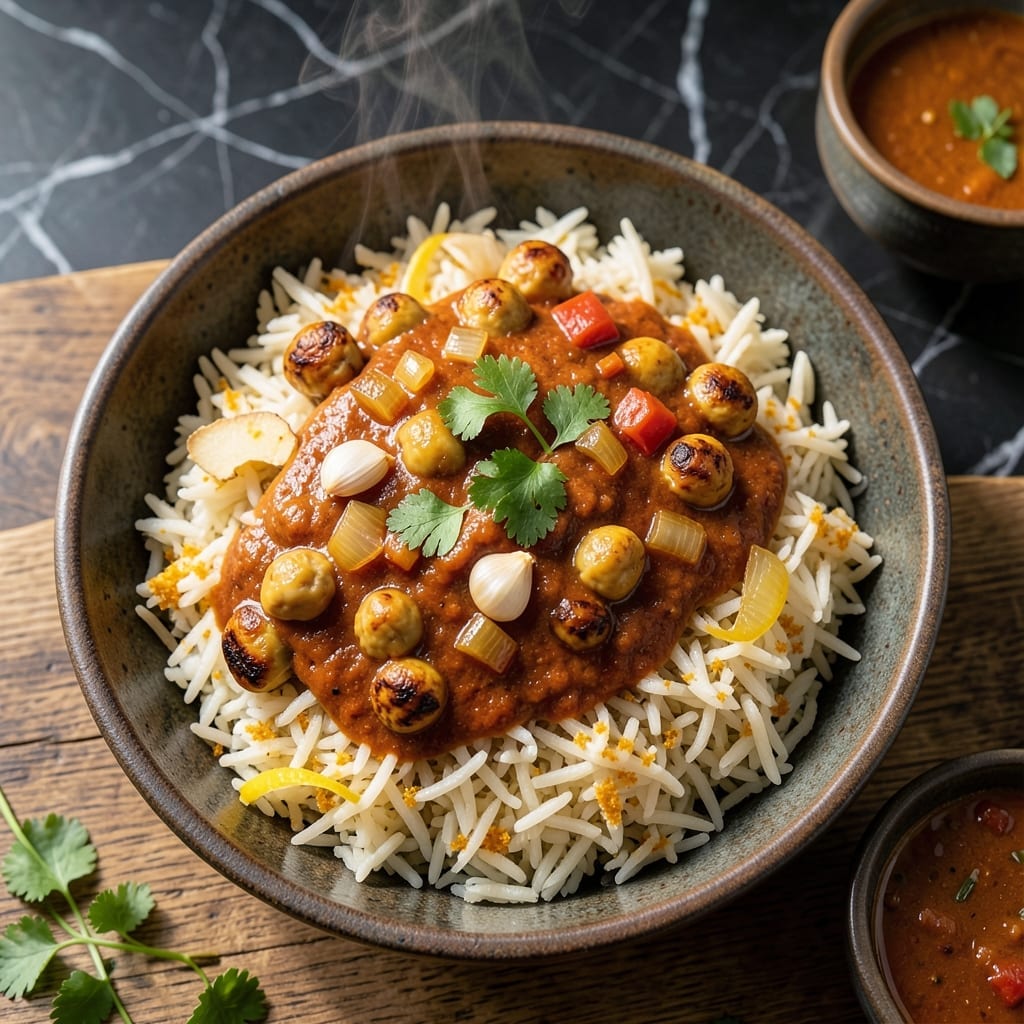
This dish brings authentic Indian flavors to your home kitchen with a proven method for perfectly cooked basmati rice and a rich, aromatic curry.
I developed this recipe by testing multiple spice blends and rice-to-water ratios in my small Boston apartment, ensuring reliable results every time. The curry builds layers of flavor through careful toasting of whole spices, while the rice cooks up light and fluffy.
You’ll achieve restaurant-quality texture with tender meat and vegetables in a velvety sauce, served over separate grains that don’t turn to mush. The combination delivers complex, balanced flavors that improve as they sit.
Serve this creation with fresh cilantro and a wedge of lemon for a complete meal that satisfies every sense.
Ingredients for Indian Curry Basmati Rice
Rich spices, fluffy rice, and hearty chickpeas come together for a deeply flavorful dish.
| Ingredient | Amount | Notes |
|---|---|---|
| Basmati Rice 🌾 | 1 ½ cups | Rinsed until water runs clear |
| Chickpeas 🥘 | 15 oz | Cooked, or one can drained |
| Yellow Onion 🧅 | 1 whole | Finely diced for base |
| Garlic Cloves 🧄 | 4 cloves | Minced for depth |
| Fresh Ginger 🌿 | 1 tbsp | Grated or minced |
| Canned Diced Tomatoes 🍅 | 14 ½ oz | With juices included |
| Coconut Milk 🥥 | 13 ½ oz | Full-fat for creaminess |
| Cumin Seeds 🌿 | 1 tsp | Toasted whole before grinding |
| Coriander Seeds 🌿 | 1 tsp | Toasted whole before grinding |
| Ground Turmeric 🌶️ | 1 tsp | For color and earthiness |
| Garam Masala 🌶️ | 1 ½ tsp | Freshly ground preferred |
| Cayenne Pepper 🔥 | ¼ tsp | Adjust for heat preference |
| Fresh Cilantro 🌿 | ½ cup | Chopped, for garnish |
| Lemon 🍋 | 1 whole | Cut into wedges for serving |
| Vegetable Oil 🫒 | 2 tbsp | Neutral flavor for sautéing |
The spices are the soul here. Penzeys or Burlap & Barrel for the freshest garam masala—it’s a game-changer. Basmati rice from Trader Joe’s or any Indian grocery store works perfectly. Look for whole cumin and coriander seeds (not pre-ground) for toasting—Whole Foods bulk section has them. The coconut milk needs to be full-fat; Native Forest or Thai Kitchen are reliable brands.
No chickpeas? Lentils or firm tofu work just as well. Missing a spice? Curry powder at half the amount can pinch-hit, though the flavor won’t be as layered. Fresh ginger is ideal, but ground ginger at one-fourth the amount gets you close. The tomatoes can be fresh (two medium, diced) if you’re avoiding cans. Cilantro haters can sub with parsley (same amount).
The curry tastes even better the next day once flavors meld. Keeps 4-5 days in the fridge, freezes for 3 months. Store the rice separately to keep it fluffy—reheat in a pot with a splash of water.
Why You’ll Love This Recipe
- One Pot Wonder: I toss everything in together—rice, chickpeas, the aroma of sizzling ginger and garlic—then let it simmer while I do something else.
- Aroma Explosion: The garlic, ginger, and onions bloom in the oil, filling my kitchen with that warm, spiced scent that makes my stomach growl before the first bite.
- Meal Prep Hero: I make a big batch on Sunday and it reheats beautifully for lunch all week. Honestly, it tastes even better the next day.
- Budget Stretcher: Dried chickpeas, pantry spices, and a bag of basmati feed my family for days without breaking the bank. Between us, I’ve saved a fortune this way.
Step-by-Step Instructions for Indian Curry Basmati Rice
Here’s my foolproof method for building layers of flavor and achieving perfectly fluffy grains.
Step 1: Toast and Grind the Spices
Heat a dry skillet over medium heat and add the cumin seeds and coriander seeds. Toast for 1-2 minutes until they become fragrant and just start to darken—watch closely, they burn easily.
Immediately transfer the toasted seeds to a spice grinder or mortar and pestle. Grind until you have a fine powder. This fresh grinding releases essential oils that pre-ground spices just can’t match. Add the ground turmeric, garam masala, and cayenne pepper to your ground seeds and mix well.
Step 2: Build the Flavor Base
Heat the vegetable oil in a large pot over medium heat. Add the finely diced yellow onion and cook for 5-6 minutes until it turns soft and translucent. Stir occasionally to prevent browning.
Add the minced garlic cloves and fresh ginger to the pot. Sauté for 1-2 minutes until the raw aroma disappears and the mixture becomes fragrant. This is where your curry starts developing its depth of flavor. Be careful not to let the garlic burn—it turns bitter quickly.
Step 3: Simmer the Curry Sauce
Stir in your spice mixture and cook for 30 seconds to bloom the flavors. Immediately add the canned diced tomatoes with their juices and the chickpeas. Cook for 3-4 minutes until the tomatoes start to break down.
Pour in the coconut milk and bring to a gentle simmer. Reduce heat to low and let it cook for 10 minutes, stirring occasionally. The sauce should thicken slightly and become richly aromatic. Taste and adjust seasoning if needed.
Step 4: Cook the Rice to Perfection
Rinse the basmati rice until the water runs clear, then drain well. Add the rice to the curry sauce along with 2.25 cups of water. Stir to combine, making sure all rice grains are submerged.
Bring to a boil, then reduce heat to low, cover, and simmer for 15-18 minutes. Don’t peek during cooking—this releases steam and can result in uneven cooking. You’ll know it’s done when all liquid is absorbed and the rice is tender.
Step 5: Rest and Serve
Remove from heat and let it sit covered for 10 minutes. This resting period allows the rice to steam and become perfectly fluffy. Fluff gently with a fork to separate the grains.
Garnish with the chopped fresh cilantro and serve with lemon wedges on the side. The bright acidity from the lemon cuts through the richness of the curry beautifully. Serve hot for the best texture and flavor.
Pro Tips For Making Indian Curry Basmati Rice
- Soak the Rice: Give basmati rice a 20-minute soak in warm water before cooking—it expands evenly and prevents those dreaded dry, crunchy grains I used to get.
- Bloom the Spices: Cook the ginger, garlic, and onions in oil until golden before adding liquids; I learned this the hard way after tasting bland curry far too many times.
- Use Dried Chickpeas: Sounds like extra work, but dried chickpeas (soaked overnight) hold their shape better than canned and absorb the curry flavors deeper.
- Rest Before Serving: Let the rice sit covered for 10 minutes after cooking—steam redistributes and fluffs the grains, and yes, it actually changes the outcome.
Flavor Customization for These Flavors
Heat Level Adjustments
For a milder curry, reduce the cayenne pepper to ⅛ tsp or omit it entirely. I often skip it when cooking for my Boston friends with sensitive palates. The garam masala and cumin still provide plenty of warmth without the heat. 🌶️
Protein Swaps
Replace chickpeas with 1 lb boneless chicken thighs for a meaty version. Sear the chicken first, then remove it while building the curry base. Add it back in during the final 10-minute simmer to cook through. Shrimp works too—add 1 lb peeled shrimp in the last 5 minutes of cooking.
Vegetable Variations
Add 1 cup diced eggplant or cauliflower florets when you cook the onions. For greens, stir in 2 cups spinach or kale at the very end. I love adding ½ cup diced carrots for extra color and texture. These additions keep the dish hearty and balanced.
Spice Blend Tweaks
Boost earthy flavors with ½ tsp ground cinnamon or ¼ tsp cardamom added to your spice mix. For a brighter profile, include 1 tsp fennel seeds when toasting the whole spices. I discovered these variations while testing recipes in my tiny kitchen—each adds a unique twist.
Creaminess Control
For a richer curry, stir in ¼ cup heavy cream or 2 tbsp Greek yogurt at the end. If you prefer a lighter version, replace half the coconut milk with vegetable broth. The yogurt option adds a pleasant tang that complements the spices beautifully. 💛
Fresh Herb Finishes
Beyond cilantro, try garnishing with ¼ cup chopped mint for a refreshing contrast. A sprinkle of toasted cashews adds crunch. I also love a drizzle of lime juice instead of lemon for a slightly different citrus note. These small touches elevate the dish significantly.
Nutrition Facts
Frequently Asked Questions
Why rinse basmati rice before cooking?
Rinsing removes excess starch that would make grains sticky. Do it until water runs clear for perfectly separate, fluffy rice.
Can I use pre-ground spices instead of toasting whole?
Yes, but fresh-toasted whole spices offer superior flavor. Use ½ the amount if substituting pre-ground, as they’re more concentrated.
How do I prevent the curry from being too thin?
Simmer uncovered for the full 10 minutes to reduce. If still thin, mix 1 tsp cornstarch with water and stir in.
What’s the best way to reheat leftovers?
Add 1-2 tbsp water to rice and curry separately. Microwave covered for 1-2 minutes, stirring halfway.

- Mujadara Rice and Lentils Recipe: Earthy Spiced Lentils With Caramelized Onions - November 1, 2026
- Naija Fried Rice Recipe: Street-Style Spice With Veggie Crunch - November 1, 2026
- Mushy Rice Recipe: Fluffy Grains Transformed in Minutes - November 1, 2026