
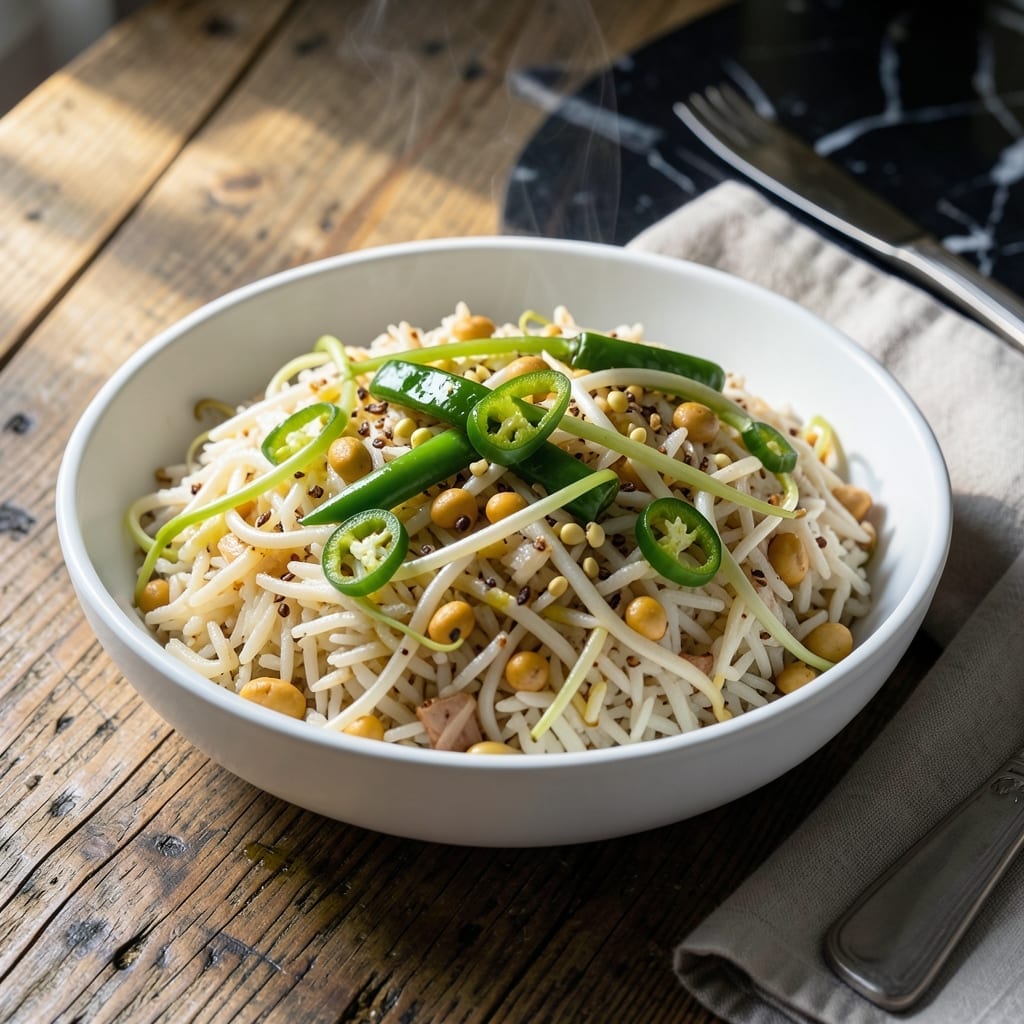
This protein-rich dish brings together the earthy flavor of moong sprouts with fragrant basmati rice for a satisfying meal. The sprouts add a delightful crunch and nutritional boost that makes this a standout side or light main.
The secret lies in tempering whole spices in hot oil before cooking the rice, which infuses every grain with warm, aromatic depth. A simple yet precise method ensures the sprouts retain their texture while the rice cooks to fluffy perfection.
What emerges is a dish with a nutty bite from the sprouts and perfectly cooked rice that absorbs all the spices. It’s a wholesome, vegan-friendly option that’s as nourishing as it is flavorful.
Serve it warm with a side of yogurt or your favorite chutney. Here’s how to make it just right.
Ingredients for Moong Sprouts Rice
Simple, wholesome ingredients for a dish that’s as nourishing as it is delicious.
| Ingredient | Amount | Notes |
|---|---|---|
| Basmati Rice 🌾 | 1 ½ cups | Rinsed until water runs clear |
| Moong Sprouts 🌱 | 2 cups | Fresh, drained and patted dry |
| Cumin Seeds 🌿 | 1 tsp | Whole for tempering |
| Mustard Seeds 🌶️ | 1 tsp | Black or yellow variety |
| Urdu Chana (Split Bengal Gram) 🌾 | ¼ cup | Optional for extra texture |
| Green Chili 🌶️ | 2 whole | Finely chopped, adjust to taste |
| Fresh Ginger 🌿 | 1 tbsp | Grated or minced |
| Curry Leaves 🍃 | 10 pieces | Fresh if available |
| Turmeric Powder 🌶️ | ½ tsp | For color and earthiness |
| Asafoetida 🌿 | ¼ tsp | Hing, optional for depth |
| Vegetable Oil 🫒 | 2 tbsp | Neutral flavor preferred |
| Salt 🧂 | 1 ½ tsp | Adjust to taste |
| Fresh Cilantro 🌿 | ¼ cup | Chopped, for garnish |
| Lemon Juice 🍋 | 1 tbsp | Freshly squeezed |
The moong sprouts are the star here—look for fresh ones at Indian grocery stores or sprout your own at home (super easy, just takes a day). Basmati rice is a must for that fragrant, fluffy texture (I grab mine from Patel Brothers or any well-stocked international aisle). Whole spices like cumin and mustard seeds are non-negotiable for the tempering step. Don’t skip them—they’re what give this dish its warm, aromatic soul.
No fresh curry leaves? Dried work in a pinch but use half the amount. Missing asafoetida? It’s fine to skip—just add an extra pinch of turmeric for depth. Frozen moong sprouts can sub for fresh (thaw and drain well). If you can’t find urdu chana, roasted peanuts add a nice crunch. The green chili can be swapped with serrano or jalapeño, depending on what you’ve got.
This keeps well for 3-4 days in the fridge—store in an airtight container. The sprouts soften slightly over time, but the flavors just get better. Reheat gently on the stove with a splash of water to keep the rice from drying out. Tastes great cold too, straight from the fridge.
Why You’ll Love This Recipe
- One Pot Wonder: I love that everything cooks together—basmati rice, sprouted moong, and the tempering of cumin and mustard seeds—minimal cleanup, maximum flavor.
- Crunchy & Warm: That first bite with the nutty sprouts and fragrant rice? Honestly, the split Bengal gram adds this earthy depth I didn’t expect.
- Meal Prep Hero: Makes enough for three days of lunches, and the flavors just get better. I’ll be real: it tastes even more delicious the next day.
- Budget Stretch: A handful of sprouts and rice feeds my family for pennies. Between us, it’s my go-to when the wallet feels tight.
Step-by-Step Instructions for Moong Sprouts Rice
Here’s the method. Simple, flavorful, and packed with texture.
Step 1: Prepare the Basmati Rice
Rinse the 1.5 cups Basmati Rice under cold water until the water runs completely clear. This removes excess starch and prevents the grains from sticking together during cooking. I use a fine-mesh strainer for this—it makes the process much easier.
Soak the rinsed rice in enough water to cover it by 1 inch for 20 minutes. This step ensures the grains cook evenly and expand properly. Drain the rice thoroughly in a colander before using—you want no excess water clinging to the grains.
Step 2: Temper the Spices
Heat the 2 tbsp Vegetable Oil in a heavy-bottomed pot over medium heat. Add the 1 tsp Cumin Seeds and 1 tsp Mustard Seeds, and let them sizzle for 30 seconds until the mustard seeds begin to pop.
Immediately add the 0.25 tsp Asafoetida, 10 pieces Curry Leaves, 2 whole Green Chili, and 1 tbsp Fresh Ginger. Sauté for 1 minute until the curry leaves become crisp and the ginger turns slightly golden. The aroma at this stage should be incredibly fragrant—this is the foundation of your flavor.
Step 3: Cook the Sprouts and Rice
Add the 0.25 cup Urdu Chana (Split Bengal Gram) and 2 cups Moong Sprouts to the pot. Stir well to coat everything in the tempered spices. Cook for 2-3 minutes until the sprouts soften slightly and absorb some of the flavors.
Now add the drained rice, 0.5 tsp Turmeric Powder, and 1.5 tsp Salt. Stir to combine evenly, ensuring the rice grains are fully coated with the spices and oil. Pour in 3 cups of water (this is the perfect ratio for the rice and sprouts) and bring to a boil over high heat.
Step 4: Simmer and Finish
Once boiling, reduce the heat to low, cover the pot with a tight-fitting lid, and let it simmer for 15 minutes. Avoid lifting the lid during this time—steam is crucial for cooking the rice evenly.
After 15 minutes, turn off the heat and let the rice rest, covered, for an additional 5 minutes. This allows the grains to steam and finish cooking without drying out. Fluff the rice gently with a fork to separate the grains.
Step 5: Garnish and Serve
Stir in the 1 tbsp Lemon Juice and half of the 0.25 cup Fresh Cilantro. The lemon juice adds a bright, tangy note that balances the earthy flavors of the spices. Taste and adjust the salt if needed.
Transfer to a serving dish and garnish with the remaining cilantro. Serve warm, with each bite offering the nutty crunch of sprouts, the aroma of tempered spices, and the fluffy texture of perfectly cooked rice. This dish tastes even better after sitting for 10 minutes, allowing the flavors to meld together.
Pro Tips For Making Moong Sprouts Rice
- Toast the Spices First: Heat the cumin and mustard seeds in hot oil until they sizzle and pop—about 30 seconds—before adding anything else. I learned this the hard way after ending up with raw-tasting spices in my rice more times than I’d like to admit. —
- Rinse the Sprouts Well: Give the moong sprouts a thorough rinse under cold water to remove any lingering dirt or bitterness. Sounds tedious, but it actually changes the outcome—your rice will taste cleaner and fresher. —
- Skip Overcooking Rice: Use a 1:1.5 rice-to-water ratio and let it simmer covered for exactly 12 minutes, then turn off the heat. Steer clear of lifting the lid early—this is how you get mushy, clumpy rice instead of fluffy grains. —
- Soak the Chana: If using Urdu chana, soak it for at least 2 hours before cooking to cut the cooking time in half. My grandmother swore by this, and she was right: it cooks evenly and blends perfectly with the sprouts.
Essential Equipment for moong sprouts rice
Heavy-Bottomed Pot
I always use my 3-quart stainless steel pot from All-Clad for even heat distribution. A heavy pot prevents hot spots that can burn spices during tempering. Look for one with a tight-fitting lid to trap steam when cooking the rice.
Fine-Mesh Strainer
Rinsing basmati rice thoroughly is crucial, and a fine-mesh strainer makes this easy. I use the OXO Good Grips model—its sturdy handles and fine holes prevent rice grains from slipping through while allowing water to flow freely.
Wooden Spoon
A wooden spoon is ideal for stirring the tempered spices and rice without scratching your pot. I prefer one with a long handle to keep my hands safe from the heat. It also helps scrape the bottom gently to prevent sticking.
Sharp Chef’s Knife
You’ll need a good 8-inch chef’s knife to finely chop the green chilies and ginger. I’ve been using my Wüsthof Classic for years—its weight and balance make quick work of prep. Keep it sharp for clean cuts. 💡
Measuring Cups and Spoons
Precise measurements matter for the rice-to-water ratio. I use stainless steel measuring cups from Cuisinox for durability. For spices, a set of magnetic measuring spoons stays organized in my drawer.
Rice Cooker Alternative
While I prefer stovetop for the tempering step, a multi-function rice cooker like the Instant Pot works well for the actual rice cooking. Just be sure to temper the spices separately in a pan first for maximum flavor.
Nutrition Facts
Frequently Asked Questions
Can I use canned sprouts instead of fresh?
Fresh sprouts work best, but canned can substitute in a pinch. Drain, rinse well, and pat dry to remove excess sodium. They’ll be softer, so reduce cooking time to 1-2 minutes to prevent mushiness.
Why soak the rice before cooking?
Soaking for 20 minutes ensures even cooking and prevents broken grains. It also shortens stovetop time, helping the rice absorb flavors better during tempering.
How do I prevent the rice from turning mushy?
Use the exact 1:2 rice-to-water ratio and avoid stirring after adding water. Let it rest covered for 5 minutes off heat to steam perfectly.
Can I make this without tempering the spices?
Tempering is key for depth of flavor, but you can add ground spices directly to the oil if short on time. The aroma won’t be as pronounced.

- Mujadara Rice and Lentils Recipe: Earthy Spiced Lentils With Caramelized Onions - November 1, 2026
- Naija Fried Rice Recipe: Street-Style Spice With Veggie Crunch - November 1, 2026
- Mushy Rice Recipe: Fluffy Grains Transformed in Minutes - November 1, 2026