
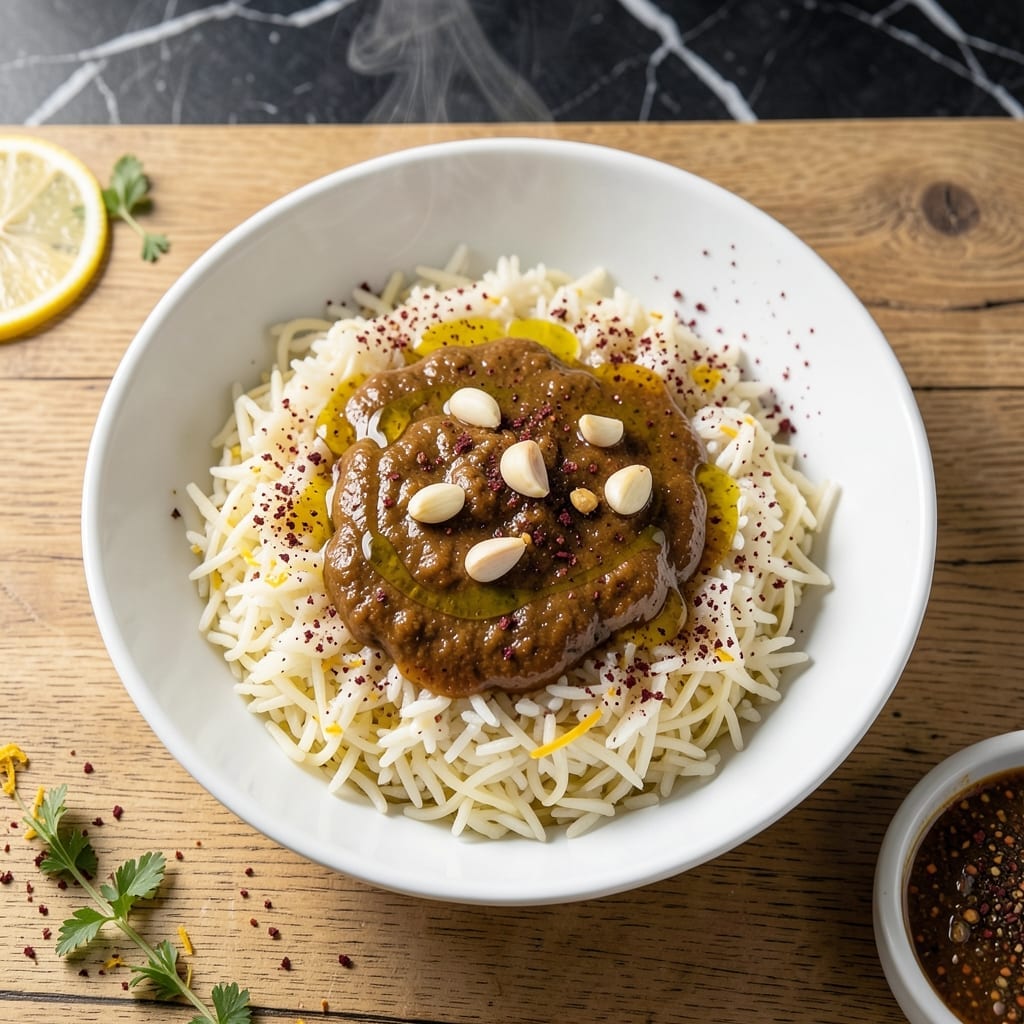
This bright, tangy sumac sauce transforms ordinary dishes with a burst of Mediterranean flair. I developed this recipe to capture that signature citrus punch that makes everything taste more vibrant.
The simple blend combines sumac’s natural acidity with olive oil and a touch of garlic for depth. It takes 5 minutes to make and keeps beautifully in the fridge, ready for drizzling over grains, proteins, or salads.
What sets this sauce apart is its versatility—use it as a marinade, dressing, or finishing touch. The vibrant red color and sharp citrus notes make it a standout addition to any meal.
Perfect for elevating rice, grilled meats, or roasted vegetables with minimal effort.
Ingredients for Rice Mediterranean Kitchen Sumac Sauce
Nine simple ingredients deliver that signature Mediterranean citrus punch you crave.
| Ingredient | Amount | Notes |
|---|---|---|
| Ground Sumac 🌶️ | 3 tbsp | Vibrant red, no additives |
| Extra-Virgin Olive Oil 🫒 | ½ cup | High-quality, fruity finish |
| Garlic Cloves 🧄 | 2 cloves | Freshly minced for pungency |
| Fresh Lemon Juice 🍋 | 2 tbsp | Newly squeezed, no concentrate |
| Dijon Mustard 🟡 | 1 tsp | Smooth, no seeds |
| Maple Syrup 🍁 | 1 tsp | Grade A, light amber |
| Sea Salt 🧂 | ½ tsp | Fine grain, Diamond Crystal preferred |
| Freshly Ground Black Pepper 🌶️ | ¼ tsp | Coarse grind for texture |
| Water 💧 | 1 tbsp | Filtered or distilled |
The sumac is non-negotiable here. Middle Eastern markets or specialty spice shops like Penzeys carry the best quality—look for vibrant red color and strong citrus aroma. Ground sumac loses potency quickly, so buy in small quantities and store airtight. The olive oil should be extra-virgin with a peppery finish to complement the acidity.
No sumac? Lemon zest plus a pinch of salt mimics some of the tang, but the color won’t be the same. Swap maple syrup for agave nectar or date syrup at a 1:1 ratio. For a creamier texture, blend in 1 tbsp tahini. If you’re out of fresh garlic, garlic powder at one-third the amount works in a pinch, but fresh is ideal.
This keeps for 2 weeks refrigerated in a sealed jar. The flavors meld and mellow over time. For longer storage, freeze in ice cube trays—perfect for single-use portions. Always give it a stir before using, as the sumac tends to settle.
Why You’ll Love This Recipe
- 5-Minute Sauce: I just whisk sumac, olive oil, garlic, lemon, and mustard—no cooking, no fuss.
- Bright & Tangy: The lemon and sumac give this rice a zesty kick that’s totally addictive.
- Pairs with Everything: I drizzle it over rice for lunch, then use leftovers on grilled chicken or roasted veggies the next day.
- Pantry Staples Only: Honestly, I always have these ingredients on hand, so it’s a lifesaver when I’m scraping the bottom of the fridge.
Step-by-Step Instructions for Zesty Sumac Sauce
This method ensures perfect emulsification and balanced tang with every batch.
Step 1: Infuse the Olive Oil with Garlic
In a small saucepan, combine the 0.5 cup Extra-Virgin Olive Oil with the 2 cloves Garlic Cloves, minced. Heat over low heat for 3-4 minutes until the garlic becomes fragrant and just golden—not brown, as burnt garlic turns bitter.
This gentle infusion extracts the garlic’s pungent aromatics into the oil, creating a flavorful base. Remove from heat immediately once fragrant to prevent overcooking. Let the mixture cool slightly; it should still be warm but not hot to the touch.
Step 2: Whisk in Acidic and Sweet Components
In a medium bowl, whisk together the 2 tbsp Fresh Lemon Juice, 1 tsp Dijon Mustard, 1 tsp Maple Syrup, 0.5 tsp Sea Salt, and 0.25 tsp Freshly Ground Black Pepper. The mustard acts as an emulsifier, while the maple syrup balances the acidity of the lemon.
Add the warm garlic-infused oil in a slow, steady stream while whisking vigorously. This gradual incorporation is critical for creating a stable emulsion that won’t separate. The mixture should begin to thicken slightly as it comes together.
Step 3: Incorporate the Sumac and Water
Sprinkle in the 3 tbsp Ground Sumac while continuing to whisk. The sumac will dissolve into the liquid, infusing its signature tangy, citrus-forward flavor. Its vibrant red hue will deepen the sauce’s color beautifully.
Add the 1 tbsp Water to adjust the consistency to a pourable, drizzling texture. The water helps distribute the sumac evenly and tempers any sharpness from the lemon. Taste and adjust seasoning if needed, though the sumac’s natural saltiness often balances the flavor perfectly.
Step 4: Rest and Serve
Let the sauce rest at room temperature for 10-15 minutes. This allows the flavors to meld completely, with the sumac’s earthiness harmonizing with the bright citrus and garlic notes. The emulsion will thicken slightly as it sits.
Give it a final whisk before using to ensure it’s smooth and well-combined. Drizzle over grilled meats, roasted vegetables, or Mediterranean rice dishes. The sauce keeps in an airtight container in the refrigerator for up to 5 days, though its vibrant flavor is best fresh.
Pro Tips For Making Rice Mediterranean Kitchen Sumac Sauce
- Bloom the Sumac: Toast the ground sumac in the olive oil for 30 seconds over medium-low heat—it wakes up the flavor before adding the other ingredients.
- Grate the Garlic: Use a microplane for the garlic cloves instead of mincing; it blends seamlessly into the sauce and avoids chunks that overpower the dish.
- Balance the Acid: Taste before adding all the lemon juice—I learned this the hard way after making a batch too puckery. Start with half, then adjust.
- Emulsify Last: Whisk in the Dijon mustard at the very end to bind the oil and lemon juice into a creamy, cohesive sauce.
Wine and Beer Pairings for This Recipe
Crisp White Wines
A bone-dry Assyrtiko from Santorini mirrors the sauce’s citrus notes with its lemony acidity. I love how the mineral edge cleanses the palate between bites. Vermentino from Sardinia offers a lighter alternative with similar brightness. 🍷
Rosé Selections
Provencal rosé with its strawberry and citrus notes pairs beautifully. Look for palette-cleansing acidity and subtle herbal undertones. Serve well-chilled at 45-50°F to highlight its crispness.
Light Beers
A Belgian witbier with coriander and orange peel notes complements the tang. Pilsners work too—their crisp malt profile balances the acidity. Avoid hoppy IPAs that will clash with the citrus.
Sparkling Options
Prosecco or Cava bubbles cut through the richness beautifully. The effervescence refreshes your palate after each bite. I always keep a bottle on hand for impromptu Mediterranean meals. ✨
Non-Alcoholic Pairings
Sparkling water with a lemon twist is my go-to. The bubbles and citrus enhance the sauce’s tang. Mint-infused iced tea offers a refreshing herbal contrast.
Nutrition Facts
Frequently Asked Questions
Can I use dried garlic instead of fresh?
Use 1/3 the amount of garlic powder as a substitute. Fresh is preferred for its pungent aroma, but dried works in a pinch. The flavor will be more muted but still delicious.
Why does the sauce separate after resting?
This is normal due to sumac’s density. Just whisk vigorously before serving to re-emulsify. If persistent, add 1 tsp more Dijon as a stabilizer.
How can I make it thicker?
For a creamier texture, blend in 1 tbsp tahini or Greek yogurt. This creates a spoonable consistency perfect for dipping or dolloping.
Is this sauce kid-friendly?
Reduce the sumac to 2 tbsp for milder flavor. The citrus remains bright but less intense. Always let kids try a small amount first.

- Jollof Rice Sauce Recipe: West African Tomato and Spice Infusion - September 25, 2026
- Japanese Rice Soup Recipe: Umami-Rich Comfort in a Bowl - September 25, 2026
- Homemade Cream Of Rice Recipe: Silk-Smooth Breakfast in Minutes - September 25, 2026