
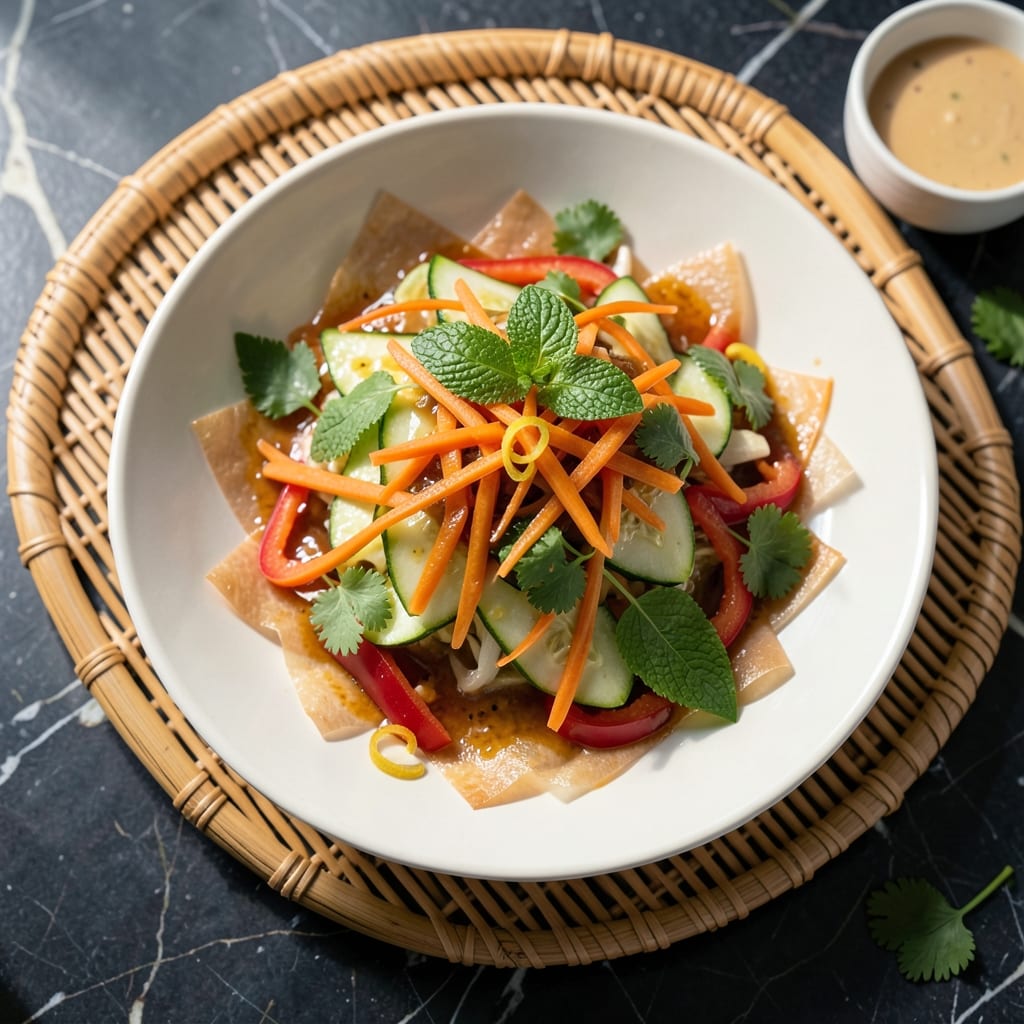
This dish captures the essence of Vietnamese cuisine with its light textures and fresh flavors. Crisp rice paper layers create a unique foundation for vibrant vegetables and herbs.
I developed this recipe to showcase how simple ingredients can transform into something extraordinary. The rice paper softens slightly but maintains its signature crunch when prepared correctly.
The combination of cool, crisp elements with a tangy dressing delivers authentic taste in every bite. It’s a refreshing alternative to traditional salads that’s surprisingly satisfying.
Perfect for warm weather or as a light starter, this salad brings restaurant-quality flavor to your kitchen. The key lies in the balance between the rice paper’s texture and the bright, bold accompaniments.
Ingredients for Rice Paper Salad
Crisp, vibrant, and bursting with freshness—these ingredients deliver authentic Vietnamese flavors in every bite.
| Ingredient | Amount | Notes |
|---|---|---|
| Rice Paper Wrappers 🍚 | 8 sheets | 22cm diameter, spring roll type |
| Carrots 🥕 | 2 whole | Julienned or shredded thinly |
| English Cucumber 🥒 | 1 whole | Seeds removed, julienned |
| Red Bell Pepper 🌶️ | 1 whole | Thinly sliced into strips |
| Fresh Mint Leaves 🌿 | ½ cup | Loosely packed, stems removed |
| Fresh Cilantro Leaves 🍃 | ½ cup | Stems removed, roughly chopped |
| Fresh Thai Basil Leaves 🌿 | ¼ cup | Optional but traditional |
| Green Onions 🧅 | 3 whole | Thinly sliced on diagonal |
| Lime Juice 🍋 | 3 tbsp | Freshly squeezed for dressing |
| Rice Vinegar 💧 | 2 tbsp | Unseasoned variety preferred |
| Agave Nectar 🍯 | 1 tbsp | Or maple syrup alternative |
| Toasted Sesame Oil 🫒 | 1 tsp | For dressing depth |
| Soy Sauce 🥢 | 2 tbsp | Low-sodium or tamari for gluten-free |
| Fresh Ginger 🌱 | 1 tsp | Finely minced or grated |
| Crushed Peanuts 🥜 | ¼ cup | Unsalted, for garnish |
The rice paper is non-negotiable for authentic texture. Look for 22cm spring roll wrappers at Asian markets or the international aisle at Whole Foods. Brands like Three Ladies or Spring Roll Skins are reliable. Freshness matters here—check the package date and avoid any with tears or moisture. The herbs should be vibrant and aromatic (skip anything wilted or yellowed).
No Thai basil? Regular basil works in a pinch (though the flavor profile shifts slightly). Mint and cilantro are essential—don’t skip them. For the dressing, maple syrup can replace agave, and rice wine vinegar stands in for rice vinegar. The peanuts are optional but add crunch; cashews or sunflower seeds are great alternatives. Always taste your dressing before tossing—adjust sweetness or acidity as needed.
Rice paper keeps in a cool, dry place for 6-12 months unopened. Once opened, transfer to an airtight container. Herbs stay fresh wrapped in damp paper towels for 5-7 days. The dressing can be made ahead and stored for 1 week in the fridge. Assemble the salad just before serving to maintain that signature crunch.
Why You’ll Love This Recipe
- No Cook Required: I just soak the rice paper wrappers in warm water and pile in the veggies—no stove, no fuss.
- Crunch & Freshness: The cucumber and red bell pepper stay crisp, while the mint adds this bright pop that makes every bite sing.
- Lunchbox Hero: I pack these for work and they hold up perfectly—no soggy mess, just fresh flavors hours later.
- Budget Stretcher: A bag of rice paper and a few veggies feed us for days, and honestly, it’s cheaper than most takeout salads.
Step-by-Step Instructions for Rice Paper Salad
This method transforms simple ingredients into a vibrant dish with perfect texture and balance.
Step 1: Prepare the Dressing Base
In a small bowl, whisk together the 3 tbsp lime juice, 2 tbsp rice vinegar, and 1 tbsp agave nectar until the agave fully dissolves. I find this ratio creates the ideal sweet-tart balance that defines this dish.
Add the 1 tsp toasted sesame oil and 2 tbsp soy sauce, then whisk in the 1 tsp fresh ginger. The ginger should be finely minced to distribute evenly throughout the dressing. This creates a complex foundation that ties all the fresh elements together.
Step 2: Prep and Cut All Vegetables
Julienne the 2 whole carrots into thin matchsticks or shred them using a mandoline for consistent texture. Remove the seeds from the 1 whole English cucumber and cut it into similar thin strips. This uniformity ensures every bite has the same satisfying crunch.
Thinly slice the 1 whole red bell pepper into strips and diagonally slice the 3 whole green onions. I always keep these separate until assembly to maintain their distinct textures. The peppers add sweetness while the onions provide a mild bite.
Step 3: Hydrate and Cut the Rice Paper
Fill a large shallow dish with warm water. Submerge 1 sheet rice paper wrapper at a time for 10-15 seconds until pliable but still slightly firm. I’ve found that over-soaking makes them too fragile to work with.
Transfer each sheet to a clean kitchen towel, then stack all 8 sheets rice paper wrappers and roll tightly. Using a sharp knife, slice the roll into thin strips. These will separate into delicate noodle-like strands once tossed with the dressing.
Step 4: Combine All Elements
In a large serving bowl, combine the prepared rice paper strips with all the sliced vegetables. Add the 0.5 cup fresh mint leaves, 0.5 cup fresh cilantro leaves, and 0.25 cup fresh Thai basil leaves. I tear the herbs rather than chop them to preserve their aroma.
Pour the dressing over the salad and toss gently but thoroughly. The rice paper will continue to soften slightly as it absorbs the dressing. Be careful not to overmix, as the rice paper can break apart.
Step 5: Garnish and Serve Immediately
Sprinkle the 0.25 cup crushed peanuts over the top just before serving. The peanuts add a satisfying crunch and nutty depth that complements the fresh herbs and vegetables.
Serve this salad immediately while the rice paper maintains its ideal texture—slightly chewy but still crisp. The flavors meld beautifully after 5-10 minutes, but the salad is best enjoyed fresh within 1 hour of assembly.
Pro Tips For Making Rice Paper Salad
- Soak Briefly: Dip rice paper wrappers in warm water for just 5-8 seconds—any longer and they’ll turn to mush. I learned this the hard way after ruining a batch that stuck together like glue.
- Shred Thinly: Use a mandoline or sharp knife to slice carrots and cucumber into matchstick-thin strips. Sounds tedious, but it actually changes the outcome—thick cuts make the salad clunky and hard to eat.
- Skip Raw Bell Pepper: Red bell pepper can taste harsh raw; quickly blanch slices in boiling water for 30 seconds to soften the bite. My grandmother swore by this, and she was right.
- Tear Mint Leaves: Resist the urge to chop mint—tearing the leaves releases more aroma and keeps them from turning brown. I was skeptical until I tried it, and now I won’t do it any other way.
Storing and Reheating This Dish
Fridge Storage
Store undressed salad components separately in airtight containers for up to 2 days. Keep herbs wrapped in damp paper towels to maintain freshness. The rice paper strips should be stored dry in a sealed container. 💡
Dressing Storage
The dressing stays fresh in the fridge for 1 week in a glass jar. I recommend shaking it well before each use as the sesame oil may separate. The flavors actually deepen over time, making it taste even better the next day.
Assembly Timing
Combine all elements only when ready to serve. The rice paper absorbs moisture quickly and will lose its signature crunch if dressed too early. I suggest assembling 15-30 minutes before eating for optimal texture.
Reheating Note
This salad is best served fresh and doesn’t require reheating. If you must revive leftovers, avoid microwaving as it will make the rice paper soggy. Instead, toss with a splash of lime juice to refresh the flavors.
Freezing Advice
Freezing isn’t recommended for this dish. The rice paper becomes mushy when thawed, and the fresh vegetables lose their crispness. The dressing freezes well for 1 month if needed.
For best results, make fresh portions rather than storing assembled salad. ❄️
Nutrition Facts
Frequently Asked Questions
Can I make this ahead of time?
Prep ingredients separately up to 2 days ahead, but assemble just before serving. The rice paper loses its crunch if dressed too early. Store components in airtight containers to maintain freshness.
What can I use instead of rice paper?
There’s no perfect substitute, but thinly sliced cabbage or lettuce can mimic the texture. For a similar experience, try rice noodles—soak and slice them like the rice paper.
How do I keep the rice paper from getting soggy?
Under-soak the sheets for just 10-15 seconds in warm water. Toss with dressing right before serving, and avoid overmixing. This maintains the ideal crisp-chewy texture.
Can I make this gluten-free?
Yes! Swap soy sauce for tamari or coconut aminos. Ensure all other ingredients, like rice paper and agave, are certified gluten-free. The rest of the recipe is naturally gluten-free.

- Jollof Rice Sauce Recipe: West African Tomato and Spice Infusion - September 25, 2026
- Japanese Rice Soup Recipe: Umami-Rich Comfort in a Bowl - September 25, 2026
- Homemade Cream Of Rice Recipe: Silk-Smooth Breakfast in Minutes - September 25, 2026