
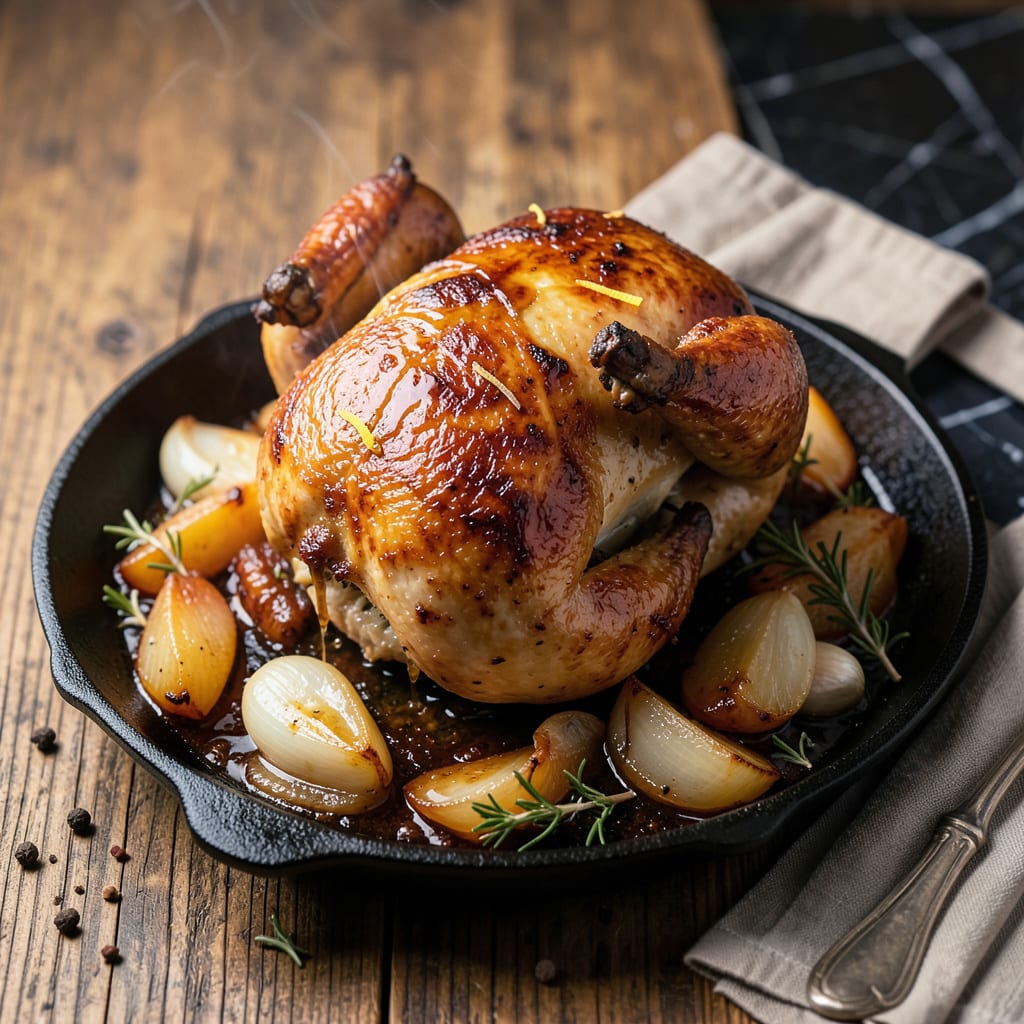
Let me tell you about the game-changer that is roasting chicken in a convection oven. That circulating hot air works magic, giving you golden crisp skin and juicy meat that cooks faster and more evenly than conventional roasting. I was skeptical at first, but after my first try, I never looked back.
Here’s the thing—convection isn’t just regular roasting with a fan. The constant air movement means you’ll need to adjust your temperature (usually 25°F lower) and cooking time. But what you get in return is chicken that browns beautifully on all sides without needing to flip or rotate. My first attempt came out so perfectly I thought I’d messed something up.
What really sold me was how the convection oven handles the tricky parts. No more worrying about dry breast meat or undercooked thighs—the even heat circulation means everything finishes at the same time. And that skin? Forget soggy or rubbery. We’re talking shatteringly crisp and golden brown, just like your favorite rotisserie chicken.
The best part? This method is actually simpler than traditional roasting. Less babysitting, more consistent results, and dinner on the table faster. Once you try this, you’ll wonder why you ever roasted chicken any other way. Ready to get that perfect bird?
📚 In This Guide
- What You’ll Need
- Instructions
- Tips and Common Mistakes
What Youll Need
- ● Whole chicken – 1 (3–5 lbs / 1.4–2.3 kg), fresh or thawed
- ● Convection oven – Preheated to 375°F (190°C) (adjust if your model runs hot!)
- ● Roasting pan – Heavy-duty, with a rack (or use a wire rack over a baking sheet)
- ○ Kitchen twine – 12–18 inches, for trussing (optional but recommended)
- ● Oil or melted butter – 1–2 tbsp (for crispy skin—don’t skip this!)
- ● Salt & black pepper – 1 tbsp kosher salt + 1 tsp pepper (or to taste)
- ○ Aromatics (optional) – 1 lemon (halved), 4 garlic cloves, 1 onion (quartered), or fresh herbs (thyme, rosemary)
- ● Meat thermometer – Instant-read (critical for perfect doneness!)
- ● Basting brush – Silicone or pastry brush (for extra flavor boosts)
- ● Aluminum foil – Small sheet (to tent if browning too fast)
- ● Carving knife & board – Sharp knife + stable surface for slicing
- ● Oven mitts – Heat-resistant (convection ovens get hot!)
Instructions
Here’s how to achieve perfectly crispy skin and juicy meat using your convection oven’s power.
Prepare the Chicken for Maximum Flavor
Start by removing the chicken from the refrigerator and letting it sit at room temperature for 30 minutes. This ensures even cooking throughout. While it warms, pat the chicken completely dry with paper towels—inside and out. I can’t stress this enough: dry skin is the secret to that beautiful crispy exterior you’re after.
Season the chicken generously with salt and pepper, making sure to get some inside the cavity too. I like to use about 1 tablespoon of salt for a standard 4-pound chicken. Don’t be shy with the seasoning; most of it will stay on the skin, creating that flavorful crust we love.
Set Up Your Convection Oven Properly
Preheat your convection oven to 375°F. The convection setting circulates hot air around the chicken, which means faster cooking and crispier skin. Place an oven-safe rack inside a roasting pan or rimmed baking sheet—this elevation allows hot air to circulate underneath the chicken, ensuring even browning on all sides.
While the oven heats, truss the chicken legs together with kitchen twine. This helps the chicken cook more evenly and prevents the legs from drying out. Tuck the wing tips under the body to keep them from burning. These small details make a big difference in the final result.
Roast with Convection for Even Cooking
Place the prepared chicken breast-side up on the rack in your preheated oven. The convection setting will do most of the work for you, but here’s what to watch for: after about 30 minutes, you’ll notice the skin starting to turn golden brown. This is your signal that the magic is happening.
Continue roasting for a total of 1 hour to 1 hour 15 minutes, depending on your chicken’s size. The convection oven will cook it about 25% faster than a conventional oven, so start checking the internal temperature early. You’re aiming for 165°F in the thickest part of the thigh (not touching bone).
Rest for Juicy Perfection
When the chicken reaches temperature, remove it from the oven and transfer it to a cutting board. Tent it loosely with foil and let it rest for 15-20 minutes. I know it’s tempting to dig in right away, but this resting period is crucial. It allows the juices to redistribute throughout the meat instead of running out when you carve.
You’ll notice the internal temperature actually rises a few degrees during this rest—that’s normal and exactly what we want. The skin will stay crispy if you don’t cover it too tightly. While it rests, you can make a quick pan sauce with the drippings or prepare your side dishes.
Carve and Serve with Confidence
To carve, first remove the legs by cutting through the skin between the leg and body, then separate the thigh from the drumstick. For the breasts, make a horizontal cut along the breastbone, then slice downward. The convection roasting should have given you beautifully even cooking, so every piece will be perfectly done.
Serve the chicken while it’s still warm. You’ll be rewarded with crispy, golden skin that shatters at the touch of your fork, and meat that’s juicy and tender throughout. The convection oven gives you that professional-quality result with minimal effort—just perfect heat circulation doing its job.
Tips and Common Mistakes
Convection ovens can be game-changers for roasting chicken, but there are some nuances to master. Here’s what I’ve learned from years of perfecting this method.
Drying is Everything: In Step 1, when you’re patting the chicken dry, don’t just do it once—keep going until the skin feels almost papery. I use about 5-6 paper towels to thoroughly dry both the outside and inside cavity. Any remaining moisture will steam during cooking, preventing that crispy skin we’re after. The 30 minutes at room temperature helps too, but dryness is what really makes the difference.
Rack Position Matters: For Step 3, place your oven rack in the lower third of the oven. This gives the chicken enough space for hot air to circulate while preventing the top from browning too quickly. I’ve found that with the convection setting at 375°F, this position gives the most even cooking. If your oven has multiple convection settings, use the “roast” or “bake” convection mode rather than “fan only” for best results.
Temperature Check Strategy: When checking for the 165°F internal temperature in Step 3, don’t just check one spot. I test three places: the thickest part of the thigh (not touching bone), the center of the breast, and near the wing joint. The convection oven cooks so evenly that you’ll often find all spots within 5 degrees of each other. Start checking at the 1-hour mark, especially if your chicken is on the smaller side.
Resting Wisdom: During the 15-20 minute rest in Step 4, don’t cover the chicken too tightly with foil. Just tent it loosely so steam can escape—this keeps the skin crispy while still allowing the meat to relax. I like to prop the foil up with a wooden spoon handle to create that perfect environment. The internal temperature will rise about 5-10 degrees during this time, which is exactly what we want for perfectly cooked meat.
Pro Tips for Roasting Chicken In Convection Oven
- Convection ovens can be game-changers for roasting chicken, but there are some nuances to master. Here’s what I’ve le…
- Drying is Everything: In Step 1, when you’re patting the chicken dry, don’t just do it once—keep going until the skin…
- Rack Position Matters: For Step 3, place your oven rack in the lower third of the oven. This gives the chicken enough…
Frequently Asked Questions
How long does it take to roast a chicken in a convection oven?
Roasting a whole chicken (3-5 lbs) in a convection oven typically takes 20-25 minutes per pound at 375°F (190°C). For example, a 4-pound chicken cooks in about 1 hour 20 minutes. Always check the internal temp—165°F (74°C) in the thickest part of the thigh ensures it’s done!
Do I need to adjust the temperature for a convection oven?
Yes! Convection ovens cook faster due to hot air circulation. Reduce the temperature by 25°F (15°C) compared to conventional recipes. If a recipe says 400°F, use 375°F instead. Keep an eye on browning—it happens quicker!
Can I use a regular roasting pan in a convection oven?
Just opt for a low-sided pan or rack to allow airflow around the chicken. Avoid deep pans—they block circulation, slowing cooking. A wire rack inside a sheet pan works perfectly for crispy skin!
Why is my chicken skin not crispy in a convection oven?
If the skin isn’t crispy, try these fixes:
- Pat the chicken completely dry before seasoning.
- Brush with oil or melted butter for extra browning.
- Roast at a higher temp (400°F) for the last 10-15 minutes.
- Avoid overcrowding—the chicken needs space for airflow!
What’s the best alternative if I don’t have a convection setting?
No convection? No problem! Use the regular bake setting but:
- Increase temp by 25°F (15°C) (e.g., 400°F instead of 375°F).
- Flip the chicken halfway or baste occasionally for even cooking.
- Add 10-15 extra minutes per pound to the cook time.
Roasting chicken in a convection oven is your secret weapon for juicy meat and perfectly crispy skin—every single time! 🍗✨ With the right temperature, prep, and airflow, you’ll turn a simple dinner into a showstopper. Whether it’s a weeknight meal or a weekend feast, your convection oven makes it effortless.
Ready to put your new skills to the test? Grab a whole chicken, fire up that oven, and get roasting! For extra inspiration, try experimenting with different herbs and spices—your taste buds will thank you. Happy cooking! 👨🍳🔥

- Mandhi Rice Recipe: Yemeni Spiced Lamb and Rice Feast - September 25, 2026
- Chuy’s Green Chili Rice Copycat Recipe: Spicy Southwest Flavor in Every Bite - September 25, 2026
- Beaten Rice Recipe: Fluffy Grains With Nutty Depth - September 25, 2026