
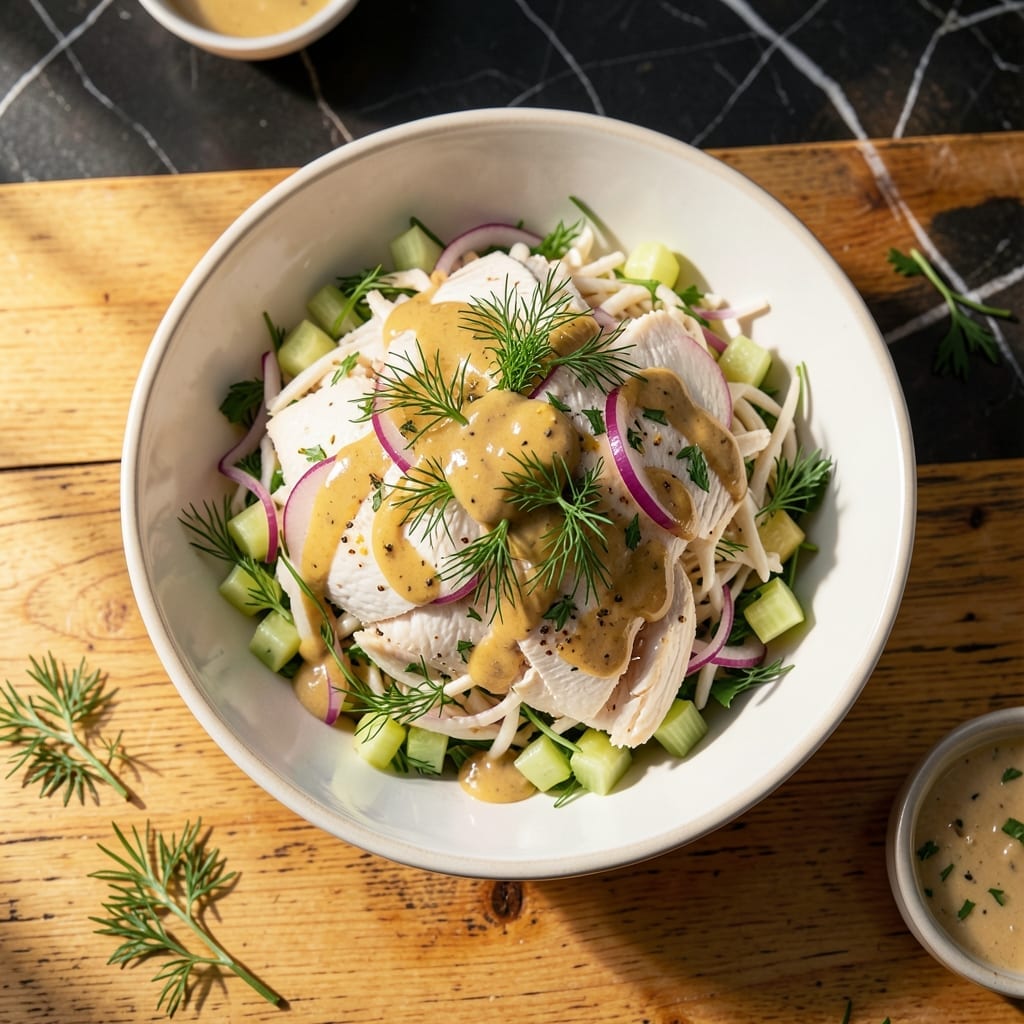
This chicken salad starts with perfectly seasoned protein that transforms the entire dish. The right spice blend makes the difference between ordinary and extraordinary.
I’ve refined this recipe to use a bright herb mix that enhances without overpowering. The spices wake up the chicken’s natural flavor, creating a base that pairs perfectly with creamy dressings and crisp vegetables.
What you’ll get is a restaurant-quality salad with layers of taste in every bite. The herbs add freshness, while subtle warmth from the spices keeps it interesting.
Serve it on greens, in wraps, or as a sandwich filling. This is how to make chicken salad worth remembering.
Ingredients for Spices for Chicken Salad
Bright herbs and warm spices transform simple chicken into something unforgettable.
| Ingredient | Amount | Notes |
|---|---|---|
| Chicken Breast 🍗 | 1 ½ lb | Boneless, skinless, cooked and shredded |
| Celery Stalks 🥬 | 3 whole | Finely diced for crunch |
| Red Onion 🧅 | ½ whole | Small dice, soak in cold water to mellow |
| Fresh Dill 🌿 | ¼ cup | Chopped, for bright herb flavor |
| Fresh Parsley 🌿 | ¼ cup | Chopped, flat-leaf preferred |
| Dijon Mustard 🟡 | 2 tbsp | For tangy depth in dressing |
| Mayonnaise 🥛 | ¾ cup | Full-fat for creaminess |
| Greek Yogurt 🥛 | ½ cup | Plain, full-fat for richness |
| Lemon Juice 🍋 | 1 tbsp | Freshly squeezed for brightness |
| Salt 🧂 | ¾ tsp | Kosher or sea salt preferred |
| Black Pepper 🌶️ | ½ tsp | Freshly ground for warmth |
| Celery Seed 🌿 | ¼ tsp | Subtle earthy note |
| Paprika 🌶️ | ½ tsp | Sweet or smoked for color |
| Garlic Powder 🧄 | ½ tsp | For savory depth |
| Onion Powder 🧅 | ½ tsp | Complements fresh onion |
The herbs are non-negotiable here. Fresh dill and parsley from the produce section (or your garden) give that restaurant-quality pop. Look for bright, perky leaves—avoid anything wilted or yellowing. I grab my celery and red onion from Trader Joe’s or Whole Foods, but honestly any grocery store with good turnover works. For the chicken, rotisserie from Costco saves time without sacrificing flavor (just shred and season).
No fresh herbs? Dried dill and parsley at half the amount work in a pinch. Swap Greek yogurt for all mayo if you want it lighter (or skip it entirely and double down on mayo). The Dijon is key for tang—regular yellow mustard falls flat. Out of celery seed? Celery salt at the same amount (just reduce the regular salt). Paprika is more for color than flavor, so don’t stress if you’re out.
The salad keeps 3-4 days in the fridge—store in an airtight container. The flavors meld and deepen overnight, so it’s actually better the next day. Don’t freeze though; the texture suffers. If making ahead, keep the dressing separate until serving to prevent sogginess.
Why You’ll Love This Recipe
- One Pot Wonder: I toss everything in while the chicken cooks—no extra bowls, no mess.
- Fresh Herb Magic: The dill and parsley make it taste like summer in a bowl, bright and clean.
- Lunchbox Hero: I pack it Monday for Wednesday’s lunch and it still tastes just-made.
- Stretches the Budget: One rotisserie chicken turns into four meals with these simple add-ins.
Step-by-Step Instructions for Spiced Chicken Salad
Here’s my go-to method for building layers of flavor in this classic dish.
Step 1: Cook and Shred the Chicken Breast
Start by poaching the 1.5 lb chicken breast in simmering water until it reaches an internal temperature of 165°F. I like to add a bay leaf or two to the water for subtle depth, but it’s optional.
Once cooked, let the chicken rest for 10 minutes before shredding. Use two forks to pull it apart into uniform pieces—this ensures every bite has the right texture. The chicken should be tender but not dry, with juices that run clear when pierced.
Step 2: Prepare the Vegetables and Herbs
Finely dice the 3 whole celery stalks and 0.5 whole red onion. I always soak the diced red onion in cold water for 10 minutes to take the edge off its sharpness—this makes the flavor more balanced in the final dish.
Chop the 0.25 cup fresh dill and 0.25 cup fresh parsley just before adding them to the salad. Fresh herbs lose their potency quickly once cut, so timing matters here. The dill adds a bright, slightly tangy note, while the parsley brings a clean, fresh finish.
Step 3: Make the Creamy Dressing
In a medium bowl, whisk together the 0.75 cup mayonnaise, 0.5 cup Greek yogurt, 2 tbsp Dijon mustard, and 1 tbsp lemon juice until smooth. The yogurt lightens the dressing while keeping it rich and creamy.
Add the 0.75 tsp salt, 0.5 tsp black pepper, 0.25 tsp celery seed, 0.5 tsp paprika, 0.5 tsp garlic powder, and 0.5 tsp onion powder. Whisk again to fully incorporate the spices. The celery seed adds a subtle earthy note, while the paprika gives a hint of color and mild smokiness.
Step 4: Combine and Chill
In a large bowl, combine the shredded chicken, diced celery, drained red onion, and chopped herbs. Pour the dressing over the top and fold everything together gently with a spatula. You want to coat every piece evenly without breaking up the chicken too much.
Cover the bowl and refrigerate for at least 30 minutes to let the flavors meld. This chilling time is crucial—it allows the spices to infuse the dressing and the vegetables to soften slightly. The salad should be creamy but not soggy, with a bright, herby aroma.
Pro Tips For Making Spices For Chicken Salad
- Toast Your Spices: Lightly toasting whole spices like cumin or coriander in a dry pan for 30 seconds before grinding wakes up their flavor—I learned this the hard way after making bland chicken salad for years.
- Salt the Chicken Early: Season the chicken breast with salt at least 10 minutes before cooking, or even better, brine it for 30 minutes in salted water. My grandmother swore by this, and she was right.
- Soak the Onion: Thinly slice the red onion and soak it in cold water for 15 minutes to mellow its harsh bite—sounds weird, but it works.
- Use Fresh Herbs: Skip the dried dill and parsley; fresh herbs make a real difference in chicken salad. I was skeptical until I tried it, and now I never go back.
Essential Equipment for Great spices for chicken salad
Mixing Bowls
I always reach for my stainless steel mixing bowls—the 1.5 quart for the dressing and a 3 quart for combining everything. They’re lightweight, nest for storage, and won’t absorb odors like plastic. Cuisinart makes a great set that lasts forever.
Cutting Tools
A sharp 8-inch chef’s knife is essential for dicing the celery and onion cleanly. I use a Wüsthof and keep it honed with a ceramic sharpener. For the herbs, my herb scissors from OXO make quick work of dill and parsley. 💪
Measuring Essentials
Accurate spice measurements matter—use a 1 tbsp and 1 tsp set from RSVP. Their magnetic backs stay organized in my drawer. For the 1.5 lb chicken, a digital kitchen scale ensures precision every time.
Whisk and Spatula
The dressing comes together best with a balloon whisk—I love the Ateco 10-inch for its comfortable grip. A silicone spatula with a flexible head helps fold the salad without crushing the chicken. These tools make all the difference.
Poaching Setup
For cooking the chicken, a wide sauté pan with a lid works perfectly. I use my All-Clad 3-quart with a candy thermometer clipped to the side to monitor the 165°F internal temp. This setup prevents overcooking.
Storage Solution
Once chilled, transfer the salad to an airtight glass container. I prefer Pyrex with snap-on lids—they’re durable and let me see the contents. This keeps the salad fresh for 3-4 days in the fridge. ✨
Nutrition Facts
Frequently Asked Questions
Can I use dried herbs instead of fresh?
Yes, but use half the amount. Dried herbs are more concentrated than fresh. For example, use 1/8 cup dried dill instead of 1/4 cup fresh.
Why soak the red onion before adding?
Soaking for 10 minutes in cold water mellows the sharpness, creating a more balanced flavor. This step prevents the onion from overpowering the delicate herbs and spices.
Can I make this ahead of time?
The salad keeps well for 3-4 days in the fridge. In fact, the flavors meld and deepen overnight, making it taste even better the next day.
What if I don’t have celery seed?
Use celery salt at the same amount, but reduce the regular salt to avoid over-salting. This substitution maintains the subtle earthy note the recipe needs.

- Jollof Rice Sauce Recipe: West African Tomato and Spice Infusion - September 25, 2026
- Japanese Rice Soup Recipe: Umami-Rich Comfort in a Bowl - September 25, 2026
- Homemade Cream Of Rice Recipe: Silk-Smooth Breakfast in Minutes - September 25, 2026