
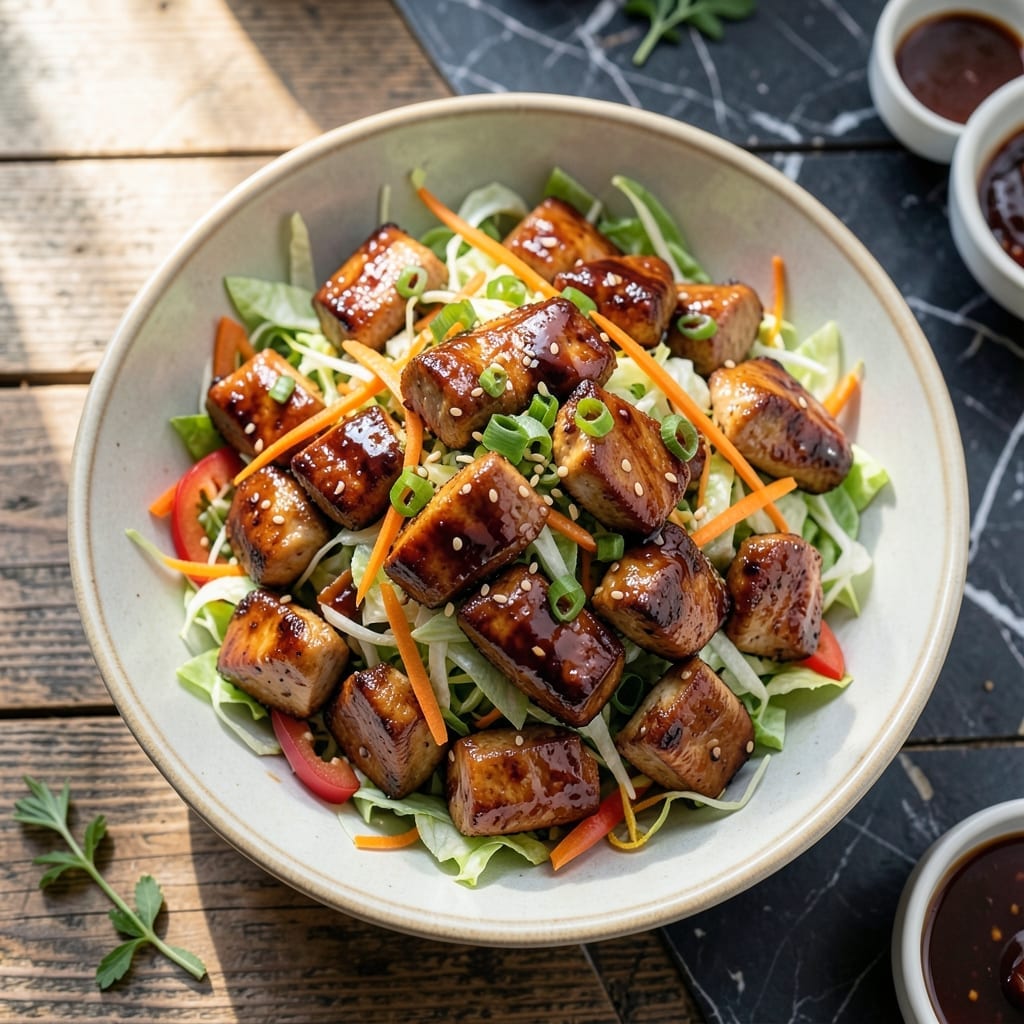
This teriyaki chicken salad brings restaurant-quality Asian flavors to your home kitchen with a perfect balance of sweet and savory. The dish starts with tender chicken marinated in a homemade teriyaki sauce, then tossed with crisp vegetables and a creamy sesame dressing.
The secret lies in the double-coating technique: first marinating the chicken, then glazing it with reduced teriyaki sauce for maximum flavor impact. Crunchy cabbage, carrots, and green onions add fresh texture that contrasts beautifully with the rich chicken.
What results is a salad that satisfies as a main course, with every bite delivering layered flavors and contrasting textures. The teriyaki glaze caramelizes slightly on the chicken, creating irresistible sweet-savory depth.
Serve it warm or chilled – this versatile creation works for lunch, dinner, or meal prep throughout the week.
Ingredients for Teriyaki Chicken Salad
Restaurant-quality Asian flavors start with these carefully selected ingredients for depth and crunch.
| Ingredient | Amount | Notes |
|---|---|---|
| Boneless, Skinless Chicken Breasts 🍗 | 1 ½ lb | Cut into bite-sized pieces |
| Soy Sauce 🫒 | ½ cup | Low-sodium preferred |
| Brown Sugar 🍚 | ¼ cup | Packed for teriyaki glaze |
| Rice Vinegar 🍋 | 3 tbsp | For acidity balance |
| Fresh Ginger Root 🌿 | 1 tbsp | Finely grated |
| Garlic Cloves 🧄 | 3 cloves | Minced for depth |
| Green Cabbage 🥬 | 3 cups | Thinly shredded for crunch |
| Carrots 🥕 | 2 whole | Julienned or shredded |
| Green Onions 🧅 | 4 whole | Thinly sliced for garnish |
| Mayonnaise 🥚 | ½ cup | Full-fat for creaminess |
| Sesame Oil 🫒 | 1 tbsp | Toasted for nutty flavor |
| Sesame Seeds 🌰 | 2 tbsp | Toasted for garnish |
| Cornstarch 🌾 | 1 tbsp | For thickening glaze |
| Water 💧 | 2 tbsp | For cornstarch slurry |
| Vegetable Oil 🫒 | 2 tbsp | For cooking chicken |
The chicken quality is non-negotiable here. Boneless, skinless breasts from Whole Foods or Costco offer the best texture for even cooking. For the teriyaki base, low-sodium soy sauce prevents the dish from becoming overly salty. Fresh ginger and garlic from the produce section (look for firm roots and unblemished cloves) provide the aromatic foundation that jarred versions simply can’t match.
No brown sugar? Coconut sugar or maple syrup work as 1:1 substitutes. The cabbage can be swapped for Napa or red cabbage—just adjust slicing thickness for consistent texture. For a lighter dressing, Greek yogurt at half the mayonnaise amount maintains creaminess. The sesame oil is key—use dark toasted for maximum nutty flavor, and don’t skip the toasting step for the seeds.
The dressed salad holds well for 3-4 days in the fridge, though the cabbage softens slightly. Store components separately if prepping ahead, and combine just before serving. The teriyaki chicken reheats beautifully for lunch the next day—microwave briefly to restore the glaze’s sheen.
Why You’ll Love This Recipe
- One Pan Meal: I toss everything in a single skillet—chicken, soy sauce, brown sugar—and dinner’s halfway done before I finish chopping the ginger.
- Sweet & Tangy Bite: The brown sugar caramelizes with the rice vinegar, and that fresh ginger? It’s the zing that keeps me coming back for another forkful.
- Lunchbox MVP: Honestly, it’s my meal prep hero—tastes just as good cold the next day, and my kids actually eat their greens when this is on top.
- Stretches Far: One batch feeds us for two nights, and the leftovers make a killer wrap filling. Between us, it’s cheaper than takeout and twice as satisfying.
Step-by-Step Instructions for Teriyaki Chicken Salad
Master this technique for perfectly balanced flavors and textures every time.
Step 1: Cook and Glaze the Chicken
Cut the 1.5 lb Boneless, Skinless Chicken Breasts into bite-sized pieces. Heat 2 tbsp Vegetable Oil in a large skillet over medium-high heat. Add the chicken and cook for 6-8 minutes, stirring occasionally, until golden brown and cooked through.
While the chicken cooks, whisk together 0.5 cup Soy Sauce, 0.25 cup Brown Sugar, 3 tbsp Rice Vinegar, 1 tbsp Fresh Ginger Root, and 3 cloves Garlic Cloves in a small saucepan. Bring to a simmer over medium heat.
Combine 1 tbsp Cornstarch with 2 tbsp Water to make a slurry, then whisk it into the sauce. Simmer for 2-3 minutes until the glaze thickens enough to coat the back of a spoon.
Pour the teriyaki glaze over the cooked chicken. Toss to coat evenly and cook for an additional 2 minutes until the chicken is glossy and the sauce clings. Remove from heat and let cool completely.
Step 2: Prepare the Vegetables
Thinly shred the 3 cups Green Cabbage using a sharp knife or mandoline. Julienne or shred the 2 whole Carrots into matchstick-sized pieces. Thinly slice the 4 whole Green Onions, keeping the white and green parts separate if desired for presentation.
Place all vegetables in a large mixing bowl. The cabbage provides a crisp base, while the carrots add sweetness and color. I like to add a pinch of salt to the vegetables at this stage to draw out excess moisture and prevent a watery salad.
Step 3: Toast the Sesame Seeds
Heat a small dry skillet over medium-low heat. Add the 2 tbsp Sesame Seeds and toast, stirring constantly, for 2-3 minutes until golden brown and fragrant. Watch closely—sesame seeds burn quickly.
Immediately transfer the toasted sesame seeds to a small bowl to cool. This step intensifies their nutty flavor and adds a delightful crunch to the finished dish. Set aside until ready to use.
Step 4: Assemble the Salad
In a large bowl, combine the cooled chicken with the prepared vegetables. Drizzle with 0.5 cup Mayonnaise and 1 tbsp Sesame Oil. Gently fold everything together until evenly coated. The mayonnaise provides creaminess while the sesame oil adds depth.
Taste and adjust seasoning if needed. The teriyaki glaze should provide enough saltiness, but a touch more soy sauce can be added for a stronger umami punch. Sprinkle the toasted sesame seeds over the top and fold in gently.
Serve immediately or refrigerate for up to 1 hour to allow the flavors to meld. For best texture, avoid chilling longer as the cabbage may soften too much.
Pro Tips For Making Teriyaki Chicken Salad
- Pound the Chicken: Butterflying or pounding the chicken breasts to an even ½-inch thickness guarantees they cook through at the same rate—no more dry edges and raw centers.
- Bloom the Ginger: Sauté the grated fresh ginger in a little oil for 30 seconds before adding liquids to wake up its flavor—raw ginger can taste harsh in the dressing.
- Reduce the Sauce: Simmer the soy sauce, brown sugar, and rice vinegar mixture until it thickens slightly (about 3-4 minutes), otherwise it’ll pool at the bottom of your salad.
- Rest Before Slicing: Let the cooked chicken rest for 5 minutes before slicing, or all the juices will end up on your cutting board instead of in the salad.
Regional Styles of This teriyaki chicken salad
Hawaiian Style
In Hawaii, they add tropical flair with diced pineapple and macadamia nuts for sweetness and crunch. The pineapple’s acidity brightens the teriyaki’s richness. Locals often use chopped romaine alongside cabbage for extra texture.
Japanese Approach
Japanese versions focus on precision and umami depth. They use shredded napa cabbage instead of green, add pickled ginger for tang, and garnish with nori strips. The dressing incorporates mirin for authentic sweetness.
Korean Twist
Korean adaptations bring heat and fermentation. I add 1 tbsp gochujang to the teriyaki glaze and top with kimchi for spicy complexity. Toasted almonds replace sesame seeds for a different nutty crunch. 🌶️
Midwestern Comfort
In the Midwest, this becomes a hearty meal with shredded cheddar cheese and crushed Ritz crackers for crunch. Some even serve it warm with a buttered croissant on the side. The sweet-savory combo feels like home.
California Fusion
West Coast versions lighten it up with baby spinach and avocado slices. I’ve seen mango chunks added for tropical sweetness. The dressing often uses Greek yogurt to reduce calories while keeping creaminess.
Southern BBQ Style
For a smoky twist, Southern cooks add 1 tsp smoked paprika to the glaze and use pepper jack cheese. The chicken gets a quick smoke treatment on the grill before glazing. Serve with buttermilk dressing on the side. 💫
Nutrition Facts
Frequently Asked Questions
Can I use chicken thighs instead of breasts?
Use 1.5 lb boneless, skinless thighs for juicier results. Cook them 8-10 minutes to 165°F since they need slightly longer to become tender. The darker meat pairs wonderfully with the sweet teriyaki glaze.
How do I make the salad less sweet?
Reduce the brown sugar to 2 tablespoons and add 1 tablespoon lime juice to balance the flavors. The rice vinegar already adds tang, but extra acidity cuts through the sugar effectively.
Can I make this ahead of time?
Yes, but store components separately. The dressed salad keeps for 3-4 days in the fridge, though the cabbage softens. Combine just before serving for the best texture.
What can I substitute for soy sauce?
Use tamari for a gluten-free option or coconut aminos for a lower-sodium alternative. Both maintain the umami depth, though you may need to adjust salt to taste.

- Jollof Rice Sauce Recipe: West African Tomato and Spice Infusion - September 25, 2026
- Japanese Rice Soup Recipe: Umami-Rich Comfort in a Bowl - September 25, 2026
- Homemade Cream Of Rice Recipe: Silk-Smooth Breakfast in Minutes - September 25, 2026