
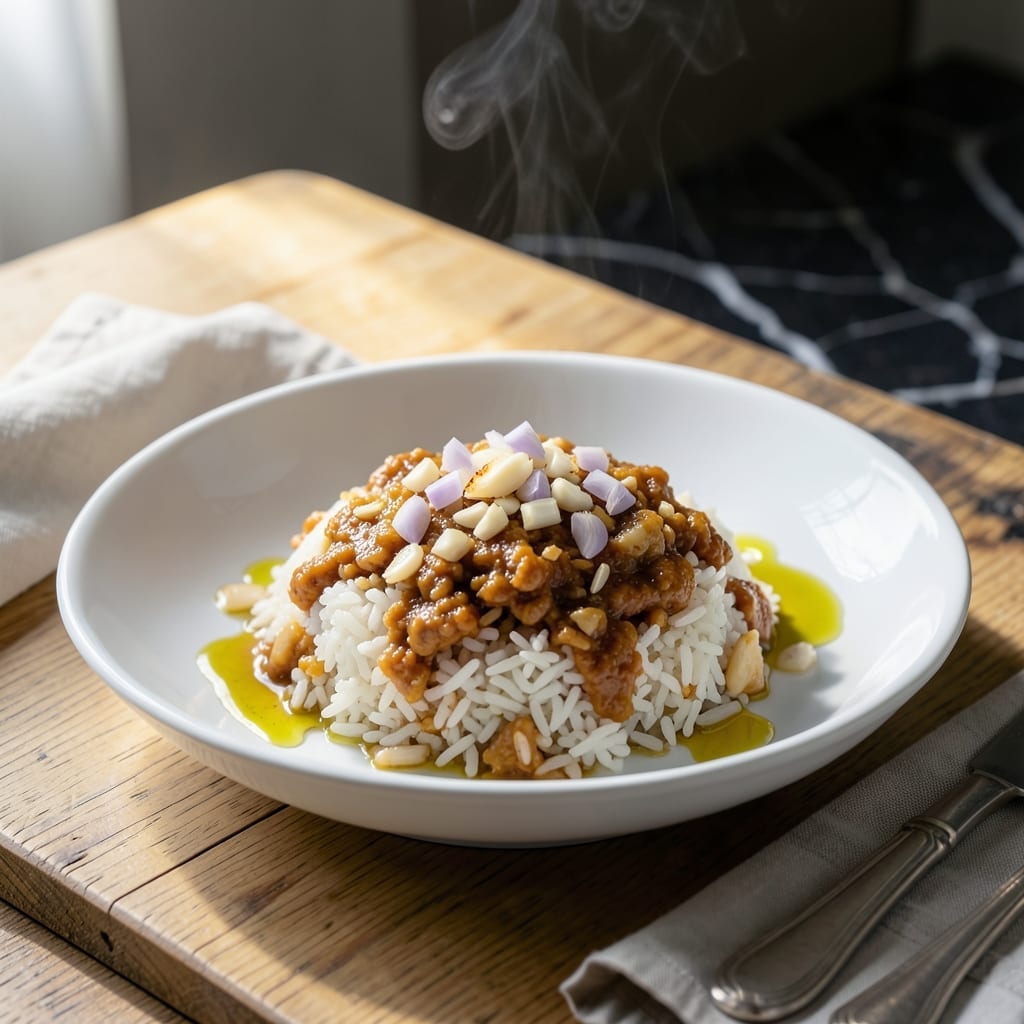
This Filipino classic transforms humble rice into a luxurious dish with its signature orange hue and rich, briny depth. The star ingredient—crab fat—creates a velvety texture that coats each grain perfectly, while minced garlic adds a fragrant, savory backbone to every bite.
The technique is straightforward but requires attention to detail. Sautéing aromatics in rendered crab fat builds layers of flavor before the rice absorbs the liquid. The result is a dish that’s both comforting and restaurant-quality, with each grain infused with umami richness.
What makes this version special is its balance—neither too oily nor too dry, with just the right amount of saltiness. It’s a staple at Filipino gatherings for good reason, offering a taste of coastal tradition in every mouthful.
Serve it as a main dish or alongside grilled meats for a meal that’s simple yet deeply satisfying.
Ingredients for Aligue Rice
Rich crab fat and fragrant garlic elevate simple rice into a luxurious Filipino staple with vibrant color.
| Ingredient | Amount | Notes |
|---|---|---|
| Jasmine Rice 🍚 | 2 cups | Rinsed until water runs clear |
| Crab Fat 🦀 | ½ cup | Fresh or canned, orange color preferred |
| Garlic Cloves 🧄 | 8 cloves | Minced finely for even distribution |
| Shallots 🧅 | 2 whole | Finely diced for sweetness |
| Chicken Stock 🍲 | 3 cups | Low-sodium preferred for control |
| Fish Sauce 🐟 | 2 tbsp | Thai or Filipino variety for authenticity |
| Butter 🧈 | 2 tbsp | Unsalted to balance saltiness |
| Salt 🧂 | ½ tsp | Adjust to taste after cooking |
| Ground Black Pepper 🌶️ | ¼ tsp | Freshly ground for best flavor |
| Green Onions 🌱 | 3 whole | Thinly sliced for garnish |
| Calamansi 🍋 | 1 whole | Juiced for bright acidity |
| Bay Leaves 🌿 | 2 whole | For aromatic depth while cooking |
The crab fat is non-negotiable for authentic flavor and that signature orange hue. Filipino markets often carry fresh or canned aligue—look for bright, vibrant color and a rich aroma. If sourcing fresh, ask for the fat from blue crabs or spider crabs. For canned, Century Pacific is a reliable brand. The rice should be jasmine or long-grain for the right texture; avoid sticky varieties that clump.
No crab fat? Butter plus a pinch of saffron mimics the color but lacks the briny depth. Shrimp paste diluted in oil can add umami in a pinch. For the stock, vegetable broth works if avoiding meat, but chicken stock provides better depth. Fish sauce can be swapped with soy sauce at half the amount, though the flavor profile shifts slightly.
This dish tastes best fresh but reheats well. Store in an airtight container for up to 3 days in the fridge. The crab fat may solidify when cold—reheat gently with a splash of stock to restore the velvety texture. Not ideal for freezing as the rice texture suffers.
Why You’ll Love This Recipe
- One Pot Wonder: I just dump everything in a single pot—jasmine rice, crab fat, and chicken stock—then let it simmer while I set the table.
- Umami Bomb: The crab fat and garlic create this rich, savory depth that makes every bite feel indulgent.
- Feeds a Crowd: Honestly, it’s my go-to for family dinners because it stretches easily and everyone always wants seconds.
- Budget Stretcher: A little crab fat goes a long way, so I can make this luxurious-tasting dish without breaking the bank.
Step-by-Step Instructions for Aligue Rice
This method ensures each grain absorbs the crab fat’s richness while maintaining perfect texture.
Step 1: Rinse and Toast the Rice
Place the 2 cups jasmine rice in a fine-mesh strainer and rinse under cold water until the water runs completely clear. This removes excess starch that could make the final dish gummy rather than fluffy and distinct.
In a heavy pot or Dutch oven, melt the 2 tbsp butter over medium heat. Add the rinsed rice and stir constantly for 2-3 minutes until the grains turn slightly translucent and give off a nutty aroma. This toasting step enhances the rice’s natural flavor and helps it absorb the rich crab fat more effectively.
Step 2: Sauté Aromatics in Crab Fat
Add the 0.5 cup crab fat to the pot with the toasted rice. Stir to coat the grains completely, allowing the vibrant orange fat to infuse every piece. The fat should begin to glisten and coat the rice in a lustrous sheen.
Incorporate the 8 cloves minced garlic and 2 finely diced shallots, stirring frequently for 1-2 minutes until the mixture becomes fragrant and the shallots start to soften. Be careful not to let the garlic brown—it should remain pale to preserve its sweet, aromatic qualities. Add the 2 whole bay leaves at this stage for depth.
Step 3: Add Liquids and Seasonings
Pour in the 3 cups chicken stock, 2 tbsp fish sauce, 0.5 tsp salt, and 0.25 tsp ground black pepper. Stir well to distribute the ingredients evenly, ensuring the rice is fully submerged in the liquid. The mixture should come to a gentle simmer almost immediately.
Bring to a boil, then reduce the heat to low. Cover the pot with a tight-fitting lid. You should see a light steam escaping from under the lid, but the liquid should not be boiling vigorously. This controlled heat is crucial for even cooking.
Step 4: Simmer and Steam to Perfection
Let the rice cook undisturbed for 15-18 minutes. Resist the temptation to stir or peek during this time—steam is your ally here, and lifting the lid releases it. The rice is done when the liquid has been fully absorbed and the grains are tender but still retain a slight bite.
Turn off the heat and let the rice sit covered for an additional 5-10 minutes. This resting period allows the grains to finish steaming in their own residual heat, ensuring uniform doneness and fluffiness. You’ll notice the rice pull away slightly from the sides of the pot when it’s ready.
Step 5: Finish and Garnish
Remove the bay leaves and discard them. Gently fluff the rice with a fork, lifting from the bottom to separate the grains without crushing them. The rice should be glossy with the crab fat, each grain distinct yet cohesive.
Squeeze the juice from the 1 whole calamansi over the rice and stir lightly to incorporate. Garnish with the 3 thinly sliced green onions, distributing them evenly across the surface. The calamansi’s bright acidity cuts through the richness, while the green onions add a fresh, crisp finish. Serve immediately while hot.
Pro Tips For Making Aligue Rice
- Toast the Garlic: Cook the minced garlic in crab fat on medium-low until just golden—any darker and it’ll turn bitter. I learned this the hard way after ruining a batch with burnt garlic.
- Rinse the Rice: Wash the jasmine rice until the water runs clear to remove excess starch, otherwise your aligue rice will end up gummy instead of light and fluffy.
- Skip Cold Stock: Use warm chicken stock when mixing with the rice to keep the cooking temperature steady. Cold stock slows everything down and can make the crab fat clump.
- Fold, Don’t Stir: Gently fold the crab fat into the cooked rice instead of stirring vigorously—this keeps the grains intact and the texture perfect. My grandmother swore by this, and she was right.
Flavor Customization for This Recipe
Spice It Up
Add 1-2 siling labuyo (Filipino bird’s eye chili) minced with the garlic for a spicy kick. The heat balances the richness beautifully. I often include ½ tsp chili flakes when serving to kids for milder heat.
Citrus Variations
No calamansi? Substitute with 2 tbsp lime juice or 1 tbsp lemon juice. For extra zest, add 1 tsp grated lime zest along with the juice. The acidity brightens the crab fat’s richness.
Protein Boosters
Stir in 1 cup cooked shrimp or diced crab meat during the final fluffing step. This adds texture and amplifies the seafood flavor. For meat lovers, ½ cup crispy lechon kawali bits work wonderfully. 🦀
Herb Infusions
Swap bay leaves for 3-4 kaffir lime leaves for a citrusy aroma. Or add 1 stalk lemongrass (bruised) while cooking. Fresh cilantro or Thai basil can replace green onions for garnish.
Creamy Twist
For extra richness, stir in ¼ cup coconut milk with the stock. The creaminess complements the crab fat. I sometimes add 2 tbsp grated coconut on top for texture contrast.
Umami Depth
Enhance with 1 tbsp oyster sauce or 1 tsp shrimp paste (bagoong) when sautéing aromatics. A splash of 1 tbsp soy sauce adds saltiness and color depth. 💫
Nutrition Facts
Frequently Asked Questions
Can I use frozen crab fat?
Yes, thaw it overnight in the fridge first. Frozen crab fat works just as well as fresh when properly defrosted. Avoid microwaving as it can alter the texture.
Why does my rice turn mushy?
Over-stirring or using too much liquid causes this. Stick to the 3 cups stock ratio and resist stirring during cooking. The steam method ensures perfect texture.
What can I substitute for calamansi?
Use 2 tbsp lime juice or 1 tbsp lemon juice for similar acidity. The bright citrus note balances the rich crab fat beautifully.
How do I store leftovers?
Keep in an airtight container for up to 3 days. Reheat gently with a splash of stock to restore the creamy texture.

- Jollof Rice Sauce Recipe: West African Tomato and Spice Infusion - September 25, 2026
- Japanese Rice Soup Recipe: Umami-Rich Comfort in a Bowl - September 25, 2026
- Homemade Cream Of Rice Recipe: Silk-Smooth Breakfast in Minutes - September 25, 2026