
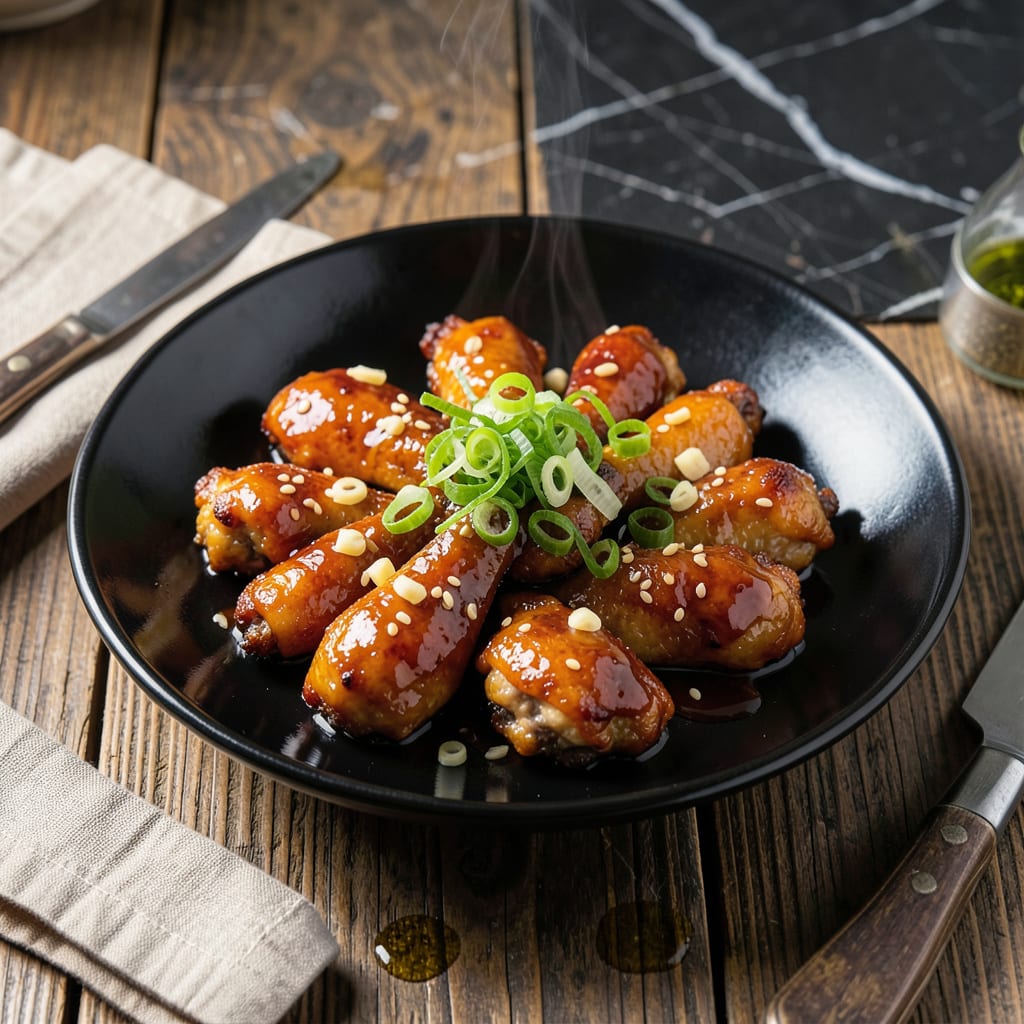
This sauce transforms ordinary chicken wings into a restaurant-quality dish with its deep, complex flavors. The combination of sweet, salty, and umami creates a glaze that clings perfectly to every wing.
Ready in under 15 minutes, this versatile sauce works for baking, frying, or grilling. Store leftovers in the fridge for up to a week to use on wings, ribs, or as a dipping sauce.
Ingredients for Asian Chicken Wing Sauce
Nine ingredients create this complex, umami-packed sauce for restaurant-quality results at home.
| Ingredient | Amount | Notes |
|---|---|---|
| Soy Sauce 🥢 | ½ cup | Low-sodium preferred for balance |
| Honey 🍯 | ⅓ cup | Clovers or wildflower variety |
| Rice Vinegar 🍶 | 3 tbsp | Unseasoned for clean acidity |
| Sesame Oil 🫒 | 1 tbsp | Toasted for nutty depth |
| Minced Garlic 🧄 | 3 cloves | Freshly minced for pungency |
| Ginger Root 🌿 | 1 tbsp | Freshly grated, peeled |
| Sriracha Sauce 🔥 | 1 tbsp | Adjust for heat preference |
| Brown Sugar 🍚 | 2 tbsp | Light or dark, packed |
| Lime Juice 🍈 | 1 tbsp | Freshly squeezed for brightness |
[recipeingredientscaler]
The soy sauce is foundational here—Kikkoman or San-J deliver consistent quality. Low-sodium allows you to control the salt balance precisely, which is critical for that perfect cling to wings. Sesame oil from Kadoya or Spectrum brands offers the best toasted aroma. Always check the ginger root for firmness—soft spots mean it’s past its prime.
No honey? Maple syrup or agave at a 1:1 ratio works, though the flavor profile shifts slightly. Sriracha can be swapped for gochujang paste (use half the amount) for a deeper, fermented heat. Fresh ginger is non-negotiable—powdered lacks the bright, zesty punch this sauce demands. Rice vinegar can be apple cider vinegar in a pinch, but the mildness of rice vinegar is ideal.
This sauce keeps 7-10 days refrigerated in an airtight container. The flavors meld and deepen over 24-48 hours, so make it ahead if possible. Freeze for up to 3 months in ice cube trays for easy portioning.
Why You’ll Love This Recipe
- 5-Minute Mix: I just dump soy sauce, honey, rice vinegar, sesame oil, and garlic in a bowl—no cooking required until it hits the wings.
- Sweet-Savory Balance: The honey and soy sauce create this sticky, salty-sweet glaze that clings to every bite.
- Dinner or Snack: I’ve used this sauce for game day wings, weeknight meals, and even as a marinade for grilled chicken.
- Stretches Far: A single batch coats at least two pounds of wings, and leftovers keep in the fridge for quick meals.
Step-by-Step Instructions for Asian Chicken Wing Sauce
Master this balance of sweet, spicy, and umami with precise timing and layering.
Step 1: Bloom Aromatics in Sesame Oil
Heat a medium saucepan over medium heat and add the 1 tablespoon Sesame Oil. When it shimmers, add the 3 cloves Minced Garlic and 1 tablespoon Ginger Root, stirring constantly for 45-60 seconds until the mixture becomes fragrant and golden.
This step releases the essential oils in the garlic and ginger, building the foundation of flavor. Be careful not to let them brown—burnt aromatics will make the sauce bitter. Remove from heat immediately if they start to darken.
Step 2: Combine Wet Ingredients and Sweeteners
Add the 0.5 cup Soy Sauce, 0.33 cup Honey, 3 tbsp Rice Vinegar, 2 tbsp Brown Sugar, and 1 tbsp Sriracha Sauce to the saucepan. Stir well to dissolve the brown sugar completely. The mixture should appear glossy and slightly thickened from the honey.
Bring the mixture to a gentle simmer over medium-high heat. The soy sauce and rice vinegar create the umami base, while the honey and brown sugar balance with sweetness. The sriracha adds a subtle kick that deepens as the sauce reduces.
Step 3: Simmer to Perfect Consistency
Once simmering, reduce heat to medium-low and let it cook for 8-10 minutes, stirring occasionally. The sauce should thicken enough to coat the back of a spoon but still be pourable.
Watch for the edges to darken slightly and the surface to develop a syrupy sheen. If it reduces too quickly or starts to caramelize, lower the heat. The goal is a sauce that clings to wings without being overly sticky or thin.
Step 4: Finish with Brightness
Remove the saucepan from heat and stir in the 1 tbsp Lime Juice. This final addition cuts through the richness and adds a vibrant citrus note that balances the deep, savory flavors.
Let the sauce cool for 5 minutes before using. It will thicken slightly as it cools, reaching the ideal consistency for tossing with crispy wings. Taste and adjust heat level if desired, though the sriracha provides a well-rounded spice that complements rather than overpowers.
Pro Tips For Making Asian Chicken Wing Sauce
- Simmer the Sauce: Let the sauce reduce for 3-4 minutes on medium-low heat after adding honey—this thickens it and balances the sweetness with the soy.
- Bloom the Garlic: Cook the minced garlic in sesame oil for 30 seconds before adding liquids to deepen its flavor, but don’t let it brown or it’ll turn bitter.
- Skip Cold Honey: Warm the honey slightly in the microwave for 10-15 seconds first so it blends smoothly into the sauce instead of clumping at the bottom.
- Taste Before Serving: I learned this the hard way—always adjust the rice vinegar last, a teaspoon at a time, since brands vary in acidity and can overpower the sauce.
Best Sauces and Condiments for These Flavors
Classic Pairing
For the most authentic experience, serve these wings with cooling cucumber slices and a side of steamed jasmine rice. The crisp texture contrasts beautifully with the sticky sauce. 🥗
Dipping Sauces
Offer creamy peanut sauce for dipping—mix ½ cup peanut butter with 2 tbsp soy sauce, 1 tbsp lime juice, and 1 tsp sriracha. This adds another layer of depth to the meal.
Fresh Garnishes
Top your wings with thinly sliced green onions and crushed peanuts for crunch. A sprinkle of sesame seeds adds visual appeal and a nutty flavor that complements the sauce perfectly.
Spice Adjustments
If you prefer more heat, serve with extra sriracha or sambal oelek on the side. For milder palates, offer a side of ranch or blue cheese dressing to balance the spice. 🔥
Beverage Pairings
An ice-cold Asian lager like Sapporo or Singha cleanses the palate between bites. For non-alcoholic options, jasmine iced tea with a squeeze of lime works beautifully.
Meal Expansion
Turn this into a full meal by adding stir-fried vegetables like bell peppers and snap peas. The sauce works wonderfully as a stir-fry sauce too—just toss everything together at the end. 💫
Nutrition Facts
Frequently Asked Questions
Can I make this sauce ahead of time?
Yes! The flavors deepen after 24-48 hours in the fridge. Store in an airtight container for up to 7-10 days or freeze for 3 months.
What can I use instead of honey?
Maple syrup or agave work perfectly at a 1:1 ratio. The flavor will be slightly different but still delicious with the umami base.
How do I adjust the spice level?
Reduce or omit the sriracha for mild heat. For more kick, add extra sriracha or sambal oelek to taste. Balance with extra honey if needed.
Can I use this sauce for other dishes?
It works great as a glaze for grilled vegetables, tofu, or even stir-fried noodles. The versatility makes it a pantry staple.

- Jollof Rice Sauce Recipe: West African Tomato and Spice Infusion - September 25, 2026
- Japanese Rice Soup Recipe: Umami-Rich Comfort in a Bowl - September 25, 2026
- Homemade Cream Of Rice Recipe: Silk-Smooth Breakfast in Minutes - September 25, 2026