
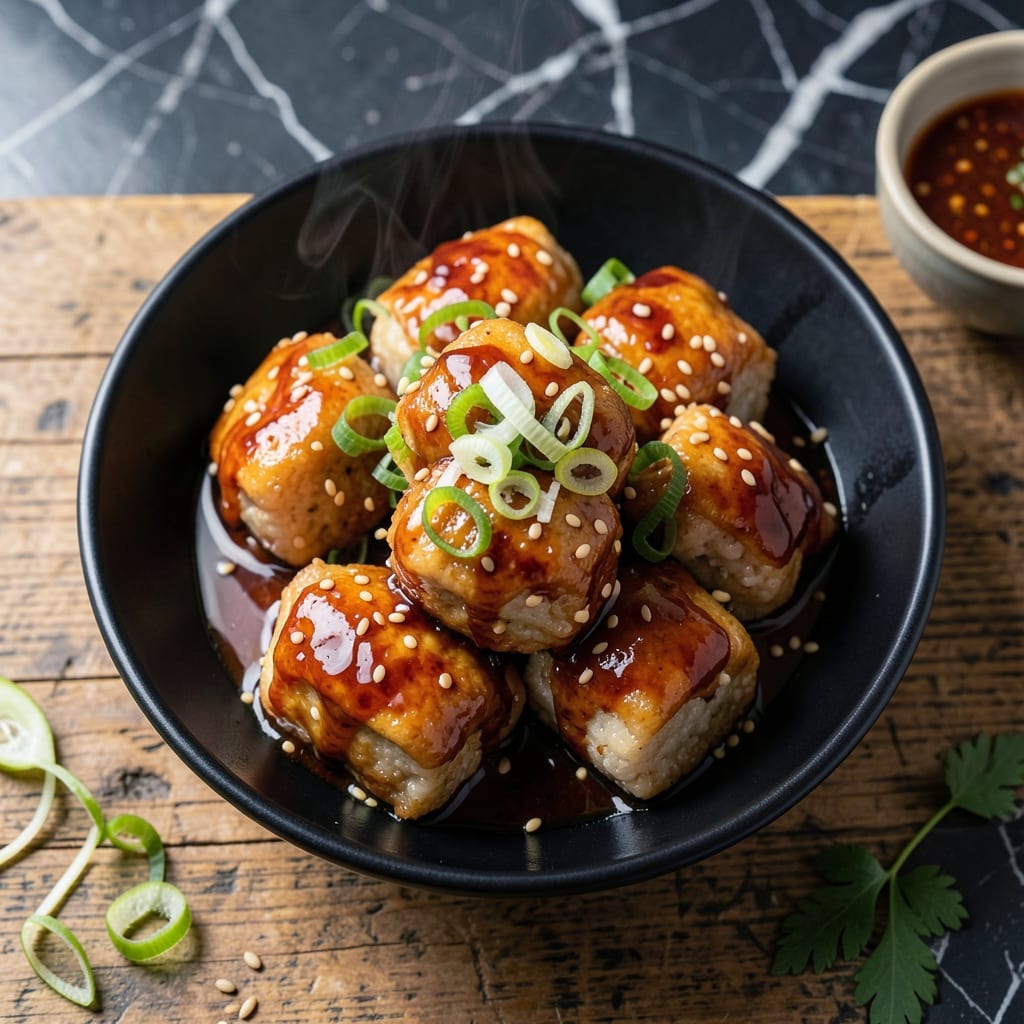
These rice cakes deliver a satisfying chew with charred edges that absorb bold umami flavors beautifully. The texture is what makes them special—soft yet resilient, with just the right resistance.
I’ve tested numerous methods, and the wok provides the best results, creating those coveted crispy bits while keeping the centers tender. A high-heat sear locks in the chewiness before the sauce coats every piece.
What you get is a dish that’s both comforting and exciting, with each bite offering a mix of textures and deep, savory notes. The rice cakes soak up the sauce without turning mushy.
Perfect as a quick weeknight meal or an impressive dish for guests. This is one recipe that never disappoints.
Ingredients for Asian Rice Cake Recipe Ideas
Fresh rice cakes soak up bold sauce while keeping that perfect chewy texture. Everything else is pantry-friendly.
| Ingredient | Amount | Notes |
|---|---|---|
| Rice Cakes 🍚 | 1 lb | Cylindrical, fresh or frozen |
| Soy Sauce 🫒 | ½ cup | Low-sodium preferred |
| Gochujang 🌶️ | 3 tbsp | Korean chili paste |
| Honey 🍯 | 2 tbsp | Or maple syrup for vegan |
| Rice Vinegar 🍶 | 2 tbsp | Unseasoned variety |
| Sesame Oil 🫒 | 1 tbsp | Toasted for aroma |
| Garlic Cloves 🧄 | 4 cloves | Minced for sauce |
| Fresh Ginger 🌿 | 1 tbsp | Grated or minced |
| Green Onions 🧅 | 4 whole | Thinly sliced for garnish |
| Vegetable Oil 🫒 | 3 tbsp | High smoke point for frying |
| Sesame Seeds 🌰 | 1 tbsp | Toasted for garnish |
| Red Pepper Flakes 🔥 | ½ tsp | Adjust to taste |
| Chicken Breast 🍗 | ½ lb | Boneless, thinly sliced (optional protein) |
| Bell Peppers 🌶️ | 2 whole | Julienned for stir-fry |
The rice cakes are everything here. Look for fresh ones at an Asian market—they’re softer and chewier than the vacuum-packed kind. Frozen works too (just thaw first). H Mart or 99 Ranch usually have them in the refrigerated section. For the gochujang, Sempio is my go-to brand—sweet, spicy, and thick without being cloying. Don’t skip toasting the sesame oil—it adds that nutty depth.
No gochujang? Sriracha plus a spoon of miso gets you close. Swap the honey for maple syrup if you need it vegan. Fresh ginger is ideal, but ground ginger at half the amount works in a pinch. The chicken is optional—tofu or shrimp would be great here too. If using frozen rice cakes, pat them dry first so they char instead of steam.
Leftovers keep 3-4 days in the fridge. Reheat in a dry pan to crisp them back up. The sauce thickens as it cools—add a splash of water when reheating. Freeze cooked rice cakes for up to 1 month (they’ll lose some chew but still taste great).
Why You’ll Love This Recipe
- One Pot Wonder: I toss everything in a pan and let the rice cakes soak up that gochujang-honey glaze while I set the table.
- Sweet & Spicy Fix: The mix of gochujang’s heat and honey’s smoothness hits that craving I didn’t even know I had.
- Meal Prep MVP: I make a big batch on Sunday and it tastes just as good reheated for lunch on Wednesday.
- Budget Stretch: Rice cakes cost pennies, and that soy sauce-gochujang combo makes them taste like a takeout splurge.
Step-by-Step Instructions for Chewy Wok-Charred Bites with Bold Umami
Here’s how I get those irresistible crispy edges and chewy centers every time.
Step 1: Soak and Prepare the Rice Cakes
If using frozen 1 lb Rice Cakes, soak them in warm water for 10-15 minutes until they soften slightly. Drain and pat dry with paper towels. This step prevents them from being too hard when stir-fried later.
For fresh rice cakes, simply rinse under cold water to remove any excess starch. You want them slightly tacky but not sticky—this helps them char nicely in the pan without turning to mush.
Step 2: Make the Bold Umami Sauce
In a bowl, whisk together the 0.5 cup Soy Sauce, 3 tbsp Gochujang, 2 tbsp Honey, 2 tbsp Rice Vinegar, 1 tbsp Sesame Oil, minced 4 cloves Garlic Cloves, and grated 1 tbsp Fresh Ginger. The sauce should be thick, glossy, and deeply aromatic.
Taste and adjust the balance if needed—add a pinch more honey if it’s too spicy or a splash of vinegar if it needs brightness. This sauce is the flavor backbone, so make sure it’s bold and well-balanced.
Step 3: Stir-Fry the Vegetables and Protein
Heat 2 tbsp Vegetable Oil in a large skillet or wok over medium-high heat. Add the julienned 2 whole Bell Peppers and stir-fry for 3-4 minutes until they soften and start to blister at the edges.
If using the optional 0.5 lb Chicken Breast, thinly slice it and add to the pan. Cook for 4-5 minutes until the chicken is no longer pink and the edges begin to brown. Push everything to one side of the pan to make room for the rice cakes.
Step 4: Char the Rice Cakes and Coat in Sauce
Add the remaining 1 tbsp Vegetable Oil to the pan, then add the rice cakes in a single layer. Let them cook undisturbed for 2-3 minutes until the bottoms develop a deep golden-brown crust. Flip and repeat on the other side.
Pour the sauce over the rice cakes, chicken, and bell peppers. Toss everything together gently but thoroughly, ensuring every piece is evenly coated. Cook for another 2 minutes until the sauce thickens slightly and clings to the rice cakes.
Step 5: Garnish and Serve Immediately
Remove from heat and sprinkle with thinly sliced 4 whole Green Onions, 1 tbsp Sesame Seeds, and 0.5 tsp Red Pepper Flakes for a little heat. Toss once more to distribute the garnishes.
Serve hot, while the rice cakes are still crispy on the outside and chewy in the middle. The contrast of textures and the deep umami flavors make this dish impossible to resist. Dig in right away for the best experience!
Pro Tips For Making Asian Rice Cake Recipe Ideas
- Soak the Cakes: I learned this the hard way—dry rice cakes stay rock-hard. Give them a 10-minute soak in warm water before cooking to guarantee a soft, chewy texture.
- Bloom the Gochujang: Cook the gochujang in 1 tablespoon of oil for 1-2 minutes before adding liquids. It mellows the raw edge and deepens the flavor in every bite.
- Skip the Cold Sauce: Mix your soy sauce, honey, and rice vinegar in a small bowl first and let it sit at room temp. Cold sauce seizes up the rice cakes and makes them gummy.
- Finish with Vinegar: Stir in the rice vinegar at the very end, off the heat. It keeps the tang bright instead of letting it cook off into bitterness.
Common Mistakes When Making This Dish
Overcrowding the Pan
This is the most common mistake I see. Adding too many rice cakes at once lowers the pan temperature, causing them to steam instead of char. Use a large wok or skillet and cook in 2 batches if needed. You want each piece to have 1-2 inches of space around it. 🔥
Skipping the Soak
Frozen rice cakes must be soaked in warm water for 10-15 minutes to soften. Without this step, they’ll stay rock-hard in the center. Fresh ones need a quick rinse to remove surface starch, which prevents gummy clumping.
Sauce Too Thin
Your sauce should coat the back of a spoon. If it’s watery, simmer it for 2-3 minutes before adding to the pan. I often mix 1 tsp cornstarch with 1 tbsp water and stir into the sauce to thicken it instantly.
Low Heat Cooking
Rice cakes need medium-high to high heat to develop that crucial char. If your oil isn’t shimmering when you add them, your pan isn’t hot enough. I test the heat by flicking water droplets—they should dance and evaporate immediately.
Over-Stirring
Let the rice cakes sit undisturbed for 2-3 minutes per side to develop a golden crust. Constant stirring prevents charring and turns them mushy. Use a metal spatula for easy flipping without breaking.
Soggy Leftovers
Store leftovers in a single layer on a plate, not stacked. Reheat in a dry pan over medium heat for 3-4 minutes to restore crispiness. Microwaving turns them rubbery—avoid it at all costs.
Nutrition Facts
Frequently Asked Questions
Can I use pre-packaged rice cakes instead of fresh?
Yes, but they may be denser. Soak them in warm water for 15-20 minutes to soften before cooking. Fresh or frozen cylindrical rice cakes work best for that perfect chewy texture.
How do I make this dish vegetarian?
Skip the chicken and add tofu, mushrooms, or extra veggies. Use maple syrup instead of honey to keep it fully plant-based. The bold sauce works beautifully with any protein swap.
What if my sauce is too spicy?
Balance it with extra honey or a splash of rice vinegar. Start with 1 tbsp of either and adjust to taste. Gochujang varies in heat, so always taste as you go.
How long can I store leftovers?
Keep in an airtight container for 3-4 days in the fridge. Reheat in a dry pan to crisp them back up. Freeze for up to 1 month, though texture may soften slightly.

- Jollof Rice Sauce Recipe: West African Tomato and Spice Infusion - September 25, 2026
- Japanese Rice Soup Recipe: Umami-Rich Comfort in a Bowl - September 25, 2026
- Homemade Cream Of Rice Recipe: Silk-Smooth Breakfast in Minutes - September 25, 2026