
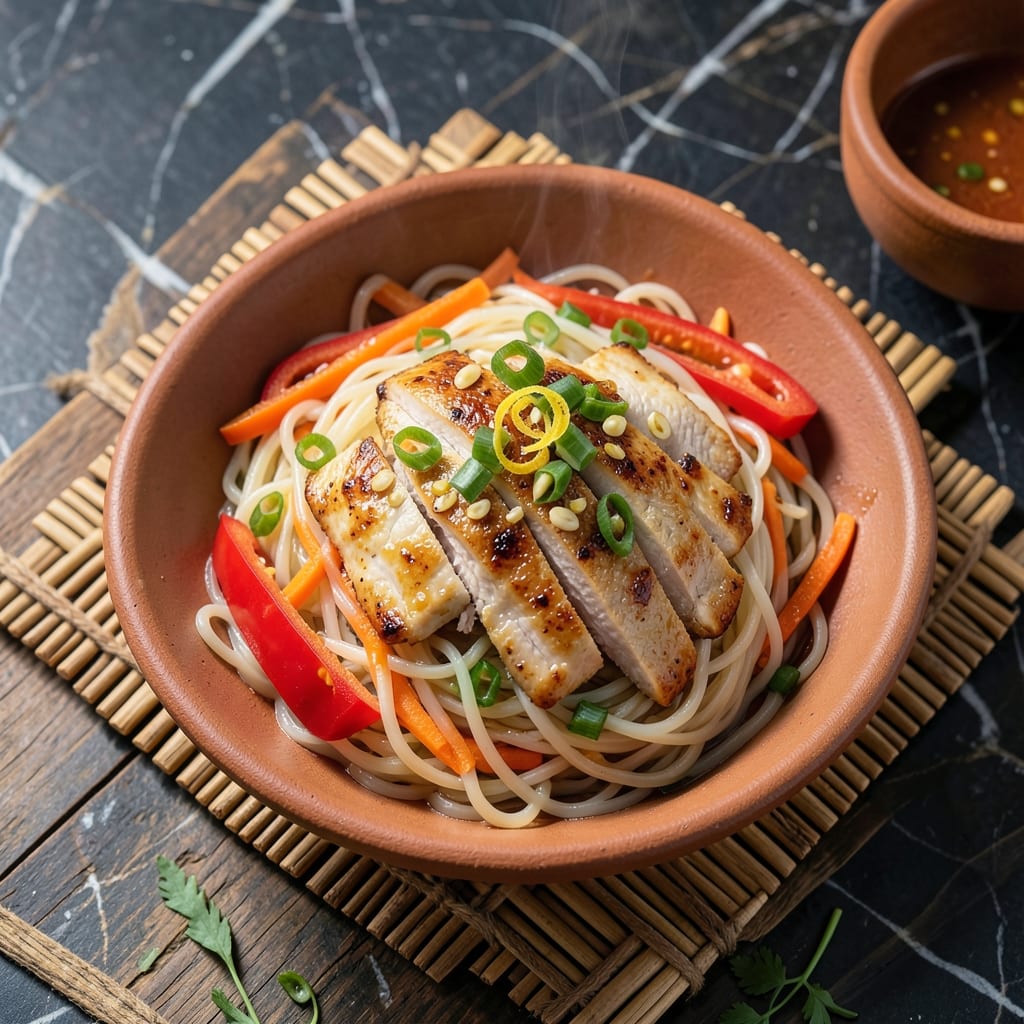
There’s an art to achieving authentic street food flavor with rice noodles at home. This recipe captures the essence of traditional Asian markets with its balance of textures and aromatics.
The secret lies in proper noodle preparation and high-heat cooking. Soaked rice noodles absorb the stir-fry sauce beautifully, while fresh vegetables and protein create that signature wok-fried taste.
What emerges is a dish with perfectly tender noodles, crisp vegetables, and a sauce that coats every strand. The aroma alone will transport you to a bustling night market.
Serve immediately for the best texture and flavor. The authentic taste comes from precise timing and quality ingredients.
Ingredients for Asian Rice Noodle
Authentic street food flavor starts with quality rice noodles and fresh aromatics for this dish.
| Ingredient | Amount | Notes |
|---|---|---|
| Rice Noodles 🍜 | 8 oz | Flat, medium-width preferred |
| Chicken Breast 🍗 | 1 lb | Thinly sliced for stir-frying |
| Bell Peppers 🌶️ | 2 whole | Thinly sliced, mixed colors |
| Carrots 🥕 | 2 whole | Julienned or thinly sliced |
| Green Onions 🧅 | 4 whole | Sliced, white and green parts separated |
| Garlic Cloves 🧄 | 4 cloves | Minced finely for maximum flavor |
| Ginger Root 🌿 | 1 tbsp | Freshly grated for aroma |
| Soy Sauce 🫒 | ⅓ cup | Low-sodium for better control |
| Oyster Sauce 💧 | 2 tbsp | Vegetarian oyster sauce if needed |
| Sesame Oil 🫒 | 1 tbsp | Toasted for nutty depth |
| Rice Vinegar 🍯 | 1 tbsp | Balances the sauce perfectly |
| Brown Sugar 🍚 | 1 tbsp | Light or dark, for sweetness |
| Peanut Oil 🫒 | 3 tbsp | High smoke point for stir-frying |
| Red Pepper Flakes 🌶️ | ½ tsp | Adjust for preferred spice level |
| Lime 🍋 | 1 whole | Cut into wedges for serving |
Rice noodles are the foundation, so seek out Thai brands like Thai Kitchen or Annie Chun’s at Whole Foods or Asian markets. The chicken should be boneless, skinless for even cooking. Fresh ginger and garlic are non-negotiable—they lose potency quickly, so buy small amounts weekly. Bell peppers with firm walls hold up best to high heat.
No chicken? Shrimp or thinly sliced beef work beautifully. For a vegetarian option, extra-firm tofu or shiitake mushrooms absorb the sauce well. If you’re out of oyster sauce, hoisin sauce at half the amount provides similar depth. Vegetable oil can replace peanut oil, though the flavor profile will shift slightly.
Store rice noodles in a cool, dry place—they keep for 6-12 months. Fresh vegetables should be prepped just before cooking to maintain crispness. The dish is best served immediately, but leftovers reheat well with a splash of water to revive the noodles.
Why You’ll Love This Recipe
- One Pot Meal: I love that everything cooks together—noodles, chicken, and veggies—so I’m not stuck washing a mountain of dishes.
- Crave-Worthy Sauce: The soy-ginger blend soaks into the rice noodles and chicken, making every bite ridiculously flavorful.
- Meal Prep Hero: This keeps beautifully for lunches, and honestly, the flavors taste even better the next day.
- Budget Stretcher: Chicken breast and veggies go a long way here, so I can feed four without breaking the bank.
Step-by-Step Instructions for Stir-Fried Rice Noodles
Master the wok toss technique for authentic street food texture and flavor.
Step 1: Prepare the Rice Noodles and Vegetables
Soak the 8 oz Rice Noodles in warm water for 15-20 minutes until pliable but still slightly firm. Drain and set aside. Meanwhile, thinly slice the 2 whole Bell Peppers and julienne the 2 whole Carrots into matchstick pieces.
Separate the white and green parts of the 4 whole Green Onions, slicing each thinly. This division allows you to use the whites for cooking and the greens for garnish. Keep all vegetables in separate piles to maintain organization during the stir-fry.
Step 2: Velvet the Chicken Breast
Slice the 1 lb Chicken Breast into thin strips against the grain. In a bowl, combine the chicken with 1 tbsp Soy Sauce, 1 tbsp Ginger Root, and 1 tbsp Brown Sugar. Mix well and let marinate for 10 minutes.
This velveting process ensures the chicken remains tender and absorbs the flavors of the marinade. The ginger adds a subtle warmth, while the brown sugar balances the saltiness of the soy sauce.
Step 3: Stir-Fry the Chicken and Vegetables
Heat 2 tbsp Peanut Oil in a wok or large skillet over high heat until shimmering. Add the marinated chicken and stir-fry for 3-4 minutes until just cooked through. Remove the chicken and set aside.
In the same wok, add the remaining 1 tbsp Peanut Oil, then toss in the 4 cloves Garlic Cloves and 0.5 tsp Red Pepper Flakes. Stir for 30 seconds until fragrant, then add the bell peppers and carrots. Stir-fry for 2-3 minutes until the vegetables are tender-crisp.
Step 4: Combine Noodles and Sauce
Add the drained rice noodles to the wok along with the cooked chicken. Pour in the remaining 0.33 cup Soy Sauce (less the 1 tbsp used earlier), 2 tbsp Oyster Sauce, 1 tbsp Rice Vinegar, and 1 tbsp Sesame Oil. Toss everything together over high heat for 2-3 minutes.
The sauce should coat the noodles evenly and glisten slightly. The rice vinegar adds a subtle tang, while the sesame oil provides a nutty aroma that ties all the flavors together.
Step 5: Garnish and Serve
Transfer the stir-fried noodles to a serving platter. Sprinkle the reserved green onion tops over the dish and serve with 1 whole Lime cut into wedges on the side. The lime adds a bright, citrusy note that complements the rich, savory flavors of the dish.
For best results, serve immediately while the noodles are hot and the vegetables retain their crispness. Each serving should have a balance of noodles, chicken, and vegetables, with the sauce evenly distributed.
Pro Tips For Making Asian Rice Noodle
- Soak the Noodles: Cover rice noodles with hot water for exactly 8-10 minutes—any longer and they’ll turn to mush. I learned this the hard way after ending up with a gluey mess more than once.
- Slice Chicken Thin: Cut the chicken breast into ¼-inch strips so it cooks through in 2-3 minutes. Sounds tedious, but it works and prevents chewy, overcooked meat.
- Prep Veggies First: Have all your bell peppers, carrots, and green onions chopped and ready before you start cooking. After burning three batches, I finally figured out that stir-frying waits for no one.
- Use High Heat: Crank the heat to high and keep the wok or pan screaming hot. My grandmother swore by this, and she was right—it’s the only way to get that smoky, restaurant-style flavor.
Flavor Customization for This Recipe
Spice It Up
Add 1-2 tsp Sriracha or 1 tbsp chili garlic sauce to the stir-fry sauce for serious heat. I love the extra kick it brings. For a milder version, ½ tsp gochujang adds depth without overwhelming spice. 🌶️
Sweet and Tangy
Boost the sweetness with 1 tbsp honey or 1 tbsp hoisin sauce for a richer flavor. For tang, add 1 extra tbsp rice vinegar or a splash of pineapple juice. The balance of sweet and sour is what makes this dish special.
Umami Bomb
Enhance the umami by adding 1 tbsp fish sauce or 1 tsp miso paste to the sauce. For a vegetarian option, 1 tbsp mushroom soy sauce works wonders. These small additions deepen the savory notes beautifully.
Herb Infusion
Fresh herbs can elevate your noodles. Toss in ¼ cup Thai basil or ¼ cup cilantro at the end of cooking. I also love adding 2 tbsp chopped mint for a refreshing twist. The herbs add a bright, fresh contrast.
Crunchy Texture
For extra crunch, top your dish with ¼ cup crushed peanuts or 2 tbsp toasted sesame seeds. I sometimes add fried shallots for a gourmet touch. These toppings provide a satisfying contrast to the tender noodles.
Citrus Zing
Brighten the flavors with zest of 1 lime or 1 tbsp orange juice added to the sauce. The citrus cuts through the richness and adds a vibrant note. Serve with extra lime wedges for a personalized touch. 💛
Nutrition Facts
Frequently Asked Questions
How do I prevent the noodles from sticking?
Rinse soaked noodles with cold water before cooking and use high heat with sufficient oil. Stir constantly to keep them moving in the wok.
Can I use other proteins besides chicken?
Try shrimp, thinly sliced beef, or extra-firm tofu for different variations. Adjust cooking times accordingly.
What if my sauce is too thick?
Thin it with 1-2 tbsp water or chicken broth while stirring. The sauce should coat the noodles lightly, not clump.
How long can I store leftovers?
Keep in an airtight container in the fridge for up to 3 days. Reheat with a splash of water to restore texture.

- Jollof Rice Sauce Recipe: West African Tomato and Spice Infusion - September 25, 2026
- Japanese Rice Soup Recipe: Umami-Rich Comfort in a Bowl - September 25, 2026
- Homemade Cream Of Rice Recipe: Silk-Smooth Breakfast in Minutes - September 25, 2026