
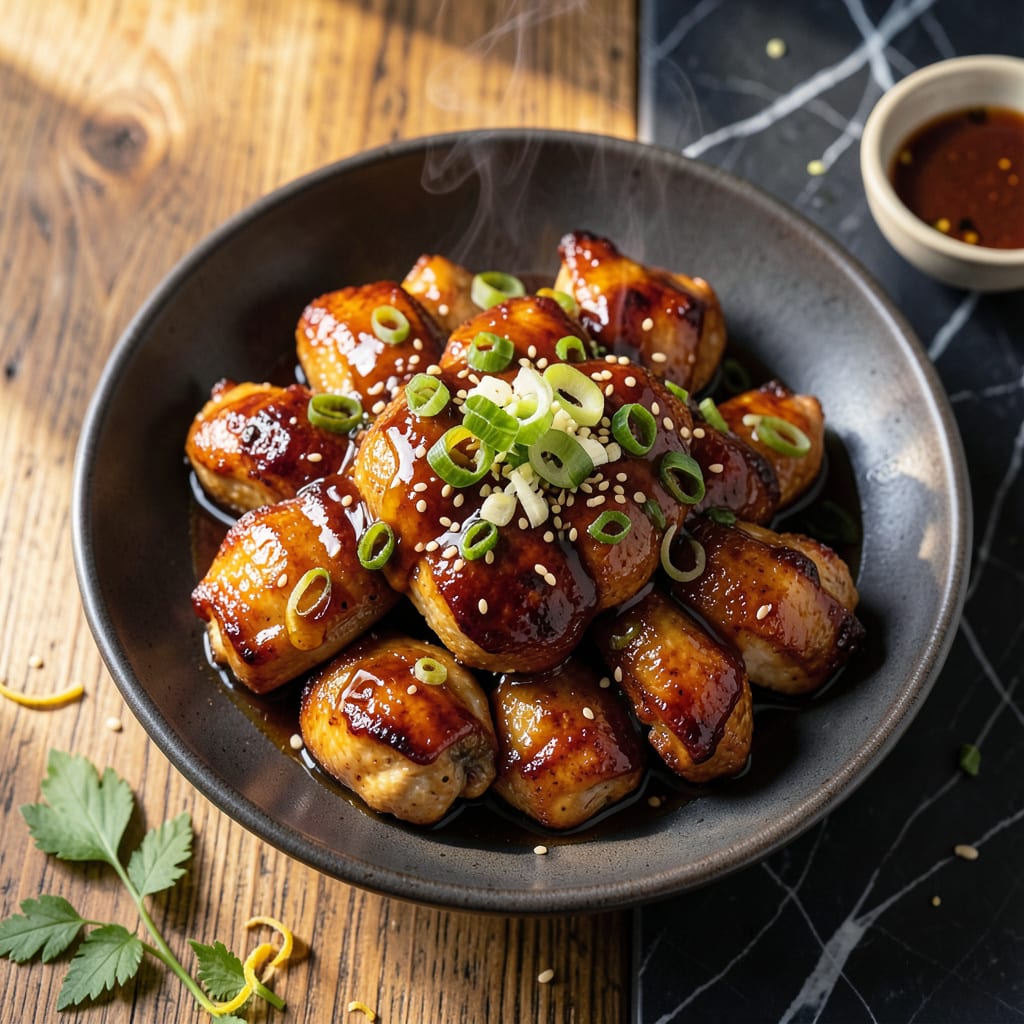
This dish transforms ordinary chicken into a sticky, glazed masterpiece with minimal effort. The magic lies in the balance of sweet, salty, and umami flavors that develop in the wok.
With just 30 minutes and basic ingredients, you’ll achieve restaurant-quality results. The sauce reduces to a glossy coat that clings to every bite, making it irresistible.
Ingredients for Asian Soy Sauce Chicken
Transform simple chicken into a glossy, umami-packed dish with these pantry staples.
| Ingredient | Amount | Notes |
|---|---|---|
| Boneless Skinless Chicken Thighs 🍗 | 1 ½ lb | Cut into bite-sized pieces |
| Soy Sauce 💧 | ½ cup | Low-sodium preferred for balance |
| Dark Brown Sugar 🍚 | ¼ cup | Packed for sweetness depth |
| Honey 🍯 | 2 tbsp | For natural sweetness and glaze |
| Fresh Ginger 🌿 | 1 tbsp | Minced finely for aroma |
| Garlic Cloves 🧄 | 4 cloves | Minced for pungent flavor |
| Rice Vinegar 💧 | 2 tbsp | For acidity and balance |
| Sesame Oil 🫒 | 1 tbsp | Toasted for nutty aroma |
| Cornstarch 🌾 | 1 tbsp | For thickening the sauce |
| Vegetable Oil 🫒 | 2 tbsp | High smoke point for stir-frying |
| Green Onions 🧅 | 3 whole | Sliced for garnish and crunch |
| Sesame Seeds 🌰 | 1 tsp | Toasted for garnish and texture |
| Red Pepper Flakes 🌶️ | ¼ tsp | Optional for heat adjustment |
[recipeingredientscaler]
The chicken is the foundation here. Boneless, skinless thighs (not breasts) stay juicy and absorb the sauce better. Source them from Whole Foods or Costco for consistent quality. For the soy sauce, Kikkoman low-sodium is a reliable choice—avoid cheap brands with additives. Fresh ginger and garlic are non-negotiable; their aromatics build the base flavor, so don’t use the jarred stuff.
Need a soy-free option? Coconut aminos at one-to-one ratio work well. No honey? Maple syrup or agave can substitute, but the flavor profile shifts slightly. For added depth, swap half the soy sauce for oyster sauce (ensure it’s vegetarian if needed). The rice vinegar can be apple cider vinegar in a pinch, but it’s tangier. Fresh ginger is best, but ground ginger at one-fourth the amount works if you’re desperate.
The sauce keeps beautifully. Store leftovers in an airtight container for up to 4 days in the fridge. Reheat gently to avoid thickening further. For meal prep, cook the chicken and sauce separately, then combine when reheating. Freezes well for up to 3 months if you leave the green onions and sesame seeds off until serving.
Why You’ll Love This Recipe
- One Pan Wonder: I just toss the chicken thighs with soy sauce, brown sugar, and ginger in a single pan—minimal cleanup, maximum flavor.
- Sweet-Savory Fix: The honey and dark brown sugar caramelize with the soy sauce for that sticky, finger-licking glaze.
- Meal Prep MVP: It reheats beautifully, so I make a big batch for lunches all week—still tender, never dry.
- Budget Stretcher: Boneless thighs stay juicy and cost half what breasts do, so I can feed four for under ten bucks.
Step-by-Step Instructions for Asian Soy Sauce Chicken
Master this technique for perfectly glazed, tender chicken with a sticky, savory-sweet sauce.
Step 1: Prepare the Marinade and Chicken
In a medium bowl, whisk together the 0.5 cup Soy Sauce, 0.25 cup Dark Brown Sugar, 2 tbsp Honey, minced 1 tbsp Fresh Ginger, minced 4 cloves Garlic Cloves, 2 tbsp Rice Vinegar, and 1 tbsp Sesame Oil until the sugar fully dissolves. This creates a balanced base with sweet, salty, and umami notes.
Cut the 1.5 lb Boneless Skinless Chicken Thighs into bite-sized pieces and add them to the marinade. Stir to coat evenly, ensuring every piece is saturated. Let it marinate for at least 15 minutes at room temperature to allow the flavors to penetrate the meat.
Step 2: Thicken the Sauce
After marinating, transfer the chicken and marinade to a colander set over a bowl to catch the excess liquid. Reserve the marinade—this will become your sauce. In a small bowl, mix the 1 tbsp Cornstarch with 2 tbsp of the reserved marinade to create a slurry.
Pour the remaining marinade into a small saucepan and bring to a gentle simmer over medium heat. Slowly whisk in the cornstarch slurry and continue simmering for 2-3 minutes, stirring constantly, until the sauce thickens to a glossy, syrup-like consistency. Remove from heat and set aside.
Step 3: Cook the Chicken
Heat the 2 tbsp Vegetable Oil in a large skillet or wok over medium-high heat until it shimmers. Add the marinated chicken in a single layer, being careful not to overcrowd the pan. Cook undisturbed for 3-4 minutes until the bottoms develop a deep golden-brown crust.
Flip the chicken and cook for another 3-4 minutes until fully cooked through and the internal temperature reaches 165°F. The chicken should be nicely caramelized at the edges, which adds depth to the flavor.
Step 4: Combine and Garnish
Pour the thickened sauce over the cooked chicken in the skillet. Stir to coat every piece evenly, allowing the sauce to cling and create a sticky glaze. Cook for an additional 1-2 minutes over low heat to meld the flavors together.
Transfer to a serving platter and garnish with the sliced 3 whole Green Onions, 1 tsp Sesame Seeds, and a pinch of 0.25 tsp Red Pepper Flakes for a touch of heat. Serve immediately while the glaze is still glossy and the chicken is at its peak tenderness.
Pro Tips For Making Asian Soy Sauce Chicken
- Sear the Thighs: Get your pan ripping hot before adding the chicken—this gives you that deep golden crust that locks in the juices. I learned this the hard way after too many pale, soggy batches.
- Grate the Ginger: Fresh ginger releases way more flavor when finely grated instead of minced. Sounds fussy, but it actually changes the outcome of your sauce.
- Reduce the Sauce: Let the soy sauce, brown sugar, and honey simmer for 3-4 minutes before adding the chicken—this prevents a watery glaze and gives you that thick, sticky coating.
- Skip the Overcrowding: Cook the chicken in batches if needed. Steer clear of packing the pan, or you’ll end up steaming instead of browning.
Wine and Beer Pairings for This Recipe
White Wine Pairings
A crisp, aromatic white wine like Riesling from Germany or Washington State cuts through the richness of the glaze. Its slight sweetness mirrors the brown sugar and honey, while the acidity balances the saltiness. I prefer a Kabinetttrocken style for its light body. 🍷
Red Wine Options
If you prefer red, go for a light-bodied Pinot Noir from Oregon or Burgundy. Its earthy notes complement the soy sauce without overpowering the dish. Avoid heavy tannic reds like Cabernet—they’ll clash with the umami flavors.
Beer Pairings
A Japanese lager like Sapporo or Asahi is my top choice—the clean, crisp profile refreshes your palate between sticky bites. For craft lovers, a Belgian witbier with citrus notes adds a bright contrast to the savory-sweet glaze. 🍺
Non-Alcoholic Choices
Sparkling lychee tea or ginger beer (like Bundaberg) offers a refreshing, flavorful alternative. The ginger’s spice mirrors the fresh ginger in the dish, while lychee’s floral notes elevate the experience.
Serving Temperature
Serve whites and lagers ice-cold (45-50°F), but let reds breathe for 15 minutes at room temperature. This enhances their aromas and softens any sharp edges, making them pair more harmoniously with the dish.
Nutrition Facts
Frequently Asked Questions
Can I use chicken breast instead of thighs?
Thighs stay juicier, but breasts work if sliced thin and cooked for 2-3 minutes less. Be careful not to overcook, as they dry out faster.
How do I make the sauce thicker?
Simmer the sauce longer or add an extra 1 tsp of cornstarch mixed with water. Stir constantly to prevent lumps.
Can I make this ahead of time?
Yes! Cook and store in the fridge for up to 4 days. Reheat gently on the stove with a splash of water.
What if my sauce is too salty?
Balance it with a little more honey or brown sugar. Adding a splash of rice vinegar can also help.

- Jollof Rice Sauce Recipe: West African Tomato and Spice Infusion - September 25, 2026
- Japanese Rice Soup Recipe: Umami-Rich Comfort in a Bowl - September 25, 2026
- Homemade Cream Of Rice Recipe: Silk-Smooth Breakfast in Minutes - September 25, 2026