
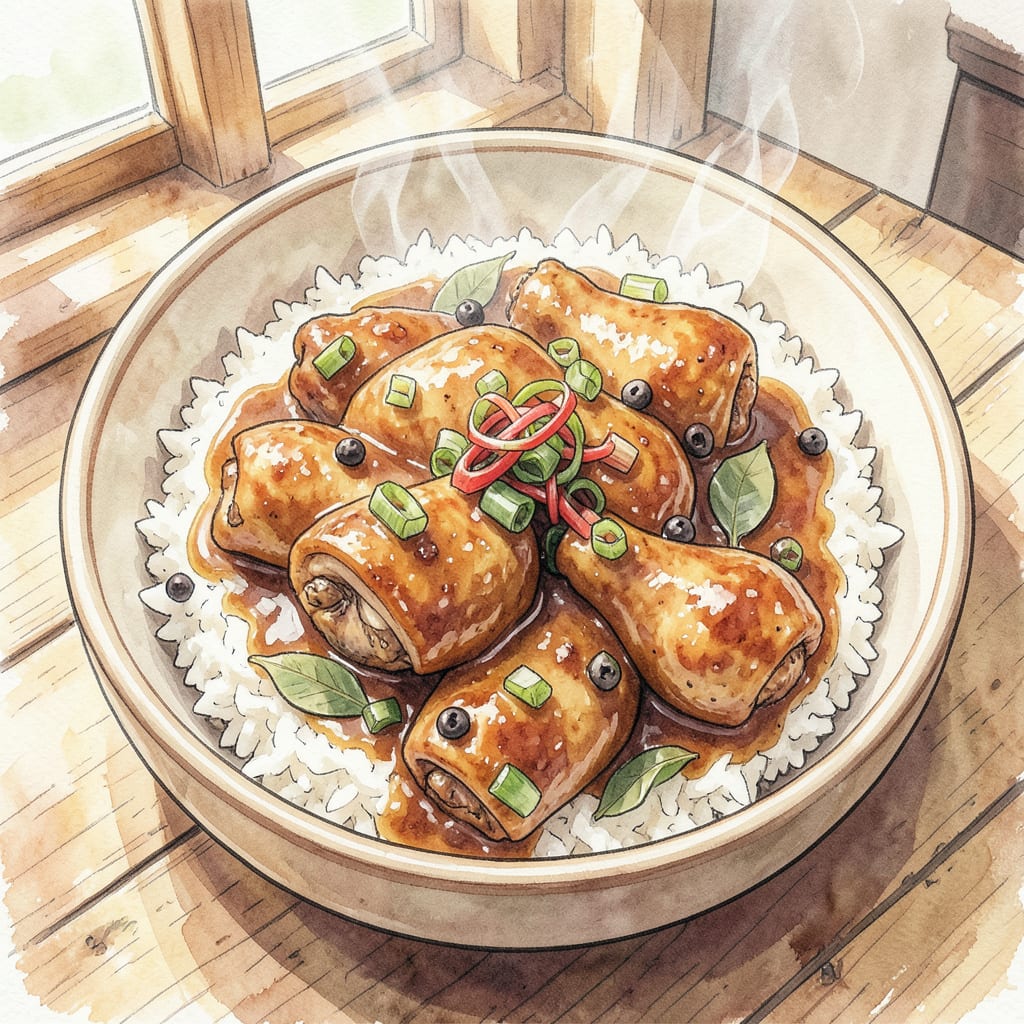
Filipino chicken adobo is a culinary staple that showcases the country’s rich cultural heritage. This authentic recipe features a tangy vinegar glaze that perfectly balances savory and sour flavors, creating a truly unforgettable dish.
By combining chicken, vinegar, soy sauce, and garlic, this traditional recipe delivers perfect results every time. The slow-cooked sauce transforms into a rich, velvety glaze that coats each piece of chicken, making it a standout main course for any occasion.
Ingredients for Authentic Chicken Adobo Recipe Filipino
Traditional Filipino ingredients come together in this authentic adobo recipe.
| Ingredient | Amount | Notes |
|---|---|---|
| Chicken Thighs 🍗 | 2 lb | Bone-in, skin-on preferred |
| White Vinegar 🥘 | ½ cup | Apple cider or white vinegar |
| Soy Sauce 🧂 | ¼ cup | Use low-sodium variety |
| Garlic Cloves 🧄 | 6 cloves | Minced or pressed |
| Bay Leaves 🌿 | 2 whole | Dried or fresh |
| Black Peppercorns 🌶️ | 1 tbsp | Freshly ground preferred |
| Salt 🧂 | 1 tsp | Kosher or sea salt |
| Coconut Oil 🫒 | 2 tbsp | Or vegetable oil |
| Onion 🧅 | 1 whole | Sliced or chopped |
| Fresh Black Pepper 🌶️ | ½ tsp | Grind to taste |
| Sugar 🍮 | 1 tbsp | Brown or white sugar |
For authentic flavor, use Filipino vinegar or apple cider vinegar. Soy sauce adds depth—choose a quality brand like Kikkoman. Garlic is essential; don’t skimp on the 6 cloves. Bay leaves add complexity; fresh or dried works.
No chicken thighs? Legs or drumsticks are fine too. For a gluten-free version, use tamari instead of soy sauce. Want it spicier? Add 1-2 Thai chilies while simmering. The vinegar glaze is key—don’t rush the reduction process.
This dish improves with time. Store leftovers in an airtight container for up to 5 days. Reheat gently on low heat, adding a splash of water if needed. Freezes well for up to 3 months—thaw overnight before reheating.
Step-by-Step Instructions for Authentic Filipino Chicken Adobo
Follow these precise steps to create an authentic Filipino dish that’s both tangy and savory.
Step 1: Prepare the Marinade and Chicken
Start by combining the 0.5 cup white vinegar, 0.25 cup soy sauce, 6 cloves garlic cloves, 2 whole bay leaves, 1 tsp salt, and 0.5 tsp fresh black pepper in a large bowl. Whisk until the salt dissolves completely, creating a smooth marinade.
Add the 2 lb chicken thighs to the marinade, ensuring they’re fully coated. Cover the bowl with plastic wrap and refrigerate for at least 2 hours or overnight for maximum flavor penetration. The acidity in the vinegar will break down the proteins, resulting in tender chicken.
Step 2: Sear the Chicken and Cook Aromatics
Heat 2 tbsp coconut oil in a large Dutch oven or heavy pot over medium-high heat. Remove the chicken from the marinade, letting any excess liquid drip off. Sear the chicken pieces until they’re golden brown on all sides, about 5-7 minutes per side. Transfer the browned chicken to a plate and set aside.
In the same pot, add the sliced 1 whole onion and cook until it’s softened and lightly caramelized, about 8-10 minutes. The onions will add a depth of flavor to the dish. If the pan gets too dark, deglaze with a splash of the marinade to prevent burning.
Step 3: Simmer and Glaze the Chicken
Pour the reserved marinade into the pot with the onions and bring the mixture to a boil. Scrape up any browned bits from the bottom of the pan to incorporate them into the sauce. Return the chicken to the pot, cover, and simmer for 30-40 minutes or until the chicken is tender and cooked through.
Remove the lid and continue simmering for another 10-15 minutes, allowing the sauce to reduce and thicken into a rich glaze. Stir in 1 tbsp sugar to balance the acidity. The final sauce should coat the back of a spoon and have a dark, syrupy appearance.
Step 4: Finish and Serve
Grind 1 tbsp black peppercorns over the chicken and sauce to add a fresh, peppery flavor. Taste and adjust the seasoning as needed. Serve the chicken adobo hot, garnished with additional black pepper and a sprinkle of chopped green onions if desired. Traditionally, it’s served over steamed rice to soak up the flavorful sauce.
Flavor Customization for authentic chicken adobo recipe filipino
Spice It Up
For those who like a little heat, add 1-2 Thai chilies or a pinch of crushed red pepper during simmering. The capsaicin will enhance the other flavors while adding a pleasant kick. I often add sliced chilies on top before serving for extra spice.
Sour Variations
Experiment with different types of vinegar to change the flavor profile. Apple cider vinegar adds a fruity note, while Filipino cane vinegar provides a more authentic taste. You can also increase the vinegar amount to ¾ cup for a tangier adobo.
Savory Enhancements
Add depth with additional aromatics like 2-3 cloves or 1 tablespoon grated ginger during the sauté phase. Some cooks also add 1 cup mushrooms (such as shiitake or button) along with the onions for extra umami flavor.
Sweetness Balance
Adjust the sugar amount or try different sweeteners like honey or palma (coconut sugar) to balance the acidity. Start with 1 teaspoon and taste as you go—the goal is to round out the flavors without making it sweet.
Regional Twists
For a Visayan-style adobo, add ½ cup coconut milk during the last 10 minutes of simmering. This creates a richer, creamier version of the dish. Some regions also use turmeric or lemongrass for additional complexity.
Modern Variations
Try using different proteins like chicken wings or pork belly for a unique twist. For a low-carb version, serve with cauliflower rice instead of traditional steamed rice. You can also add vegetables like potatoes or green beans during the last 15 minutes of cooking.
Nutrition Facts

- Jollof Rice Sauce Recipe: West African Tomato and Spice Infusion - September 25, 2026
- Japanese Rice Soup Recipe: Umami-Rich Comfort in a Bowl - September 25, 2026
- Homemade Cream Of Rice Recipe: Silk-Smooth Breakfast in Minutes - September 25, 2026