
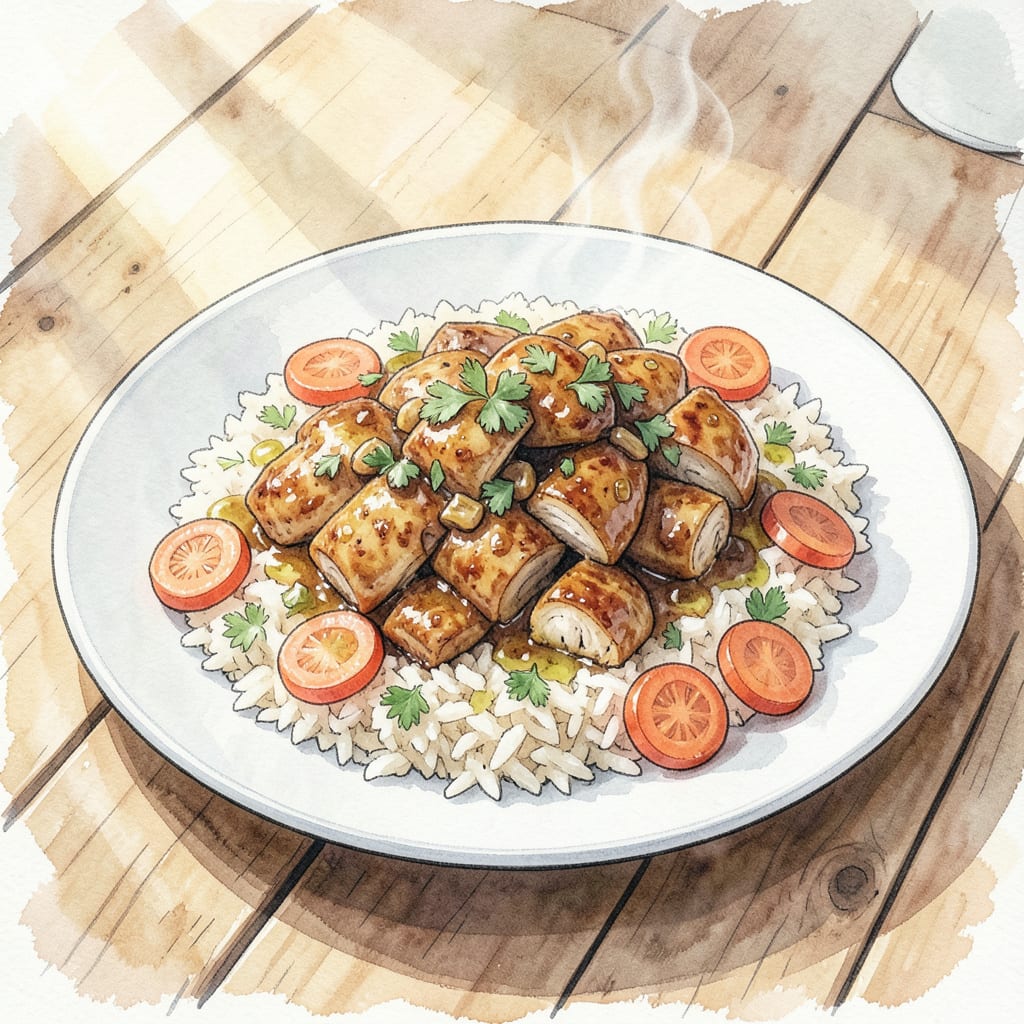
Transforming leftovers into a satisfying meal is a game-changer on busy days. This leftover chicken and rice recipe elevates simple ingredients into comfort food that warms the soul.
By combining leftover chicken and rice with fresh vegetables and spices, you’ll create a hearty dish that’s ready in 30 minutes. This recipe is perfect for using up leftovers while delivering a fresh, home-cooked meal that feels anything but leftover.
Ingredients for Leftover Chicken and Rice
Simple leftovers transformed. Comfort food elevated. Ready in 30 minutes, serves 4.
| Ingredient | Amount | Notes |
|---|---|---|
| Leftover Cooked Chicken 🍗 | 2 cups | Shredded or diced, any variety |
| Cooked White Rice 🍚 | 2 cups | Day-old preferred for best texture |
| Olive Oil 🫒 | 2 tbsp | Extra-virgin for richness |
| Onion 🧅 | 1 whole | Diced, any color |
| Garlic Cloves 🧄 | 3 cloves | Minced, fresh |
| Carrots 🥕 | 1 cup | Peeled, diced |
| Frozen Peas 🌽 | 1 cup | Thawed, any variety |
| Chicken Broth 🍲 | 2 cups | Low-sodium, homemade or store-bought |
| Soy Sauce 💧 | 2 tbsp | Or tamari for gluten-free |
| Ground Ginger 🌿 | 1 tsp | Freshly grated preferred |
| Black Pepper 🌶️ | ½ tsp | Freshly ground |
| Green Onions 🌿 | ¼ cup | Chopped, for garnish |
The chicken matters here. Rotisserie works great—shred or chop it. If you’re cooking from scratch, poach breasts for tender results. Most grocery stores have pre-cooked chicken too. For rice, day-old is best—fresh rice can be too moist. I usually make extra rice on purpose so I’ve got leftovers.
No frozen peas? Fresh or canned works too—just adjust cooking time. For extra flavor, try sesame oil instead of olive oil. If you need more liquid, add broth gradually to avoid sogginess. The soy sauce brings umami—use low-sodium if you’re watching salt. Want spice? Red pepper flakes add kick at 1/4 teaspoon.
This reheats beautifully—keeps for 4 days in the fridge. Freeze individual portions for 3 months. I portion mine into containers so lunches are sorted for the week. Add fresh herbs just before serving for best flavor.
Step-by-Step Instructions for Leftover Chicken and Rice
Transform your leftovers into a comforting meal with these straightforward steps.
Step 1: Sauté Aromatics and Vegetables
Heat the 2 tbsp olive oil in a large skillet or wok over medium-high heat. Add the 1 whole onion, diced, and cook for 3-4 minutes until it starts to soften. You’ll notice the aroma filling the kitchen as the onion begins to caramelize.
Next, add the 3 cloves garlic cloves, minced, and 1 cup carrots, peeled and diced. Continue cooking for another 4-5 minutes, stirring occasionally, until the carrots begin to tenderize. The mixture should be fragrant and the vegetables slightly tender.
Step 2: Add Leftover Chicken and Broth
Add the 2 cups leftover cooked chicken to the skillet, stirring to combine with the vegetables. Pour in the 2 cups chicken broth, 2 tbsp soy sauce, and 1 tsp ground ginger. Bring the mixture to a simmer.
As it simmers, the flavors will meld together, and the chicken will heat through. This should take about 5 minutes. You’ll know it’s ready when the liquid has reduced slightly and the mixture is hot and steamy.
Step 3: Incorporate Rice and Peas
Add the 2 cups cooked white rice to the skillet, stirring to combine with the chicken and vegetable mixture. Cook for 2-3 minutes, breaking up any clumps with a spatula, until the rice is heated through and starting to brown slightly.
Stir in the 1 cup frozen peas, thawed, and continue cooking for another minute. The peas should be tender and evenly distributed throughout the dish. Season with 0.5 tsp black pepper to taste.
Step 4: Finish and Serve
Transfer the chicken and rice mixture to a serving platter or individual plates. Garnish with 0.25 cup green onions, chopped, for a fresh and colorful finish. Serve immediately while hot, enjoying the comforting blend of flavors and textures you’ve created.
Dietary Considerations for This Recipe
Making It Gluten-Free
To make this recipe gluten-free, focus on the soy sauce or tamari you use. Traditional soy sauce contains gluten, so look for a certified gluten-free version or switch to tamari. Some brands offer gluten-free versions that still have that rich umami flavor. I prefer San-J Tamari for its smooth taste.
Keto and Low-Carb Adaptations
For a keto version, replace the 2 cups cooked white rice with cauliflower rice. Simply pulse cauliflower florets in a food processor until they resemble rice, then sauté them in a bit of oil before adding to the dish. You can also use zucchini noodles or other low-carb alternatives. Be mindful of the chicken broth, too—make sure it’s low-carb and sugar-free. 🔥
Dairy-Free Considerations
This recipe is naturally dairy-free, making it a great option for those with dairy allergies or intolerances. If you’re adding any optional ingredients or variations, just be sure they are dairy-free as well. Some chicken broth brands may contain dairy, so check the labels.
Lower Sodium Options
To reduce sodium, use low-sodium chicken broth and choose a low-sodium soy sauce or tamari. You can also limit the amount of added salt or omit it entirely if you’re watching your sodium intake. The green onions add a nice burst of flavor without adding salt.
Vegan and Vegetarian Variations
While this recipe is centered around chicken, you can easily make it vegetarian by swapping the chicken for extra-firm tofu or a mix of hearty vegetables like mushrooms and bell peppers. For a vegan version, ensure that your broth and soy sauce are vegan-friendly, as some brands use animal products in their processing.
Nutrition Facts

- Jollof Rice Sauce Recipe: West African Tomato and Spice Infusion - September 25, 2026
- Japanese Rice Soup Recipe: Umami-Rich Comfort in a Bowl - September 25, 2026
- Homemade Cream Of Rice Recipe: Silk-Smooth Breakfast in Minutes - September 25, 2026