
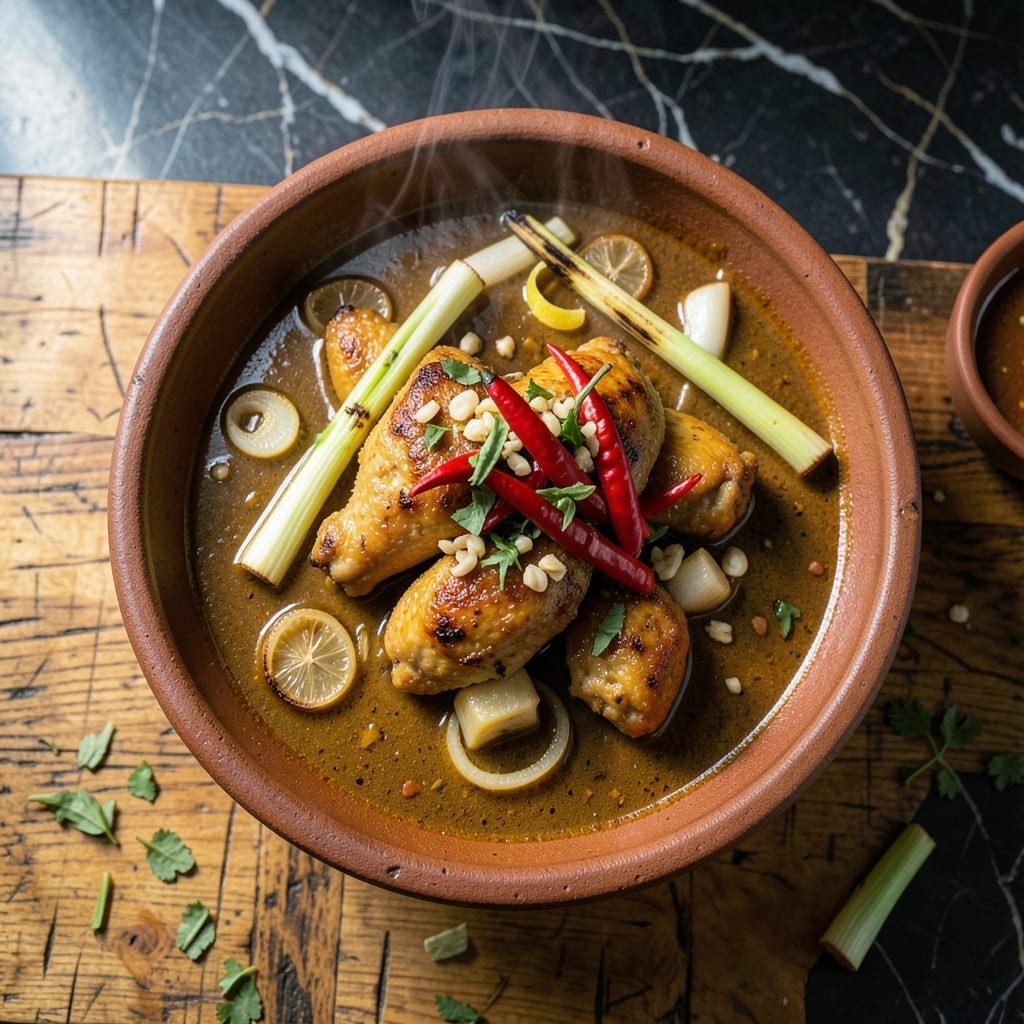
This Balinese chicken curry brings the vibrant flavors of Southeast Asia to your kitchen with a perfect balance of fragrant spices and tender meat.
The secret lies in fresh lemongrass and galangal, which create an aromatic base that’s both complex and approachable. Traditional techniques ensure the chicken stays moist while absorbing every layer of flavor.
You’ll build a rich, golden sauce that coats each piece of chicken, infusing it with turmeric, coriander, and other authentic spices. The result is a dish that’s deeply satisfying without being overly complicated.
Serve this with steamed rice to soak up every drop of the velvety curry. The flavors only improve as they meld together.
Ingredients for Balinese Chicken Curry
Fresh aromatics and tender chicken come together for this deeply flavorful dish.
| Ingredient | Amount | Notes |
|---|---|---|
| Chicken Thighs 🍗 | 2 lb | Boneless, skinless, cut into bite-sized pieces |
| Lemongrass Stalks 🌿 | 3 whole | Bruised and cut into 3-inch pieces |
| Galangal Root 🌱 | 2 whole | Peeled and thinly sliced |
| Shallots 🧅 | 4 whole | Peeled and finely chopped |
| Garlic Cloves 🧄 | 6 cloves | Peeled and minced |
| Red Chili Peppers 🌶️ | 3 whole | Seeds removed, finely chopped |
| Fresh Ginger Root 🌿 | 1 ½ tbsp | Peeled and minced |
| Ground Turmeric 🌶️ | 1 tbsp | Freshly ground preferred |
| Ground Coriander 🌿 | 1 tbsp | Toasted for deeper flavor |
| Coconut Milk 🥥 | 2 cups | Full-fat for creaminess |
| Fish Sauce 🐟 | 1 tbsp | Or substitute soy sauce |
| Palm Sugar 🍚 | 1 tbsp | Or substitute brown sugar |
| Lime Leaves 🍈 | 4 whole | Fresh or dried |
| Vegetable Oil 🫒 | 2 tbsp | For sautéing aromatics |
| Salt 🧂 | 1 tsp | Sea salt preferred |
The lemongrass and galangal are non-negotiable here. Asian grocery stores almost always carry them fresh—look for firm stalks with tight layers. Galangal looks like ginger but has a citrusy, floral punch that’s essential. If you can’t find fresh, frozen works in a pinch (just thaw before using). For the chicken, thighs stay juicier than breasts in the long simmer.
No fish sauce? Soy sauce or tamari gets you 90% there. Palm sugar can be swapped for brown sugar (the molasses notes are similar). Fresh lime leaves are ideal, but dried ones rehydrate well—just soak in warm water for 10 minutes. Missing galangal? Double the ginger, though the flavor won’t be quite the same. The coconut milk should be full-fat—light versions split when heated.
This curry tastes even better the next day once the flavors meld. Keeps 4-5 days in the fridge, freezes for 3 months. Store lime leaves wrapped in damp paper towels if not using immediately (they dry out fast).
Why You’ll Love This Recipe
- One Pot Wonder: I just toss the chicken thighs, lemongrass, and galangal into a single pot and let the stove do the work.
- Flavor Bomb: The shallots and garlic create this deep, aromatic base that makes every bite ridiculously good.
- Feeds a Crowd: Leftovers taste even better the next day—perfect for packing lunches or a lazy dinner.
- Budget Friendly: Chicken thighs are cheap, and a little galangal and lemongrass go a long way.
Step-by-Step Instructions for Balinese Chicken Curry
Here’s the method I use for building those complex, aromatic layers that define this dish.
Step 1: Bloom the Aromatic Base
Heat the 2 tbsp vegetable oil in a heavy pot over medium heat. Add the 4 whole shallots, 6 cloves garlic cloves, 3 whole red chili peppers, and 1.5 tbsp fresh ginger root. Sauté for 3-4 minutes until the mixture turns fragantly golden—you’ll smell the transformation.
Stir in the 2 whole galangal root slices and cook for another 2 minutes. The galangal should soften slightly but not brown. This slow cooking releases essential oils that form the flavor foundation. Add the 3 whole lemongrass stalks and cook for 1 minute to wake up their citrusy notes.
Step 2: Toast the Spices and Build Depth
Push the aromatics to one side of the pot and add the 1 tbsp ground turmeric and 1 tbsp ground coriander to the cleared space. Toast for 30-45 seconds until the spices become deeply aromatic—this prevents a raw, powdery taste.
Immediately add the 2 lb chicken thighs and cook for 5 minutes, turning occasionally, until the pieces develop a light golden crust. The spices will coat the meat, creating layers of flavor. Season with the 1 tsp salt during this process.
Step 3: Simmer in Coconut Milk
Pour in the 2 cups coconut milk, 1 tbsp fish sauce, 1 tbsp palm sugar, and 4 whole lime leaves. Stir well to combine, scraping up any browned bits from the bottom. These bits contain concentrated flavor that will enrich the sauce.
Bring the mixture to a gentle simmer, then reduce heat to low. Cover and cook for 25-30 minutes, stirring occasionally, until the chicken is tender and cooked through and the sauce has thickened slightly. The lime leaves should release their citrusy perfume into the curry.
Step 4: Finish and Adjust Seasoning
Remove the lime leaves and lemongrass stalks—they’ve infused their flavors. Taste the sauce and adjust seasoning if needed, though the initial measurements should yield a balanced flavor profile.
Let the curry sit uncovered for 5 minutes before serving. This allows the flavors to meld and the sauce to reach the perfect consistency. The chicken should be fall-apart tender, and the sauce should have a rich, golden hue with visible specks of spices and aromatics.
Pro Tips For Making Balinese Chicken Curry
- Bruise the Lemongrass: Smash the lemongrass stalks with the side of your knife before adding them—this releases the aromatic oils that define Balinese curry. I learned this the hard way after making a bland batch with whole stalks.
- Sear Chicken First: Brown the chicken thighs well in the pot before simmering. About 3-4 minutes per side on medium-high heat locks in flavor and prevents a watery curry.
- Skip the Ginger: Resist the urge to substitute ginger for galangal—it’s a different flavor entirely. After burning three batches trying to fake it, I finally accepted that galangal is non-negotiable here.
- Blend the Aromatics: Pulse shallots, garlic, and galangal into a paste in a food processor. It saves 10 minutes of chopping and guarantees they melt into the sauce instead of floating around.
Troubleshooting Great balinese chicken curry
Sauce Too Thin
If your curry looks watery, simmer uncovered for 5-10 minutes to reduce. Stir frequently to prevent sticking. I often mash a few chicken pieces slightly to thicken naturally. 💡
Bitter Flavors
Bitterness usually means overcooked aromatics. Next time, lower heat when blooming shallots and garlic. A pinch of palm sugar (½ tsp) can balance it now. Remove any burnt bits immediately.
Chicken Tough
This happens with too-vigorous boiling. Keep at a gentle simmer—tiny bubbles only. If already tough, return to low heat with lid on for 15 minutes. Thighs are forgiving.
Sauce Separating
Coconut milk splitting? Whisk vigorously to re-emulsify. Prevent this by avoiding high heat after adding coconut milk. If persistent, stir in 1 tsp cornstarch slurry.
Weak Aromatics
Freshness matters most. Use new lemongrass and galangal—old ones lose potency. Bruise stalks well before cooking. Add 1 extra lime leaf for citrus depth.
Overly Spicy
Remove seeds from chilies next time. To fix now, stir in ½ cup more coconut milk and 1 tsp palm sugar. Balance with extra fish sauce to taste.
Nutrition Facts
Frequently Asked Questions
Can I use ginger instead of galangal?
Yes, though the flavor won’t be identical. Use double the amount of fresh ginger as a substitute. Galangal has a unique citrusy, floral note that ginger can’t fully replicate, but it’s better than omitting it entirely.
How do I know when the chicken is fully cooked?
The chicken should reach an internal temperature of 165°F. You’ll also notice the meat pulls away from the bone easily and the juices run clear. In this recipe, 25-30 minutes of simmering usually does the trick.
Can this curry be made ahead of time?
The flavors deepen as they meld. Store in an airtight container in the fridge for up to 4-5 days or freeze for 3 months. Reheat gently on the stove, adding a splash of water if needed.
What should I serve with this dish?
Steamed jasmine rice is traditional and perfect for soaking up the rich sauce. For variety, try cauliflower rice or naan bread. A simple cucumber salad adds a refreshing contrast to the bold flavors.

- Jollof Rice Sauce Recipe: West African Tomato and Spice Infusion - September 25, 2026
- Japanese Rice Soup Recipe: Umami-Rich Comfort in a Bowl - September 25, 2026
- Homemade Cream Of Rice Recipe: Silk-Smooth Breakfast in Minutes - September 25, 2026