
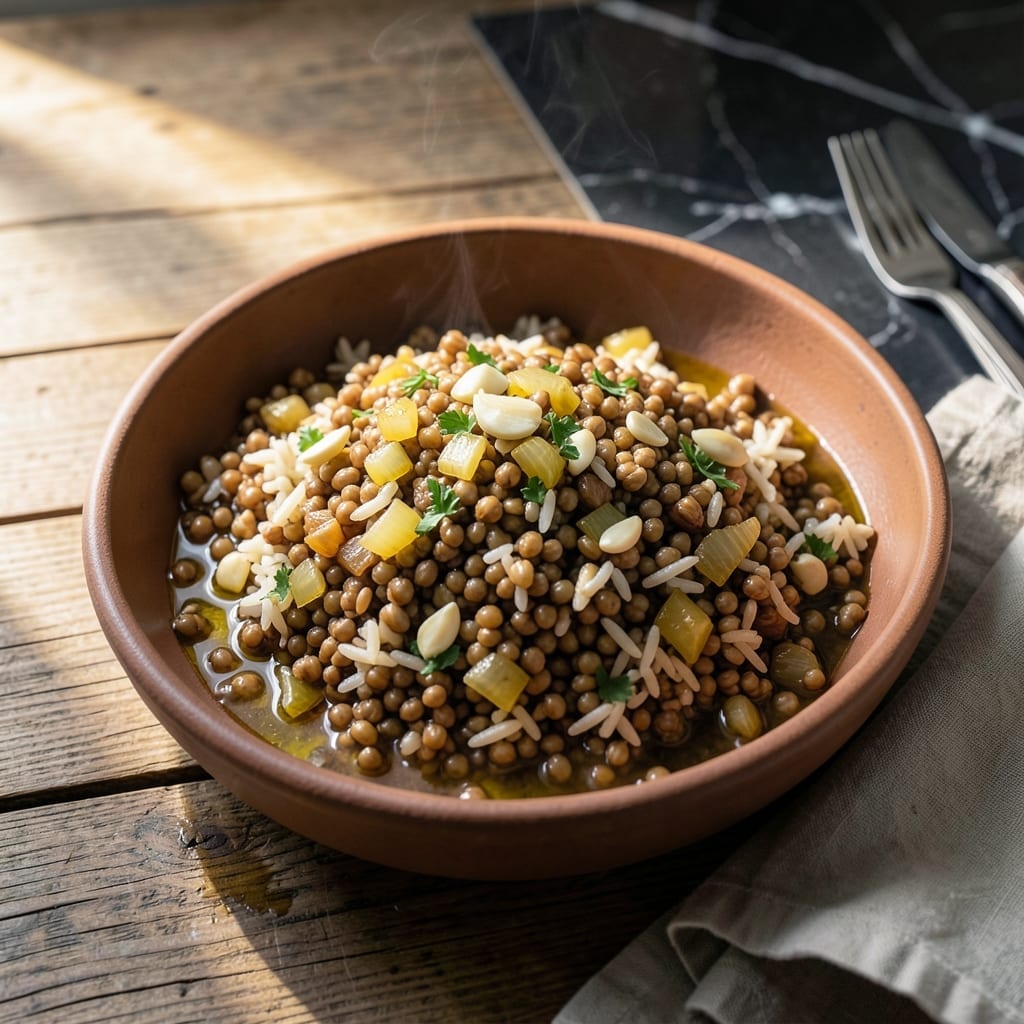
This grain combination transforms simple ingredients into a dish with remarkable depth. Barley and rice cook together to create a texture that’s both chewy and tender, with a nutty flavor that stands out on its own.
I developed this method after testing multiple ratios to find the perfect balance. The barley adds heartiness while the rice provides familiar comfort, making it ideal as a side or vegetarian main.
The cooking process is straightforward: simmer the grains with broth until they absorb the liquid. This creates a nutrient-packed dish that’s as satisfying as it is nourishing.
Serve it warm as a base for proteins or enjoy it plain with a pat of butter. This creation proves that simple grains can be extraordinary.
Ingredients for Barley Rice
These simple grains and aromatic vegetables create a dish with nutty, earthy depth and satisfying texture.
| Ingredient | Amount | Notes |
|---|---|---|
| Pearl Barley 🌾 | 1 cup | Rinsed before cooking |
| Long-Grain White Rice 🍚 | 1 cup | Rinsed until water runs clear |
| Vegetable Broth 🥫 | 3 ½ cups | Low-sodium preferred |
| Olive Oil 🫒 | 2 tbsp | Extra-virgin for best flavor |
| Yellow Onion 🧅 | 1 whole | Finely diced |
| Garlic Cloves 🧄 | 3 cloves | Minced finely |
| Bay Leaf 🍃 | 1 whole | Dried, removed before serving |
| Sea Salt 🧂 | ¾ tsp | Adjust to taste |
| Freshly Ground Black Pepper 🌶️ | ½ tsp | For seasoning |
| Dried Thyme 🌿 | ½ tsp | For earthy depth |
| Fresh Parsley 🌿 | ¼ cup | Chopped, for garnish |
| Lemon Juice 🍋 | 1 tbsp | Freshly squeezed |
The barley is key here. Organic pearl barley from Whole Foods or Bob’s Red Mill gives the best texture—chewy but tender. Look for uniform, plump grains without dark spots. The rice should be long-grain white for the right consistency, though jasmine works too. Trader Joe’s has great organic options for both. For the broth, Imagine or Pacific Foods brands are reliable for a clean, vegetable-forward flavor.
No barley? Farro or wheat berries can substitute at the same ratio. Out of fresh parsley? Dried parsley at one-third the amount works, though fresh adds brightness. Skip the bay leaf if needed, but it does add subtle depth. For a richer finish, stir in a tablespoon of vegan butter at the end (Miyoko’s is a great brand). The lemon juice is optional but really lifts the flavors.
Cooked grains keep 4-5 days in the fridge, sealed tightly. They’ll thicken as they cool—add a splash of water or broth when reheating. Freezes beautifully for up to 3 months. Portion into containers for easy grab-and-go meals.
Why You’ll Love This Recipe
- One Pot Meal: I just dump the barley, rice, and broth in a single pot and let it simmer—no babysitting required.
- Rich & Savory: The onion sweats in olive oil until golden, then the broth soaks into every grain for that deep, comforting flavor.
- Meal Prep Hero: It holds up beautifully in the fridge, so I make a big batch Sunday and pair it with different proteins all week.
- Budget Stretch: Pearl barley and white rice together bulk this up for pennies per serving, and it’s filling enough to stand alone.
Step-by-Step Instructions for Barley Rice
This method ensures perfect texture and layered flavors in every bite.
Step 1: Sauté Aromatics in Olive Oil
Heat the 2 tbsp olive oil in a large pot over medium heat. Add the finely diced yellow onion and cook for 4-5 minutes until translucent and soft, stirring occasionally to prevent browning.
Stir in the minced garlic cloves and cook for an additional 30 seconds until fragrant. Watch closely—garlic burns easily and bitter flavors will ruin the dish. The onion should be sweet and aromatic, not crisp or raw.
Step 2: Toast the Grains for Nutty Depth
Add the 1 cup pearl barley and 1 cup long-grain white rice to the pot. Stir continuously for 2 minutes until the grains are lightly toasted and release a nutty aroma.
Toasting enhances the natural flavors of the grains and prevents a starchy aftertaste. The pearl barley should turn slightly opaque, and the rice will become chalky white. Don’t let them brown—just warm them through evenly.
Step 3: Simmer in Vegetable Broth with Seasonings
Pour in the 3.5 cups vegetable broth and add the 1 whole bay leaf, 0.75 tsp sea salt, 0.5 tsp freshly ground black pepper, and 0.5 tsp dried thyme. Stir well to combine.
Bring to a boil, then reduce the heat to low, cover, and simmer for 30-35 minutes until the liquid is absorbed and the grains are tender but still slightly chewy. Check at 25 minutes—if the mixture is dry but the grains aren’t done, add ¼ cup hot water and continue cooking.
Step 4: Rest and Finish with Fresh Flavors
Remove the pot from heat and let it sit covered for 10 minutes. This allows the grains to steam and absorb any remaining moisture. Discard the bay leaf before serving.
Stir in the 1 tbsp lemon juice and half of the 0.25 cup fresh parsley. The lemon brightens the earthy flavors, while the parsley adds freshness. Taste and adjust the sea salt if needed—low-sodium broth may require a bit more.
Garnish with the remaining parsley and serve warm. The texture should be hearty and slightly chewy, with a balanced savory and citrus note in every forkful.
Pro Tips For Making Barley Rice
- Soak the Barley: Give the pearl barley a 30-minute soak in warm water before cooking—I learned this the hard way after ending up with undercooked grains mixed in with perfect rice.
- Toast the Grains: Heat the barley and rice in olive oil for 2-3 minutes until nutty and fragrant, about 2 tablespoons—it adds depth that plain broth can’t.
- Double the Liquid: Barley absorbs more than rice, so use a 2:1 ratio of vegetable broth to the grain mix, or you’ll be left with a dry, crunchy mess.
- Cover and Wait: After simmering, let it sit covered off the heat for 10 minutes—skipping this leaves the barley stubbornly firm, no matter how long it simmered.
Flavor Customization for This barley rice
Citrus Brightness Boost
Add 1-2 tsp lemon zest along with the juice for extra citrus punch. The zest adds aromatic oils that elevate the dish. I also love stirring in 1 tbsp orange juice for a sweeter twist that pairs beautifully with the nutty grains. 🍋
Herb Variations
Swap the dried thyme for 1 tsp rosemary or 1 tbsp fresh dill. Rosemary adds a piney note, while dill brings a fresh, slightly grassy flavor. For a Mediterranean touch, add 1 tsp dried oregano with the thyme.
Spicy Kick
Stir in ½ tsp red pepper flakes with the aromatics for heat. For smoky spice, add ½ tsp smoked paprika. I tested this with 1 minced jalapeño—it added fresh heat without overpowering the grains.
Umami Depth
Add 1 tbsp soy sauce or 1 tsp miso paste to the broth for savory depth. For mushroom lovers, stir in ½ cup sautéed mushrooms at the end. These additions transform the dish into a richer, more complex side.
Sweet and Nutty
Toast ¼ cup chopped walnuts or pecans and stir in before serving. Add 2 tbsp dried cranberries for a sweet-tart contrast. This version reminds me of my Nonna’s stuffing—comforting and slightly sweet. 💛
Fresh Garnish Ideas
Top with ¼ cup crumbled feta or 2 tbsp toasted pine nuts. Fresh herbs like cilantro or mint add bright, unexpected flavors. I always keep extra parsley on hand for a pop of color.
Nutrition Facts
Frequently Asked Questions
How long does it take to cook?
Total cooking time is about 45-50 minutes, including 30-35 minutes simmering time. The grains need 10 minutes to rest off heat before serving.
Can I use brown rice instead?
Yes, but increase broth to 4 cups and simmer for 45-50 minutes. Brown rice takes longer to soften than white.
Why toast the grains first?
Toasting for 2 minutes enhances nutty flavors and prevents a starchy aftertaste. It’s a key step for depth.
How do I fix undercooked grains?
If dry but firm at 25 minutes, add ¼ cup hot water and cook 5-10 minutes more.

- Jollof Rice Sauce Recipe: West African Tomato and Spice Infusion - September 25, 2026
- Japanese Rice Soup Recipe: Umami-Rich Comfort in a Bowl - September 25, 2026
- Homemade Cream Of Rice Recipe: Silk-Smooth Breakfast in Minutes - September 25, 2026