
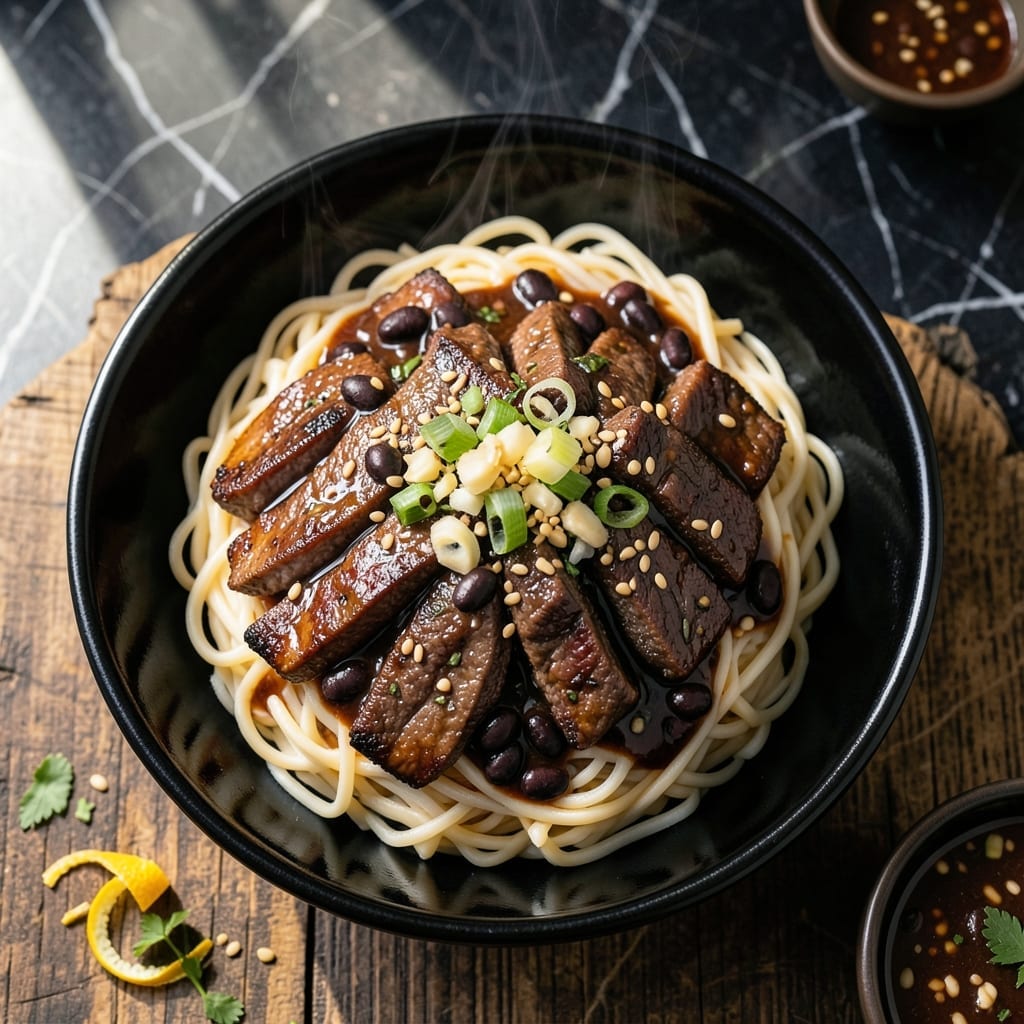
Cantonese-style wok tossed noodles bring restaurant-quality flavor to your kitchen with minimal effort. This dish combines tender beef, chewy rice noodles, and a rich black bean sauce that’s both savory and slightly sweet.
The secret lies in the sauce preparation—fermented black beans create depth while garlic and ginger add aromatic complexity. I’ve tested this recipe repeatedly to ensure the noodles stay perfectly springy and the beef remains juicy.
High heat wok cooking locks in flavors, while a quick toss at the end ensures every strand of noodle is coated. The result is a dish that’s both hearty and balanced, with textures that keep you coming back.
Serve immediately for the best experience, as the noodles absorb the sauce beautifully when fresh. This is authentic takeout taste made at home.
Ingredients for Beef Black Bean Sauce Rice Noodle
Restaurant-quality beef, chewy rice noodles, and rich black bean sauce come together beautifully here.
| Ingredient | Amount | Notes |
|---|---|---|
| Flank Steak 🥩 | 1 lb | Thinly sliced against the grain |
| Dried Rice Noodles 🍜 | 8 oz | Flat or wide variety preferred |
| Fermented Black Beans ⚫ | 2 tbsp | Rinsed and finely chopped |
| Garlic Cloves 🧄 | 6 cloves | Minced for maximum flavor |
| Fresh Ginger 🌿 | 1 tbsp | Peeled and finely grated |
| Oyster Sauce 🫒 | 3 tbsp | High-quality for depth |
| Soy Sauce 🫒 | 2 tbsp | Low-sodium for balance |
| Shaoxing Wine 🍶 | 2 tbsp | Or dry sherry as substitute |
| Brown Sugar 🍚 | 1 tsp | Light or dark works |
| Sesame Oil 🫒 | 1 tsp | Toasted for aroma |
| Green Onions 🧅 | 3 whole | Thinly sliced for garnish |
| Vegetable Oil 🫒 | 3 tbsp | High smoke point for wok cooking |
| Cornstarch 🌾 | 1 tbsp | For velvety sauce consistency |
| Water 💧 | ½ cup | For slurry and cooking |
The flank steak is critical for texture—look for well-marbled cuts at Whole Foods or a trusted butcher. Slice it paper-thin against the grain for maximum tenderness. Fermented black beans are non-negotiable; Asian markets carry the best quality, but most supermarkets stock them in the international aisle. Fresh ginger and garlic should be firm, with no soft spots. The rice noodles must be dried, not fresh, to withstand the high-heat wok cooking.
No Shaoxing wine? Dry sherry works in a pinch. Oyster sauce can be swapped with vegetarian oyster sauce for a plant-based version. If you can’t find fermented black beans, douchi (fermented black bean paste) is a good alternative—use half the amount. The soy sauce should be low-sodium to control saltiness. For extra depth, add a splash of fish sauce (optional but recommended).
Store flank steak in the coldest part of your fridge for up to 3 days. Fermented black beans keep indefinitely in their brine. Once opened, transfer rice noodles to an airtight container—they’ll last 6-12 months. The sauce components can be prepped a day ahead, but cook the dish fresh for the best texture.
Why You’ll Love This Recipe
- One Pot Wonder: Honestly, I just toss the flank steak, rice noodles, and black beans in one pan with garlic and ginger—minimal cleanup, maximum flavor.
- Umami Explosion: The fermented black beans and fresh ginger create this deep, salty-sweet richness that coats every noodle. I’ll be real: I’ve licked the bowl.
- Meal Prep Hero: Makes enough for 3 days of lunches, and the noodles soak up the sauce even better the next day.
- Budget Stretcher: Flank steak goes a long way here, and dried rice noodles cost pennies. My wallet and my stomach both thank me.
Step-by-Step Instructions for Beef Black Bean Sauce Rice Noodles
Master the technique for perfectly tender beef and silky noodles with rich, savory sauce.
Step 1: Prepare the Flank Steak and Sauce Components
Slice the 1 lb Flank Steak thinly against the grain into ¼-inch thick strips. This ensures maximum tenderness. Place the sliced beef in a bowl and toss with the 1 tbsp Cornstarch until evenly coated. This step is crucial for that velvety texture in the final dish.
Rinse and finely chop the 2 tbsp Fermented Black Beans, then mince the 6 cloves Garlic Cloves and finely grate the 1 tbsp Fresh Ginger. In a small bowl, combine the 3 tbsp Oyster Sauce, 2 tbsp Soy Sauce, 2 tbsp Shaoxing Wine, 1 tsp Brown Sugar, and 0.5 cup Water. Stir until the brown sugar dissolves completely.
Step 2: Soak and Par-Cook the Rice Noodles
Place the 8 oz Dried Rice Noodles in a large bowl and cover with hot water. Soak for 8-10 minutes until pliable but still slightly firm. Drain immediately and rinse under cold water to stop the cooking process. This prevents them from becoming mushy when stir-fried.
Thinly slice the 3 whole Green Onions, separating the white and green parts. You’ll use both for different layers of flavor. Keep them ready for the final steps. The noodles should be flexible enough to fold without breaking but retain a slight bite.
Step 3: Stir-Fry the Beef and Aromatics
Heat 2 tbsp Vegetable Oil in a wok or large skillet over high heat until shimmering. Add the beef in a single layer and sear undisturbed for 1-2 minutes until the edges begin to brown. Stir-fry for another 30 seconds until the beef is just cooked through but still slightly pink. Remove to a plate and set aside.
In the same wok, add the remaining 1 tbsp Vegetable Oil if needed. Add the chopped fermented black beans, minced garlic, and grated ginger. Stir-fry for 30-45 seconds until the garlic is fragrant and the beans are slightly crispy. Be careful not to burn the garlic—it should be golden, not dark brown.
Step 4: Combine Everything with the Sauce
Return the beef to the wok along with the par-cooked rice noodles. Pour the prepared sauce mixture over everything. Toss continuously with tongs for 2-3 minutes until the noodles are tender and have absorbed most of the sauce. The mixture should be glossy and well coated.
Add the white parts of the green onions and continue to toss for another 30 seconds. The sauce should thicken slightly from the cornstarch on the beef, creating a luxurious coating on the noodles and beef.
Step 5: Finish and Serve
Remove from heat and stir in the 1 tsp Sesame Oil. This adds a final layer of aroma. Garnish with the green parts of the green onions. The dish should have a balance of savory, slightly sweet, and umami flavors with a pleasing chew from the noodles.
Serve immediately while hot. The beef should be tender, the noodles silky, and the sauce clinging perfectly to every strand. This dish comes together quickly once you start cooking, so have all your ingredients prepped and ready to go.
Pro Tips For Making Beef Black Bean Sauce Rice Noodle
- Slice Against the Grain: Cut the flank steak thinly against the grain—about ¼-inch thick—for tender bites that soak up the black bean sauce. I learned this the hard way after chewing through rubbery strips in my first attempt.
- Rinse Fermented Beans: Give the fermented black beans a quick rinse to remove excess salt, but don’t soak them or you’ll wash away the funky depth they add to the sauce.
- Parcook Noodles Separately: Boil the rice noodles for 1-2 minutes less than package instructions, then finish them in the sauce to avoid mushy, overcooked strands. After burning a batch to the pan, I now pull them early every time.
- Bloom Aromatics First: Cook the minced garlic and ginger in hot oil for 15-20 seconds until fragrant before adding the black beans—this builds the base flavor that makes the dish sing.
Best Sauces and Condiments for This Dish
Classic Pairings
I always serve this dish with a side of quick-pickled vegetables—thinly sliced cucumbers and carrots in rice vinegar with a pinch of sugar cuts through the richness. The acidity balances the deep umami of the black bean sauce perfectly. 🥗
Heat Enhancers
For those who love spice, I recommend Sriracha or chili garlic sauce on the side. A drizzle of 1-2 tsp adds heat without overpowering the dish. I keep a bottle of Huy Fong Sriracha in my pantry at all times.
Umami Boosters
Sometimes I add a splash of fish sauce or hoisin sauce at the table. Just ½ tsp of fish sauce enhances the savory depth, while hoisin adds a touch of sweetness. Both are staples in my Boston kitchen.
Fresh Garnishes
Fresh cilantro or Thai basil leaves bring brightness to the dish. I chop ¼ cup cilantro just before serving for maximum freshness. The herbaceous notes complement the rich sauce beautifully.
Crunchy Toppings
For texture contrast, I sprinkle crushed peanuts or toasted sesame seeds on top. About 2 tbsp of either adds a satisfying crunch that takes this dish to the next level. 💛
Dipping Sauce
A simple dipping sauce of soy sauce and rice vinegar in a 1:1 ratio lets you control the flavor with each bite. I serve it in small bowls for easy dipping between mouthfuls of noodles.
Nutrition Facts
Frequently Asked Questions
Can I use a different cut of beef?
Yes, sirloin or ribeye work well too. Avoid tougher cuts like chuck, as they won’t tenderize quickly enough for stir-frying. Slice all alternatives thinly against the grain for best results.
How do I prevent the noodles from sticking?
Rinse soaked noodles thoroughly under cold water and toss with a bit of oil before cooking. Use high heat and keep them moving constantly in the wok. This ensures they stay separate and silky.
What if I can’t find fermented black beans?
Substitute with 1 tbsp black bean paste (douchi) or 2 tbsp miso paste for a similar umami depth. Both are widely available in Asian grocery stores or online.
Can I make this dish ahead of time?
Prep ingredients in advance, but cook just before serving. Noodles absorb sauce and become mushy if held too long. Reheat leftovers quickly in a hot wok with a splash of water.

- Beef Black Bean Sauce Rice Noodle Recipe: Cantonese-Style Wok Tossed Noodles - September 26, 2026
- Recipe for Unstuffed Cabbage Rolls with Rice in Oven: Deconstructed Comfort in One Pan - September 26, 2026
- Recipe for Dirty Rice With Hamburger: Cajun-Spiced Ground Beef and Rice Skillet - September 26, 2026