
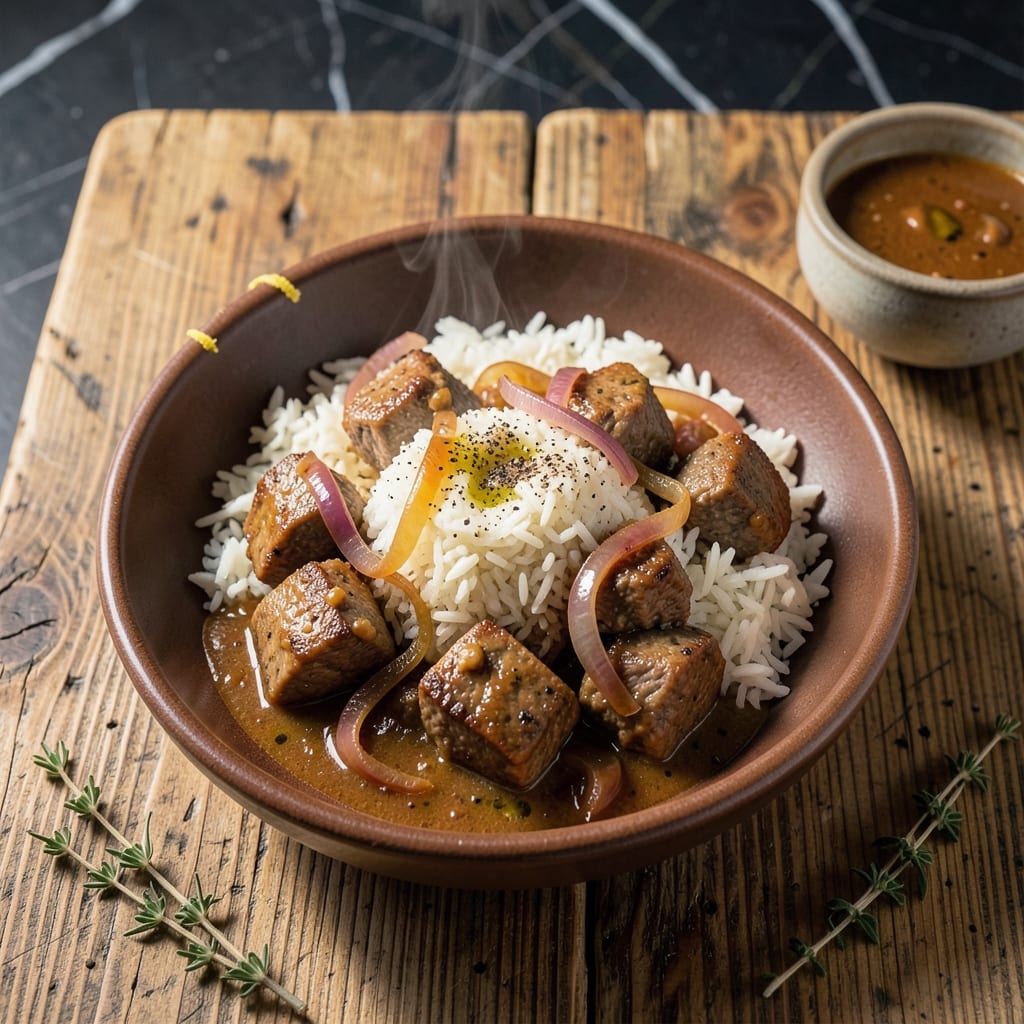
There’s something deeply satisfying about a bowl of tender beef stew served over fluffy rice, where every bite delivers slow-cooked richness and comforting warmth. This recipe transforms simple ingredients into a meal that feels special without requiring advanced techniques.
The key is allowing the beef to cook low and slow until it becomes fork-tender, while the vegetables absorb the deep, savory flavors of the broth. The rice, cooked separately, stays light and fluffy, providing the perfect contrast to the hearty stew.
You’ll end up with a dish that’s hearty enough for a Sunday supper but simple enough for a weeknight. The beef becomes meltingly tender, the vegetables soft yet still holding their shape, and the broth reduces to a velvety consistency that coats every grain of rice.
Serve it piping hot for a meal that warms both body and soul.
Ingredients for Beef Stew with Rice
Simple, quality ingredients transform into a deeply satisfying meal with slow-cooked richness and comforting warmth.
| Ingredient | Amount | Notes |
|---|---|---|
| Beef Chuck Roast 🥩 | 1 ½ lb | Cut into 1-inch cubes, well-marbled |
| All-Purpose Flour 🌾 | ¼ cup | For dredging beef cubes |
| Kosher Salt 🧂 | 1 ½ tsp | Divided for seasoning layers |
| Freshly Ground Black Pepper 🌶️ | 1 tsp | Divided for depth of flavor |
| Olive Oil 🫒 | 2 tbsp | Divided for searing and sautéing |
| Yellow Onion 🧅 | 1 whole | Medium, diced into 1/2-inch pieces |
| Garlic Cloves 🧄 | 4 cloves | Minced for aromatic base |
| Carrots 🥕 | 3 whole | Peeled, cut into 1-inch chunks |
| Celery Stalks 🌿 | 2 whole | Cut into 1-inch pieces |
| Tomato Paste 🍅 | 2 tbsp | For umami depth in broth |
| Low-Sodium Beef Broth 💧 | 4 cups | Quality brand preferred |
| Dried Thyme 🍃 | 1 tsp | Crushed between fingers |
| Bay Leaf 🍃 | 1 whole | For subtle earthy aroma |
| Long-Grain White Rice 🍚 | 1 ½ cups | Uncooked, rinsed before cooking |
| Fresh Parsley 🌿 | ¼ cup | Chopped, for garnish |
The beef is non-negotiable here—chuck roast with good marbling yields the most tender results after long cooking. Whole Foods or Costco offer well-marbled cuts at reasonable prices. Look for bright red color with white fat streaks throughout. Avoid pre-cut stew meat if possible, as it often comes from leaner, tougher cuts. The flour for dredging should be all-purpose; cake flour lacks the structure needed for proper browning.
No chuck roast? Short ribs work beautifully but require slightly longer cooking. Swap beef broth for mushroom broth if avoiding meat products. Fresh thyme can replace dried at three times the amount. The tomato paste can be omitted in a pinch, but the stew will lack depth. Trader Joe’s carries excellent pre-diced mirepoix (onion, carrot, celery) that saves prep time without sacrificing flavor.
The stew improves overnight as flavors meld. Refrigerate in an airtight container for up to 4 days or freeze for 3 months. Cook the rice fresh when ready to serve—it absorbs liquid from the stew if stored together. Leftovers reheat beautifully on the stovetop with a splash of broth.
Why You’ll Love This Recipe
- One Pot Magic: I brown the beef chuck in olive oil, dust it with flour, and let the oven do the rest.
- Rich & Hearty: The slow-cooked chuck roast turns so tender it melts into the rice.
- Feeds the Freezer: I always double the batch—leftovers taste even better the next day.
- Budget Stretcher: Honestly, a cheap cut like chuck becomes a showstopper with just salt, pepper, and time.
Step-by-Step Instructions for Beef Stew With Rice
Achieve rich, tender results with this methodical approach to building layers of flavor.
Step 1: Sear and Brown the Dredged Beef Cubes
Pat the beef chuck roast dry with paper towels, then cut into 1-inch cubes. Season with 1 tsp kosher salt and 1 tsp freshly ground black pepper. Place the all-purpose flour in a shallow dish and dredge the beef cubes, shaking off excess.
Heat 1 tbsp olive oil in a large Dutch oven over medium-high heat until shimmering. Working in batches to avoid crowding, sear the beef for 3-4 minutes per side until deeply browned on all sides. The fond created here forms the flavor base. Transfer to a plate and set aside.
Step 2: Sauté Aromatics and Build the Stew Base
In the same pot, add the remaining 1 tbsp olive oil. Add the yellow onion, carrots, and celery stalks. Sauté for 5-6 minutes until the vegetables soften and the onion becomes translucent. Stir in the garlic cloves and cook for 30 seconds until fragrant.
Add the tomato paste and cook for 2 minutes, stirring constantly, until it darkens slightly. This step develops the paste’s natural sweetness and eliminates any raw flavor. Pour in 1 cup of the low-sodium beef broth to deglaze, scraping up all browned bits from the bottom of the pot.
Step 3: Simmer the Stew to Tender Perfection
Return the seared beef to the pot along with any accumulated juices. Add the remaining 3 cups low-sodium beef broth, dried thyme, bay leaf, and remaining 0.5 tsp kosher salt. Bring to a boil, then reduce heat to low, cover, and simmer for 1.5-2 hours.
Check occasionally and stir gently. The stew is ready when the beef is fork-tender and easily pulls apart. The liquid should slightly reduce and thicken from the flour used in dredging. Remove and discard the bay leaf before proceeding.
Step 4: Cook the Rice and Finish the Dish
Rinse the long-grain white rice under cold water until the water runs clear. In a separate pot, bring 3 cups of water to a boil. Add the rice, reduce heat to low, cover, and simmer for 15-18 minutes until the water is absorbed and the rice is fluffy.
To serve, spoon a generous portion of rice into each bowl. Ladle the beef stew over the rice, ensuring each serving includes plenty of vegetables and broth. Garnish with fresh parsley for a bright, fresh finish that cuts through the richness of the dish.
Pro Tips For Making Beef Stew With Rice
- Sear in Batches: Crowding the pan steams the beef instead of browning it—I learned this the hard way after ending up with gray, sad chunks. Use about 2 tablespoons of olive oil and sear the chuck roast in two batches for that deep, caramelized crust.
- Dredge Evenly: Toss the beef cubes in flour like you’re coating them for a light snowfall, shaking off the excess. This isn’t just for thickening; it creates a proper crust that locks in juices.
- Skip the Cold Beef: Pull the chuck roast from the fridge 30 minutes before cooking—cold meat seizes up in a hot pan and browns unevenly. My grandmother swore by this, and she was right.
- Deglaze Thoroughly: After searing, pour in a splash of water or broth and scrape the browned bits from the bottom of the pan. Sounds weird, but it works: those bits are pure flavor for your stew.
Wine and Beer Pairings for beef stew with rice
Robust Red Wines
A full-bodied Cabernet Sauvignon from Napa Valley stands up to the rich beef flavors beautifully. Its bold tannins and dark fruit notes complement the stew’s depth. I love Caymus or Robert Mondavi for this pairing. 🍷
Medium-Bodied Reds
A Merlot offers softer tannins with plummy notes that harmonize with the savory broth. Try Chateau Ste. Michelle from Washington State. The wine’s velvety texture mirrors the stew’s consistency.
Old World Options
For earthier notes, a Bordeaux blend brings structure and complexity. The tobacco and leather undertones in these wines enhance the beef’s umami. I recommend Château Montelena for a special occasion.
Beer Pairings
A malty Brown Ale like Newcastle provides caramel notes that echo the stew’s richness. The carbonation cuts through the dish’s heartiness. Serve slightly chilled for best results.
Lighter Beer Option
An Amber Ale such as Fat Tire offers balanced sweetness. Its toasty malt character complements the vegetables in the stew without overwhelming the palate.
Non-Alcoholic Choice
For a non-alcoholic option, try sparkling black cherry soda. The effervescence and fruit depth provide a refreshing contrast to the savory stew. Serve over ice with a lemon wedge. ✨
Nutrition Facts
Frequently Asked Questions
Can I use a different cut of beef?
Yes, but choose well-marbled cuts like chuck roast or short ribs for best results. Leaner cuts may become tough during the 1.5-2 hour simmer. Avoid pre-cut stew meat as it’s often from less ideal sections.
Why do I need to dredge the beef in flour?
The flour creates a light coating that helps the beef brown better and thickens the stew naturally as it cooks. This step adds depth to both the texture and flavor of your dish.
Can I cook the rice directly in the stew?
It’s not recommended. The rice would absorb too much liquid and become mushy. Cook it separately to maintain fluffy texture and proper consistency. The contrast makes each bite perfect.
How do I store leftovers?
Store stew and rice separately in airtight containers in the fridge for up to 4 days. The stew actually improves overnight as flavors meld. Freeze stew alone for up to 3 months.

- Jollof Rice Sauce Recipe: West African Tomato and Spice Infusion - September 25, 2026
- Japanese Rice Soup Recipe: Umami-Rich Comfort in a Bowl - September 25, 2026
- Homemade Cream Of Rice Recipe: Silk-Smooth Breakfast in Minutes - September 25, 2026