
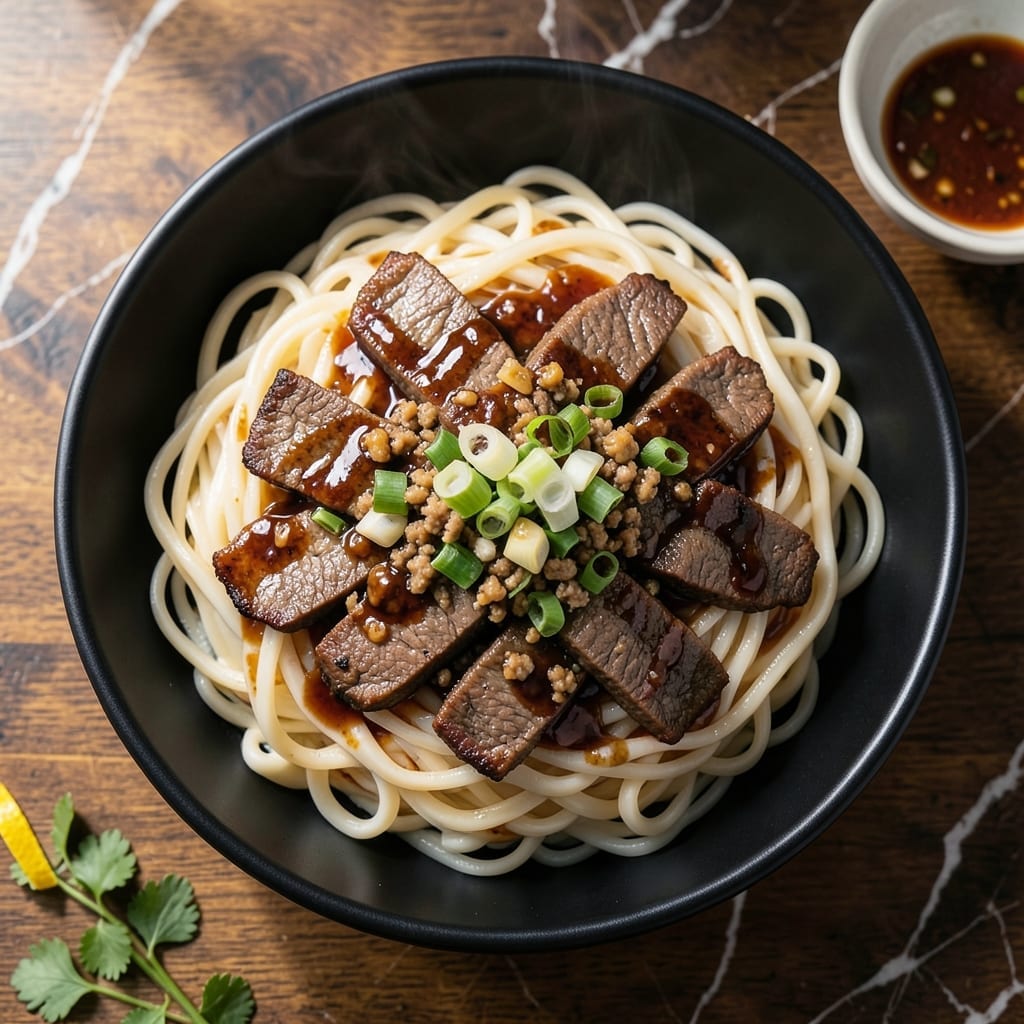
This Cantonese-style dish delivers perfect texture and flavor with every bite. The key lies in the wok tossing technique that creates that signature char and even distribution of ingredients.
I developed this method after testing multiple approaches to achieve restaurant-quality results at home. The rice noodles soak up the savory beef and sauce while maintaining their springy texture.
What makes this version special is the balance of tender beef strips, crisp vegetables, and a sauce that coats every noodle without being heavy. The high heat cooking creates that distinctive wok hei flavor.
Ready in under 30 minutes, this recipe brings authentic taste to your kitchen with simple ingredients and straightforward steps.
Ingredients for Beef Rice Noodle
Fourteen ingredients transform into restaurant-quality Cantonese-style beef and rice noodles at home.
| Ingredient | Amount | Notes |
|---|---|---|
| Rice Noodles 🍜 | 8 oz | Dried, flat wide variety |
| Flank Steak 🥩 | 1 lb | Thinly sliced against grain |
| Soy Sauce 🫙 | 3 tbsp | Low-sodium preferred for control |
| Oyster Sauce 🫙 | 2 tbsp | Essential for authentic flavor |
| Dark Soy Sauce 🫙 | 1 tsp | For depth and color |
| Shaoxing Wine 🍶 | 2 tbsp | Or dry sherry substitute |
| Cornstarch 🌾 | 1 tbsp | For velveting the beef |
| Garlic Cloves 🧄 | 4 cloves | Minced for aromatic base |
| Fresh Ginger 🌿 | 1 tbsp | Grated or finely minced |
| Green Onions 🧅 | 3 whole | Cut into 2-inch pieces |
| Bean Sprouts 🌱 | 1 cup | Fresh, rinsed thoroughly |
| Red Bell Pepper 🌶️ | 1 whole | Thinly sliced for crunch |
| Sesame Oil 🫒 | 1 tsp | Toasted variety for finish |
| Neutral Oil 🫒 | 3 tbsp | High smoke point for wok |
| White Sugar 🧂 | 1 tsp | Balances savory flavors |
The beef selection is critical for texture. Flank steak offers the perfect balance of tenderness and flavor when sliced thinly against the grain. Asian markets often carry pre-sliced beef for stir-fry, saving prep time. For the noodles, dried flat rice noodles (about 1/4-inch wide) are standard—look for brands like Three Ladies or Shirataki in the international aisle.
No Shaoxing wine? Dry sherry works in a pinch, or omit and add an extra teaspoon of soy sauce. Vegetable substitutions are flexible—snap peas or broccoli florets replace bean sprouts beautifully. For gluten-free, use tamari instead of soy sauce. The cornstarch velveting step is non-negotiable for that tender beef texture (don’t skip this part).
Store dried noodles in a cool, dark place for up to 1 year. Fresh ginger and garlic keep 3 weeks in the fridge. Cooked leftovers reheat well and taste even better the next day—store in airtight containers for up to 4 days.
Why You’ll Love This Recipe
- One Pot Wonder: I just toss the rice noodles, flank steak, and sauces together—soy, oyster, and dark soy do all the heavy lifting for flavor.
- Umami Bomb: That mix of oyster sauce and dark soy gives the beef this deep, savory richness that clings to every noodle.
- Meal Prep Magic: It reheats beautifully, and I love having leftovers that taste even better the next day.
- Budget Stretcher: Flank steak goes further than I expected here, and rice noodles are so affordable. Honestly, it feeds my family for two meals.
Step-by-Step Instructions for Cantonese-Style Beef Rice Noodles
Master the velveting technique and wok tossing method for restaurant-quality results at home.
Step 1: Velvet the Beef for Maximum Tenderness
In a bowl, combine the 1 lb Flank Steak with 3 tbsp Soy Sauce, 2 tbsp Shaoxing Wine, 1 tbsp Cornstarch, and 1 tsp White Sugar. Mix thoroughly until every piece is evenly coated. The cornstarch creates a protective layer that locks in moisture during cooking.
Let the beef marinate for 15-20 minutes at room temperature. This allows the cornstarch to fully hydrate and the flavors to penetrate the meat. Meanwhile, soak the 8 oz Rice Noodles in hot water for 10-12 minutes until pliable but still slightly firm—they’ll finish cooking in the wok.
Step 2: Prepare the Aromatics and Vegetables
Mince the 4 cloves Garlic Cloves and grate the 1 tbsp Fresh Ginger. Cut the 3 whole Green Onions into 2-inch pieces, thinly slice the 1 whole Red Bell Pepper, and rinse the 1 cup Bean Sprouts thoroughly. Having all ingredients prepped and within reach is crucial for the fast cooking process.
In a small bowl, mix the 2 tbsp Oyster Sauce and 1 tsp Dark Soy Sauce. This sauce combination delivers the signature Cantonese flavor profile. The dark soy sauce adds depth and color, while the oyster sauce provides that essential umami richness.
Step 3: Stir-Fry the Beef and Aromatics
Heat 2 tbsp Neutral Oil in a wok or large skillet over high heat until shimmering. Add the marinated beef in a single layer and let it sear undisturbed for 30-45 seconds until the edges turn white and the bottom develops a light crust. Stir-fry for another 1-2 minutes until the beef is just cooked through. Remove and set aside.
In the same wok, add the remaining 1 tbsp Neutral Oil, then the garlic, ginger, and green onions. Stir-fry for 20-30 seconds until fragrant—don’t let the garlic burn. Immediately add the red bell pepper and bean sprouts, stir-frying for 1-2 minutes until the vegetables are crisp-tender.
Step 4: Combine and Finish with Rice Noodles
Return the beef to the wok along with the drained rice noodles. Pour the oyster sauce mixture over everything. Using tongs, toss vigorously for 2-3 minutes until the noodles are fully cooked and everything is evenly coated. The noodles should be tender but still have a slight chew.
Drizzle with 1 tsp Sesame Oil and give it one final toss to distribute the nutty aroma. The dish is ready when the noodles have absorbed most of the sauce and have a glossy sheen. Serve immediately while hot, as the noodles will continue to absorb flavors as they sit.
Pro Tips For Making Beef Rice Noodle
- Slice Against the Grain: Cut the flank steak into thin strips against the grain for a more tender bite—I learned this the hard way after chewing through rubbery beef in my first few attempts.
- Soak Noodles Properly: Cover rice noodles with hot water and let them sit for 8-10 minutes until pliable but still slightly firm. They’ll finish cooking in the sauce, so don’t over-soak or they’ll turn to mush.
- Skip the Cold Steak: Take the flank steak out of the fridge 20-30 minutes before cooking. Cold meat seizes up in the pan and cooks unevenly—sounds obvious, but I’ve rushed this step more times than I’d like to admit.
- Balance the Sauces: Mix soy sauce, oyster sauce, and dark soy sauce in a 2:1:1 ratio for depth without overpowering saltiness. My grandmother swore by this, and she was right: it keeps the dish rich and complex.
Health Benefits of This Recipe
Protein Powerhouse
The 1 lb flank steak in this dish provides about 50 grams of protein per serving, supporting muscle repair and growth. Beef is a complete protein containing all nine essential amino acids your body can’t produce on its own. 💪
Iron Rich Benefits
Flank steak is particularly high in heme iron, the most easily absorbed form, with each serving delivering about 20% of your daily iron needs. This supports healthy red blood cell production and energy levels, especially important for active individuals.
Low Fat Option
Compared to other cuts, flank steak is relatively lean with only 7-8 grams of fat per serving. The velveting technique with cornstarch helps maintain moisture without adding extra fat, making this a healthier protein choice.
Veggie Boost
The bean sprouts and red bell pepper add fiber, vitamins A and C, and antioxidants. A 1 cup serving of bean sprouts provides about 10% of your daily vitamin C, while the pepper offers even more nutritional benefits.
Complex Carbs
The 8 oz rice noodles provide sustained energy through complex carbohydrates. These are naturally gluten-free and easier to digest than wheat-based noodles, making this dish suitable for many dietary needs. 🥗
Balanced Meal
This creation combines protein, vegetables, and carbs in one balanced dish. The 30-minute cook time preserves nutrients better than longer cooking methods, and the high heat retains the vegetables’ crisp texture and vitamin content.
Nutrition Facts
Frequently Asked Questions
Can I use a different cut of beef?
Yes, sirloin or skirt steak work well as alternatives. Avoid tougher cuts like chuck. Slice thinly against the grain for best results.
How do I prevent the noodles from sticking?
Soak noodles until pliable but still firm, then drain well. Use high heat and toss constantly with enough oil. Don’t over-soak or they’ll turn mushy.
Can I make this gluten-free?
Substitute regular soy sauce with tamari and ensure oyster sauce is gluten-free. All other ingredients are naturally gluten-free.
What if I don’t have a wok?
A large, heavy skillet works fine. Use high heat and cook in batches if needed. The key is maintaining that sizzling hot surface.

- Jollof Rice Sauce Recipe: West African Tomato and Spice Infusion - September 25, 2026
- Japanese Rice Soup Recipe: Umami-Rich Comfort in a Bowl - September 25, 2026
- Homemade Cream Of Rice Recipe: Silk-Smooth Breakfast in Minutes - September 25, 2026