
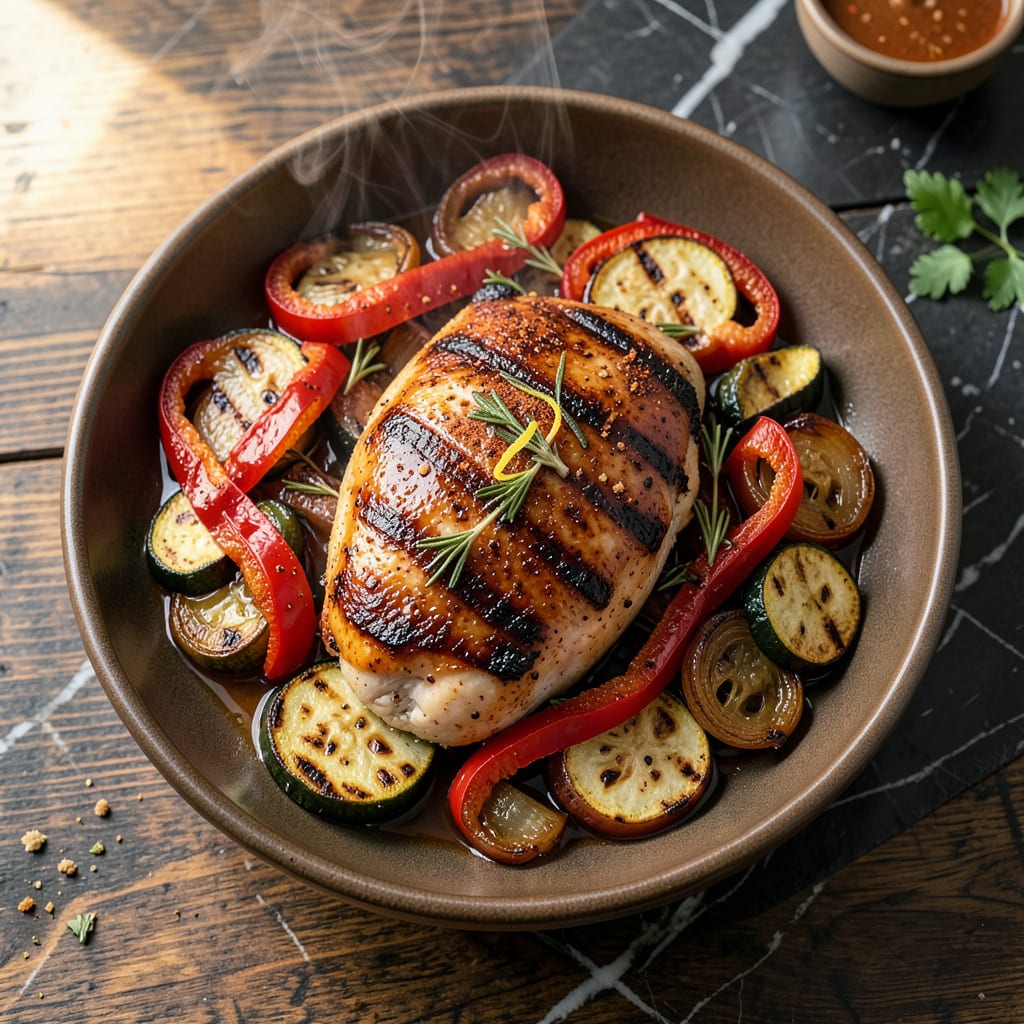
This grilled chicken breast delivers smoky char and a flavorful herb crust that’s hard to beat. The secret lies in a simple dry rub and precise grilling technique.
You’ll achieve juicy, tender meat with a perfectly caramelized exterior. This method ensures professional results with minimal effort, making it a reliable choice for any cookout.
Ingredients for Best Barbecue Grilled Chicken Breast
Pantry staples and fresh herbs create this standout grilled chicken with smoky, caramelized perfection.
| Ingredient | Amount | Notes |
|---|---|---|
| Chicken Breast 🍗 | 2 lb | Boneless, skinless, pounded even |
| Smoked Paprika 🌶️ | 1 ½ tbsp | For authentic smoky depth |
| Garlic Powder 🧄 | 1 tbsp | Freshly ground if possible |
| Onion Powder 🧅 | 1 tbsp | Fine grain for even coating |
| Dried Thyme 🍃 | 1 tsp | Crushed between fingers |
| Dried Rosemary 🌿 | 1 tsp | Finely minced for texture |
| Brown Sugar 🍚 | 2 tbsp | Light or dark variety |
| Kosher Salt 🧂 | 1 ½ tsp | Diamond Crystal preferred |
| Black Pepper 🌶️ | 1 tsp | Freshly ground for potency |
| Olive Oil 🫒 | 2 tbsp | For brushing chicken |
| Barbecue Sauce 🍯 | 1 cup | High-quality, thick consistency |
| Apple Cider Vinegar 🍏 | 1 tbsp | For tangy balance |
| Lemon Zest 🍋 | 1 tsp | Freshly grated for brightness |
[recipeingredientscaler]
The chicken is the foundation—opt for thick-cut breasts (about 8 oz each) for even cooking. Whole Foods or Costco carry reliable organic options. Pounding to uniform thickness prevents dry spots. The smoked paprika is non-negotiable for that signature char; Penzeys offers exceptional quality. Fresh herbs can be used at double the dried amount if you prefer.
No smoked paprika? Regular paprika plus a pinch of chipotle powder approximates the flavor. Brown sugar can be swapped for honey or maple syrup (adjust to taste). The barbecue sauce should have a thick, sticky consistency—Stubb’s Original or Sweet Baby Ray’s work well. For a milder profile, reduce the vinegar by half.
The dry rub keeps for 6 months in an airtight container. Grilled chicken stays fresh refrigerated for 4 days or frozen for 3 months. Reheat gently to preserve the herb crust’s texture and smoky char.
Why You’ll Love This Recipe
- Set and Forget: I toss the chicken with the spices in the morning and let it marinate while I do my thing.
- Smoky Depth: That smoked paprika and thyme combo gives it a rich, almost campfire-like flavor without overpowering.
- Meal Prep MVP: I grill a big batch on Sunday and it’s ready for salads, wraps, or straight from the fridge all week.
- Leftovers Win: Honestly, it tastes even better the next day—great for lunches or a quick protein boost.
Step-by-Step Instructions for Barbecue Grilled Chicken Breast
Master these precise techniques to achieve perfectly charred, smoky grilled chicken with an herb-infused crust.
Step 1: Prepare the Herb and Spice Rub
In a small bowl, combine the 1.5 tbsp Smoked Paprika, 1 tbsp Garlic Powder, 1 tbsp Onion Powder, 1 tsp Dried Thyme, 1 tsp Dried Rosemary, 2 tbsp Brown Sugar, 1.5 tsp Kosher Salt, and 1 tsp Black Pepper. Crush the dried herbs between your fingers as you add them to release their essential oils.
This blend creates a deeply aromatic rub that forms a caramelized crust on the chicken. I always whisk vigorously for 30 seconds to ensure even distribution of all spices and sugars. The brown sugar will help create those coveted charred edges during grilling.
Step 2: Coat and Marinate the Chicken
Pat the 2 lb Chicken Breast completely dry with paper towels. This ensures the rub adheres properly and promotes even browning. Brush both sides lightly with 1 tbsp Olive Oil—just enough to help the rub stick without making the surface soggy.
Generously apply the spice rub to all surfaces of the chicken, pressing firmly to create an even coating. Drizzle the remaining 1 tbsp Olive Oil over the seasoned chicken. Let it marinate at room temperature for 20-30 minutes while the grill preheats. This resting period allows the salt to penetrate the meat and the spices to develop their full flavor.
Step 3: Grill to Perfection Over Direct Heat
Preheat your grill to medium-high heat (about 400°F). Clean and oil the grates thoroughly to prevent sticking. Place the chicken on the grill and cook undisturbed for 5-6 minutes until you see distinct grill marks forming and the edges begin to whiten.
Flip the chicken and cook for another 5-6 minutes. The internal temperature should reach 160°F in the thickest part. During the last 2 minutes of cooking, brush both sides with ½ cup Barbecue Sauce to create a glossy, sticky glaze.
Step 4: Finish with Sauce and Rest
Transfer the chicken to a clean platter. In a small bowl, whisk together the remaining ½ cup Barbecue Sauce, 1 tbsp Apple Cider Vinegar, and 1 tsp Lemon Zest. Brush this mixture over the grilled chicken immediately after removing it from the heat.
Tent loosely with foil and let rest for 5-10 minutes. This allows the juices to redistribute throughout the meat while the residual heat brings the chicken to the perfect serving temperature of 165°F. The acidity from the vinegar and the brightness from the lemon zest will balance the richness of the barbecue sauce beautifully.
Pro Tips For Making Best Barbecue Grilled Chicken Breast
- Pound Even Thickness: Chicken breasts cook unevenly if left whole—pound them to 1-inch thickness so every bite hits that perfect smoky crust without dry edges.
- Bloom the Spices: Toss the smoked paprika, garlic powder, and onion powder in a dry pan for 30 seconds before rubbing—wakes up the flavors so they actually stick to the meat.
- Skip Cold Chicken: I learned this the hard way—let the breasts sit at room temp for 20 minutes before grilling, or they’ll seize up and stay raw inside while burning your spices outside.
- Rest Under Foil: Pull the chicken at 160°F, tent it loosely with foil, and wait 5 minutes—keeps the juices from pooling on your cutting board instead of in the meat.
Regional Styles of This Dish
Texas Style
In Texas, we keep it simple but bold. I use mesquite wood chips for smoke and swap the brown sugar for turbinado sugar to create a crunchier crust. The dry rub often includes cumin and chili powder for that Lone Star kick. 🔥
Carolina Influence
Carolina barbecue leans vinegar-forward. I add 1 tbsp apple cider vinegar directly to the dry rub and use a vinegar-based sauce for basting. The tangy brightness pairs perfectly with the smoky char, and I often serve it with a side of coleslaw.
Kansas City Tradition
For a sweeter profile, I increase the brown sugar to 3 tbsp and add 1 tsp molasses to the rub. Kansas City loves its thick, sweet sauces, so I brush on extra barbecue sauce during the last 5 minutes of grilling. This creates a sticky, caramelized glaze.
Alabama White Sauce
Alabama’s signature white sauce is a game-changer. I mix 1 cup mayonnaise, ¼ cup apple cider vinegar, and 1 tbsp horseradish for a tangy, creamy dip. It’s an unexpected but delicious twist that pairs beautifully with the smoky herb crust.
California Fusion
On the West Coast, I add a touch of Asian influence with 1 tsp grated ginger and 1 tbsp soy sauce to the marinade. The umami depth complements the smoky flavors, and I often garnish with fresh cilantro and lime wedges for brightness. ✨
Midwest Simplicity
In the Midwest, the focus is on the grill itself. I use charcoal briquettes for a consistent heat and let the natural flavors shine. The herb crust stays front and center, with just a light brushing of barbecue sauce for a clean, classic finish.
Nutrition Facts
Frequently Asked Questions
What’s the best grill temperature?
Preheat to medium-high heat at about 400°F. This ensures a good sear while cooking the chicken through without burning the outside.
How do I prevent dry chicken?
Don’t overcook! Pull the chicken at 160°F internal temperature and let it rest for 5-10 minutes to reach 165°F. Resting keeps it juicy.
Can I use a gas grill instead of charcoal?
Gas grills work perfectly. Use direct heat and follow the same timing. For extra smokiness, add wood chips to the flavorizer bars.
Should I marinate it overnight?
Room temperature marinating for 20-30 minutes is ideal. Overnight marinating can make the texture mushy due to the salt and vinegar in the rub.

- Jollof Rice Sauce Recipe: West African Tomato and Spice Infusion - September 25, 2026
- Japanese Rice Soup Recipe: Umami-Rich Comfort in a Bowl - September 25, 2026
- Homemade Cream Of Rice Recipe: Silk-Smooth Breakfast in Minutes - September 25, 2026