
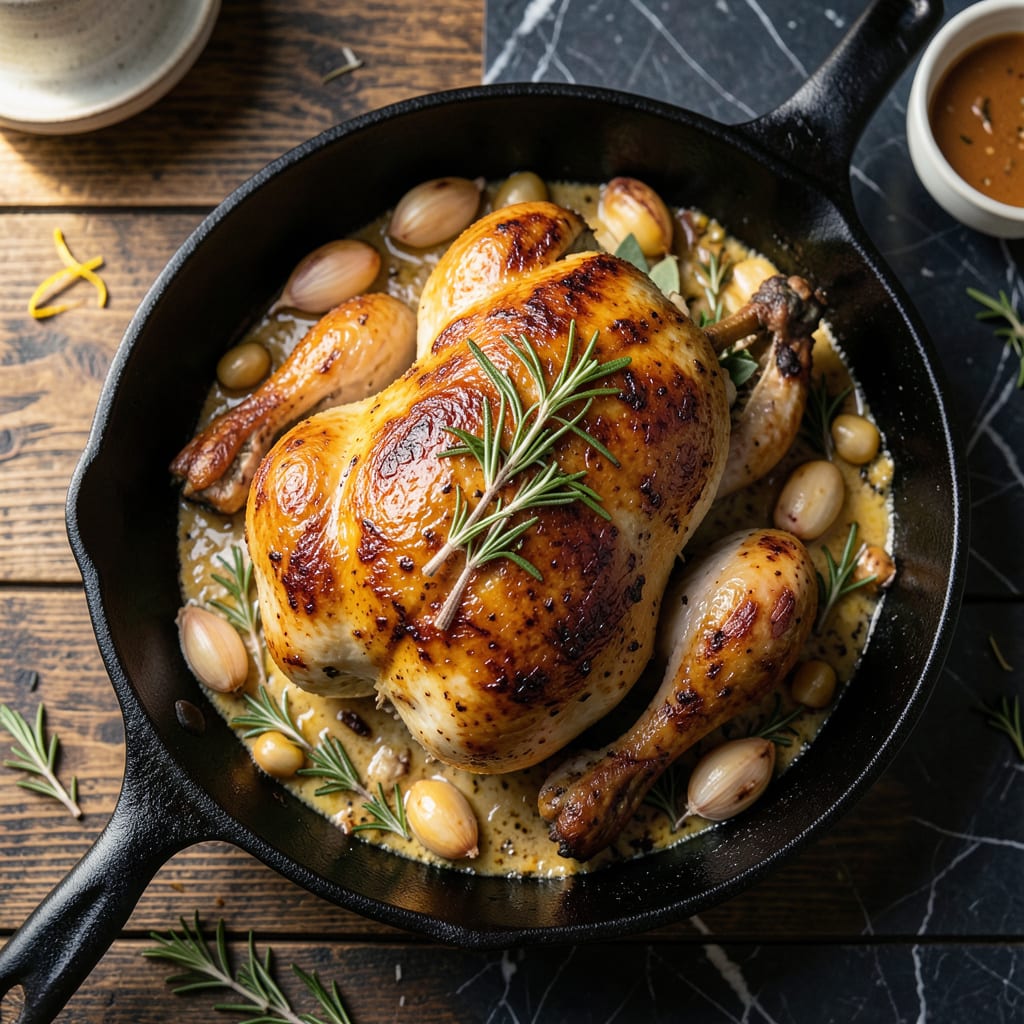
This whole roasted chicken delivers golden crispiness and juicy meat every time with a simple herb-infused technique I’ve perfected over years of testing.
That crispy skin and tender flesh come from even seasoning, proper oven temperature, and resting before carving. The result is a centerpiece dish that’s as impressive as it is flavorful.
Ingredients for Best Whole Roasted Chicken Recipe Ever
Fourteen ingredients transform into the juiciest, most flavorful roasted chicken you will ever make.
| Ingredient | Amount | Notes |
|---|---|---|
| Whole Chicken 🍗 | 4 lb | Fresh or thawed, giblets removed |
| Unsalted Butter 🧈 | ½ cup | Softened to room temperature |
| Fresh Rosemary Sprigs 🌿 | 4 whole | About 6 inches each |
| Fresh Thyme Sprigs 🍃 | 6 whole | Stems removed for seasoning |
| Fresh Sage Leaves 🍃 | 8 whole | Lightly bruised for flavor |
| Garlic Cloves 🧄 | 6 cloves | Peeled and smashed |
| Kosher Salt 🧂 | 1 ½ tbsp | Diamond Crystal preferred |
| Freshly Ground Black Pepper 🌶️ | 2 tsp | Coarse grind for texture |
| Lemon 🍋 | 1 whole | Halved for cavity and basting |
| Yellow Onion 🧅 | 1 whole | Quartered for cavity aroma |
| Carrots 🥕 | 2 whole | Cut into 2-inch pieces |
| Celery Stalks 🥬 | 2 whole | Cut into 2-inch pieces |
| Dry White Wine 🍷 | ½ cup | For basting liquid |
| Chicken Stock 🥣 | ½ cup | Low-sodium preferred |
[recipeingredientscaler]
The chicken itself is critical. Look for air-chilled birds at Whole Foods or a local butcher—they retain moisture better and yield crispier skin. Aim for 4 pounds for even cooking; too large and the white meat dries out before the dark meat finishes. The herbs should be organic when possible, with vibrant color and strong aroma.
No fresh herbs? Dried at one-third the amount works, but rehydrate them first in warm water. Butter can be swapped for olive oil (use the same quantity), though the flavor profile changes slightly. Short on white wine? Apple cider or additional chicken stock will do. Always use low-sodium stock so you can control the seasoning.
The bird can rest at room temperature for 30 minutes before roasting. Leftovers keep in the fridge for 3-4 days or freeze for up to 3 months. Carve only when ready to serve—this preserves moisture and that coveted crispy skin.
Why You’ll Love This Recipe
- I’ll be real: the sandwiches and soups I make from the leftovers taste even better the next day.
- One Pan Magic: I just rub butter and herbs under the skin, pop it in the oven, and let the rosemary, thyme, and sage do all the work.
- Herb-Butter Bliss: That butter melted into the chicken with fresh rosemary and thyme? It’s the kind of flavor that makes you close your eyes with every bite.
- Feeds Everyone: Honestly, it’s my go-to for Sunday suppers, meal prep, or when I need to impress with barely any effort.
Step-by-Step Instructions for Herb-Infused Roasted Chicken
Master the technique that delivers perfectly crispy skin and juicy, herb-infused meat every time.
Step 1: Prep and Season the Whole Chicken
Pat the 4 lb Whole Chicken completely dry with paper towels inside and out. This removes moisture that would steam the skin instead of crisping it. I focus especially on the cavity and under the wings where water tends to accumulate.
Generously season the exterior and cavity with the 1.5 tbsp Kosher Salt and 2 tsp Freshly Ground Black Pepper. The salt should create a visible crust on the skin. Stuff the cavity with the 1 whole Lemon (halved), 1 whole Yellow Onion (quartered), 2 whole Carrots, and 2 whole Celery Stalks. These aromatics infuse the meat with subtle flavor as it roasts.
Step 2: Create the Herb Butter for Basting
In a small bowl, combine the 0.5 cup Unsalted Butter with the 4 whole Fresh Rosemary Sprigs, 6 whole Fresh Thyme Sprigs, 8 whole Fresh Sage Leaves, and 6 cloves Garlic Cloves. Mash them together with a fork to release the herb oils into the butter.
This compound butter will be used for basting throughout the roasting process. I like to let it sit at room temperature for 10 minutes to allow the flavors to meld before using. The butter should be soft but not melted—this ensures it coats the chicken evenly without running off.
Step 3: Roast at High Heat for Crispy Skin
Preheat your oven to 425°F. Place the chicken breast-side up on a rack in a roasting pan. Roast for 15 minutes at this high temperature to start developing that golden crust.
After 15 minutes, reduce the oven temperature to 375°F. Begin basting the chicken every 20 minutes with the herb butter and a mixture of 0.5 cup Dry White Wine and 0.5 cup Chicken Stock. This keeps the skin moist while it browns and adds layers of flavor. The chicken is done when the juices run clear and an instant-read thermometer inserted into the thickest part of the thigh registers 165°F.
Step 4: Rest and Serve
Transfer the chicken to a cutting board and let it rest for 15-20 minutes. This allows the juices to redistribute throughout the meat, ensuring every bite is moist and flavorful. I tent it loosely with foil to keep it warm without steaming the skin.
Carve the chicken and serve with the pan juices drizzled over the top. The skin should be deep golden brown and crisp to the touch, while the meat remains tender and infused with the herb and citrus notes from the cavity aromatics. This method guarantees the best balance of texture and flavor in every serving.
Pro Tips For Making Best Whole Roasted Chicken Recipe Ever
- Dry the Chicken: Pat the chicken thoroughly dry with paper towels before seasoning—this guarantees crispy skin, especially when using butter.
- Room Temp Start: Let the chicken sit out for 30-45 minutes before roasting; I learned this the hard way after pulling a cold bird straight from the fridge and getting uneven cooking.
- Butter Under Skin: Gently loosen the skin and rub softened unsalted butter directly onto the meat, then tuck the herbs underneath—this keeps the breast juicy while the skin crisps.
- Rest Before Carving: Give it a solid 15 minutes under foil after roasting; sounds tedious, but it redistributes the juices so they don’t all spill out when you slice.
Common Mistakes When Making This Recipe
Skipping the Dry
Never skip patting the chicken completely dry before seasoning. Even a little moisture will steam the skin instead of letting it crisp. I use 3-4 paper towels and pay special attention to the cavity and under the wings where water collects.
Uneven Seasoning
Don’t just sprinkle salt on top—get it into every crevice, under the wings, and inside the cavity. The seasoning should be visible on the skin. I use my fingers to gently separate the skin from the breast to distribute salt underneath for maximum flavor.
Cold Chicken in Oven
Starting with a cold chicken straight from the fridge leads to uneven cooking. Let it sit at room temperature for 30-45 minutes before roasting. This ensures the meat cooks evenly and the skin crisps properly from the start. 💡
Overcrowding the Pan
Using a pan without a rack or crowding the chicken with too many vegetables causes the skin to steam. Always use a rack to elevate the bird, allowing hot air to circulate underneath. I recommend a stainless steel roasting rack for best results.
Ignoring the Thermometer
Relying on cooking time alone often leads to dry meat or undercooked chicken. Use an instant-read thermometer and check the thickest part of the thigh, not the breast. It’s done at 165°F—no higher, no lower.
Skipping the Rest
Carving immediately after removing from the oven causes all those precious juices to spill out. Always rest the chicken for 15-20 minutes tented loosely with foil. This step is non-negotiable for juicy, flavorful meat. 🍗
Frequently Asked Questions
Why let the chicken rest before carving?
Resting for 15-20 minutes allows juices to redistribute, ensuring moist meat. Carving too soon causes dryness as fluids spill out. Tent loosely with foil to keep warm.
Can I use dried herbs instead of fresh?
Yes, use dried herbs at one-third the amount. Rehydrate them first in warm water for best results. Fresh herbs provide stronger aroma, but dried work in a pinch.
What if my chicken skin isn’t crispy?
Pat the chicken completely dry before seasoning, and use a rack to elevate it. Ensure oven temperature reaches 425°F initially for that golden crust.
How do I know when it’s done?
Use an instant-read thermometer in the thickest part of the thigh. It should read 165°F. Juices should run clear, not pink.

- Jollof Rice Sauce Recipe: West African Tomato and Spice Infusion - September 25, 2026
- Japanese Rice Soup Recipe: Umami-Rich Comfort in a Bowl - September 25, 2026
- Homemade Cream Of Rice Recipe: Silk-Smooth Breakfast in Minutes - September 25, 2026