
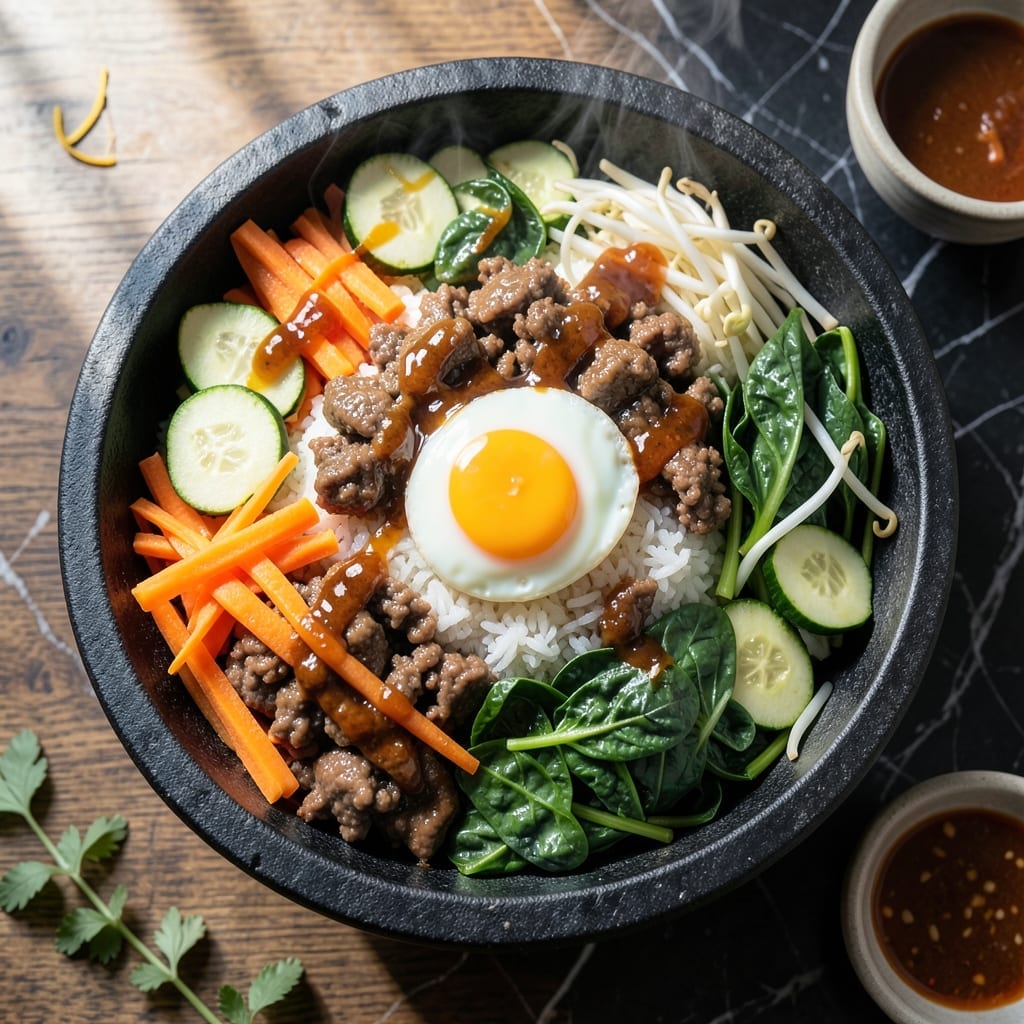
This Korean classic brings together tender beef, vibrant vegetables, and fluffy rice in one colorful bowl. The dish balances sweet, savory, and spicy flavors perfectly.
Top with a fried egg and drizzle with gochujang sauce for an authentic experience. Every bite offers a mix of textures and tastes.
Ingredients for Bibimbap Rice
Tender beef, colorful vegetables, and fluffy rice create this vibrant Korean bowl with bold flavors.
| Ingredient | Amount | Notes |
|---|---|---|
| White Rice 🍚 | 2 cups | Short-grain preferred for stickiness |
| Ground Beef 🥩 | ¾ lb | Lean ground beef, 85/15 ratio |
| Carrots 🥕 | 1 whole | Julienned into thin strips |
| Zucchini 🥒 | 1 whole | Julienned into thin strips |
| Spinach 🌿 | 4 cups | Fresh, roughly chopped |
| Bean Sprouts 🌱 | 2 cups | Rinsed and drained |
| Shiitake Mushrooms 🍄 | 4 whole | Fresh, sliced thinly |
| Garlic Cloves 🧄 | 4 cloves | Minced finely |
| Soy Sauce 💧 | ¼ cup | Low-sodium preferred |
| Sesame Oil 🫒 | 2 tbsp | Toasted for best flavor |
| Gochujang Sauce 🌶️ | 3 tbsp | Korean red pepper paste |
| Sugar 🧂 | 1 tbsp | Granulated white sugar |
| Eggs 🥚 | 4 whole | For frying, one per serving |
| Vegetable Oil 🫒 | 2 tbsp | For cooking beef and veggies |
| Green Onions 🧅 | 4 whole | Thinly sliced for garnish |
The beef should be high-quality for the best texture. USDA Choice or Prime ground beef works perfectly, and Whole Foods or local butchers carry excellent options. For vegetables, seek out firm, fresh produce—Korean markets often have pre-cut options that save time. The rice is the foundation, so use short-grain for that signature sticky texture.
No ground beef? Ground turkey or chicken work well as leaner alternatives. Vegetarian? Crumbled tofu or tempeh soak up the marinade beautifully. If gochujang is hard to find, sriracha mixed with miso paste approximates the flavor. Fresh spinach can be swapped for baby bok choy for a different texture.
Prepared bibimbap keeps in the fridge for 3-4 days if stored separately. The gochujang sauce can be made ahead and stored for up to 2 weeks. For best results, assemble bowls fresh when serving to maintain the crispness of the vegetables.
Why You’ll Love This Recipe
- One Pan Meal: I just toss the ground beef and veggies in while the rice cooks—minimal cleanup, maximum flavor.
- Umami Bomb: The spinach and beef soak up the sauce, and that first bite? Ridiculously good.
- Meal Prep MVP: I make a big batch on Sunday and it stays fresh for days—lunches sorted.
- Budget Hero: A pound of ground beef and a few veggies stretch so far. Feeds my family for two nights.
Step-by-Step Instructions for Bibimbap
Master the art of Korean mixed rice with precise technique and authentic flavor layers.
Step 1: Cook the White Rice to Perfect Stickiness
Rinse the 2 cups White Rice under cold water until the water runs clear to remove excess starch. This prevents a gummy texture and ensures each grain remains distinct yet slightly sticky. Use a rice cooker or heavy pot with a tight lid, combining the rice with 2¼ cups water.
Cook until the water absorbs completely and the rice is tender, about 15-20 minutes. Let it steam covered for an additional 10 minutes off heat. The grains should be glossy and hold together lightly when pressed with a spoon, ideal for mixing with other ingredients.
Step 2: Marinate and Cook the Ground Beef
In a bowl, combine the 0.75 lb Ground Beef with 2 tbsp Soy Sauce, 1 tbsp Sugar, and 1 clove of minced Garlic Cloves. Mix thoroughly to ensure even seasoning. The sugar caramelizes slightly during cooking, balancing the saltiness of the soy sauce.
Heat 1 tbsp Vegetable Oil in a skillet over medium-high heat. Add the beef mixture and cook, breaking it into small pieces, for 5-6 minutes until browned and cooked through. The beef should be crumbly with a glossy, slightly sticky coating from the soy-sugar marinade.
Step 3: Sauté the Vegetables Individually for Optimal Texture
Heat 1 tbsp Vegetable Oil in a large skillet over medium heat. Sauté the Carrots and Zucchini (both julienned) for 3-4 minutes until just tender but still vibrant in color. Remove and set aside. In the same pan, add the Shiitake Mushrooms and cook for 4-5 minutes until golden and slightly crisp.
For the Spinach and Bean Sprouts, blanch them separately in boiling water for 30-45 seconds, then shock in ice water to preserve their bright color and crisp texture. Drain well and toss each with ½ tsp Sesame Oil and a pinch of salt to enhance their natural flavors.
Step 4: Prepare the Gochujang Sauce and Fry the Eggs
In a small bowl, whisk together the 3 tbsp Gochujang Sauce, 1 tbsp Soy Sauce, 1 tbsp Sesame Oil, and the remaining 3 cloves of minced Garlic Cloves. Adjust the consistency with a splash of water if needed; the sauce should be thick but pourable. This balances heat, sweetness, and umami perfectly.
Fry the 4 whole Eggs in a nonstick pan with a little oil over medium-low heat for 2-3 minutes until the whites are set but yolks remain runny. The yolk acts as a rich, creamy binder when mixed into the bowl.
Step 5: Assemble and Serve the Bibimbap
Divide the cooked White Rice among four bowls. Arrange the cooked Ground Beef, Carrots, Zucchini, Shiitake Mushrooms, Spinach, and Bean Sprouts in separate sections on top of the rice. Drizzle each bowl with the remaining 1 tbsp Sesame Oil for added aroma.
Place a fried egg in the center of each bowl. Garnish with the Green Onions (thinly sliced) and serve the Gochujang Sauce on the side. Instruct diners to mix everything thoroughly before eating to distribute the flavors and textures evenly.
Pro Tips For Making Bibimbap Rice
- Pre-cook the rice: Use day-old, chilled rice—it holds its shape better when mixed with the hot veggies and beef. I learned this the hard way after making mushy bibimbap more times than I care to admit.
- Sear the beef first: Brown the ground beef in a screaming-hot pan before seasoning to lock in flavor, then drain excess fat. Skipping this step leaves you with a greasy, bland mess.
- Salt the spinach: Toss the spinach with a pinch of salt and let it sit for 5 minutes before blanching—it’ll wilt faster and keep its bright green color. Sounds weird, but it works.
- Cut veggies thin: Julienne the carrots and zucchini into matchsticks so they cook evenly and look restaurant-worthy. I was skeptical until I tried it, and now I won’t do it any other way.
Flavor Customization for These Flavors
Spice Level Adjustments
For those who prefer less heat, reduce the gochujang sauce to 1 tbsp and add 1 tsp honey to balance the flavors. I often do this for kids or heat-sensitive friends. The dish remains flavorful without overwhelming spice. 💡
Extra Veggie Boost
Add ½ cup sliced bell peppers or 1 cup baby bok choy for more color and nutrients. Sauté them with the carrots and zucchini for 3-4 minutes until tender-crisp. This increases the vegetable variety while keeping prep simple.
Protein Swaps
Replace ground beef with bulgogi-marinated chicken or thinly sliced pork for a different texture. For vegetarians, crumbled tofu or tempeh works beautifully when marinated in the same soy-sugar mixture.
Sauce Variations
Create a creamy version by mixing 2 tbsp gochujang with 1 tbsp mayonnaise and 1 tsp rice vinegar. This adds richness that pairs wonderfully with the runny egg yolk. I love this twist for a modern take. ✨
Garnish Upgrades
Sprinkle with toasted sesame seeds or crushed kimchi for extra crunch and tang. Fresh cilantro works well for those who enjoy its bright flavor. These small additions elevate the dish with minimal effort.
Rice Alternatives
For a nuttier flavor, swap white rice for brown rice or mixed grains. Cook according to package instructions, but note it may need 5-10 extra minutes to achieve the right tenderness. The texture will be slightly chewier.
Nutrition Facts
Frequently Asked Questions
Can I make this without gochujang?
Yes! Mix 1 tbsp sriracha with 1 tsp miso paste and 1 tsp honey for a similar flavor profile.
How do I store leftovers?
Keep components separate in airtight containers in the fridge for 3-4 days. Reheat rice and toppings separately for best texture.
What’s the best rice for this dish?
Short-grain white rice is ideal for its sticky texture. Rinse well before cooking for perfect consistency.
Can I use frozen vegetables?
Fresh is best, but thawed frozen veggies work in a pinch. Sauté them 1-2 minutes longer to remove excess moisture.

- Jollof Rice Sauce Recipe: West African Tomato and Spice Infusion - September 25, 2026
- Japanese Rice Soup Recipe: Umami-Rich Comfort in a Bowl - September 25, 2026
- Homemade Cream Of Rice Recipe: Silk-Smooth Breakfast in Minutes - September 25, 2026