
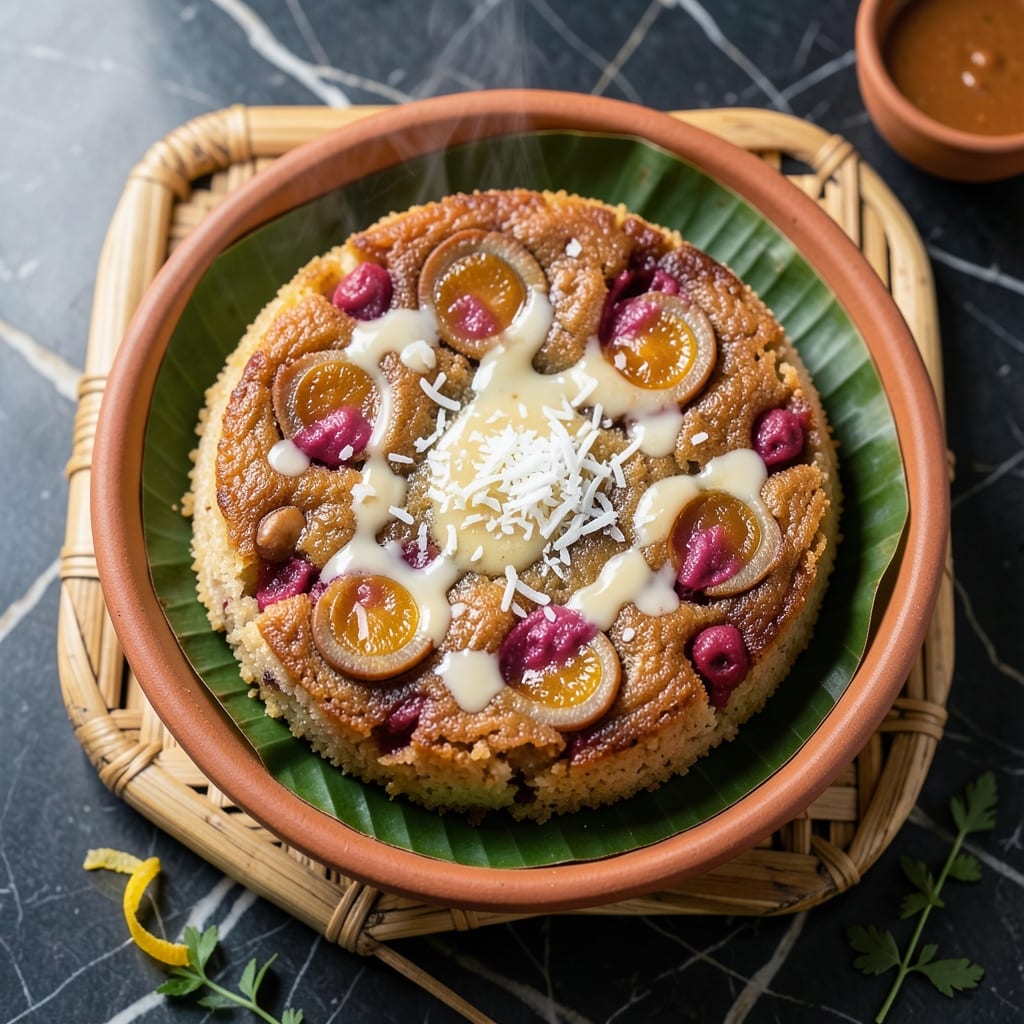
This traditional Filipino dessert brings the warmth of holiday celebrations to your kitchen. A coconut-infused rice cake baked to golden perfection, it captures the essence of festive gatherings.
The recipe combines simple ingredients with time-honored techniques to create a soft, slightly chewy texture with a fragrant aroma that fills your home. Perfect for sharing with loved ones during special occasions.
Ingredients for Bibingka Rice Cake
Traditional Filipino ingredients create this festive coconut-infused rice cake with warm, golden perfection.
| Ingredient | Amount | Notes |
|---|---|---|
| Glutinous Rice Flour 🌾 | 2 cups | Also called sweet rice flour |
| Granulated Sugar 🍚 | 1 ½ cups | Divided for batter and topping |
| Coconut Milk 🥥 | 1 ½ cups | Full-fat for richness |
| Large Eggs 🥚 | 4 whole | Room temperature preferred |
| Unsalted Butter 🧈 | ½ cup | Melted, plus extra for greasing |
| Baking Powder 🧂 | 2 tsp | Ensures proper rise |
| Salt 🧂 | ½ tsp | Fine sea salt preferred |
| Freshly Grated Coconut 🥥 | 1 cup | Or unsweetened desiccated coconut |
| Vanilla Extract 🌿 | 1 tsp | Pure extract recommended |
| Banana Leaves 🍃 | 2 sheets | For lining, optional |
| Sliced Salted Eggs 🥚 | 2 whole | Traditional topping, optional |
| Grated Edam Cheese 🧀 | ½ cup | Or cheddar cheese for topping |
Glutinous rice flour is non-negotiable for authentic texture—look for it in Asian markets or the international aisle at Whole Foods. Bob’s Red Mill offers a reliable brand widely available. Coconut milk must be full-fat; light versions lack the richness this dish demands. Freshly grated coconut adds depth, but unsweetened desiccated coconut works in a pinch if time is limited.
No banana leaves? Parchment paper lined with a light butter coating substitutes adequately. Salted eggs can be omitted or replaced with hard-boiled eggs for a simpler version. Edam cheese is traditional, but sharp cheddar provides a similar salty contrast. For a dairy-free option, vegan cheese melts differently but still adds a complementary layer.
Bibingka keeps well at room temperature for 2 days in an airtight container. For longer storage, refrigerate for up to 5 days or freeze for 1 month. Reheat in a steamer or microwave with a damp towel to restore moisture and softness.
Why You’ll Love This Recipe
- One Bowl Mix: I just dump the glutinous rice flour, sugar, coconut milk, and eggs in a single bowl—no fancy prep, and the butter melts right in.
- That Coconut Magic: Honestly, the-rich coconut milk and butter combo makes every bite taste like a warm, sweet hug from my Filipino grandma’s kitchen.
- Holiday or Tuesday: I serve it at Christmas parties, but between us, it’s also my sneaky afternoon snack with leftover coffee.
- Budget Stretcher: Glutinous rice flour and coconut milk are cheap, and one pan makes enough to feed a crowd or keep me in treats for days.
Step-by-Step Instructions for Bibingka Rice Cake
This traditional method delivers authentic texture and flavor while honoring its festive roots.
Step 1: Prepare the Banana Leaves and Preheat Oven
Preheat your oven to 375°F. While it heats, prepare the banana leaves by briefly passing them over an open flame to soften and remove any stiffness. This step also releases their natural aroma, which enhances the dish’s traditional character.
Cut the banana leaves into circles slightly larger than your baking pan and use them to line the bottom. If banana leaves aren’t available, you can grease the pan with extra unsalted butter instead. The leaves should be pliant enough to fold up the sides of the pan without cracking.
Step 2: Mix the Wet Ingredients
In a large mixing bowl, whisk together the 4 whole Large Eggs and 1.5 cups Granulated Sugar until the mixture is pale and slightly thickened. This should take about 2-3 minutes with a hand mixer on medium speed.
Gradually add the 1.5 cups Coconut Milk and 0.5 cup Unsalted Butter (melted and cooled slightly), continuing to whisk until fully emulsified. Stir in the 1 tsp Vanilla Extract to complete the wet mixture. The consistency should be smooth and homogeneous before proceeding.
Step 3: Incorporate Dry Ingredients and Fold in Coconut
In a separate bowl, sift together the 2 cups Glutinous Rice Flour, 2 tsp Baking Powder, and 0.5 tsp Salt. This aerates the dry ingredients for a lighter texture in the finished cake.
Gradually add the dry mixture to the wet ingredients, folding gently with a spatula until just combined. Avoid overmixing, which could develop gluten and make the cake dense. Finally, fold in the 1 cup Freshly Grated Coconut until evenly distributed throughout the batter.
Step 4: Bake Until Golden and Set
Pour the batter into your prepared pan with banana leaves. The batter should be about 1 inch thick for even cooking. Bake at 375°F for 35-40 minutes, or until the top is golden brown and a toothpick inserted in the center comes out clean.
Halfway through baking, carefully arrange the 2 whole Sliced Salted Eggs on top of the cake, pressing them gently into the batter. This ensures they bake into the cake rather than sitting loosely on top. The cake is done when the edges pull slightly away from the pan.
Step 5: Add Cheese Topping and Finish
Remove the cake from the oven and immediately sprinkle the 0.5 cup Grated Edam Cheese evenly over the top. Return it to the oven for 2-3 minutes just until the cheese melts and turns lightly golden.
Let the bibingka cool in the pan for 10 minutes before slicing. The banana leaves not only provide a traditional presentation but also impart a subtle, earthy fragrance that complements the sweet, coconut-rich cake. Serve warm for the best experience.
Pro Tips For Making Bibingka Rice Cake
- Preheat the Oven: Crank it to 375°F (190°C) and let it stabilize for 10 minutes—I learned this the hard way after my first few bibingkas came out dense and gummy in the middle.
- Warm the Coconut Milk: Take it out of the fridge 30 minutes early or microwave for 20 seconds; cold coconut milk makes the butter clump and the batter uneven.
- Skip Overmixing: Stir just until the glutinous rice flour disappears—overworking develops too much chew and turns your cake tough instead of tender.
- Butter the Pan Well: Use about 1 tablespoon of melted unsalted butter to coat the baking dish, including the sides—this keeps the edges from sticking and gives that classic golden crust.
Regional Styles of These Flavors
Traditional Filipino Style
In the Philippines, this dish is baked in clay pots lined with banana leaves over hot coals, creating a smoky aroma. I use a 9×13-inch pan in my oven to mimic this. The banana leaves are essential for that authentic earthy scent and presentation. 🌿
Pampanga Variation
In Pampanga, they add duck eggs instead of chicken eggs for a richer flavor. The yolk’s deeper orange color makes the cake more visually striking. I also notice they often use muscovado sugar for a caramel-like depth.
Bicolano Approach
Bicol region incorporates coconut cream (kakang gata) in addition to regular coconut milk. This creates an even denser, creamier texture. They also top it with sliced ripe mango for a sweet-tart contrast that I find irresistible.
Modern Manila Style
Urban bakeries in Manila often add pandan extract to the batter for a vibrant green hue and floral aroma. Some even layer ube halaya (purple yam jam) between two layers of bibingka for a stunning presentation.
Vegan Adaptation
In progressive Filipino kitchens, they replace eggs with flax eggs (1 tbsp ground flax + 3 tbsp water per egg) and use coconut oil instead of butter. The texture differs slightly but maintains the coconut essence beautifully.
Gluten-Free Note
Since the recipe uses glutinous rice flour, it’s naturally gluten-free. Just ensure your baking powder is gluten-free certified. I always double-check labels when serving to friends with celiac disease.
Nutrition Facts
Frequently Asked Questions
Can I use regular rice flour instead?
No, glutinous rice flour is essential for the authentic chewy texture. Regular rice flour will result in a grainy, crumbly cake. Look for it in Asian markets or online.
Why is my bibingka dense?
Overmixing the batter or using expired baking powder can cause density. Fold ingredients gently and check your leavening agent’s freshness. The batter should be smooth but not tough.
How do I store leftovers?
Keep in an airtight container at room temperature for 2 days or refrigerate for up to 5 days. Reheat in a steamer or microwave with a damp towel to restore moisture.
Can I make this without banana leaves?
Yes! Use parchment paper lined with extra butter. While you’ll miss the aroma, the texture and taste remain excellent. The leaves are traditional but optional.

- Jollof Rice Sauce Recipe: West African Tomato and Spice Infusion - September 25, 2026
- Japanese Rice Soup Recipe: Umami-Rich Comfort in a Bowl - September 25, 2026
- Homemade Cream Of Rice Recipe: Silk-Smooth Breakfast in Minutes - September 25, 2026