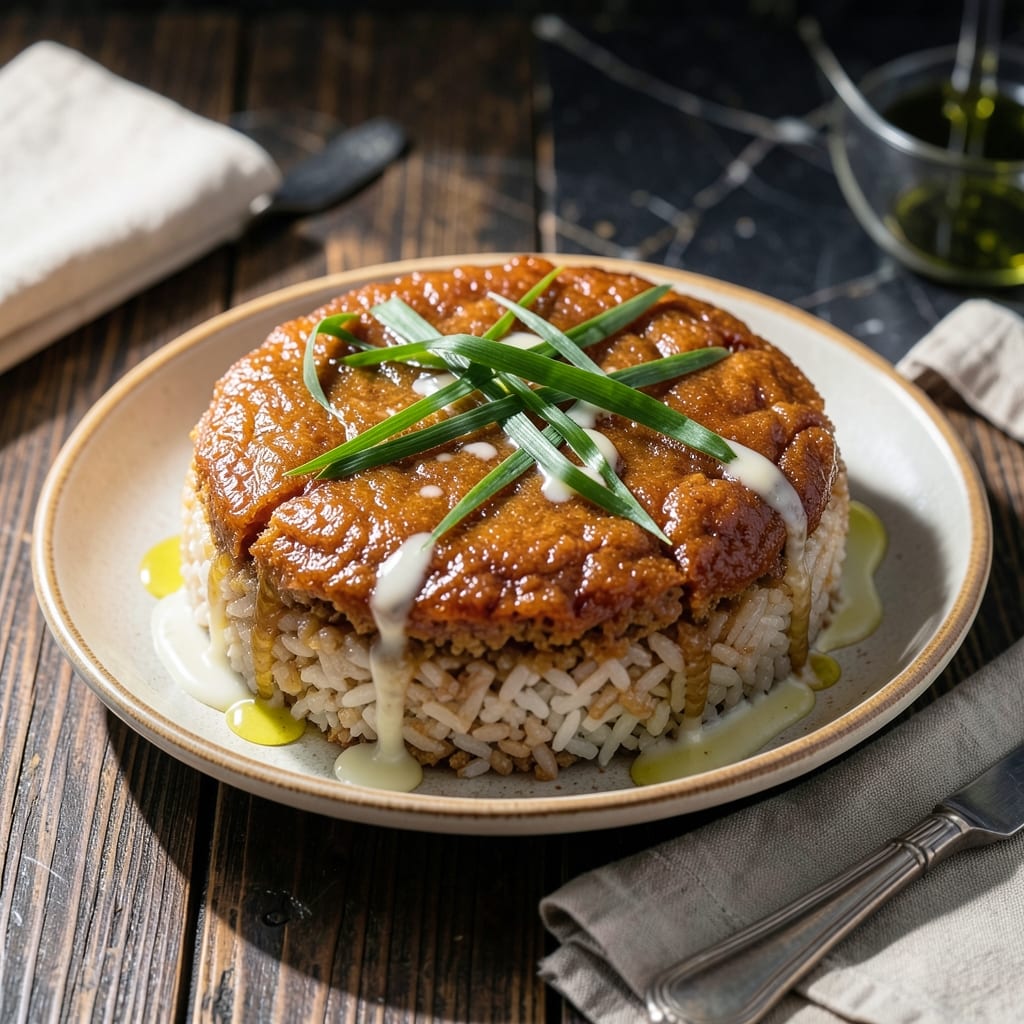
Biko Rice Cake Recipe: Filipino Sticky Sweetness with Coconut Milk

Biko Rice Cake Recipe: Filipino Sticky Sweetness with Coconut Milk

This traditional Filipino dessert transforms simple glutinous rice into a sticky, sweet treat that’s both comforting and festive. The combination of coconut milk and brown sugar creates a rich, caramelized topping that soaks into every bite.

Perfect for celebrations or everyday indulgence, this dish captures the warmth of Filipino heritage with minimal effort. The texture is soft yet chewy, with a golden crust that’s impossible to resist.

👨‍🍳
Difficulty
Medium
🌿
Category
Vegetarian
⏱️
Duration
30 min
🔥
Calories
Med Cal

Ingredients for Biko Rice Cake

Simple glutinous rice, coconut milk, and brown sugar create this Filipino sticky sweet treat.

Ingredient Amount Notes
Glutinous Rice 🍚 2 cups Sweet or sticky rice variety
Coconut Milk 🥥 2 cups Full-fat for richness
Brown Sugar 🍚 1 ½ cups Packed, for caramel topping
Water 💧 3 cups For cooking rice
Salt 🧂 ½ tsp Balances sweetness
Pandan Leaves 🌿 2 pieces Optional for aroma
Vanilla Extract 🌿 1 tsp Pure extract preferred
Toasted Coconut Flakes 🥥 ½ cup For garnish
Coconut Oil 🫒 1 tbsp For greasing pan

The glutinous rice is non-negotiable—sweet or sticky rice varieties (like Thai sticky rice) are essential for that signature chewy texture. Regular white rice won’t work. Look for it at Asian markets or the international aisle at larger supermarkets. The coconut milk should be full-fat; light versions lack the richness needed to properly caramelize the brown sugar topping.

No pandan leaves? Skip them or use vanilla extract for a subtle flavor boost. Brown sugar can be swapped for coconut sugar, but the caramelization depth won’t be as pronounced. If you’re in a pinch, white sugar with a splash of molasses mimics brown sugar. The coconut flakes are optional but add a nice textural contrast—Trader Joe’s has great pre-toasted ones.

Store cooked biko in an airtight container at room temperature for up to 3 days. For longer storage, refrigerate for 1 week or freeze for 3 months. Reheat gently in the microwave to restore that gooey texture.

❤️

Why You’ll Love This Recipe

  • One Pot Wonder: I just dump the glutinous rice, coconut milk, and brown sugar in a pot, let it simmer, and it practically cooks itself.
  • Caramelized Bliss: The brown sugar melts into this deep, toffee-like richness that pairs perfectly with the creamy coconut.
  • Feeds a Crowd: Honestly, it’s my go-to for potlucks—one batch makes enough to share, and it’s always the first to disappear.
  • Keeps Like a Dream: Leftovers taste even better the next day, and it stays moist for ages in the fridge.

Step-by-Step Instructions for Biko Rice Cake

Master this traditional Filipino dessert with precise technique and layered coconut sweetness.

Step 1: Prepare and Soak the Glutinous Rice

Rinse the 2 cups Glutinous Rice under cold running water until the water runs clear. This removes excess starch that could make the cake gummy rather than perfectly sticky. Drain thoroughly in a fine-mesh sieve.

Transfer the drained rice to a bowl and add the 3 cups Water and 2 pieces Pandan Leaves if using. Let it soak for 30 minutes—this hydrates the grains evenly and shortens the cooking time. The rice should appear plump and opaque when ready. Discard the pandan leaves after soaking.

Step 2: Cook the Rice to Perfect Tenderness

In a medium saucepan, combine the soaked glutinous rice with the soaking water. Add the 0.5 tsp Salt to balance the sweetness. Bring to a boil over medium-high heat, then reduce to low heat, cover, and simmer for 15-18 minutes.

Check that the rice is tender but still holds its shape—there should be no hard center when you press a grain between your fingers. If the water evaporates before the rice is done, add ¼ cup more water and continue cooking. Drain any excess water and let the rice cool slightly.

Step 3: Create the Coconut Caramel Topping

In a separate saucepan, combine the 2 cups Coconut Milk, 1.5 cups Brown Sugar, and 1 tsp Vanilla Extract. Cook over medium heat, stirring constantly, until the sugar fully dissolves and the mixture thickens slightly, about 8-10 minutes.

You’re aiming for a syrupy consistency that coats the back of a spoon. Be vigilant—this mixture can burn easily if left unattended. The color should deepen to a rich amber, and you’ll notice a glossy sheen as it reduces. Remove from heat immediately once it reaches this stage.

Step 4: Layer and Steam the Biko

Grease an 8-inch square baking dish with the 1 tbsp Coconut Oil, ensuring all surfaces are well coated to prevent sticking. Spread half of the cooked glutinous rice evenly in the prepared dish, pressing down lightly to create a compact layer.

Pour half of the coconut caramel mixture over the rice, spreading it evenly with a spatula. Repeat with the remaining rice and coconut caramel, ensuring the top layer is smooth. Cover the dish tightly with aluminum foil to trap steam.

Step 5: Steam and Garnish for Serving

Place the covered dish in a steamer over boiling water and steam for 25-30 minutes. The biko is done when the coconut caramel has been fully absorbed and the top appears glossy with a slight jiggle in the center.

Remove from the steamer and let it cool to room temperature, about 1 hour. This resting period allows the layers to set properly. Once cooled, sprinkle the 0.5 cup Toasted Coconut Flakes evenly over the top. Slice into squares and serve at room temperature for the best texture.

👨‍🍳

Pro Tips For Making Biko Rice Cake

  • Soak the Rice: Give the glutinous rice a good 4-hour soak in water—I learned this the hard way after ending up with hard, undercooked centers in my early attempts.
  • Simmer Low and Slow: Keep the heat at a gentle simmer when cooking the rice with coconut milk, or you’ll risk curdling the mixture and getting a grainy texture.
  • Use Fresh Coconut Milk: Canned coconut milk works, but fresh-squeezed actually changes the outcome—it’s creamier and gives that authentic richness my grandmother always insisted on.
  • Press While Warm: Pack the cooked biko into the pan while it’s still warm—it sticks together better and makes slicing cleaner, even if you’re tempted to let it cool first.

Wine and Beer Pairings for biko rice cake

Dessert Wine Pairings

A Moscato d’Asti from Italy offers a light, bubbly contrast to the dense sweetness of this dish. Its peach and apricot notes complement the coconut while the effervescence cleanses your palate. I love how the 5-6% ABV keeps it light and refreshing. 🍷

Rich White Wines

For a fuller-bodied option, try a Sauternes from France—its honeyed sweetness and apricot flavors mirror the caramelized coconut topping. The wine’s acidity cuts through the richness beautifully. Serve chilled at 45-50°F for the best experience.

Tropical Beer Options

A wheat beer like Hoegaarden or Blue Moon with a citrus wedge brings out the coconut flavors. The beer’s effervescence and subtle spice balance the sweetness without overpowering it. I find 12-ounce servings perfect for individual portions. 🍺

Dark Beer Pairings

Surprisingly, a stout or porter can work wonderfully—the roasted malt flavors contrast with the sweetness like salt in caramel. Try Guinness or a local craft stout. The carbonation helps cleanse your palate between bites.

Non-Alcoholic Choices

For alcohol-free options, coconut water enhances the tropical flavors, while sparkling mango juice adds a fruity contrast. I prefer chilled options to balance the warm, sticky texture of the dish. Serve in small glasses to complement bite-sized pieces.

Nutrition Facts

Servings 4
Amount Per Serving
Calories 480kcal
% Daily Value
Total Fat 24g31%
Saturated Fat 20g100%
Cholesterol 0mg0%
Sodium 150mg7%
Total Carbohydrate 65g24%
Dietary Fiber 2g7%
Sugars 45g
Protein 4g8%
Percent Daily Values are based on a 2,000 calorie diet. Your daily values may be higher or lower depending on your calorie needs.

Frequently Asked Questions

1

Can I use regular rice instead of glutinous rice?

No, regular rice won’t give you the sticky texture. Glutinous rice is essential for that signature chew.

2

Why did my coconut topping separate?

This happens if the mixture boils too vigorously. Stir constantly over medium heat and remove from heat as soon as it thickens.

3

How do I know when it’s fully cooked?

The top should be glossy with a slight jiggle in the center. Steaming for 25-30 minutes ensures the layers set properly.

4

Can I make this ahead of time?

Yes! Store in an airtight container at room temperature for up to 3 days. Reheat gently to restore texture.

★★★★★4.7(5 reviews)
Tyler Campbell

Biko Rice Cake Recipe: Filipino Sticky Sweetness with Coconut Milk

Biko Rice Cake Recipe: Filipino Sticky Sweetness with Coconut Milk

This traditional Filipino dessert transforms simple glutinous rice into a sticky, sweet treat that’s both comforting and festive. The combination of coconut milk and brown sugar creates a rich, caramelized topping that soaks into every bite.

Perfect for celebrations or everyday indulgence, this dish captures the warmth of Filipino heritage with minimal effort. The texture is soft yet chewy, with a golden crust that’s impossible to resist.

👨‍🍳
Difficulty
Medium
🌿
Category
Vegetarian
⏱️
Duration
30 min
🔥
Calories
Med Cal

Ingredients for Biko Rice Cake

Simple glutinous rice, coconut milk, and brown sugar create this Filipino sticky sweet treat.

Ingredient Amount Notes
Glutinous Rice 🍚 2 cups Sweet or sticky rice variety
Coconut Milk 🥥 2 cups Full-fat for richness
Brown Sugar 🍚 1 ½ cups Packed, for caramel topping
Water 💧 3 cups For cooking rice
Salt 🧂 ½ tsp Balances sweetness
Pandan Leaves 🌿 2 pieces Optional for aroma
Vanilla Extract 🌿 1 tsp Pure extract preferred
Toasted Coconut Flakes 🥥 ½ cup For garnish
Coconut Oil 🫒 1 tbsp For greasing pan

The glutinous rice is non-negotiable—sweet or sticky rice varieties (like Thai sticky rice) are essential for that signature chewy texture. Regular white rice won’t work. Look for it at Asian markets or the international aisle at larger supermarkets. The coconut milk should be full-fat; light versions lack the richness needed to properly caramelize the brown sugar topping.

No pandan leaves? Skip them or use vanilla extract for a subtle flavor boost. Brown sugar can be swapped for coconut sugar, but the caramelization depth won’t be as pronounced. If you’re in a pinch, white sugar with a splash of molasses mimics brown sugar. The coconut flakes are optional but add a nice textural contrast—Trader Joe’s has great pre-toasted ones.

Store cooked biko in an airtight container at room temperature for up to 3 days. For longer storage, refrigerate for 1 week or freeze for 3 months. Reheat gently in the microwave to restore that gooey texture.

❤️

Why You’ll Love This Recipe

  • One Pot Wonder: I just dump the glutinous rice, coconut milk, and brown sugar in a pot, let it simmer, and it practically cooks itself.
  • Caramelized Bliss: The brown sugar melts into this deep, toffee-like richness that pairs perfectly with the creamy coconut.
  • Feeds a Crowd: Honestly, it’s my go-to for potlucks—one batch makes enough to share, and it’s always the first to disappear.
  • Keeps Like a Dream: Leftovers taste even better the next day, and it stays moist for ages in the fridge.

Step-by-Step Instructions for Biko Rice Cake

Master this traditional Filipino dessert with precise technique and layered coconut sweetness.

Step 1: Prepare and Soak the Glutinous Rice

Rinse the 2 cups Glutinous Rice under cold running water until the water runs clear. This removes excess starch that could make the cake gummy rather than perfectly sticky. Drain thoroughly in a fine-mesh sieve.

Transfer the drained rice to a bowl and add the 3 cups Water and 2 pieces Pandan Leaves if using. Let it soak for 30 minutes—this hydrates the grains evenly and shortens the cooking time. The rice should appear plump and opaque when ready. Discard the pandan leaves after soaking.

Step 2: Cook the Rice to Perfect Tenderness

In a medium saucepan, combine the soaked glutinous rice with the soaking water. Add the 0.5 tsp Salt to balance the sweetness. Bring to a boil over medium-high heat, then reduce to low heat, cover, and simmer for 15-18 minutes.

Check that the rice is tender but still holds its shape—there should be no hard center when you press a grain between your fingers. If the water evaporates before the rice is done, add ¼ cup more water and continue cooking. Drain any excess water and let the rice cool slightly.

Step 3: Create the Coconut Caramel Topping

In a separate saucepan, combine the 2 cups Coconut Milk, 1.5 cups Brown Sugar, and 1 tsp Vanilla Extract. Cook over medium heat, stirring constantly, until the sugar fully dissolves and the mixture thickens slightly, about 8-10 minutes.

You’re aiming for a syrupy consistency that coats the back of a spoon. Be vigilant—this mixture can burn easily if left unattended. The color should deepen to a rich amber, and you’ll notice a glossy sheen as it reduces. Remove from heat immediately once it reaches this stage.

Step 4: Layer and Steam the Biko

Grease an 8-inch square baking dish with the 1 tbsp Coconut Oil, ensuring all surfaces are well coated to prevent sticking. Spread half of the cooked glutinous rice evenly in the prepared dish, pressing down lightly to create a compact layer.

Pour half of the coconut caramel mixture over the rice, spreading it evenly with a spatula. Repeat with the remaining rice and coconut caramel, ensuring the top layer is smooth. Cover the dish tightly with aluminum foil to trap steam.

Step 5: Steam and Garnish for Serving

Place the covered dish in a steamer over boiling water and steam for 25-30 minutes. The biko is done when the coconut caramel has been fully absorbed and the top appears glossy with a slight jiggle in the center.

Remove from the steamer and let it cool to room temperature, about 1 hour. This resting period allows the layers to set properly. Once cooled, sprinkle the 0.5 cup Toasted Coconut Flakes evenly over the top. Slice into squares and serve at room temperature for the best texture.

👨‍🍳

Pro Tips For Making Biko Rice Cake

  • Soak the Rice: Give the glutinous rice a good 4-hour soak in water—I learned this the hard way after ending up with hard, undercooked centers in my early attempts.
  • Simmer Low and Slow: Keep the heat at a gentle simmer when cooking the rice with coconut milk, or you’ll risk curdling the mixture and getting a grainy texture.
  • Use Fresh Coconut Milk: Canned coconut milk works, but fresh-squeezed actually changes the outcome—it’s creamier and gives that authentic richness my grandmother always insisted on.
  • Press While Warm: Pack the cooked biko into the pan while it’s still warm—it sticks together better and makes slicing cleaner, even if you’re tempted to let it cool first.

Wine and Beer Pairings for biko rice cake

Dessert Wine Pairings

A Moscato d’Asti from Italy offers a light, bubbly contrast to the dense sweetness of this dish. Its peach and apricot notes complement the coconut while the effervescence cleanses your palate. I love how the 5-6% ABV keeps it light and refreshing. 🍷

Rich White Wines

For a fuller-bodied option, try a Sauternes from France—its honeyed sweetness and apricot flavors mirror the caramelized coconut topping. The wine’s acidity cuts through the richness beautifully. Serve chilled at 45-50°F for the best experience.

Tropical Beer Options

A wheat beer like Hoegaarden or Blue Moon with a citrus wedge brings out the coconut flavors. The beer’s effervescence and subtle spice balance the sweetness without overpowering it. I find 12-ounce servings perfect for individual portions. 🍺

Dark Beer Pairings

Surprisingly, a stout or porter can work wonderfully—the roasted malt flavors contrast with the sweetness like salt in caramel. Try Guinness or a local craft stout. The carbonation helps cleanse your palate between bites.

Non-Alcoholic Choices

For alcohol-free options, coconut water enhances the tropical flavors, while sparkling mango juice adds a fruity contrast. I prefer chilled options to balance the warm, sticky texture of the dish. Serve in small glasses to complement bite-sized pieces.

Nutrition Facts

Servings 4
Amount Per Serving
Calories 480kcal
% Daily Value
Total Fat 24g31%
Saturated Fat 20g100%
Cholesterol 0mg0%
Sodium 150mg7%
Total Carbohydrate 65g24%
Dietary Fiber 2g7%
Sugars 45g
Protein 4g8%
Percent Daily Values are based on a 2,000 calorie diet. Your daily values may be higher or lower depending on your calorie needs.

Frequently Asked Questions

1

Can I use regular rice instead of glutinous rice?

No, regular rice won’t give you the sticky texture. Glutinous rice is essential for that signature chew.

2

Why did my coconut topping separate?

This happens if the mixture boils too vigorously. Stir constantly over medium heat and remove from heat as soon as it thickens.

3

How do I know when it’s fully cooked?

The top should be glossy with a slight jiggle in the center. Steaming for 25-30 minutes ensures the layers set properly.

4

Can I make this ahead of time?

Yes! Store in an airtight container at room temperature for up to 3 days. Reheat gently to restore texture.

★★★★★4.7(5 reviews)
Tyler Campbell