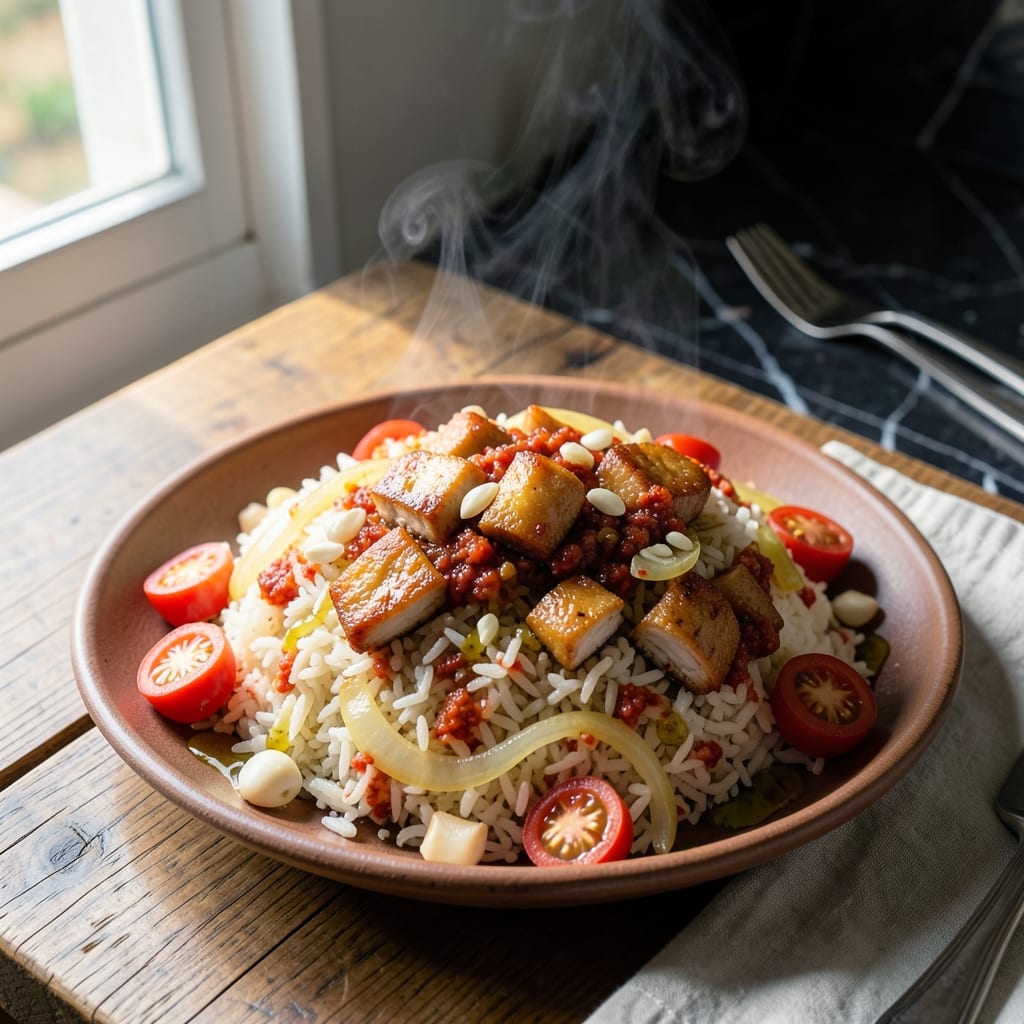
Binagoongan Rice Recipe: Filipino Shrimp Paste Savory Delight

Binagoongan Rice Recipe: Filipino Shrimp Paste Savory Delight

This Filipino classic transforms humble ingredients into a savory masterpiece that’s deeply satisfying. The combination of shrimp paste, pork, and vegetables creates a rich, umami-packed dish that’s both comforting and bold.

I’ve perfected this version to balance traditional flavors with everyday cooking. The shrimp paste adds a distinct depth, while the pork and vegetables soak up every bit of that flavorful sauce.

👨‍🍳
Difficulty
Medium
🐟
Category
Seafood
⏱️
Duration
30 min
🔥
Calories
Med Cal

Ingredients for Binagoongan Rice

Traditional Filipino ingredients create this savory rice dish with bold, umami-rich flavors everyone will love.

Ingredient Amount Notes
Jasmine Rice 🍚 2 cups Rinsed until water runs clear
Pork Belly 🥓 ¾ lb Cut into 1-inch cubes
Shrimp Paste 🦐 ¼ cup Filipino bagoong alamang preferred
Garlic Cloves 🧄 6 cloves Minced finely for even distribution
Yellow Onion 🧅 1 whole Diced into small pieces
Roma Tomatoes 🍅 2 whole Diced, seeds removed
Eggplant 🍆 1 whole Cut into 1-inch cubes
Green Beans 🌱 1 cup Trimmed, cut into 2-inch pieces
Chili Pepper 🌶️ 2 whole Sliced thinly, optional for heat
Fish Sauce 🐟 1 tbsp For depth of umami flavor
Soy Sauce 🫒 1 tbsp Low-sodium preferred for balance
Black Pepper 🌶️ ½ tsp Freshly ground for best aroma
Vegetable Oil 🫒 2 tbsp For sautéing pork and aromatics

The shrimp paste is non-negotiable here. Filipino markets carry the best bagoong alamang, but Asian grocery stores typically stock it too. Look for the pinkish, salty paste in jars or plastic containers. Pork belly gives the richest flavor, though pork shoulder works in a pinch. For the eggplant, choose the long, slender Asian variety if available—less bitter, more tender.

No shrimp paste? Anchovy paste at half the amount gets you closest, but the flavor won’t be identical. Out of pork belly? Chicken thighs absorb the sauce well. For a vegetarian version, mushrooms or tofu can substitute the pork. The green beans can be swapped with long beans or even zucchini. Always taste before adding salt—the shrimp paste is already quite salty.

This tastes even better the next day as the rice absorbs more flavor. Stores well in the fridge for up to 4 days. Reheat gently with a splash of water to prevent drying. Not ideal for freezing as the eggplant texture suffers, but the sauce freezes beautifully for 1 month.

❤️

Why You’ll Love This Recipe

  • One Pot Wonder: I just dump jasmine rice, pork belly, and shrimp paste in one pot—minimal cleanup, maximum reward.
  • Flavor Bomb: The shrimp paste and pork belly combo is so rich and savory, it turns plain rice into something crave-worthy.
  • Weeknight Hero: I throw it together on busy evenings, and it’s ready before the kids start asking for snacks.
  • Stretches Far: Leftovers taste even better the next day, and the ingredients are cheap enough to feed the whole family.

Step-by-Step Instructions for Binagoongan Rice

Master this Filipino classic with precise timing and technique for balanced, authentic flavor.

Step 1: Sauté Aromatics and Render Pork Fat

Heat the 2 tbsp Vegetable Oil in a large pot over medium heat. Add the 0.75 lb Pork Belly cubes and cook for 8-10 minutes, stirring occasionally, until the fat renders out and the pork turns golden brown on all sides.

Push the pork to one side and add the 6 cloves Garlic Cloves, 1 whole Yellow Onion, and 2 whole Roma Tomatoes. Sauté for 3-4 minutes until the onions soften and the tomatoes break down, releasing their juices into the rendered pork fat.

Step 2: Bloom Shrimp Paste and Build Base

Reduce heat to medium-low and add the 0.25 cup Shrimp Paste. Stir constantly for 2 minutes to bloom its pungent aroma—this step is crucial for developing the dish’s signature depth. The paste will darken slightly and become fragrant.

Pour in the 1 tbsp Fish Sauce, 1 tbsp Soy Sauce, and 0.5 tsp Black Pepper. Stir to combine, scraping the bottom of the pot to deglaze. The mixture should sizzle gently, indicating the flavors are melding properly.

Step 3: Incorporate Vegetables for Texture

Add the 1 whole Eggplant cubes and 1 cup Green Beans. Stir to coat evenly in the sauce. Cook for 5-6 minutes until the eggplant begins to soften but still holds its shape, and the green beans turn bright vibrant green.

For heat, stir in the 2 whole Chili Pepper slices (if using). Taste and adjust seasoning—this is your last chance to balance the saltiness of the shrimp paste with more fish sauce or soy sauce if needed.

Step 4: Add Rice and Simmer to Perfection

Rinse the 2 cups Jasmine Rice until the water runs clear, then drain thoroughly. Add it to the pot and stir for 1-2 minutes to toast the grains slightly in the aromatic oil and sauce. This step enhances the nutty flavor of the rice.

Pour in 4 cups water (or enough to cover the rice by about 1 inch) and bring to a boil. Reduce heat to low, cover, and simmer for 18-20 minutes until the rice is tender and the liquid has been absorbed. Do not stir during cooking to prevent mushy rice.

Step 5: Rest and Fluff for Ideal Texture

Remove the pot from heat and let it sit covered for 10 minutes. This resting period allows the rice to steam and absorb any remaining liquid, ensuring even cooking and preventing a sticky bottom.

Gently fluff the rice with a fork, breaking up any clumps while keeping the grains intact. The pork should be tender, the vegetables soft but not mushy, and every bite infused with the rich, umami-packed flavor of the shrimp paste and aromatics.

👨‍🍳

Pro Tips For Making Binagoongan Rice

  • Sear the Pork First: Brown the pork belly in batches over medium-high heat until crispy—I learned this the hard way after ending up with soggy meat in my binagoongan.
  • Bloom the Shrimp Paste: Cook the shrimp paste with garlic and onions for 2-3 minutes until fragrant; skipping this step leaves a raw, harsh flavor in your rice.
  • Use Day-Old Rice: Fresh jasmine rice turns mushy when stir-fried, so use leftover rice that’s been in the fridge overnight for better texture.
  • Balance the Salt: Taste before adding more salt—shrimp paste is already salty, and I’ve ruined a batch by over-seasoning without checking first.

Creative Variations of This Recipe

Seafood Twist

Swap pork belly for 1 lb peeled shrimp or squid rings for a lighter, briny take. Add seafood in step 3 instead of pork to prevent overcooking. The shrimp paste pairs beautifully with ocean flavors. 🌊

Vegetarian Delight

Use 1 lb firm tofu or mushrooms instead of pork. Press tofu for 30 minutes before cubing for better texture. Sauté with extra oil to compensate for the missing pork fat.

Spicy Kick

Double the chili peppers or add 1 chopped siling labuyo for intense heat. Balance with 1 tbsp coconut milk stirred in at the end to cool the burn. Taste as you go to find your perfect spice level.

Quick Weeknight Version

Use pre-cooked pork belly from Filipino markets to cut cooking time in half. Simmer with shrimp paste and veggies for 10 minutes before adding rice. Still packed with authentic flavor. ⚡

Extra Umami Boost

Add 2 tbsp oyster sauce or 1 tbsp miso paste when blooming the shrimp paste. This deepens the savory profile without overpowering the dish’s traditional taste.

Coconut Milk Version

Replace water with 1 can coconut milk and 1 cup water for a creamier texture. This variation is popular in some Bicolano households, balancing the saltiness with coconut richness.

Nutrition Facts

Servings 4
Amount Per Serving
Calories 580kcal
% Daily Value
Total Fat 32g41%
Saturated Fat 11g55%
Cholesterol 80mg27%
Sodium 1200mg52%
Total Carbohydrate 52g19%
Dietary Fiber 6g21%
Sugars 4g
Protein 22g44%
Percent Daily Values are based on a 2,000 calorie diet. Your daily values may be higher or lower depending on your calorie needs.

Frequently Asked Questions

1

Can I use a different type of rice?

Jasmine rice works best, but long-grain white rice is a good substitute. Avoid sticky varieties like glutinous rice as they’ll make the dish too dense.

2

How do I reduce the saltiness?

Rinse the shrimp paste thoroughly before use or reduce the amount by half. Balance with 1 tbsp vinegar or a pinch of sugar to counteract the salt.

3

Can I make this in a rice cooker?

Yes! Sauté aromatics and pork first, then transfer to the rice cooker. Add rice and water, then cook as usual. Stir once halfway for even flavor distribution.

4

What if my eggplant turns mushy?

Add it later in the cooking process or salt and drain it first. Asian eggplant varieties hold their shape better than globe eggplants.

★★★★★4.6(10 reviews)
Tyler Campbell

Binagoongan Rice Recipe: Filipino Shrimp Paste Savory Delight

Binagoongan Rice Recipe: Filipino Shrimp Paste Savory Delight

This Filipino classic transforms humble ingredients into a savory masterpiece that’s deeply satisfying. The combination of shrimp paste, pork, and vegetables creates a rich, umami-packed dish that’s both comforting and bold.

I’ve perfected this version to balance traditional flavors with everyday cooking. The shrimp paste adds a distinct depth, while the pork and vegetables soak up every bit of that flavorful sauce.

👨‍🍳
Difficulty
Medium
🐟
Category
Seafood
⏱️
Duration
30 min
🔥
Calories
Med Cal

Ingredients for Binagoongan Rice

Traditional Filipino ingredients create this savory rice dish with bold, umami-rich flavors everyone will love.

Ingredient Amount Notes
Jasmine Rice 🍚 2 cups Rinsed until water runs clear
Pork Belly 🥓 ¾ lb Cut into 1-inch cubes
Shrimp Paste 🦐 ¼ cup Filipino bagoong alamang preferred
Garlic Cloves 🧄 6 cloves Minced finely for even distribution
Yellow Onion 🧅 1 whole Diced into small pieces
Roma Tomatoes 🍅 2 whole Diced, seeds removed
Eggplant 🍆 1 whole Cut into 1-inch cubes
Green Beans 🌱 1 cup Trimmed, cut into 2-inch pieces
Chili Pepper 🌶️ 2 whole Sliced thinly, optional for heat
Fish Sauce 🐟 1 tbsp For depth of umami flavor
Soy Sauce 🫒 1 tbsp Low-sodium preferred for balance
Black Pepper 🌶️ ½ tsp Freshly ground for best aroma
Vegetable Oil 🫒 2 tbsp For sautéing pork and aromatics

The shrimp paste is non-negotiable here. Filipino markets carry the best bagoong alamang, but Asian grocery stores typically stock it too. Look for the pinkish, salty paste in jars or plastic containers. Pork belly gives the richest flavor, though pork shoulder works in a pinch. For the eggplant, choose the long, slender Asian variety if available—less bitter, more tender.

No shrimp paste? Anchovy paste at half the amount gets you closest, but the flavor won’t be identical. Out of pork belly? Chicken thighs absorb the sauce well. For a vegetarian version, mushrooms or tofu can substitute the pork. The green beans can be swapped with long beans or even zucchini. Always taste before adding salt—the shrimp paste is already quite salty.

This tastes even better the next day as the rice absorbs more flavor. Stores well in the fridge for up to 4 days. Reheat gently with a splash of water to prevent drying. Not ideal for freezing as the eggplant texture suffers, but the sauce freezes beautifully for 1 month.

❤️

Why You’ll Love This Recipe

  • One Pot Wonder: I just dump jasmine rice, pork belly, and shrimp paste in one pot—minimal cleanup, maximum reward.
  • Flavor Bomb: The shrimp paste and pork belly combo is so rich and savory, it turns plain rice into something crave-worthy.
  • Weeknight Hero: I throw it together on busy evenings, and it’s ready before the kids start asking for snacks.
  • Stretches Far: Leftovers taste even better the next day, and the ingredients are cheap enough to feed the whole family.

Step-by-Step Instructions for Binagoongan Rice

Master this Filipino classic with precise timing and technique for balanced, authentic flavor.

Step 1: Sauté Aromatics and Render Pork Fat

Heat the 2 tbsp Vegetable Oil in a large pot over medium heat. Add the 0.75 lb Pork Belly cubes and cook for 8-10 minutes, stirring occasionally, until the fat renders out and the pork turns golden brown on all sides.

Push the pork to one side and add the 6 cloves Garlic Cloves, 1 whole Yellow Onion, and 2 whole Roma Tomatoes. Sauté for 3-4 minutes until the onions soften and the tomatoes break down, releasing their juices into the rendered pork fat.

Step 2: Bloom Shrimp Paste and Build Base

Reduce heat to medium-low and add the 0.25 cup Shrimp Paste. Stir constantly for 2 minutes to bloom its pungent aroma—this step is crucial for developing the dish’s signature depth. The paste will darken slightly and become fragrant.

Pour in the 1 tbsp Fish Sauce, 1 tbsp Soy Sauce, and 0.5 tsp Black Pepper. Stir to combine, scraping the bottom of the pot to deglaze. The mixture should sizzle gently, indicating the flavors are melding properly.

Step 3: Incorporate Vegetables for Texture

Add the 1 whole Eggplant cubes and 1 cup Green Beans. Stir to coat evenly in the sauce. Cook for 5-6 minutes until the eggplant begins to soften but still holds its shape, and the green beans turn bright vibrant green.

For heat, stir in the 2 whole Chili Pepper slices (if using). Taste and adjust seasoning—this is your last chance to balance the saltiness of the shrimp paste with more fish sauce or soy sauce if needed.

Step 4: Add Rice and Simmer to Perfection

Rinse the 2 cups Jasmine Rice until the water runs clear, then drain thoroughly. Add it to the pot and stir for 1-2 minutes to toast the grains slightly in the aromatic oil and sauce. This step enhances the nutty flavor of the rice.

Pour in 4 cups water (or enough to cover the rice by about 1 inch) and bring to a boil. Reduce heat to low, cover, and simmer for 18-20 minutes until the rice is tender and the liquid has been absorbed. Do not stir during cooking to prevent mushy rice.

Step 5: Rest and Fluff for Ideal Texture

Remove the pot from heat and let it sit covered for 10 minutes. This resting period allows the rice to steam and absorb any remaining liquid, ensuring even cooking and preventing a sticky bottom.

Gently fluff the rice with a fork, breaking up any clumps while keeping the grains intact. The pork should be tender, the vegetables soft but not mushy, and every bite infused with the rich, umami-packed flavor of the shrimp paste and aromatics.

👨‍🍳

Pro Tips For Making Binagoongan Rice

  • Sear the Pork First: Brown the pork belly in batches over medium-high heat until crispy—I learned this the hard way after ending up with soggy meat in my binagoongan.
  • Bloom the Shrimp Paste: Cook the shrimp paste with garlic and onions for 2-3 minutes until fragrant; skipping this step leaves a raw, harsh flavor in your rice.
  • Use Day-Old Rice: Fresh jasmine rice turns mushy when stir-fried, so use leftover rice that’s been in the fridge overnight for better texture.
  • Balance the Salt: Taste before adding more salt—shrimp paste is already salty, and I’ve ruined a batch by over-seasoning without checking first.

Creative Variations of This Recipe

Seafood Twist

Swap pork belly for 1 lb peeled shrimp or squid rings for a lighter, briny take. Add seafood in step 3 instead of pork to prevent overcooking. The shrimp paste pairs beautifully with ocean flavors. 🌊

Vegetarian Delight

Use 1 lb firm tofu or mushrooms instead of pork. Press tofu for 30 minutes before cubing for better texture. Sauté with extra oil to compensate for the missing pork fat.

Spicy Kick

Double the chili peppers or add 1 chopped siling labuyo for intense heat. Balance with 1 tbsp coconut milk stirred in at the end to cool the burn. Taste as you go to find your perfect spice level.

Quick Weeknight Version

Use pre-cooked pork belly from Filipino markets to cut cooking time in half. Simmer with shrimp paste and veggies for 10 minutes before adding rice. Still packed with authentic flavor. ⚡

Extra Umami Boost

Add 2 tbsp oyster sauce or 1 tbsp miso paste when blooming the shrimp paste. This deepens the savory profile without overpowering the dish’s traditional taste.

Coconut Milk Version

Replace water with 1 can coconut milk and 1 cup water for a creamier texture. This variation is popular in some Bicolano households, balancing the saltiness with coconut richness.

Nutrition Facts

Servings 4
Amount Per Serving
Calories 580kcal
% Daily Value
Total Fat 32g41%
Saturated Fat 11g55%
Cholesterol 80mg27%
Sodium 1200mg52%
Total Carbohydrate 52g19%
Dietary Fiber 6g21%
Sugars 4g
Protein 22g44%
Percent Daily Values are based on a 2,000 calorie diet. Your daily values may be higher or lower depending on your calorie needs.

Frequently Asked Questions

1

Can I use a different type of rice?

Jasmine rice works best, but long-grain white rice is a good substitute. Avoid sticky varieties like glutinous rice as they’ll make the dish too dense.

2

How do I reduce the saltiness?

Rinse the shrimp paste thoroughly before use or reduce the amount by half. Balance with 1 tbsp vinegar or a pinch of sugar to counteract the salt.

3

Can I make this in a rice cooker?

Yes! Sauté aromatics and pork first, then transfer to the rice cooker. Add rice and water, then cook as usual. Stir once halfway for even flavor distribution.

4

What if my eggplant turns mushy?

Add it later in the cooking process or salt and drain it first. Asian eggplant varieties hold their shape better than globe eggplants.

★★★★★4.6(10 reviews)
Tyler Campbell